
Soul

Emily Dickinson
I never felt at Home—Below
I never felt at Home—Below—-
And in the Handsome Skies
I shall not feel at Home—I know—
I don't like Paradise—
Because it's Sunday—all the time—
And Recess—never comes—
And Eden'll be so lonesome
Bright Wednesday Afternoons—
If God could make a visit—
Or ever took a Nap—
So not to see us—but they say
Himself—a Telescope
Perennial beholds us—
Myself would run away
From Him—and Holy Ghost—and All—
But there's the "Judgement Day"!
Read more →
305

William Shakespeare
Sonnet 105: Let not my love be called idolatry
Let not my love be called idolatry,
Nor my belovèd as an idol show,
Since all alike my songs and praises be
To one, of one, still such, and ever so.
Kind is my love today, tomorrow kind,
Still constant in a wondrous excellence;
Therefore my verse to constancy confined,
One thing expressing, leaves out difference.
"Fair, kind, and true" is all my argument,
"Fair, kind, and true" varying to other words;
And in this change is my invention spent,
Three themes in one, which wondrous scope affords.
Fair, kind, and true, have often lived alone.
Which three till now never kept seat in one.
Read more →
307

George Herbert
The Holdfast
I threatened to observe the strict decree
Of my deare God with all my power and might:
But I was told by one, `It could not be;
Yet I might trust in God to be my light.'
`Then will I trust,' said I, `in Him alone.'
`Nay, ev'n to trust in Him, was also His:
We must confesse that nothing is our own.'
`Then I confesse that He my succour is.'
`But to have nought is ours, not to confesse
That we have nought.' I stood amaz'd at this,
Much troubled, till I heard a friend expresse
That all things were more ours by being His:
What Adam had, and forfeited for all,
Christ keepeth now, Who cannot fail or fall.
Read more →
306

William Butler Yeats
Death
NOR dread nor hope attend
A dying animal;
A man awaits his end
Dreading and hoping all;
Many times he died,
Many times rose again.
A great man in his pride
Confronting murderous men
Casts derision upon
Supersession of breath;
He knows death to the bone --
Man has created death.
Read more →
306
William Butler Yeats
The Mother Of God
THE threefold terror of love; a fallen flare
Through the hollow of an ear;
Wings beating about the room;
The terror of all terrors that I bore
The Heavens in my womb.
Had I not found content among the shows
Every common woman knows,
Chimney corner, garden walk,
Or rocky cistern where we tread the clothes
And gather all the talk?
What is this flesh I purchased with my pains,
This fallen star my milk sustains,
This love that makes my heart's blood stop
Or strikes a Sudden chill into my bones
And bids my hair stand up?
Read more →
307
Emily Dickinson
One need not be a chamber to be haunted
One need not be a chamber to be haunted,
One need not be a house;
The brain has corridors surpassing
Material place.
Far safer, of a midnight meeting
External ghost,
Than an interior confronting
That whiter host.
Far safer through an Abbey gallop,
The stones achase,
Than, moonless, one's own self encounter
In lonesome place.
Ourself, behind ourself concealed,
Should startle most;
Assassin, hid in our apartment,
Be horror's least.
The prudent carries a revolver,
He bolts the door,
O'erlooking a superior spectre
More near.
Read more →
306
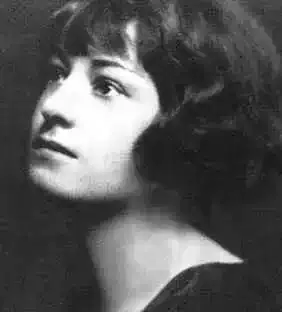
Dorothy Parker
The Small Hours
No more my little song comes back;
And now of nights I lay
My head on down, to watch the black
And wait the unfailing gray.
Oh, sad are winter nights, and slow;
And sad's a song that's dumb;
And sad it is to lie and know
Another dawn will come.
Read more →
304
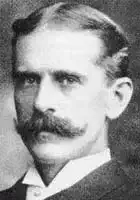
Henry Van Dyke
Longfellow
In a great land, a new land, a land full of labour
and riches and confusion,
Where there were many running to and fro, and
shouting, and striving together,
In the midst of the hurry and the troubled noise,
I heard the voice of one singing.
"What are you doing there, O man, singing
quietly amid all this tumult?
This is the time for new inventions, mighty
shoutings, and blowings of the trumpet."
But he answered, "I am only shepherding my
sheep with music."
So he went along his chosen way, keeping his
little flock around him;
And he paused to listen, now and then, beside
the antique fountains,
Where the faces of forgotten gods were refreshed
with musically falling waters;
Or he sat for a while at the blacksmith's door,
and heard the cling-clang of the anvils;
Or he rested beneath old steeples full of bells,
that showered their chimes upon him;
Or he walked along the border of the sea,
drinking in the long roar of the billows;
Or he sunned himself in the pine-scented shipyard,
amid the tattoo of the mallets;
Or he leaned on the rail of the bridge, letting
his thoughts flow with the whispering river;
He hearkened also to ancient tales, and made
them young again with his singing.
Then a flaming arrow of death fell on his flock,
and pierced the heart of his dearest!
Silent the music now, as the shepherd entered
the mystical temple of sorrow:
Long he tarried in darkness there: but when he
came out he was singing.
And I saw the faces of men and women and
children silently turning toward him;
The youth setting out on the journey of life, and
the old man waiting beside the last mile-stone;
The toiler sweating beneath his load; and the
happy mother rocking her cradle;
The lonely sailor on far-off seas; and the greyminded
scholar in his book-room;
The mill-hand bound to a clacking machine; and
the hunter in the forest;
And the solitary soul hiding friendless in the
wilderness of the city;
Many human faces, full of care and longing, were
drawn irresistibly toward him,
By the charm of something known to every heart,
yet very strange and lovely,
And at the sound of that singing wonderfully
all their faces were lightened.
"Why do you listen, O you people, to this old
and world-worn music?
This is not for you, in the splendour of a new
age, in the democratic triumph!
Listen to the clashing cymbals, the big drums, the
brazen trumpets of your poets."
But the people made no answer, following in
their hearts the simpler music:
For it seemed to them, noise-weary, nothing
could be better worth the hearing
Than the melodies which brought sweet order
into life's confusion.
So the shepherd sang his way along, until he
came unto a mountain:
And I know not surely whether it was called
Parnassus,
But he climbed it out of sight, and still I heard
the voice of one singing.
Read more →
304
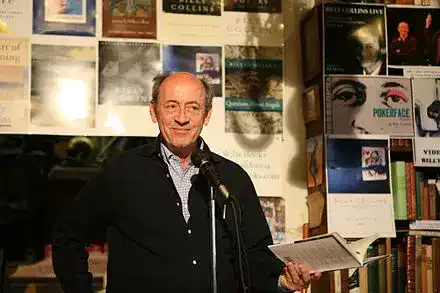
Billy Collins
Fishing On The Susquehanna In July
I have never been fishing on the Susquehanna
or on any river for that matter
to be perfectly honest.
Not in July or any month
have I had the pleasure -- if it is a pleasure -of
fishing on the Susquehanna.
I am more likely to be found
in a quiet room like this one -a
painting of a woman on the wall,
a bowl of tangerines on the table -trying
to manufacture the sensation
of fishing on the Susquehanna.
There is little doubt
that others have been fishing
on the Susquehanna,
rowing upstream in a wooden boat,
sliding the oars under the water
then raising them to drip in the light.
But the nearest I have ever come to
fishing on the Susquehanna
was one afternoon in a museum in Philadelphia,
when I balanced a little egg of time
in front of a painting
in which that river curled around a bend
under a blue cloud-ruffled sky,
dense trees along the banks,
and a fellow with a red bandana
sitting in a small, green
flat-bottom boat
holding the thin whip of a pole.
That is something I am unlikely
ever to do, I remember
saying to myself and the person next to me.
Then I blinked and moved on
to other American scenes
of haystacks, water whitening over rocks,
even one of a brown hare
who seemed so wired with alertness
I imagined him springing right out of the frame.
Read more →
303

John Greenleaf Whittier
Howard At Atlanta
RIGHT in the track where Sherman
Ploughed his red furrow,
Out of the narrow cabin,
Up from the cellar's burrow,
Gathered the little black people,
With freedom newly dowered,
Where, beside their Northern teacher,
Stood the soldier, Howard.
He listened and heard the children
Of the poor and long-enslavëd
Reading the words of Jesus,
Singing the songs of David.
Behold! —the dumb lips speaking,
The blind eyes seeing!
Bones of the Prophet's vision
Warmed into being!
Transformed he saw them passing
Their new life's portal!
Almost it seemed the mortal
Put on the immortal.
No more with the beasts of burden,
No more with stone and clod,
But crowned with glory and honor
In the image of God!
There was the human chattel
Its manhood taking;
There, in each dark, brown statue,
A soul was waking!
The man of many battles,
With tears his eyelids pressing,
Stretched over those dusky foreheads
His one-armed blessing.
And he said: 'Who hears can never
Fear for or doubt you;
What shall I tell the children
Up North about you?'
Then ran round a whisper, a murmur,
Some answer devising;
And a little boy stood up: 'General,
Tell'em we're rising!'
O black boy of Atlanta!
But half was spoken:
The slave's chain and the master's
Alike are broken.
The one curse of the races
Held both in tether:
They are rising, — all are rising,
The black and white together!
O brave men and fair women!
Ill comes of hate and scorning:
Shall the dark faces only
Be turned to morning? —
Make Time your sole avenger,
All-healing, all-redressing;
Meet Fate half-way, and make it
A joy and blessing!
Read more →
303
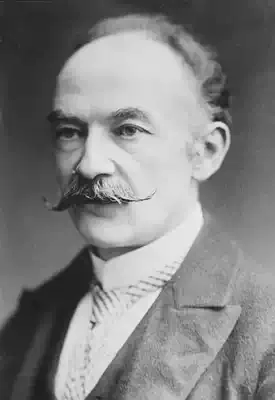
Thomas Hardy
My spirit will not haunt the mound
My spirit will not haunt the mound
Above my breast,
But travel, memory-possessed,
To where my tremulous being found
Life largest, best.
My phantom-footed shape will go
When nightfall grays
Hither and thither along the ways
I and another used to know
In backward days.
And there you'll find me, if a jot
You still should care
For me, and for my curious air;
If otherwise, then I shall not,
For you, be there.
Read more →
304
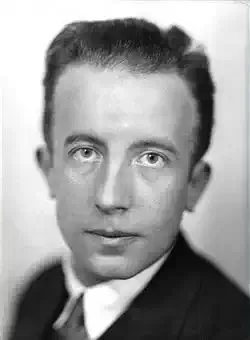
Paul Éluard
The Nakedness of Truth (I know it well)
Despair has no wings,
Nor has love,
No countenance:
They do not speak.
I do not stir,
I do not behold them,
I do not speak to them,
But I am as real as my love and my despair.
Read more →
304
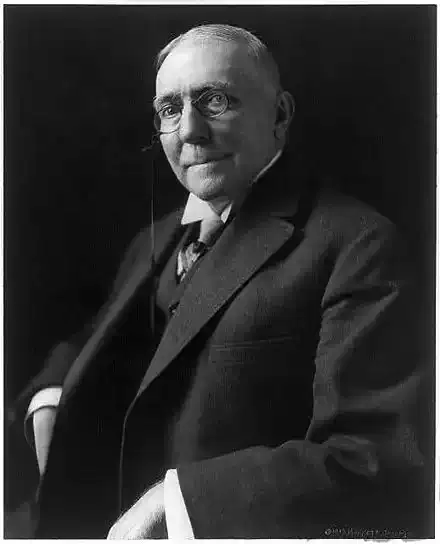
James Whitcomb Riley
Blooms Of May
But yesterday!...
O blooms of May,
And summer roses--Where-away?
O stars above,
And lips of love
And all the honeyed sweets thereof!
O lad and lass
And orchard-pass,
And briered lane, and daisied grass!
O gleam and gloom,
And woodland bloom,
And breezy breaths of all perfume!--
No more for me
Or mine shall be
Thy raptures--save in memory,--
No more--no more--
Till through the Door
Of Glory gleam the days of yore.
Read more →
304
William Butler Yeats
Peace
AH, that Time could touch a form
That could show what Homer's age
Bred to be a hero's wage.
'Were not all her life but storm
Would not painters paint a form
Of such noble lines,' I said,
'Such a delicate high head,
All that sternness amid charm,
All that sweetness amid strength?'
Ah, but peace that comes at length,
Came when Time had touched her form.
Read more →
304
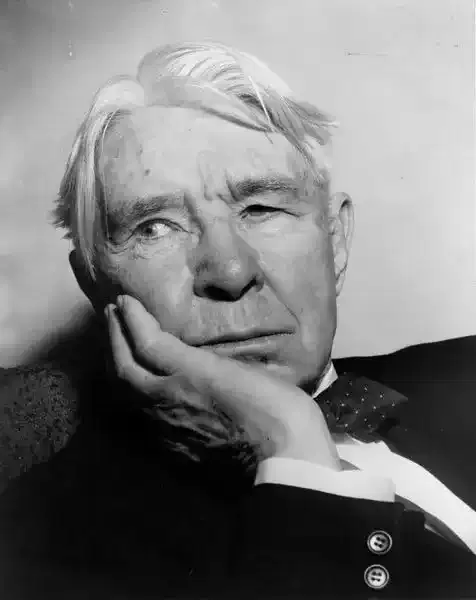
Carl Sandburg
Prayers of Steel
Lay me on an anvil, O God.
Beat me and hammer me into a crowbar.
Let me pry loose old walls.
Let me lift and loosen old foundations.
Lay me on an anvil, O God.
Beat me and hammer me into a steel spike.
Drive me into the girders that hold a skyscraper together.
Take red-hot rivets and fasten me into the central girders.
Let me be the great nail holding a skyscraper through blue nights into white stars.
Read more →
303
Emily Dickinson
For largest Woman's Hearth I knew
For largest Woman's Hearth I knew'
Tis little I can do-
And yet the largest Woman's Heart
Could hold an Arrow-too-
And so, instructed by my own,
I tenderer, turn Me to.
Read more →
302

Johann Wolfgang von Goethe
To Lina
SHOULD these songs, love, as they fleet,
Chance again to reach thy hand,
At the piano take thy seat,
Where thy friend was wont to stand!
Sweep with finger bold the string,
Then the book one moment see:
But read not! do nought but sing!
And each page thine own will be!
Ah, what grief the song imparts
With its letters, black on white,
That, when breath'd by thee, our hearts
Now can break and now delight!
Read more →
304
James Whitcomb Riley
A Dream
I dreamed I was a spider;
A big, fat, hungry spider;
A lusty, rusty spider
With a dozen palsied limbs;
With a dozen limbs that dangled
Where three wretched flies were tangled
And their buzzing wings were strangled
In the middle of their hymns.
And I mocked them like a demon--
A demoniacal demon
Who delights to be a demon
For the sake of sin alone;
And with fondly false embraces
Did I weave my mystic laces
Round their horror-stricken faces
Till I muffled every groan.
And I smiled to see them weeping,
For to see an insect weeping,
Sadly, sorrowfully weeping,
Fattens every spider's mirth;
And to note a fly's heart quaking,
And with anguish ever aching
Till you see it slowly breaking
Is the sweetest thing on earth.
I experienced a pleasure,
Such a highly-flavored pleasure,
Such intoxicating pleasure,
That I drank of it like wine;
And my mortal soul engages
That no spider on the pages
Of the history of ages
Felt a rapture more divine.
I careened around and capered--
Madly, mystically capered--
For three days and nights I capered
Round my web in wild delight;
Till with fierce ambition burning,
And an inward thirst and yearning
I hastened my returning
With a fiendish appetite.
And I found my victims dying,
'Ha!' they whispered, 'we are dying!'
Faintly whispered, 'we are dying,
And our earthly course is run.'
And the scene was so impressing
That I breathed a special blessing,
As I killed them with caressing
And devoured them one by one.
Read more →
304
James Whitcomb Riley
A Feel In The Chris'mas-Air
They's a kind o' _feel_ in the air, to me.
When the Chris'mas-times sets in.
That's about as much of a mystery
As ever I've run ag'in!--
Fer instunce, now, whilse I gain in weight
And gineral health, I swear
They's a _goneness_ somers I can't quite state--
A kind o' _feel_ in the air.
They's a feel in the Chris'mas-air goes right
To the spot where a man _lives_ at!--
It gives a feller a' appetite--
They ain't no doubt about _that_!--
And yit they's _somepin_'--I don't know what--
That follers me, here and there,
And ha'nts and worries and spares me not--
A kind o' feel in the air!
They's a _feel_, as I say, in the air that's jest
As blame-don sad as sweet!--
In the same ra-sho as I feel the best
And am spryest on my feet,
They's allus a kind o' sort of a' _ache_
That I can't lo-cate no-where;--
But it comes with _Chris'mas_, and no mistake!--
A kind o' feel in the air.
Is it the racket the childern raise?-W'y,
_no_!--God bless 'em!--_no_!--
Is it the eyes and the cheeks ablaze--
Like my _own_ wuz, long ago?--
Is it the bleat o' the whistle and beat
O' the little toy-drum and blare
O' the horn?--_No! no!_--it is jest the sweet--
The sad-sweet feel in the air.
Read more →
304

Henry Lawson
And What Have You To Say?
I MIND the days when ladies fair
Helped on my overcoat,
And tucked the silken handkerchief
About my precious throat;
They used to see the poet’s soul
In every song I wrote.
They pleaded hard, but I had work
To do, and could not stay
I used to work the whole night through,
And what have you to say?
’Twas clever, handsome woman then,
And I their rising star;
I could not see they worshipped me,
Because I saw too far.
(’Tis well for one or two, I think,
That things are as they are.)
(I used to write for writing’s sake,
I used to write till day,
I loved my prose and poetry,
And what have you to say?)
I guess if one should meet me now
That she would gasp to think,
She ever knew a thing like me,
As down the street I slink,
And trembling cadge from some old pal
The tray-bit for a drink.
I used to drink with gentlemen
To pass an hour away:
I drink long beers in common bars,
And what have you to say?
But often, in the darkest night
(And ’tis a wondrous thing)—
When others see the devils dance,
I hear the angels sing,
And round the drunkard’s lonely bed
Heaven’s nurses whispering.
I wrote for Truth and Right alone,
I wrote from night till day;
I’ll find a drunken pauper grave,
And what have you to say?
Good night!
Good day!
My noble friends,
And what have you to say?
Read more →
302
Emily Dickinson
I should not dare to leave my friend
I should not dare to leave my friend,
Because-because if he should die
While I was gone-and I-too late-
Should reach the Heart that wanted me-
If I should disappoint the eyes
That hunted-hunted so-to see-
And could not bear to shut until
They "noticed" me-they noticed me-
If I should stab the patient faith
So sure I'd come-so sure I'd come-
It listening-listening-went to sleep-
Telling my tardy name-
My Heart would wish it broke before-
Since breaking then-since breaking then-
Were useless as next morning's sun-
Where midnight frosts-had lain!
Read more →
303

Henry Wadsworth Longfellow
Song
Where, from the eye of day,
The dark and silent river
Pursues through tangled woods a way
O'er which the tall trees quiver;
The silver mist, that breaks
From out that woodland cover,
Betrays the hidden path it takes,
And hangs the current over!
So oft the thoughts that burst
From hidden springs of feeling,
Like silent streams, unseen at first,
From our cold hearts are stealing:
But soon the clouds that veil
The eye of Love, when glowing,
Betray the long unwhispered tale
Of thoughts in darkness flowing!
Read more →
302
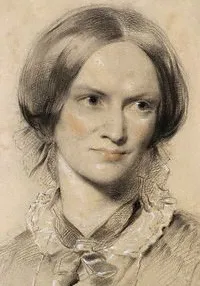
Charlotte Brontë
The Teacher's Monologue
THE room is quiet, thoughts alone
People its mute tranquillity;
The yoke put on, the long task done,
I
am, as it is bliss to be,
Still and untroubled. Now, I see,
For the first time, how soft the day
O'er waveless water, stirless tree,
Silent and sunny, wings its way.
Now, as I watch that distant hill,
So faint, so blue, so far removed,
Sweet dreams of home my heart may fill,
That home where I am known and loved:
It lies beyond; yon azure brow
Parts me from all Earth holds for me;
And, morn and eve, my yearnings flow
Thitherward tending, changelessly.
My happiest hours, aye ! all the time,
I love to keep in memory,
Lapsed among moors, ere life's first prime
Decayed to dark anxiety.
Sometimes, I think a narrow heart
Makes me thus mourn those far away,
And keeps my love so far apart
From friends and friendships of today;
Sometimes, I think 'tis but a dream
I measure up so jealously,
All the sweet thoughts I live on seem
To vanish into vacancy:
And then, this strange, coarse world around
Seems all that's palpable and true;
And every sight, and every sound,
Combines my spirit to subdue
To aching grief, so void and lone
Is Life and Earthso
worse than vain,
The hopes that, in my own heart sown,
And cherished by such sun and rain
As Joy and transient Sorrow shed,
Have ripened to a harvest there:
Alas ! methinks I hear it said,
'Thy golden sheaves are empty air.'
All fades away; my very home
I think will soon be desolate;
I hear, at times, a warning come
Of bitter partings at its gate;
And, if I should return and see
The hearthfire
quenched, the vacant chair;
And hear it whispered mournfully,
That farewells have been spoken there,
What shall I do, and whither turn ?
Where look for peace ? When cease to mourn ?
'Tis not the air I wished to play,
The strain I wished to sing;
My wilful spirit slipped away
And struck another string.
I neither wanted smile nor tear,
Bright joy nor bitter woe,
But just a song that sweet and clear,
Though haply sad, might flow.
A quiet song, to solace me
When sleep refused to come;
A strain to chase despondency,
When sorrowful for home.
In vain I try; I cannot sing;
All feels so cold and dead;
No wild distress, no gushing spring
Of tears in anguish shed;
But all the impatient gloom of one
Who waits a distant day,
When, some great task of suffering done,
Repose shall toil repay.
For youth departs, and pleasure flies,
And life consumes away,
And youth's rejoicing ardour dies
Beneath this drear delay;
And Patience, weary with her yoke,
Is yielding to despair,
And Health's elastic spring is broke
Beneath the strain of care.
Life will be gone ere I have lived;
Where now is Life's first prime ?
I've worked and studied, longed and grieved,
Through all that rosy time.
To toil, to think, to long, to grieve,
Is
such my future fate ?
The morn was dreary, must the eve
Be also desolate ?
Well, such a life at least makes Death
A welcome, wishedfor
friend;
Then, aid me, Reason, Patience, Faith,
To suffer to the end !
Read more →
302
Emily Dickinson
What did They do since I saw Them?
What did They do since I saw Them?
Were They industrious?
So many questions to put Them
Have I the eagerness
That could I snatch Their Faces
That could Their lips reply
Not till the last was answered
Should They start for the Sky.
Not if Their Party were waiting,
Not if to talk with Me
Were to Them now, Homesickness
After Eternity.
Not if the Just suspect me
And offer a Reward
Would I restore my Booty
To that Bold Person, God-
Read more →
302