
Soul
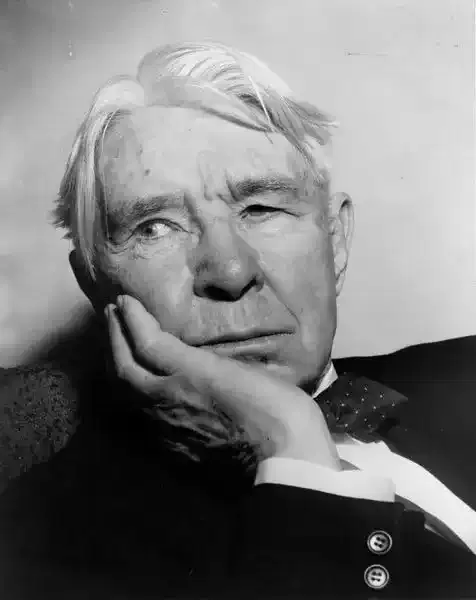
Carl Sandburg
Troths
Yellow dust on a bumble
bee's wing,
Grey lights in a woman's
asking eyes,
Red ruins in the changing
sunset embers:
I take you and pile high
the memories.
Death will break her claws
on some I keep.
Read more →
299
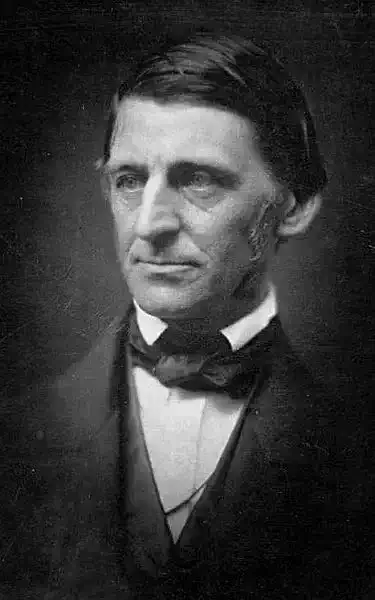
Ralph Waldo Emerson
The Forerunners
Long I followed happy guides,—
I could never reach their sides.
Their step is forth, and, ere the day,
Breaks up their leaguer, and away.
Keen my sense, my heart was young,
Right goodwill my sinews strung,
But no speed of mine avails
To hunt upon their shining trails.
On and away, their hasting feet
Make the morning proud and sweet.
Flowers they strew, I catch the scent,
Or tone of silver instrument
Leaves on the wind melodious trace,
Yet I could never see their face.
On eastern hills I see their smokes
Mixed with mist by distant lochs.
I meet many travellers
Who the road had surely kept,—
They saw not my fine revellers,—
These had crossed them while they slept.
Some had heard their fair report
In the country or the court.
Fleetest couriers alive
Never yet could once arrive,
As they went or they returned,
At the house where these sojourned.
Sometimes their strong speed they slacken,
Though they are not overtaken:
In sleep, their jubilant troop is near,
I tuneful voices overhear,
It may be in wood or waste,—
At unawares 'tis come and passed.
Their near camp my spirit knows
By signs gracious as rainbows.
I thenceforward and long after
Listen for their harplike laughter,
And carry in my heart for days
Peace that hallows rudest ways.—
Read more →
299

George Herbert
Church Monuments
While that my soul repairs to her devotion,
Here I intomb my flesh, that it betimes
May take acquaintance of this heap of dust;
To which the blast of death's incessant motion,
Fed with the exhalation of our crimes,
Drives all at last. Therefore I gladly trust
My body to this school, that it may learn
To spell his elements, and find his birth
Written in dusty heraldry and lines;
Which dissolution sure doth best discern,
Comparing dust with dust, and earth with earth.
These laugh at jet and marble put for signs,
To sever the good fellowship of dust,
And spoil the meeting. What shall point out them,
When they shall bow, and kneel, and fall down flat
To kiss those heaps, which now they have in trust?
Dear flesh, while I do pray, learn here thy stem
And true descent, that when thou shalt grow fat
And wanton in thy cravings, thou mayst know
That flesh is but the glass which holds the dust
That measures all our time; which also shall
Be crumbled into dust. Mark, here below
How tame these ashes are, how free from lust,
That thou mayst fit thyself against thy fall.
Read more →
298

Henry Wadsworth Longfellow
Tales Of A Wayside Inn : Part 3. Interlude VI.
'Now that is after my own heart,'
The Poet cried; 'one understands
Your swarthy hero Scanderbeg,
Gauntlet on hand and boot on leg,
And skilled in every warlike art,
Riding through his Albanian lands,
And following the auspicious star
That shone for him o'er Ak-Hissar.'
The Theologian added here
His word of praise not less sincere,
Although he ended with a jibe;
'The hero of romance and song
Was born,' he said, 'to right the wrong;
And I approve; but all the same
That bit of treason with the Scribe
Adds nothing to your hero's fame.'
The Student praised the good old times,
And liked the canter of the rhymes,
That had a hoofbeat in their sound;
But longed some further word to hear
Of the old chronicler Ben Meir,
And where his volume might he found.
The tall Musician walked the room
With folded arms and gleaming eyes,
As if he saw the Vikings rise,
Gigantic shadows in the gloom;
And much he talked of their emprise
And meteors seen in Northern skies,
And Heimdal's horn, and day of doom.
But the Sicilian laughed again;
'This is the time to laugh,' he said,
For the whole story he well knew
Was an invention of the Jew,
Spun from the cobwebs in his brain,
And of the same bright scarlet thread
As was the Tale of Kambalu.
Only the Landlord spake no word;
'T was doubtful whether he had heard
The tale at all, so full of care
Was he of his impending fate,
That, like the sword of Damocles,
Above his head hung blank and bare,
Suspended by a single hair,
So that he could not sit at ease,
But sighed and looked disconsolate,
And shifted restless in his chair,
Revolving how he might evade
The blow of the descending blade.
The Student came to his relief
By saying in his easy way
To the Musician: 'Calm your grief,
My fair Apollo of the North,
Balder the Beautiful and so forth;
Although your magic lyre or lute
With broken strings is lying mute,
Still you can tell some doleful tale
Of shipwreck in a midnight gale,
Or something of the kind to suit
The mood that we are in to-night
For what is marvellous and strange;
So give your nimble fancy range,
And we will follow in its flight.'
But the Musician shook his head;
'No tale I tell to-night,' he said,
'While my poor instrument lies there,
Even as a child with vacant stare
Lies in its little coffin dead.'
Yet, being urged, he said at last:
'There comes to me out of the Past
A voice, whose tones are sweet and wild,
Singing a song almost divine,
And with a tear in every line;
An ancient ballad, that my nurse
Sang to me when I was a child,
In accents tender as the verse;
And sometimes wept, and sometimes smiled
While singing it, to see arise
The look of wonder in my eyes,
And feel my heart with terror beat.
This simple ballad I retain
Clearly imprinted on my brain,
And as a tale will now repeat.'
Read more →
299

Walter de la Mare
When the Rose is Faded
When the rose is faded,
Memory may still dwell on
Her beauty shadowed,
And the sweet smell gone.
That vanishing loveliness,
That burdening breath,
No bond of life hath then,
Nor grief of death.
'Tis the immortal thought
Whose passion still
Makes the changing
The unchangeable.
Oh, thus thy beauty,
Loveliest on earth to me,
Dark with no sorrow, shines
And burns, with thee.
Read more →
300
Henry Van Dyke
Stars and the Soul
To Charles A. Young, Astronomer
"Two things," the wise man said, "fill me with awe:
The starry heavens and the moral law."
Nay, add another wonder to thy roll, --
The living marvel of the human soul!
Born in the dust and cradled in the dark,
It feels the fire of an immortal spark,
And learns to read, with patient, searching eyes,
The splendid secret of the unconscious skies.
For God thought Light before He spoke the word;
The darkness understood not, though it heard:
But man looks up to where the planets swim,
And thinks God's thoughts of glory after Him.
What knows the star that guides the sailor's way,
Or lights the lover's bower with liquid ray,
Of toil and passion, danger and distress,
Brave hope, true love, and utter faithfulness?
But human hearts that suffer good and ill,
And hold to virtue with a loyal will,
Adorn the law that rules our mortal strife
With star-surpassing victories of life.
So take our thanks, dear reader of the skies,
Devout astronomer, most humbly wise,
For lessons brighter than the stars can give,
And inward light that helps us all to live.
The world has brought the laurel-leaves to crown
The star-discoverer's name with high renown;
Accept the flower of love we lay with these
For influence sweeter than the Pleiades!
Read more →
298

Mirza Ghalib
He was, when it was aught
He was, when it was aught
He would still be, even if it might have been naught
Drowned I am in my ego
What would have happened if 'I' was not
Laden with distraught and feeling apathetic
do I have to worry about the head being severed
If it did not severe from the body
The head would have simply reposed on the lap
It has been ages that 'Ghalib' died
Yet the memories linger on
His saying this on every occasion
If it was 'like this' then what it would be!
Read more →
299

John Donne
Good Friday, 1613. Riding Westward
Let mans Soule be a Spheare, and then, in this,
The intelligence that moves, devotion is
And as the other Spheares, by being growne
Subject to forraigne motions, lose their owne
And being by others hurried every day,
Scarce in a yeare their natural! forme obey:
Pleasure or businesse, so, our Soules admit
For their first mover, and are whirld by it.
Hence is's, that I am carryed towards the West
This day, when my Soules forme bends toward the East.
There I should see a Sunne, by rising set,
And by that setting endlesse day beget;
But that Christ on this Crosse, did rise and fall,
Sinne had eternally benighted all.
Yet dare ['almost be glad, I do not see
That spectacle of too much weight for meet
Who sees Gods face, that is selfe life, must dye;
What a death were it then to see God dye?
It made his owne Lieutenant Nature shrinke,
It made his footstoole crack, and the Sunne winke.
Could I behold those hands which span the Poles,
And tune all spheares at once, peirc'd with those holes?
Could I behold that endlesse height which is
Zenith to us, and to'our Antipodes,
Humbled below us? or that blood which is
The seat of all our Soules, if not of his,
Make curt of dust, or that flesh which was worne
By God, for his apparel!, rag'd, and tome?
If on these things I durst not looke, durst I
Upon his miserable mother cast mine eye,
Who was Gods partner here, and furnish'd thus
Halfe of that Sacrifice, which ransom'd us?
Though these things, as I ride, be from mine eye,
They'are present yet unto my memory,
For that looks towards them; and thou look'st towards mee,
O Saviour, as thou hang'st upon the tree;
I turne my backe to thee, but to receive
Corrections, till thy mercies bid thee leave.
O thinke mee worth shine anger, punish mee,
Burne off my rusts, and my deformity,
Restore shine Image, so much, by thy grace,
That thou may'st know mee, and I'll turne my face.
Read more →
298
John Donne
Elegy:The End of Funeral Elegies
MADAM—
That I might make your cabinet my tomb,
And for my fame, which I love next my soul,
Next to my soul provide the happiest room,
Admit to that place this last funeral scroll.
Others by wills give legacies, but I
Dying, of you do beg a legacy.
My fortune and my will this custom break,
When we are senseless grown to make stones speak,
Though no stone tell thee what I was, yet thou
In my grave's inside seest what thou art now,
Yet thou 'rt not yet so good ; till death us lay
To ripe and mellow there, we're stubborn clay.
Parents make us earth, and souls dignify
Us to be glass ; here to grow gold we lie.
Whilst in our souls sin bred and pamper'd is,
Our souls become worm-eaten carcases.
Read more →
300

John Greenleaf Whittier
To James T. Fields
ON A BLANK LEAF OF 'POEMS PRINTED, NOT PUBLISHED.'
Well thought! who would not rather hear
The songs to Love and Friendship sung
Than those which move the stranger's tongue,
And feed his unselected ear?
Our social joys are more than fame;
Life withers in the public look.
Why mount the pillory of a book,
Or barter comfort for a name?
Who in a house of glass would dwell,
With curious eyes at every pane?
To ring him in and out again,
Who wants the public crier's bell?
To see the angel in one's way,
Who wants to play the ass's part,-Bear
on his back the wizard Art,
And in his service speak or bray?
And who his manly locks would shave,
And quench the eyes of common sense,
To share the noisy recompense
That mocked the shorn and blinded slave?
The heart has needs beyond the head,
And, starving in the plenitude
Of strange gifts, craves its common food,-Our
human nature's daily bread.
We are but men: no gods are we,
To sit in mid-heaven, cold and bleak,
Each separate, on his painful peak,
Thin-cloaked in self-complacency.
Better his lot whose axe is swung
In Wartburg woods, or that poor girl's
Who by the him her spindle whirls
And sings the songs that Luther sung,
Than his who, old, and cold, and vain,
At Weimar sat, a demigod,
And bowed with Jove's imperial nod
His votaries in and out again!
Ply, Vanity, thy winged feet!
Ambition, hew thy rocky stair!
Who envies him who feeds on air
The icy splendor of his seat?
I see your Alps, above me, cut
The dark, cold sky; and dim and lone
I see ye sitting,--stone on stone,-With
human senses dulled and shut.
I could not reach you, if I would,
Nor sit among your cloudy shapes;
And (spare the fable of the grapes
And fox) I would not if I could.
Keep to your lofty pedestals!
The safer plain below I choose
Who never wins can rarely lose,
Who never climbs as rarely falls.
Let such as love the eagle's scream
Divide with him his home of ice
For me shall gentler notes suffice,-The
valley-song of bird and stream;
The pastoral bleat, the drone of bees,
The flail-beat chiming far away,
The cattle-low, at shut of day,
The voice of God in leaf and breeze;
Then lend thy hand, my wiser friend,
And help me to the vales below,
(In truth, I have not far to go,)
Where sweet with flowers the fields extend.
Read more →
298
Henry Wadsworth Longfellow
Flower-De-Luce: Divina Commedia
I.
Oft have I seen at some cathedral door
A laborer, pausing in the dust and heat,
Lay down his burden, and with reverent feet
Enter, and cross himself, and on the floor
Kneel to repeat his paternoster o'er;
Far off the noises of the world retreat;
The loud vociferations of the street
Become an undistinguishable roar.
So, as I enter here from day to day,
And leave my burden at this minster gate,
Kneeling in prayer, and not ashamed to pray,
The tumult of the time disconsolate
To inarticulate murmurs dies away,
While the eternal ages watch and wait.
II.
How strange the sculptures that adorn these towers!
This crowd of statues, in whose folded sleeves
Birds build their nests; while canopied with leaves
Parvis and portal bloom like trellised bowers,
And the vast minster seems a cross of flowers!
But fiends and dragons on the gargoyled eaves
Watch the dead Christ between the living thieves,
And, underneath, the traitor Judas lowers!
Ah! from what agonies of heart and brain,
What exultations trampling on despair,
What tenderness, what tears, what hate of wrong,
What passionate outcry of a soul in pain,
Uprose this poem of the earth and air,
This medieval miracle of song!
III.
I enter, and I see thee in the gloom
Of the long aisles, O poet saturnine!
And strive to make my steps keep pace with thine.
The air is filled with some unknown perfume;
The congregation of the dead make room
For thee to pass; the votive tapers shine;
Like rooks that haunt Ravenna's groves of pine
The hovering echoes fly from tomb to tomb.
From the confessionals I hear arise
Rehearsals of forgotten tragedies,
And lamentations from the crypts below;
And then a voice celestial, that begins
With the pathetic words, 'Although your sins
As scarlet be,' and ends with 'as the snow.'
IV.
With snow-white veil and garments as of flame,
She stands before thee, who so long ago
Filled thy young heart with passion and the woe
From which thy song and all its splendors came;
And while with stern rebuke she speaks thy name,
The ice about thy heart melts as the snow
On mountain height; and in swift overflow
Comes gushing from thy lips in sobs of shame.
Thou makest full confession; and a gleam,
As of the dawn on some dark forest cast,
Seems on thy lifted forehead to increase;
Lethe and Eunoe--the remembered dream
And the forgotten sorrow--bring at last
That perfect pardon which is perfect peace.
V.
I lift mine eyes, and all the windows blaze
With forms of saints and holy men who died,
Here martyred and hereafter glorified;
And the great Rose upon its leaves displays
Christ's Triumph, and the angelic roundelays,
With splendor upon splendor multiplied;
And Beatrice again at Dante's side
No more rebukes, but smiles her words of praise.
And then the organ sounds, and unseen choirs
Sing the old Latin hymns of peace and love,
And benedictions of the Holy Ghost;
And the melodious bells among the spires
O'er all the house-tops and through heaven above
Proclaim the elevation of the Host!
VI.
O star of morning and of liberty!
O bringer of the light, whose splendor shines
Above the darkness of the Apennines,
Forerunner of the day that is to be!
The voices of the city and the sea,
The voices of the mountains and the pines,
Repeat thy song, till the familiar lines
Are footpaths for the thought of Italy!
Thy fame is blown abroad from all the heights,
Through all the nations, and a sound is heard,
As of a mighty wind, and men devout,
Strangers of Rome, and the new proselytes,
In their own language hear thy wondrous word,
And many are amazed and many doubt.
Read more →
298
John Greenleaf Whittier
At Eventide
Poor and inadequate the shadow-play
Of gain and loss, of waking and of dream,
Against life's solemn background needs must seem
At this late hour. Yet, not unthankfully,
I call to mind the fountains by the way,
The breath of flowers, the bird-song on the spray,
Dear friends, sweet human loves, the joy of giving
And of receiving, the great boon of living
In grand historic years when Liberty
Had need of word and work, quick sympathies
For all who fail and suffer, song's relief,
Nature's uncloying loveliness; and chief,
The kind restraining hand of Providence,
The inward witness, the assuring sense
Of an Eternal Good which overlies
The sorrow of the world, Love which outlives
All sin and wrong, Compassion which forgives
To the uttermost, and Justice whose clear eyes
Through lapse and failure look to the intent,
And judge our frailty by the life we meant.
Read more →
298

Emily Dickinson
Don't put up my Thread and Needle
Don't put up my Thread and NeedleI'll
begin to Sew
When the Birds begin to whistle-
Better Stitches-so-
These were bent-my sight got crooked-
When my mind-is plain
I'll do seams-a Queen's endeavor
Would not blush to own
Hems-too fine for Lady's tracing
To the sightless KnotTucks-
of dainty interspersion-
Like a dotted Dot-
Leave my Needle in the furrow-
Where I put it down-
I can make the zigzag stitches
Straight-when I am strong-
Till then-dreaming I am sewing
Fetch the seam I missed
Closer-
so I-at my sleeping-
Still surmise I stitch-
Read more →
298
John Greenleaf Whittier
Randolph Of Roanoke
O Mother Earth! upon thy lap
Thy weary ones receiving,
And o'er them, silent as a dream,
Thy grassy mantle weaving,
Fold softly in thy long embrace
That heart so worn and broken,
And cool its pulse of fire beneath
Thy shadows old and oaken.
Shut out from him the bitter word
And serpent hiss of scorning;
Nor let the storms of yesterday
Disturb his quiet morning.
Breathe over him forgetfulness
Of all save deeds of kindness,
And, save to smiles of grateful eyes,
Press down his lids in blindness.
There, where with living ear and eye
He heard Potomac's flowing,
And, through his tall ancestral trees,
Saw autumn's sunset glowing,
He sleeps, still looking to the west,
Beneath the dark wood shadow,
As if he still would see the sun
Sink down on wave and meadow.
Bard, Sage, and Tribune! in himself
All moods of mind contrasting, The
tenderest wail of human woe,
The scorn like lightning blasting;
The pathos which from rival eyes
Unwilling tears could summon,
The stinging taunt, the fiery burst
Of hatred scarcely human!
Mirth, sparkling like a diamond shower,
From lips of life-long sadness;
Clear picturings of majestic thought
Upon a ground of madness;
And over all Romance and Song
A classic beauty throwing,
And laurelled Clio at his side
Her storied pages showing.
All parties feared him: each in turn
Beheld its schemes disjointed,
As right or left his fatal glance
And spectral finger pointed.
Sworn foe of Cant, he smote it down
With trenchant wit unsparing,
And, mocking, rent with ruthless hand
The robe Pretence was wearing.
Too honest or too proud to feign
A love he never cherished,
Beyond Virginia's border line
His patriotism perished.
While others hailed in distant skies
Our eagle's dusky pinion,
He only saw the mountain bird
Stoop o'er his Old Dominion!
Still through each change of fortune strange
Racked nerve, and brain all burning,
His loving faith in Mother-land
Knew never shade of turning;
By Britain's lakes, by Neva's tide,
Whatever sky was o'er him,
He heard her rivers' rushing sound,
Her blue peaks rose before him.
He held his slaves, yet made withal
No false and vain pretences,
Nor paid a lying priest to seek
For Scriptural defences.
His harshest words of proud rebuke,
His bitterest taunt and scorning,
Fell fire-like on the Northern brow
That bent to him in fawning.
He held his slaves; yet kept the while
His reverence for the Human;
In the dark vassals of his will
He saw but Man and Woman!
No hunter of God's outraged poor
His Roanoke valley entered;
No trader in the souls of men
Across his threshold ventured.
And when the old and wearied man
Lay down for his last sleeping,
And at his side, a slave no more,
His brother-man stood weeping,
His latest thought, his latest breath,
To Freedom's duty giving,
With failing tongue and trembling hand
The dying blest the living.
Oh, never bore his ancient State
A truer son or braver!
None trampling with a calmer scorn
On foreign hate or favor.
He knew her faults, yet never stooped
His proud and manly feeling
To poor excuses of the wrong
Or meanness of concealing.
But none beheld with clearer eye
The plague-spot o'er her spreading
None heard more sure the steps of Doom
Along her future treading.
For her as for himself he spake,
When, his gaunt frame upbracing,
He traced with dying hand 'Remorse!'
And perished in the tracing.
As from the grave where Henry sleeps,
From Vernon's weeping willow,
And from the grassy pall which hides
The Sage of Monticello,
So from the leaf-strewn burial-stone
Of Randolph's lowly dwelling,
Virginia! o'er thy land of slaves
A warning voice is swelling!
And hark! from thy deserted fields
Are sadder warnings spoken,
From quenched hearths, where thy exiled sons
Their household gods have broken.
The curse is on thee, - wolves for men,
And briers for corn-sheaves giving!
Oh, more than all thy dead renown
Were now one hero living!
Read more →
299
Emily Dickinson
The Loneliness One dare not sound
The Loneliness One dare not sound-
And would as soon surmise
As in its Grave go plumbing
To ascertain the size-
The Loneliness whose worst alarm
Is lest itself should see-
And perish from before itself
For just a scrutiny-
The Horror not to be surveyed-
But skirted in the Dark-
With Consciousness suspended-
And Being under Lock-
I fear me this-is Loneliness-
The Maker of the soul
Its Caverns and its Corridors
Illuminate-or seal-
Read more →
299
Henry Van Dyke
Departure
Oh, why are you shining so bright, big Sun,
And why is the garden so gay?
Do you know that my days of delight are done,
Do you know I am going away?
If you covered your face with a cloud, I 'd dream
You were sorry for me in my pain,
And the heads of the flowers all bowed would seem
To be weeping with me in the rain.
But why is your head so low, sweet heart,
And why are your eyes overcast?
Are they clouded because you know we must part,
Do you think this embrace is our last?
Then kiss me again, and again, and again,
Look up as you bid me good-bye!
For your face is too dear for the stain of a tear,
And your smile is the sun in my sky.
Read more →
299

William Butler Yeats
Love's Loneliness
Old fathers, great-grandfathers,
Rise as kindred should.
If ever lover's loneliness
Came where you stood,
Pray that Heaven protect us
That protect your blood.
The mountain throws a shadow,
Thin is the moon's horn;
What did we remember
Under the ragged thorn?
Dread has followed longing,
And our hearts are torn.
Read more →
300
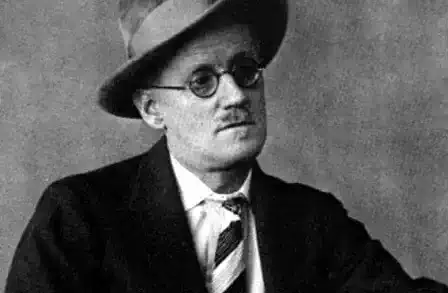
James Joyce
A Flower Given to My Daughter
Frail the white rose and frail are
Her hands that gave
Whose soul is sere and paler
Than time's wan wave.
Rosefrail and fair -- yet frailest
A wonder wild
In gentle eyes thou veilest,
My blueveined child.
Read more →
298
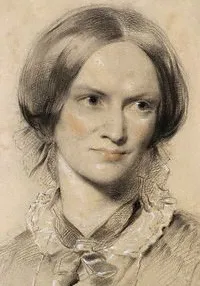
Charlotte Brontë
The Wood
BUT two miles more, and then we rest !
Well, there is still an hour of day,
And long the brightness of the West
Will light us on our devious way;
Sit then, awhile, here in this wood
So
total is the solitude,
We safely may delay.
These massive roots afford a seat,
Which seems for weary travellers made.
There rest. The air is soft and sweet
In this sequestered forest glade,
And there are scents of flowers around,
The evening dew draws from the ground;
How soothingly they spread !
Yes; I was tired, but not at heart;
Nothat
beats full of sweet content,
For now I have my natural part
Of action with adventure blent;
Cast forth on the wide vorld with thee,
And all my once waste energy
To weighty purpose bent.
Yetsay'st
thou, spies around us roam,
Our aims are termed conspiracy ?
Haply, no more our English home
An anchorage for us may be ?
That there is risk our mutual blood
May redden in some lonely wood
The knife of treachery ?
Say'st thouthat
where we lodge each night,
In each lone farm, or lonelier hall
Of Norman Peerere
morning light
Suspicion must as duly fall,
As day returnssuch
vigilance
Presides and watches over France,
Such rigour governs all ?
I fear not, William; dost thou fear ?
So that the knife does not divide,
It may be ever hovering near:
I could not tremble at thy side,
And strenuous lovelike
mine for thee
Is
buckler strong, 'gainst treachery,
And turns its stab aside.
I am resolved that thou shalt learn
To trust my strength as I trust thine;
I am resolved our souls shall burn,
With equal, steady, mingling shine;
Part of the field is conquered now,
Our lives in the same channel flow,
Along the selfsame
line;
And while no groaning storm is heard,
Thou seem'st content it should be so,
But soon as comes a warning word
Of dangerstraight
thine anxious brow
Bends over me a mournful shade,
As doubting if my powers are made
To ford the floods of woe.
Know, then it is my spirit swells,
And drinks, with eager joy, the air
Of freedomwhere
at last it dwells,
Chartered, a common task to share
With thee, and then it stirs alert,
And pants to learn what menaced hurt
Demands for thee its care.
Remember, I have crossed the deep,
And stood with thee on deck, to gaze
On waves that rose in threatening heap,
While stagnant lay a heavy haze,
Dimly confusing sea with sky,
And baffling, even, the pilot's eye,
Intent to thread the maze
Of rocks, on Bretagne's dangerous coast,
And find a way to steer our band
To the one point obscure, which lost,
Flung us, as victims, on the strand;
All,
elsewhere, gleamed the Gallic sword,
And not a wherry could be moored
Along the guarded land.
I feared not then
I
fear not now;
The interest of each stirring scene
Wakes a new sense, a welcome glow,
In every nerve and bounding vein;
Alike on turbid Channel sea,
Or in still wood of Normandy,
I feel as born again.
The rain descended that wild morn
When, anchoring in the cove at last,
Our band, all weary and forlorn,
Ashore, like waveworn
sailors, cast
Sought
for a sheltering roof in vain,
And scarce could scanty food obtain
To break their morning fast.
Thou didst thy crust with me divide,
Thou didst thy cloak around me fold;
And, sitting silent by thy side,
I ate the bread in peace untold:
Given kindly from thy hand, 'twas sweet
As costly fare or princely treat
On royal plate of gold.
Sharp blew the sleet upon my face,
And, rising wild, the gusty wind
Drove on those thundering waves apace,
Our crew so late had left behind;
But, spite of frozen shower and storm,
So close to thee, my heart beat warm,
And tranquil slept my mind.
So nownor
footsore
nor opprest
With walking all this August day,
I taste a heaven in this brief rest,
This gipsyhalt
beside the way.
England's wild flowers are fair to view,
Like balm is England's summer dew,
Like gold her sunset ray.
But the white violets, growing here,
Are sweeter than I yet have seen,
And ne'er did dew so pure and clear
Distil on forest mosses green,
As now, called forth by summer heat,
Perfumes our cool and fresh retreat
These fragrant limes between.
That sunset ! Look beneath the boughs,
Over the copsebeyond
the hills;
How soft, yet deep and warm it glows,
And heaven with rich suffusion fills;
With hues where still the opal's tint,
Its gleam of poisoned fire is blent,
Where flame through azure thrills !
Depart we nowfor
fast will fade
That solemn splendour of decline,
And deep must be the aftershade
As stars alone tonight
will shine;
No moon is destinedpaleto
gaze
On such a day's vast Phoenix blaze,
A day in fires decayed !
Therehandinhand
we tread again
The mazes of this varying wood,
And soon, amid a cultured plain,
Girt in with fertile solitude,
We shall our restingplace
descry,
Marked by one rooftree,
towering high
Above a farmstead
rude.
Refreshed, erelong, with rustic fare,
We'll seek a couch of dreamless ease;
Courage will guard thy heart from fear,
And Love give mine divinest peace:
Tomorrow
brings more dangerous toil,
And through its conflict and turmoil
We'll pass, as God shall please.
Read more →
299
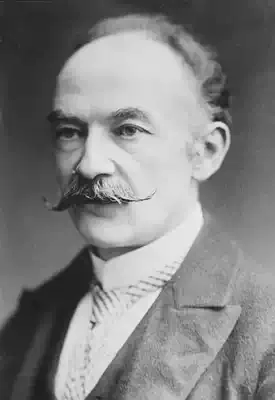
Thomas Hardy
At A Bridal
WHEN you paced forth, to wait maternity,
A dream of other offspring held my mind,
Compounded of us twain as Love designed;
Rare forms, that corporate now will never be!
Should I, too, wed as slave to Mode's decree,
And each thus found apart, of false desire,
A stolid line, whom no high aims will fire
As had fired ours could ever have mingled we;
And, grieved that lives so matched should miscompose,
Each mourn the double waste; and question dare
To the Great Dame whence incarnation flows,
Why those high-purposed children never were:
What will she answer? That she does not care
If the race all such sovereign types unknows.
Read more →
298
Emily Dickinson
Renunciation
Renunciation -- is a piercing Virtue --
The letting go
A Presence -- for an Expectation --
Not now --
The putting out of Eyes --
Just Sunrise --
Lest Day -Day's
Great Progenitor --
Outvie
Renunciation -- is the Choosing
Against itself --
Itself to justify
Unto itself --
When larger function --
Make that appear --
Smaller -- that Covered Vision -- Here --
Read more →
299
Carl Sandburg
I Am The People, The Mob
I Am the people--the mob--the crowd--the mass.
Do you know that all the great work of the world is
done through me?
I am the workingman, the inventor, the maker of the
world's food and clothes.
I am the audience that witnesses history. The Napoleons
come from me and the Lincolns. They die. And
then I send forth more Napoleons and Lincolns.
I am the seed ground. I am a prairie that will stand
for much plowing. Terrible storms pass over me.
I forget. The best of me is sucked out and wasted.
I forget. Everything but Death comes to me and
makes me work and give up what I have. And I
forget.
Sometimes I growl, shake myself and spatter a few red
drops for history to remember. Then--I forget.
When I, the People, learn to remember, when I, the
People, use the lessons of yesterday and no longer
forget who robbed me last year, who played me for
a fool--then there will be no speaker in all the world
say the name: 'The People,' with any fleck of a
sneer in his voice or any far-off smile of derision.
The mob--the crowd--the mass--will arrive then.
Read more →
296
Emily Dickinson
I meant to have but modest needs
I meant to have but modest needs-
Such as Content-and Heaven-
Within my income-these could lie
And Life and I-keep even-
But since the last-included both-
It would suffice my Prayer
But just for One-to stipulate-
And Grace would grant the Pair-
And so-upon this wise-I prayed-
Great Spirit-Give to me
A Heaven not so large as Yours,
But large enough-for me-
A Smile suffused Jehovah's face-
The Cherubim-withdrew-
Grave Saints stole out to look at me-
And showed their dimples-too-
I left the Place, with all my might-
I threw my Prayer away-
The Quiet Ages picked it up-
And Judgment-twinkled-too-
Tat one so honest-be extant-
It take the Tale for true-
That "Whatsoever Ye shall ask-
Itself be given You"-
But I, grown shrewder-scan the Skies
With a suspicious Air-
As Children-swindled for the first
All Swindlers-be-infer-
Read more →
295
Henry Wadsworth Longfellow
The Haunted Chamber. (Birds Of Passage. Flight The Third)
Each heart has its haunted chamber,
Where the silent moonlight falls!
On the floor are mysterious footsteps,
There are whispers along the walls!
And mine at times is haunted
By phantoms of the Past
As motionless as shadows
By the silent moonlight cast.
A form sits by the window,
That is not seen by day,
For as soon as the dawn approaches
It vanishes away.
It sits there in the moonlight
Itself as pale and still,
And points with its airy finger
Across the window-sill.
Without before the window,
There stands a gloomy pine,
Whose boughs wave upward and downward
As wave these thoughts of mine.
And underneath its branches
Is the grave of a little child,
Who died upon life's threshold,
And never wept nor smiled.
What are ye, O pallid phantoms!
That haunt my troubled brain?
That vanish when day approaches,
And at night return again?
What are ye, O pallid phantoms!
But the statues without breath,
That stand on the bridge overarching
The silent river of death?
Read more →
297