
Soul

Robert W. Service
The Walkers
(He speaks.)
Walking, walking, oh, the joy of walking!
Swinging down the tawny lanes with head held high;
Striding up the green hills, through the heather stalking,
Swishing through the woodlands where the brown leaves lie;
Marveling at all things -- windmills gaily turning,
Apples for the cider-press, ruby-hued and gold;
Tails of rabbits twinkling, scarlet berries burning,
Wedge of geese high-flying in the sky's clear cold,
Light in little windows, field and furrow darkling;
Home again returning, hungry as a hawk;
Whistling up the garden, ruddy-cheeked and sparkling,
Oh, but I am happy as I walk, walk, walk!
(She speaks.)
Walking, walking, oh, the curse of walking!
Slouching round the grim square, shuffling up the street,
Slinking down the by-way, all my graces hawking,
Offering my body to each man I meet.
Peering in the gin-shop where the lads are drinking,
Trying to look gay-like, crazy with the blues;
Halting in a doorway, shuddering and shrinking
(Oh, my draggled feather and my thin, wet shoes).
Here's a drunken drover: "Hullo, there, old dearie!"
No, he only curses, can't be got to talk. . . .
On and on till daylight, famished, wet and weary,
God in Heaven help me as I walk, walk, walk!
Read more →
297
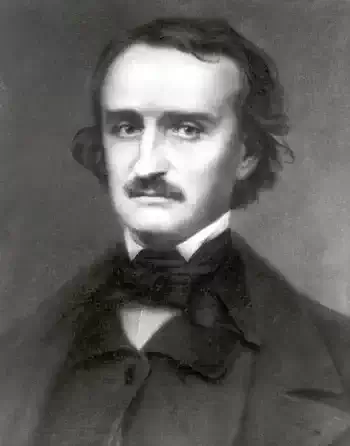
Edgar Allan Poe
Tamerlane
Kind solace in a dying hour!
Such, father, is not (now) my theme
I will not madly deem that power
Of Earth may shrive me of the sin
Unearthly pride hath revell'd in
I have no time to dote or dream:
You call it hope- that fire of fire!
It is but agony of desire:
If I can hope- Oh God! I can
Its fount is holier- more divine
I
would not call thee fool, old man,
But such is not a gift of thine.
Know thou the secret of a spirit
Bow'd from its wild pride into shame.
O yearning heart! I did inherit
Thy withering portion with the fame,
The searing glory which hath shone
Amid the jewels of my throne,
Halo of Hell! and with a pain
Not Hell shall make me fear againO
craving heart, for the lost flowers
And sunshine of my summer hours!
The undying voice of that dead time,
With its interminable chime,
Rings, in the spirit of a spell,
Upon thy emptiness- a knell.
I have not always been as now:
The fever'd diadem on my brow
I claim'd and won usurpingly
Hath not the same fierce heirdom given
Rome to the Caesar- this to me?
The heritage of a kingly mind,
And a proud spirit which hath striven
Triumphantly with human kind.
On mountain soil I first drew life:
The mists of the Taglay have shed
Nightly their dews upon my head,
And, I believe, the winged strife
And tumult of the headlong air
Have nestled in my very hair.
So late from Heaven- that dew- it fell
(Mid dreams of an unholy night)
Upon me with the touch of Hell,
While the red flashing of the light
From clouds that hung, like banners, o'er,
Appeared to my half-closing eye
The pageantry of monarchy,
And the deep trumpet-thunder's roar
Came hurriedly upon me, telling
Of human battle, where my voice,
My own voice, silly child!- was swelling
(O! how my spirit would rejoice,
And leap within me at the cry)
The battle-cry of Victory!
The rain came down upon my head
Unshelter'd- and the heavy wind
Rendered me mad and deaf and blind.
It was but man, I thought, who shed
Laurels upon me: and the rush
The
torrent of the chilly air
Gurgled within my ear the crush
Of empires- with the captive's prayer
The
hum of suitors- and the tone
Of flattery 'round a sovereign's throne.
My passions, from that hapless hour,
Usurp'd a tyranny which men
Have deem'd, since I have reach'd to power,
My innate nature- be it so:
But father, there liv'd one who, then,
Then- in my boyhood- when their fire
Burn'd with a still intenser glow,
(For passion must, with youth, expire)
E'en then who knew this iron heart
In woman's weakness had a part.
I have no words- alas!- to tell
The loveliness of loving well!
Nor would I now attempt to trace
The more than beauty of a face
Whose lineaments, upon my mind,
Are- shadows on th' unstable wind:
Thus I remember having dwelt
Some page of early lore upon,
With loitering eye, till I have felt
The letters- with their meaning- melt
To fantasies- with none.
O, she was worthy of all love!
Love- as in infancy was mine'
Twas such as angel minds above
Might envy; her young heart the shrine
On which my every hope and thought
Were incense- then a goodly gift,
For they were childish and upright
Pure-
as her young example taught:
Why did I leave it, and, adrift,
Trust to the fire within, for light?
We grew in age- and love- together,
Roaming the forest, and the wild;
My breast her shield in wintry weather
And when the friendly sunshine smil'd,
And she would mark the opening skies,
I saw no Heaven- but in her eyes.
Young Love's first lesson is- the heart:
For 'mid that sunshine, and those smiles,
When, from our little cares apart,
And laughing at her girlish wiles,
I'd throw me on her throbbing breast,
And pour my spirit out in tears
There
was no need to speak the rest
No need to quiet any fears
Of her- who ask'd no reason why,
But turn'd on me her quiet eye!
Yet more than worthy of the love
My spirit struggled with, and strove,
When, on the mountain peak, alone,
Ambition lent it a new tone
I
had no being- but in thee:
The world, and all it did contain
In the earth- the air- the sea
Its
joy- its little lot of pain
That was new pleasure- the ideal,
Dim vanities of dreams by night
And dimmer nothings which were real(
Shadows- and a more shadowy light!)
Parted upon their misty wings,
And, so, confusedly, became
Thine image, and- a name- a name!
Two separate- yet most intimate things.
I was ambitious- have you known
The passion, father? You have not:
A cottager, I mark'd a throne
Of half the world as all my own,
And murmur'd at such lowly lot
But,
just like any other dream,
Upon the vapour of the dew
My own had past, did not the beam
Of beauty which did while it thro'
The minute- the hour- the day- oppress
My mind with double loveliness.
We walk'd together on the crown
Of a high mountain which look'd down
Afar from its proud natural towers
Of rock and forest, on the hills
The dwindled hills! begirt with bowers,
And shouting with a thousand rills.
I spoke to her of power and pride,
But mystically- in such guise
That she might deem it nought beside
The moment's converse; in her eyes
I read, perhaps too carelessly
A
mingled feeling with my own
The
flush on her bright cheek, to me
Seem'd to become a queenly throne
Too well that I should let it be
Light in the wilderness alone.
I wrapp'd myself in grandeur then,
And donn'd a visionary crown
Yet
it was not that Fantasy
Had thrown her mantle over me
But that, among the rabble- men,
Lion ambition is chained down
And
crouches to a keeper's hand
Not
so in deserts where the grand
The
wild- the terrible conspire
With their own breath to fan his fire.
Look 'round thee now on Samarcand!
Is not she queen of Earth? her pride
Above all cities? in her hand
Their destinies? in all beside
Of glory which the world hath known
Stands she not nobly and alone?
Falling- her veriest stepping-stone
Shall form the pedestal of a throne
And
who her sovereign? Timour- he
Whom the astonished people saw
Striding o'er empires haughtily
A diadem'd outlaw!
O, human love! thou spirit given
On Earth, of all we hope in Heaven!
Which fall'st into the soul like rain
Upon the Siroc-wither'd plain,
And, failing in thy power to bless,
But leav'st the heart a wilderness!
Idea! which bindest life around
With music of so strange a sound,
And beauty of so wild a birth
Farewell!
for I have won the Earth.
When Hope, the eagle that tower'd, could see
No cliff beyond him in the sky,
His pinions were bent droopingly
And homeward turn'd his soften'd eye.
'Twas sunset: when the sun will part
There comes a sullenness of heart
To him who still would look upon
The glory of the summer sun.
That soul will hate the ev'ning mist,
So often lovely, and will list
To the sound of the coming darkness (known
To those whose spirits hearken) as one
Who, in a dream of night, would fly
But cannot from a danger nigh.
What tho' the moon- the white moon
Shed all the splendour of her noon,
Her smile is chilly, and her beam,
In that time of dreariness, will seem
(So like you gather in your breath)
A portrait taken after death.
And boyhood is a summer sun
Whose waning is the dreariest one
For
all we live to know is known,
And all we seek to keep hath flown
Let
life, then, as the day-flower, fall
With the noon-day beauty- which is all.
I reach'd my home- my home no more
For all had flown who made it so.
I pass'd from out its mossy door,
And, tho' my tread was soft and low,
A voice came from the threshold stone
Of one whom I had earlier known
O, I defy thee, Hell, to show
On beds of fire that burn below,
A humbler heart- a deeper woe.
Father, I firmly do believe
I
know- for Death, who comes for me
From regions of the blest afar,
Where there is nothing to deceive,
Hath left his iron gate ajar,
And rays of truth you cannot see
Are flashing thro' Eternity
I do believe that Eblis hath
A snare in every human path
Else
how, when in the holy grove
I wandered of the idol, Love,
Who daily scents his snowy wings
With incense of burnt offerings
From the most unpolluted things,
Whose pleasant bowers are yet so riven
Above with trellis'd rays from Heaven,
No mote may shun- no tiniest fly
The lightning of his eagle eye
How
was it that Ambition crept,
Unseen, amid the revels there,
Till growing bold, he laughed and leapt
In the tangles of Love's very hair?
Read more →
295
John Donne
Hym To God, My God In My Sickness
Since I am coming to that holy room,
Where, with thy choir of saints for evermore,
I shall be made thy music; as I come
I tune the instrument here at the door,
And what I must do then, think here before.
Whilst my physicians by their love are grown
Cosmographers, and I their map, who lie
Flat on this bed, that by them may be shown
That this is my south-west discovery,
[lang l]Per fretum febris[lang e], by these straits to die,
pmdv3 n='33-11'> I joy, that in these straits I see my west;
For, though their currents yield return to none,
What shall my west hurt me? As west and east
In all flat maps (and I am one) are one,
So death doth touch the resurrection.
Is the Pacific Sea my home? Or are
The eastern riches? Is Jerusalem?
Anyan, and Magellan, and Gibraltar,
All straits, and none but straits, are ways to them,
Whether where Japhet dwelt, or Cham, or Shem.
We think that Paradise and Calvary,
Christ's cross, and Adam's tree, stood in one place;
Look, Lord, and find both Adams met in me;
As the first Adam's sweat surrounds my face,
May the last Adam's blood my soul embrace.
So, in his purple wrapp'd, receive me, Lord;
By these his thorns, give me his other crown;
And as to others' souls I preach'd thy word,
Be this my text, my sermon to mine own:
'Therefore that he may raise, the Lord throws down.'
Read more →
295

William Butler Yeats
His Confidence
Undying love to buy
I wrote upon
The corners of this eye
All wrongs done.
What payment were enough
For undying love?
I broke my heart in two
So hard I struck.
What matter? for I know
That out of rock,
Out of a desolate source,
Love leaps upon its course.
Read more →
297

Henry Wadsworth Longfellow
Tales Of A Wayside Inn : Part 1. Interlude V.
A strain of music closed the tale,
A low, monotonous, funeral wail,
That with its cadence, wild and sweet,
Made the long Saga more complete.
'Thank God,' the Theologian said,
'The reign of violence is dead,
Or dying surely from the world;
While Love triumphant reigns instead,
And in a brighter sky o'erhead
His blessed banners are unfurled.
And most of all thank God for this:
The war and waste of clashing creeds
Now end in words, and not in deeds,
And no one suffers loss, or bleeds,
For thoughts that men call heresies.
'I stand without here in the porch,
I hear the bell's melodious din,
I hear the organ peal within,
I hear the prayer, with words that scorch
Like sparks from an inverted torch,
I hear the sermon upon sin,
With threatenings of the last account.
And all, translated in the air,
Reach me but as our dear Lord's Prayer,
And as the Sermon on the Mount.
'Must it be Calvin, and not Christ?
Must it be Athanasian creeds,
Or holy water, books, and beads?
Must struggling souls remain content
With councils and decrees of Trent?
And can it be enough for these
The Christian Church the year embalms
With evergreens and boughs of palms,
And fills the air with litanies?
'I know that yonder Pharisee
Thanks God that he is not like me;
In my humiliation dressed,
I only stand and beat my breast,
And pray for human charity.
'Not to one church alone, but seven,
The voice prophetic spake from heaven;
And unto each the promise came,
Diversified, but still the same;
For him that overcometh are
The new name written on the stone,
The raiment white, the crown, the throne,
And I will give him the Morning Star!
'Ah! to how many Faith has been
No evidence of things unseen,
But a dim shadow, that recasts
The creed of the Phantasiasts,
For whom no Man of Sorrows died,
For whom the Tragedy Divine
Was but a symbol and a sign,
And Christ a phantom crucified!
'For others a diviner creed
Is living in the life they lead.
The passing of their beautiful feet
Blesses the pavement of the street
And all their looks and words repeat
Old Fuller's saying, wise and sweet,
Not as a vulture, but a dove,
The Holy Ghost came from above.
'And this brings back to me a tale
So sad the hearer well may quail,
And question if such things can be;
Yet in the chronicles of Spain
Down the dark pages runs this stain,
And naught can wash them white again,
So fearful is the tragedy.'
Read more →
296
William Butler Yeats
The Living Beauty
I BADE, because the wick and oil are spent
And frozen are the channels of the blood,
My discontented heart to draw content
From beauty that is cast out of a mould
In bronze, or that in dazzling marble appears,
Appears, but when wc have gone is gone again,
Being more indifferent to our solitude
Than 'twere an apparition. O heart, we are old;
The living beauty is for younger men:
We cannot pay its rribute of wild tears.
Read more →
297

Henry Lawson
Old North Sydney
They're shifting old North Sydney—
Perhaps ’tis just as well—
They’re carting off the houses
Where the old folks used to dwell.
Where only ghosts inhabit
They lay the old shops low;
But the Spirit of North Sydney,
It vanished long ago.
The Spirit of North Sydney,
The good old time and style,
It camped, maybe, at Crow’s Nest,
But only for a while.
It left about the season,
Or at the time, perhaps,
When old Inspector Cotter
Transferred his jokes and traps.
A brand new crowd is thronging
The brand new streets aglow
Where the Spirit of North Sydney
Would gossip long ago.
They will not know to-morrow—
Tho’ ’twere but yesterday—
Exactly how McMahon’s Point
And its ferry used to lay.
The good old friendly spirit
Its sorrows would unfold,
When householders were neighbours
And shop-keeping was old;
But now we’re busy strangers,
Our feelings we restrain—
The Spirit of North Sydney
Shall never come again!
Read more →
296

Ella Wheeler Wilcox
The Old Moon In The New Moon's Arms
The beautiful and slender young New Moon,
In trailing robes of pink and palest blue,
Swept close to Venus, and breathed low: 'A boon,
A precious boon, I ask, dear friend, of you.'
'O queen of light and beauty, you have known
The pangs of love - its passions and alarms;
Then grant me this one favour, let my own My
lost Old Moon be once more in my arms.'
Swift thro' the vapours and the golden mist The
Full Moon's shadowy shape shone on the night,
The New Moon reached out clasping arms and kissed
Her phantom lover in the whole world's sight.
Read more →
295
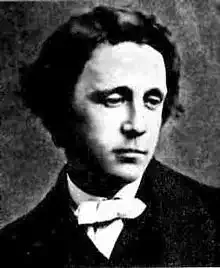
Lewis Carroll
Bessie's Song To Her Doll
Matilda Jane, you never look
At any toy or picturebook.
I show you pretty things in vain
You must be blind, Matilda Jane!
I ask you riddles, tell you tales,
But all our conversation fails.
You never answer me again
I fear you're dumb, Matilda Jane!
Matilda darling, when I call,
You never seem to hear at all.
I shout with all my might and main
But you're so deaf, Matilda Jane!
Matilda Jane, you needn't mind,
For, though you're deaf and dumb and blind,
There's some one loves you, it is plain
And that is me, Matilda Jane!
Read more →
296
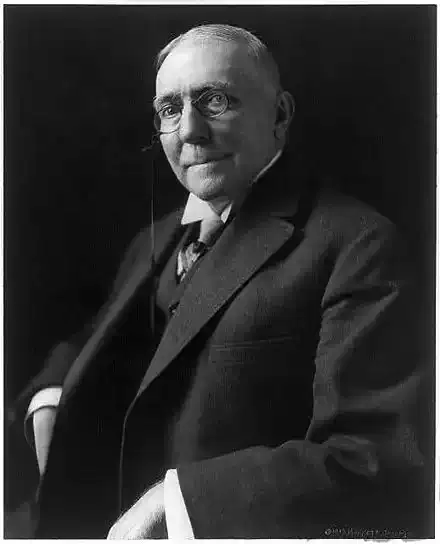
James Whitcomb Riley
A Worn-Out Pencil
Welladay!
Here I lay
You at rest--all worn away,
O my pencil, to the tip
Of our old companionship!
Memory
Sighs to see
What you are, and used to be,
Looking backward to the time
When you wrote your earliest rhyme!--
When I sat
Filing at
Your first point, and dreaming that
Your initial song should be
Worthy of posterity.
With regret
I forget
If the song be living yet,
Yet remember, vaguely now,
It was honest, anyhow.
You have brought
Me a thought--
Truer yet was never taught,--
That the silent song is best,
And the unsung worthiest.
So if I,
When I die,
May as uncomplainingly
Drop aside as now you do,
Write of me, as I of you:--
Here lies one
Who begun
Life a-singing, heard of none;
And he died, satisfied,
With his dead songs by his side.
Read more →
296

Emily Dickinson
Did Our Best Moment last
Did Our Best Moment last'
Twould supersede the Heaven-
A few-and they by Risk-procure-
So this Sort-are not given-
Except as stimulants-in
Cases of Despair-
Or Stupor-The Reserve-
These Heavenly Moments are-
A Grant of the Divine-
That Certain as it ComesWithdraws-
and leaves the dazzled Soul
In her unfurnished Rooms
Read more →
295
Henry Wadsworth Longfellow
The Golden Legend: V. A Covered Bridge At Lucerne
_Prince Henry_. God's blessing on the architects who build
The bridges o'er swift rivers and abysses
Before impassable to human feet,
No less than on the builders of cathedrals,
Whose massive walls are bridges thrown across
The dark and terrible abyss of Death.
Well has the name of Pontifex been given
Unto the Church's head, as the chief builder
And architect of the invisible bridge
That leads from earth to heaven.
_Elsie_ How dark it grows!
What are these paintings on the walls around us?
_Prince Henry_ The Dance Macaber!
_Elsie_ What?
_Prince Henry_ The Dance of Death!
All that go to and fro must look upon it,
Mindful of what they shall be, while beneath,
Among the wooden piles, the turbulent river
Rushes, impetuous as the river of life,
With dimpling eddies, ever green and bright,
Save where the shadow of this bridge falls on it.
_Elsie._ O, yes! I see it now!
_Prince Henry_ The grim musician
Leads all men through the mazes of that dance,
To different sounds in different measures moving;
Sometimes he plays a lute, sometimes a drum,
To tempt or terrify.
_Elsie_ What is this picture?
_Prince Henry_ It is a young man singing to a nun,
Who kneels at her devotions, but in kneeling
Turns round to look at him, and Death, meanwhile,
Is putting out the candles on the altar!
_Elsie_ Ah, what a pity 't is that she should listen
to such songs, when in her orisons
She might have heard in heaven the angels singing!
_Prince Henry_ Here he has stolen a jester's cap and bells,
And dances with the Queen.
_Elsie_ A foolish jest!
_Prince Henry_ And here the heart of the new-wedded wife,
Coming from church with her beloved lord,
He startles with the rattle of his drum.
_Elsie_ Ah, that is sad! And yet perhaps 't is best
That she should die, with all the sunshine on her,
And all the benedictions of the morning,
Before this affluence of golden light
Shall fade into a cold and clouded gray,
Then into darkness!
_Prince Henry_ Under it is written,
'Nothing but death shall separate thee and me!'
_Elsie._ And what is this, that follows close upon it?
_Prince Henry_ Death, playing on a ducimer. Behind him,
A poor old woman, with a rosary,
Follows the sound, and seems to wish her feet
Were swifter to o'ertake him. Underneath,
The inscription reads, 'Better is Death than Life.'
_Elsie._ Better is Death than Life! Ah yes! to thousands
Death plays upon a dulcimer, and sings
That song of consolation, till the air
Rings with it, and they cannot choose but follow
Whither he leads. And not the old alone,
But the young also hear it, and are still.
_Prince Henry_ Yes, in their sadder moments. 'T is the sound
Of their own hearts they hear, half full of tears,
Which are like crystal cups, half filled with water.
Responding to the pressure of a finger
With music sweet and low and melancholy.
Let us go forward, and no longer stay
In this great picture-gallery of Death!
I hate it! ay, the very thought of it!
_Elsie._ Why is it hateful to you?
_Prince Henry._ For the reason
That life, and all that speaks of life, is lovely,
And death, and all that speaks of death, is hateful.
_Elsie._ The grave is but a covered bridge,
leading from light to light, through a brief darkness!
_Prince Henry (emerging from the bridge)._ I breathe again more
freely! Ah, how pleasant
To come once more into the light of day,
Out of that shadow of death! To hear again
The hoof-beats of our horses on firm ground,
And not upon those hollow planks, resounding
With a sepulchral echo, like the clods
On coffins in a churchyard! Yonder lies
The Lake of the Four Forest-Towns, apparelled
In light, and lingering, like a village maiden,
Hid in the bosom of her native mountains,
Then pouring all her life into another's,
Changing her name and being! Overhead,
Shaking his cloudy tresses loose in air,
Rises Pilatus, with his windy pines.
(_They pass on_.)
* * * * *
THE DEVIL'S BRIDGE.
* * * * *
PRINCE HENRY _and_ ELSIE _crossing, with attendants._
_Guide._ This bridge is called the Devil's Bridge.
With a single arch, from ridge to ridge,
It leaps across the terrible chasm
Yawning beneath us, black and deep,
As if, in some convulsive spasm,
the summits of the hills had cracked,
and made a road for the cataract,
That raves and rages down the steep!
_Lucifer (under the bridge)._ Ha! ha!
_Guide._ Never any bridge but this
Could stand across the wild abyss;
All the rest, of wood or stone,
By the Devil's hand were overthrown.
He toppled crags from the precipice,
And whatsoe'er was built by day
In the night was swept away;
None could stand but this alone.
_Lucifer (under the bridge)._ Ha! ha!
_Guide._ I showed you in the valley a boulder
Marked with the imprint of his shoulder;
As he was bearing it up this way,
A peasant, passing, cried, 'Herr Je!'
And the Devil dropped it in his fright,
And vanished suddenly out of sight!
_Lucifer (under the bridge)._ Ha! ha!
_Guide._ Abbot Giraldus of Einsiedel,
For pilgrims on their way to Rome,
Built this at last, with a single arch,
Under which, on its endless march,
Runs the river, white with foam,
Like a thread through the eye of a needle.
And the Devil promised to let it stand,
Under compact and condition
That the first living thing which crossed
Should be surrendered into his hand,
And be beyond redemption lost.
_Lucifer (under the bridge)._ Ha! ha! perdition!
_Guide._ At length, the bridge being all completed,
The Abbot, standing at its head,
Threw across it a loaf of bread,
Which a hungry dog sprang after,
And the rocks reechoed with peals of laughter
To see the Devil thus defeated!
(_They pass on_)
_Lucifer_ (_under the bridge_) Ha! ha! defeated!
For journeys and for crimes like this
To let the bridge stand o'er the abyss!
* * * * *
THE ST. GOTHARD PASS.
* * * * *
_Prince Henry._ This is the highest point. Two ways the rivers
Leap down to different seas, and as they roll
Grow deep and still, and their majestic presence
Becomes a benefaction to the towns
They visit, wandering silently among them,
Like patriarchs old among their shining tents.
_Elsie._ How bleak and bare it is! Nothing but mosses
Grow on these rocks.
_Prince Henry._ Yet are they not forgotten;
Beneficent Nature sends the mists to feed them.
_Elsie._ See yonder little cloud, that, borne aloft
So tenderly by the wind, floats fast away
Over the snowy peaks! It seems to me
The body of St. Catherine, borne by angels!
_Prince Henry._ Thou art St. Catherine, and invisible angels
Bear thee across these chasms and precipices,
Lest thou shouldst dash thy feet against a stone!
_Elsie._ Would I were borne unto my grave, as she was,
Upon angelic shoulders! Even now
I Seem uplifted by them, light as air!
What sound is that?
_Prince Henry_. The tumbling avalanches!
_Elsie_ How awful, yet how beautiful!
_Prince Henry_. These are
The voices of the mountains! Thus they ope
Their snowy lips, and speak unto each other,
In the primeval language, lost to man.
_Elsie_. What land is this that spreads itself beneath us?
_Prince Henry_ Italy! Italy!
_Elsie_ Land of the Madonna!
How beautiful it is! It seems a garden
Of Paradise!
_Prince Henry_. Nay, of Gethsemane
To thee and me, of passion and of prayer!
Yet once of Paradise. Long years ago
I wandered as a youth among its bowers,
And never from my heart has faded quite
Its memory, that, like a summer sunset,
Encircles with a ring of purple light
All the horizon of my youth.
_Guide_. O friends!
The days are short, the way before us long;
We must not linger, if we think to reach
The inn at Belinzona before vespers!
(_They pass on_.)
* * * * *
AT THE FOOT OF THE ALPS.
* * * * *
_A halt under the trees at noon_.
_Prince Henry_ Here let us pause a moment in the trembling
Shadow and sunshine of the roadside trees,
And, our tired horses in a group assembling,
Inhale long draughts of this delicious breeze
Our fleeter steeds have distanced our attendants;
They lag behind us with a slower pace;
We will await them under the green pendants
Of the great willows in this shady place.
Ho, Barbarossa! how thy mottled haunches
Sweat with this canter over hill and glade!
Stand still, and let these overhanging branches
Fan thy hot sides and comfort thee with shade!
_Elsie._ What a delightful landscape spreads before us,
Marked with a whitewashed cottage here and there!
And, in luxuriant garlands drooping o'er us,
Blossoms of grapevines scent the sunny air.
_Prince Henry._ Hark! what sweet sounds are those, whose accents holy
Fill the warm noon with music sad and sweet!
_Elsie._ It is a band of pilgrims, moving slowly
On their long journey, with uncovered feet.
_Pilgrims (chaunting the Hymn of St. Hildebert)_
Me receptet Sion illa,
Sion David, urbs tranquilla,
Cujus faber auctor lucis,
Cujus portae lignum crucis,
Cujus claves lingua Petri,
Cujus cives semper laeti,
Cujus muri lapis vivus,
Cujus custos Rex festivus!
_Lucifer (as a Friar in the procession)._ Here am I, too, in the
pious band,
In the garb of a barefooted Carmelite dressed!
The soles of my feet are as hard and tanned
As the conscience of old Pope Hildebrand,
The Holy Satan, who made the wives
Of the bishops lead such shameful lives.
All day long I beat my breast,
And chaunt with a most particular zest
The Latin hymns, which I understand
Quite as well, I think, as the rest.
And at night such lodging in barns and sheds,
Such a hurly-burly in country inns,
Such a clatter of tongues in empty heads,
Such a helter-skelter of prayers and sins!
Of all the contrivances of the time
For sowing broadcast the seeds of crime,
There is none so pleasing to me and mine
As a pilgrimage to some far-off shrine!
_Prince Henry._ If from the outward man we judge the inner,
And cleanliness is godliness, I fear
A hopeless reprobate, a hardened sinner,
Must be that Carmelite now passing near.
_Lucifer._ There is my German Prince again,
Thus far on his journey to Salern,
And the lovesick girl, whose heated brain
Is sowing the cloud to reap the rain;
But it's a long road that has no turn!
Let them quietly hold their way,
I have also a part in the play.
But first I must act to my heart's content
This mummery and this merriment,
And drive this motley flock of sheep
Into the fold, where drink and sleep
The jolly old friars of Benevent.
Of a truth, it often provokes me to laugh
To see these beggars hobble along,
Lamed and maimed, and fed upon chaff,
Chanting their wonderful piff and paff,
And, to make up for not understanding the song,
Singing it fiercely, and wild, and strong!
Were it not for my magic garters and staff,
And the goblets of goodly wine I quaff,
And the mischief I make in the idle throng,
I should not continue the business long.
_Pilgrims (chaunting)._ In hac uibe, lux solennis,
Ver aeternum, pax perennis,
In hac odor implens caelos,
In hac semper festum melos!
_Prince Henry._ Do you observe that monk among the train,
Who pours from his great throat the roaring bass,
As a cathedral spout pours out the rain,
And this way turns his rubicund, round face?
_Elsie._ It is the same who, on the Strasburg square,
Preached to the people in the open air.
_Prince Henry._ And he has crossed o'er mountain, field, and fell,
On that good steed, that seems to bear him well,
The hackney of the Friars of Orders Gray,
His own stout legs! He, too, was in the play,
Both as King Herod and Ben Israel.
Good morrow, Friar!
_Friar Cuthbert._ Good morrow, noble Sir!
_Prince Henry._ I speak in German, for, unless I err,
You are a German.
_Friar Cuthbert._ I cannot gainsay you.
But by what instinct, or what secret sign,
Meeting me here, do you straightway divine
That northward of the Alps my country lies?
_Prince Henry._ Your accent, like St, Peter's, would betray you,
Did not your yellow beard and your blue eyes,
Moreover, we have seen your face before,
And heard you preach at the Cathedral door
On Easter Sunday, in the Strasburg square
We were among the crowd that gathered there,
And saw you play the Rabbi with great skill,
As if, by leaning o'er so many years
To walk with little children, your own will
Had caught a childish attitude from theirs,
A kind of stooping in its form and gait,
And could no longer stand erect and straight.
Whence come you now?
_Friar Cuthbert._ From the old monastery
Of Hirschau, in the forest; being sent
Upon a pilgrimage to Benevent,
To see the image of the Virgin Mary,
That moves its holy eyes, and sometimes speaks,
And lets the piteous tears run down its cheeks,
To touch the hearts of the impenitent.
_Prince Henry._ O, had I faith, as in the days gone by,
That knew no doubt, and feared no mystery!
_Lucifer (at a distance)._ Ho, Cuthbert! Friar Cuthbert!
_Friar Cuthbert._ Farewell, Prince!
I cannot stay to argue and convince.
_Prince Henry._ This is indeed the blessed Mary's land,
Virgin and Mother of our dear Redeemer!
All hearts are touched and softened at her name;
Alike the bandit, with the bloody hand,
The priest, the prince, the scholar, and the peasant,
The man of deeds, the visionary dreamer,
Pay homage to her as one ever present!
And even as children, who have much offended
A too indulgent father, in great shame,
Penitent, and yet not daring unattended
To go into his presence, at the gate
Speak with their sister, and confiding wait
Till she goes in before and intercedes;
So men, repenting of their evil deeds,
And yet not venturing rashly to draw near
With their requests an angry father's ear,
Offer to her their prayers and their confession,
And she for them in heaven makes intercession.
And if our Faith had given us nothing more
Than this example of all womanhood,
So mild, so merciful, so strong, so good,
So patient, peaceful, loyal, loving, pure,
This were enough to prove it higher and truer
Than all the creeds the world had known before.
_Pilgrims (chaunting afar off)_. Urbs ccelestis, urbs beata,
Supra petram collocata,
Urbs in portu satis tuto
De longinquo te saluto,
Te saluto, te suspiro,
Te affecto, te requiro!
* * * * *
THE INN AT GENOA.
* * * * *
_A terrace overlooking the sea. Night._
_Prince Henry._ It is the sea, it is the sea,
In all its vague immensity,
Fading and darkening in the distance!
Silent, majestical, and slow,
The white ships haunt it to and fro,
With all their ghostly sails unfurled,
As phantoms from another world
Haunt the dim confines of existence!
But ah! how few can comprehend
Their signals, or to what good end
From land to land they come and go!
Upon a sea more vast and dark
The spirits of the dead embark,
All voyaging to unknown coasts.
We wave our farewells from the shore,
And they depart, and come no more,
Or come as phantoms and as ghosts.
Above the darksome sea of death
Looms the great life that is to be,
A land of cloud and mystery,
A dim mirage, with shapes of men
Long dead, and passed beyond our ken.
Awe-struck we gaze, and hold our breath
Till the fair pageant vanisheth,
Leaving us in perplexity,
And doubtful whether it has been
A vision of the world unseen,
Or a bright image of our own
Against the sky in vapors thrown.
_Lucifer (singing from the sea)_. Thou didst not make it, thou
canst not mend it,
But thou hast the power to end it!
The sea is silent, the sea is discreet,
Deep it lies at thy very feet;
There is no confessor like unto Death!
Thou canst not see him, but he is near;
Thou needest not whisper above thy breath,
And he will hear;
He will answer the questions,
The vague surmises and suggestions,
That fill thy soul with doubt and fear!
_Prince Henry_. The fisherman, who lies afloat,
With shadowy sail, in yonder boat,
Is singing softly to the Night!
But do I comprehend aright
The meaning of the words he sung
So sweetly in his native tongue?
Ah, yes! the sea is still and deep.
All things within its bosom sleep!
A single step, and all is o'er;
A plunge, a bubble, and no more;
And thou, dear Elsie, wilt be free
From martyrdom and agony.
_Elsie (coming from her chamber upon the terrace)._
The night is calm and cloudless,
And still as still can be,
And the stars come forth to listen
To the music of the sea.
They gather, and gather, and gather,
Until they crowd the sky,
And listen, in breathless silence,
To the solemn litany.
It begins in rocky caverns,
As a voice that chaunts alone
To the pedals of the organ
In monotonous undertone;
And anon from shelving beaches,
And shallow sands beyond,
In snow-white robes uprising
The ghostly choirs respond.
And sadly and unceasing
The mournful voice sings on,
And the snow-white choirs still answer
Christe eleison!
_Prince Henry._ Angel of God! thy finer sense perceives
Celestial and perpetual harmonies!
Thy purer soul, that trembles and believes,
Hears the archangel's trumpet in the breeze,
And where the forest rolls, or ocean heaves,
Cecilia's organ sounding in the seas,
And tongues of prophets speaking in the leaves.
But I hear discord only and despair,
And whispers as of demons in the air!
* * * * *
AT SEA.
* * * * *
_Il Padrone._ The wind upon our quarter lies,
And on before the freshening gale,
That fills the snow-white lateen sail,
Swiftly our light felucca flies.
Around, the billows burst and foam;
They lift her o'er the sunken rock,
They beat her sides with many a shock,
And then upon their flowing dome
They poise her, like a weathercock!
Between us and the western skies
The hills of Corsica arise;
Eastward, in yonder long, blue line,
The summits of the Apennine,
And southward, and still far away,
Salerno, on its sunny bay.
You cannot see it, where it lies.
_Prince Henry._ Ah, would that never more mine eyes
Might see its towers by night or day!
_Elsie._ Behind us, dark and awfully,
There comes a cloud out of the sea,
That bears the form of a hunted deer,
With hide of brown, and hoofs of black,
And antlers laid upon its back,
And fleeing fast and wild with fear,
As if the hounds were on its track!
_Prince Henry._ Lo! while we gaze, it breaks and falls
In shapeless masses, like the walls
Of a burnt city. Broad and red
The fires of the descending sun
Glare through the windows, and o'erhead,
Athwart the vapors, dense and dun,
Long shafts of silvery light arise,
Like rafters that support the skies!
_Elsie._ See! from its summit the lurid levin
Flashes downward without warning,
As Lucifer, son of the morning,
Fell from the battlements of heaven!
_Il Padrone._ I must entreat you, friends, below!
The angry storm begins to blow,
For the weather changes with the moon.
All this morning, until noon,
We had baffling winds, and sudden flaws
Struck the sea with their cat's-paws.
Only a little hour ago
I was whistling to Saint Antonio
For a capful of wind to fill our sail,
And instead of a breeze he has sent a gale.
Last night I saw St. Elmo's stars,
With their glimmering lanterns, all at play
On the tops of the masts and the tips of the spars,
And I knew we should have foul weather to-day.
Cheerily, my hearties! yo heave ho!
Brail up the mainsail, and let her go
As the winds will and Saint Antonio!
Do you see that Livornese felucca,
That vessel to the windward yonder,
Running with her gunwale under?
I was looking when the wind o'ertook her,
She had all sail set, and the only wonder
Is that at once the strength of the blast
Did not carry away her mast.
She is a galley of the Gran Duca,
That, through the fear of the Algerines,
Convoys those lazy brigantines,
Laden with wine and oil from Lucca.
Now all is ready, high and low;
Blow, blow, good Saint Antonio!
Ha! that is the first dash of the rain,
With a sprinkle of spray above the rails,
Just enough to moisten our sails,
And make them ready for the strain.
See how she leaps, as the blasts o'ertake her,
And speeds away with a bone in her mouth!
Now keep her head toward the south,
And there is no danger of bank or breaker.
With the breeze behind us, on we go;
Not too much, good Saint Antonio!
Read more →
296
Emily Dickinson
One Year ago—jots what?
One Year ago—jots what?
God—spell the word! I—can't—
Was't Grace? Not that—
Was't Glory? That—will do—
Spell slower—Glory—
Such Anniversary shall be—
Sometimes—not often—in Eternity—
When farther Parted, than the Common Woe—
Look—feed upon each other's faces—so—
In doubtful meal, if it be possible
Their Banquet's true—
I tasted—careless—then—
I did not know the Wine
Came once a World—Did you?
Oh, had you told me so—
This Thirst would blister—easier—now—
You said it hurt you—most—
Mine—was an Acorn's Breast—
And could not know how fondness grew
In Shaggier Vest—
Perhaps—I couldn't—
But, had you looked in—
A Giant—eye to eye with you, had been—
No Acorn—then—
So—Twelve months ago—
We breathed—
Then dropped the Air—
Which bore it best?
Was this—the patientest—
Because it was a Child, you know—
And could not value—Air?
If to be "Elder"—mean most pain—
I'm old enough, today, I'm certain—then—
As old as thee—how soon?
One—Birthday more—or Ten?
Let me—choose!
Ah, Sir, None!
Read more →
296
Sarojini Naidu
Transcience
Nay, do not grieve tho' life be full of sadness,
Dawn will not veil her spleandor for your grief,
Nor spring deny their bright, appointed beauty
To lotus blossom and ashoka leaf.
Nay, do not pine, tho' life be dark with trouble,
Time will not pause or tarry on his way;
To-day that seems so long, so strange, so bitter,
Will soon be some forgotten yesterday.
Nay, do not weep; new hopes, new dreams, new faces,
The unspent joy of all the unborn years,
Will prove your heart a traitor to its sorrow,
And make your eyes unfaithful to their tears.
Read more →
297
Emily Dickinson
If He dissolve—then—there is nothing
If He dissolve—then—there is nothing—more—
Eclipse—at Midnight—
It was dark—before—
Sunset—at Easter—
Blindness—on the Dawn—
Faint Star of Bethlehem—
Gone down!
Would but some God—inform Him—
Or it be too late!
Say—that the pulse just lisps—
The Chariots wait—
Say—that a little life—for His—
Is leaking—red—
His little Spaniel—tell Him!
Will He heed?
Read more →
295
James Whitcomb Riley
The Same Old Story
The same old story told again--
The maiden droops her head,
The ripening glow of her crimson cheek
Is answering in her stead.
The pleading tone of a trembling voice
Is telling her the way
He loved her when his heart was young
In Youth's sunshiny day:
The trembling tongue, the longing tone,
Imploringly ask why
They can not be as happy now
As in the days gone by.
And two more hearts, tumultuous
With overflowing joy,
Are dancing to the music
Which that dear, provoking boy
Is twanging on his bowstring,
As, fluttering his wings,
He sends his love-charged arrows
While merrily be sings:
'Ho! ho! my dainty maiden,
It surely can not be
You are thinking you are master
Of your heart, when it is me.'
And another gleaming arrow
Does the little god's behest,
And the dainty little maiden
Falls upon her lover's breast.
'The same old story told again,'
And listened o'er and o'er,
Will still be new, and pleasing, too,
Till 'Time shall be no more.'
Read more →
296
Thomas Moore
Remember Thee!
Remember thee! yes, while there's life in this heart,
It shall never forget thee, all lorn as thou art;
More dear in thy sorrow, thy gloom, and thy showers,
Than the rest of the world in their sunniest hours.
Wert thou all that I wish thee, great, glorious, and free,
First flower of the earth, and first gem of the sea,
I might hail thee with prouder, with happier brow,
But oh! could I love thee more deeply tha now?
No, thy chains as they rankle, thy blood as it runs,
But make thee more painfully dear to thy sons --
Whose hearts, like the young of the desert-bird's nest,
Drink love in each life-drop that flows from thy breast.
Read more →
296
Thomas Hardy
I said to Love
I said to Love,
"It is not now as in old days
When men adored thee and thy ways
All else above;
Named thee the Boy, the Bright, the One
Who spread a heaven beneath the sun,"
I said to Love.
I said to him,
"We now know more of thee than then;
We were but weak in judgment when,
With hearts abrim,
We clamoured thee that thou would'st please
Inflict on us thine agonies,"
I said to him.
I said to Love,
"Thou art not young, thou art not fair,
No elfin darts, no cherub air,
Nor swan, nor dove
Are thine; but features pitiless,
And iron daggers of distress,"
I said to Love.
"Depart then, Love!
Man's race shall perish, threatenest thou,
WIthout thy kindling coupling-vow?
The age to come the man of now
Know nothing of?
We fear not such a threat from thee;
We are too old in apathy!
Mankind shall cease.. -
So let it be,"
I said to Love.
Read more →
294
James Whitcomb Riley
Harlie
Fold the little waxen hands
Lightly. Let your warmest tears
Speak regrets, but never fears,--
Heaven understands!
Let the sad heart, o'er the tomb,
Lift again and burst in bloom
Fragrant with a prayer as sweet
As the lily at your feet.
Bend and kiss the folded eyes--
They are only feigning sleep
While their truant glances peep
Into Paradise.
See, the face, though cold and white,
Holds a hint of some delight
E'en with Death, whose finger-tips
Rest upon the frozen lips.
When, within the years to come,
Vanished echoes live once more--
Pattering footsteps on the floor,
And the sounds of home,--
Let your arms in fancy fold
Little Harlie as of old--
As of old and as he waits
At the City's golden gates.
Read more →
293

Anonymous
Barbara Allen's Cruelty
IN Scarlet town, where I was born,
There was a fair maid dwellin',
Made every youth cry Well-a-way!
Her name was Barbara Allen.
All in the merry month of May,
When green buds they were swellin',
Young Jemmy Grove on his death-bed lay,
For love of Barbara Allen.
He sent his man in to her then,
To the town where she was dwellin',
'O haste and come to my master dear,
If your name be Barbara Allen.'
So slowly, slowly rase she up,
And slowly she came nigh him,
And when she drew the curtain by--
'Young man, I think you're dyin'.'
'O it 's I am sick and very very sick,
And it 's all for Barbara Allen.'
'O the better for me ye'se never be,
Tho' your heart's blood were a-spillin'!
'O dinna ye mind, young man,' says she,
'When the red wine ye were fillin',
That ye made the healths go round and round,
And slighted Barbara Allen?'
He turn'd his face unto the wall,
And death was with him dealin':
'Adieu, adieu, my dear friends all,
And be kind to Barbara Allen!'
As she was walking o'er the fields,
She heard the dead-bell knellin';
And every jow the dead-bell gave
Cried 'Woe to Barbara Allen.'
'O mother, mother, make my bed,
O make it saft and narrow:
My love has died for me to-day,
I'll die for him to-morrow.
'Farewell,' she said, 'ye virgins all,
And shun the fault I fell in:
Henceforth take warning by the fall
Of cruel Barbara Allen.'
Read more →
293
Robert Burns
Anna
Yestreen I had a pint o' wine,
A place where body saw na;
Yestreen lay on this breast o' mine
The gowden locks of Anna.
The hungry Jew in wilderness
Rejoicing o'er his manna
Was naething to my hiney bliss
Upon the lips of Anna.
Ye Monarchs take the East and West
Frae Indus to Savannah:
Gie me within my straining grasp
The melting form of Anna!
There I'll despise Imperial charms,
An empress or sultana,
While dying raptures in her arms,
I give an' take wi' Anna!
Awa, thou flaunting God of Day!
Awa, thou pale Diana!
Ilk star, gae hide thy twinkling ray,
When I'm to meet my Anna!
Come, in thy raven plumage, Night
(Sun, Moon, and Stars, withdrawn a')
And bring an Angel-pen to write
My transports with my Anna!
The Kirk an State may join, an tell
To do sic things I maunna:
The Kirk an State may gae to Hell,
And I'll gae to my Anna.
She is the sunshine o' my e'e,
To live but her I canna:
Had I on earth but wishes three,
The first should be my Anna.
Read more →
294

Alice Walker
Blessed Are The Poor In Spirit
Did you ever understand this?
If my spirit was poor, how could I enter heaven?
Was I depressed?
Understanding editing,
I see how a comma, removed or inserted
with careful plan,
can change everything.
I was reminded of this
when a poor young man
in Tunisia
desperate to live
and humiliated for trying
set himself ablaze;
I felt uncomfortably warm
as if scalded by his shame.
I do not have to sell vegetables from a cart as he did
or live in narrow rooms too small for spacious thought;
and, at this late date,
I do not worry that someone will
remove every single opportunity
for me to thrive.
Still, I am connected to, inseparable from,
this young man.
Blessed are the poor, in spirit, for theirs is the kingdom of heaven.
Jesus. (Commas restored) .
Jesus was as usual talking about solidarity: about how we join with others
and, in spirit, feel the world, and suffering, the same as them.
This is the kingdom of owning the other as self, the self as other;
that transforms grief into
peace and delight.
I, and you, might enter the heaven
of right here
through this door.
In this spirit, knowing we are blessed,
we might remain poor
Read more →
294

William Shakespeare
Sonnet 44: If the dull substance of my flesh were thought
If the dull substance of my flesh were thought,
Injurious distance should not stop my way;
For then despite of space I would be brought,
From limits far remote, where thou dost stay.
No matter then although my foot did stand
Upon the farthest earth removed from thee;
For nimble thought can jump both sea and land
As soon as think the place where he would be.
But, ah, thought kills me that I am not thought,
To leap large lengths of miles when thou art gone,
But that, so much of earth and water wrought,
I must attend time's leisure with my moan,
Receiving nought by elements so slow,
But heavy tears, badges of either's woe.
Read more →
295