

Poems in this topic
Dates and Celebrations
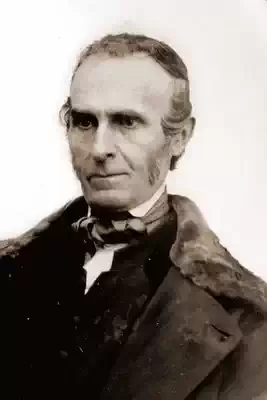
John Greenleaf Whittier
The Christmas Of 1888
The Christmas Of 1888
Low in the east, against a white, cold dawn,
The black-lined silhouette of the woods was drawn,
And on a wintry waste
Of frosted streams and hillsides bare and brown,
Through thin cloud-films, a pallid ghost looked down,
The waning moon half-faced!
In that pale sky and sere, snow-waiting earth,
What sign was there of the immortal birth?
What herald of the One?
Lo! swift as thought the heavenly radiance came,
A rose-red splendor swept the sky like flame,
Up rolled the round, bright sun!
And all was changed. From a transfigured world
The moon's ghost fled, the smoke of home-hearths curled
Up the still air unblown.
In Orient warmth and brightness, did that morn
O'er Nain and Nazareth, when the Christ was born,
Break fairer than our own?
The morning's promise noon and eve fulfilled
In warm, soft sky and landscape hazy-hilled
And sunset fair as they;
A sweet reminder of His holiest time,
A summer-miracle in our winter clime,
God gave a perfect day.
The near was blended with the old and far,
And Bethlehem's hillside and the Magi's star
Seemed here, as there and then,-Our
homestead pine-tree was the Syrian palm,
Our heart's desire the angels' midnight psalm,
Peace, and good-will to men!
Low in the east, against a white, cold dawn,
The black-lined silhouette of the woods was drawn,
And on a wintry waste
Of frosted streams and hillsides bare and brown,
Through thin cloud-films, a pallid ghost looked down,
The waning moon half-faced!
In that pale sky and sere, snow-waiting earth,
What sign was there of the immortal birth?
What herald of the One?
Lo! swift as thought the heavenly radiance came,
A rose-red splendor swept the sky like flame,
Up rolled the round, bright sun!
And all was changed. From a transfigured world
The moon's ghost fled, the smoke of home-hearths curled
Up the still air unblown.
In Orient warmth and brightness, did that morn
O'er Nain and Nazareth, when the Christ was born,
Break fairer than our own?
The morning's promise noon and eve fulfilled
In warm, soft sky and landscape hazy-hilled
And sunset fair as they;
A sweet reminder of His holiest time,
A summer-miracle in our winter clime,
God gave a perfect day.
The near was blended with the old and far,
And Bethlehem's hillside and the Magi's star
Seemed here, as there and then,-Our
homestead pine-tree was the Syrian palm,
Our heart's desire the angels' midnight psalm,
Peace, and good-will to men!
338
John Greenleaf Whittier
The Birthday Wreath
The Birthday Wreath
Blossom and greenness, making all
The winter birthday tropical,
And the plain Quaker parlors gay,
Have gone from bracket, stand, and wall;
We saw them fade, and droop, and fall,
And laid them tenderly away.
White virgin lilies, mignonette,
Blown rose, and pink, and violet,
A breath of fragrance passing by;
Visions of beauty and decay,
Colors and shapes that could not stay,
The fairest, sweetest, first to die.
But still this rustic wreath of mine,
Of acorned oak and needled pine,
And lighter growths of forest lands,
Woven and wound with careful pains,
And tender thoughts, and prayers, remains,
As when it dropped from love's dear hands.
And not unfitly garlanded,
Is he, who, country-born and bred,
Welcomes the sylvan ring which gives
A feeling of old summer days,
The wild delight of woodland ways,
The glory of the autumn leaves.
And, if the flowery meed of song
To other bards may well belong,
Be his, who from the farm-field spoke
A word for Freedom when her need
Was not of dulcimer and reed.
This Isthmian wreath of pine and oak.
Blossom and greenness, making all
The winter birthday tropical,
And the plain Quaker parlors gay,
Have gone from bracket, stand, and wall;
We saw them fade, and droop, and fall,
And laid them tenderly away.
White virgin lilies, mignonette,
Blown rose, and pink, and violet,
A breath of fragrance passing by;
Visions of beauty and decay,
Colors and shapes that could not stay,
The fairest, sweetest, first to die.
But still this rustic wreath of mine,
Of acorned oak and needled pine,
And lighter growths of forest lands,
Woven and wound with careful pains,
And tender thoughts, and prayers, remains,
As when it dropped from love's dear hands.
And not unfitly garlanded,
Is he, who, country-born and bred,
Welcomes the sylvan ring which gives
A feeling of old summer days,
The wild delight of woodland ways,
The glory of the autumn leaves.
And, if the flowery meed of song
To other bards may well belong,
Be his, who from the farm-field spoke
A word for Freedom when her need
Was not of dulcimer and reed.
This Isthmian wreath of pine and oak.
276
John Greenleaf Whittier
Bryant On His Birthday
Bryant On His Birthday
We praise not now the poet's art,
The rounded beauty of his song;
Who weighs him from his life apart
Must do his nobler nature wrong.
Not for the eye, familiar grown
With charms to common sight denied,
The marvellous gift he shares alone
With him who walked on Rydal-side;
Not for rapt hymn nor woodland lay,
Too grave for smiles, too sweet for tears;
We speak his praise who wears to-day
The glory of his seventy years.
When Peace brings Freedom in her train,
Let happy lips his songs rehearse;
His life is now his noblest strain,
His manhood better than his verse!
Thank God! his hand on Nature's keys
Its cunning keeps at life's full span;
But, dimmed and dwarfed, in times like these,
The poet seems beside the man!
So be it! let the garlands die,
The singer's wreath, the painter's meed,
Let our names perish, if thereby
Our country may be saved and freed!
We praise not now the poet's art,
The rounded beauty of his song;
Who weighs him from his life apart
Must do his nobler nature wrong.
Not for the eye, familiar grown
With charms to common sight denied,
The marvellous gift he shares alone
With him who walked on Rydal-side;
Not for rapt hymn nor woodland lay,
Too grave for smiles, too sweet for tears;
We speak his praise who wears to-day
The glory of his seventy years.
When Peace brings Freedom in her train,
Let happy lips his songs rehearse;
His life is now his noblest strain,
His manhood better than his verse!
Thank God! his hand on Nature's keys
Its cunning keeps at life's full span;
But, dimmed and dwarfed, in times like these,
The poet seems beside the man!
So be it! let the garlands die,
The singer's wreath, the painter's meed,
Let our names perish, if thereby
Our country may be saved and freed!
340
John Greenleaf Whittier
A Christmas Carmen
A Christmas Carmen
I.
Sound over all waters, reach out from all lands,
The chorus of voices, the clasping of hands;
Sing hymns that were sung by the stars of the morn,
Sing songs of the angels when Jesus was born!
With glad jubilations
Bring hope to the nations!
The dark night is ending and dawn has begun:
Rise, hope of the ages, arise like the sun,
All speech flow to music, all hearts beat as one!
II.
Sing the bridal of nations! with chorals of love
Sing out the war-vulture and sing in the dove,
Till the hearts of the peoples keep time in accord,
And the voice of the world is the voice of the Lord!
Clasp hands of the nations
In strong gratulations:
The dark night is ending and dawn has begun;
Rise, hope of the ages, arise like the sun,
All speech flow to music, all hearts beat as one!
III.
Blow, bugles of battle, the marches of peace;
East, west, north, and south let the long quarrel cease
Sing the song of great joy that the angels began,
Sing of glory to God and of good-will to man!
Hark! joining in chorus
The heavens bend o’er us!
The dark night is ending and dawn has begun;
Rise, hope of the ages, arise like the sun,
All speech flow to music, all hearts beat as one!
I.
Sound over all waters, reach out from all lands,
The chorus of voices, the clasping of hands;
Sing hymns that were sung by the stars of the morn,
Sing songs of the angels when Jesus was born!
With glad jubilations
Bring hope to the nations!
The dark night is ending and dawn has begun:
Rise, hope of the ages, arise like the sun,
All speech flow to music, all hearts beat as one!
II.
Sing the bridal of nations! with chorals of love
Sing out the war-vulture and sing in the dove,
Till the hearts of the peoples keep time in accord,
And the voice of the world is the voice of the Lord!
Clasp hands of the nations
In strong gratulations:
The dark night is ending and dawn has begun;
Rise, hope of the ages, arise like the sun,
All speech flow to music, all hearts beat as one!
III.
Blow, bugles of battle, the marches of peace;
East, west, north, and south let the long quarrel cease
Sing the song of great joy that the angels began,
Sing of glory to God and of good-will to man!
Hark! joining in chorus
The heavens bend o’er us!
The dark night is ending and dawn has begun;
Rise, hope of the ages, arise like the sun,
All speech flow to music, all hearts beat as one!
372
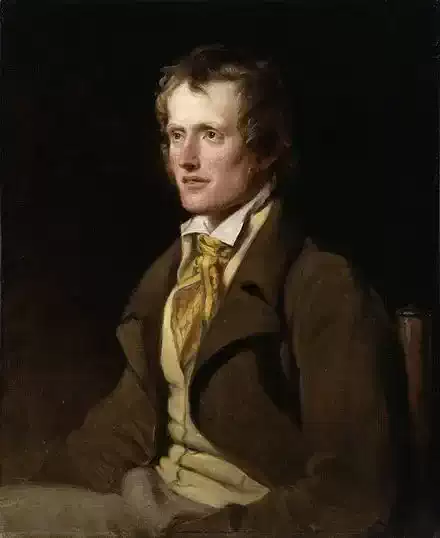
John Clare
Christmass
Christmass
Christmass is come and every hearth
Makes room to give him welcome now
Een want will dry its tears in mirth
And crown him wi a holly bough
Tho tramping neath a winters sky
Oer snow track paths and ryhmey stiles
The huswife sets her spining bye
And bids him welcome wi her smiles
Each house is swept the day before
And windows stuck wi evergreens
The snow is beesomd from the door
And comfort crowns the cottage scenes
Gilt holly wi its thorny pricks
And yew and box wi berrys small
These deck the unusd candlesticks
And pictures hanging by the wall
Neighbours resume their anual cheer
Wishing wi smiles and spirits high
Clad christmass and a happy year
To every morning passer bye
Milk maids their christmass journeys go
Accompanyd wi favourd swain
And childern pace the crumping snow
To taste their grannys cake again
Hung wi the ivys veining bough
The ash trees round the cottage farm
Are often stript of branches now
The cotters christmass hearth to warm
He swings and twists his hazel band
And lops them off wi sharpend hook
And oft brings ivy in his hand
To decorate the chimney nook
Old winter whipes his ides bye
And warms his fingers till he smiles
Where cottage hearths are blazing high
And labour resteth from his toils
Wi merry mirth beguiling care
Old customs keeping wi the day
Friends meet their christmass cheer to share
And pass it in a harmless way
Old customs O I love the sound
However simple they may be
What ere wi time has sanction found
Is welcome and is dear to me
Pride grows above simplicity
And spurns it from her haughty mind
And soon the poets song will be
The only refuge they can find
The shepherd now no more afraid
Since custom doth the chance bestow
Starts up to kiss the giggling maid
Beneath the branch of mizzletoe
That neath each cottage beam is seen
Wi pearl-like-berrys shining gay
The shadow still of what hath been
Which fashion yearly fades away
And singers too a merry throng
At early morn wi simple skill
Yet imitate the angels song
And chant their christmass ditty still
And mid the storm that dies and swells
By fits-in humings softly steals
The music of the village bells
Ringing round their merry peals
And when its past a merry crew
Bedeckt in masks and ribbons gay
The 'Morrice danse' their sports renew
And act their winter evening play
The clown-turnd-kings for penny praise
Storm wi the actors strut and swell
And harlequin a laugh to raise
Wears his hump back and tinkling bell
And oft for pence and spicy ale
Wi winter nosgays pind before
The wassail singer tells her tale
And drawls her christmass carrols oer
The prentice boy wi ruddy face
And ryhme bepowderd dancing locks
From door to door wi happy pace
Runs round to claim his 'christmass box'
The block behind the fire is put
To sanction customs old desires
And many a faggots bands are cut
For the old farmers christmass fires
Where loud tongd gladness joins the throng
And winter meets the warmth of may
Feeling by times the heat too strong
And rubs his shins and draws away
While snows the window panes bedim
The fire curls up a sunny charm
Where creaming oer the pitchers rim
The flowering ale is set to warm
Mirth full of joy as summer bees
Sits there its pleasures to impart
While childern tween their parents knees
Sing scraps of carrols oer by heart
And some to view the winter weathers
Climb up the window seat wi glee
Likening the snow to falling feathers
In fancys infant extacy
Laughing wi superstitious love
Oer visions wild that youth supplyes
Of people pulling geese above
And keeping christmass in the skyes
As tho the homstead trees were drest
In lieu of snow wi dancing leaves
As. tho the sundryd martins nest
Instead of ides hung the eaves
The childern hail the happy day
As if the snow was april grass
And pleasd as neath the warmth of may
Sport oer the water froze to glass
Thou day of happy sound and mirth
That long wi childish memory stays
How blest around the cottage hearth
I met thee in my boyish days
Harping wi raptures dreaming joys
On presents that thy coming found
The welcome sight of little toys
The christmass gifts of comers round
'The wooden horse wi arching head
Drawn upon wheels around the room
The gilded coach of ginger bread
And many colord sugar plumb
Gilt coverd books for pictures sought
Or storys childhood loves to tell
Wi many a urgent promise bought
To get tomorrows lesson well
And many a thing a minutes sport
Left broken on the sanded floor
When we woud leave our play and court
Our parents promises for more
Tho manhood bids such raptures dye
And throws such toys away as vain
Yet memory loves to turn her eye
And talk such pleasures oer again
Around the glowing hearth at night
The harmless laugh and winter tale
Goes round-while parting friends delight
To toast each other oer their ale
The cotter oft wi quiet zeal
Will musing oer his bible lean
While in the dark the lovers steal
To kiss and toy behind the screen
The yule cake dotted thick wi plumbs
Is on each supper table found
And cats look up for falling crumbs
Which greedy childern litter round
And huswifes sage stuffd seasond chine
Long hung in chimney nook to drye
And boiling eldern berry wine
To drink the christmass eves 'good bye'
Christmass is come and every hearth
Makes room to give him welcome now
Een want will dry its tears in mirth
And crown him wi a holly bough
Tho tramping neath a winters sky
Oer snow track paths and ryhmey stiles
The huswife sets her spining bye
And bids him welcome wi her smiles
Each house is swept the day before
And windows stuck wi evergreens
The snow is beesomd from the door
And comfort crowns the cottage scenes
Gilt holly wi its thorny pricks
And yew and box wi berrys small
These deck the unusd candlesticks
And pictures hanging by the wall
Neighbours resume their anual cheer
Wishing wi smiles and spirits high
Clad christmass and a happy year
To every morning passer bye
Milk maids their christmass journeys go
Accompanyd wi favourd swain
And childern pace the crumping snow
To taste their grannys cake again
Hung wi the ivys veining bough
The ash trees round the cottage farm
Are often stript of branches now
The cotters christmass hearth to warm
He swings and twists his hazel band
And lops them off wi sharpend hook
And oft brings ivy in his hand
To decorate the chimney nook
Old winter whipes his ides bye
And warms his fingers till he smiles
Where cottage hearths are blazing high
And labour resteth from his toils
Wi merry mirth beguiling care
Old customs keeping wi the day
Friends meet their christmass cheer to share
And pass it in a harmless way
Old customs O I love the sound
However simple they may be
What ere wi time has sanction found
Is welcome and is dear to me
Pride grows above simplicity
And spurns it from her haughty mind
And soon the poets song will be
The only refuge they can find
The shepherd now no more afraid
Since custom doth the chance bestow
Starts up to kiss the giggling maid
Beneath the branch of mizzletoe
That neath each cottage beam is seen
Wi pearl-like-berrys shining gay
The shadow still of what hath been
Which fashion yearly fades away
And singers too a merry throng
At early morn wi simple skill
Yet imitate the angels song
And chant their christmass ditty still
And mid the storm that dies and swells
By fits-in humings softly steals
The music of the village bells
Ringing round their merry peals
And when its past a merry crew
Bedeckt in masks and ribbons gay
The 'Morrice danse' their sports renew
And act their winter evening play
The clown-turnd-kings for penny praise
Storm wi the actors strut and swell
And harlequin a laugh to raise
Wears his hump back and tinkling bell
And oft for pence and spicy ale
Wi winter nosgays pind before
The wassail singer tells her tale
And drawls her christmass carrols oer
The prentice boy wi ruddy face
And ryhme bepowderd dancing locks
From door to door wi happy pace
Runs round to claim his 'christmass box'
The block behind the fire is put
To sanction customs old desires
And many a faggots bands are cut
For the old farmers christmass fires
Where loud tongd gladness joins the throng
And winter meets the warmth of may
Feeling by times the heat too strong
And rubs his shins and draws away
While snows the window panes bedim
The fire curls up a sunny charm
Where creaming oer the pitchers rim
The flowering ale is set to warm
Mirth full of joy as summer bees
Sits there its pleasures to impart
While childern tween their parents knees
Sing scraps of carrols oer by heart
And some to view the winter weathers
Climb up the window seat wi glee
Likening the snow to falling feathers
In fancys infant extacy
Laughing wi superstitious love
Oer visions wild that youth supplyes
Of people pulling geese above
And keeping christmass in the skyes
As tho the homstead trees were drest
In lieu of snow wi dancing leaves
As. tho the sundryd martins nest
Instead of ides hung the eaves
The childern hail the happy day
As if the snow was april grass
And pleasd as neath the warmth of may
Sport oer the water froze to glass
Thou day of happy sound and mirth
That long wi childish memory stays
How blest around the cottage hearth
I met thee in my boyish days
Harping wi raptures dreaming joys
On presents that thy coming found
The welcome sight of little toys
The christmass gifts of comers round
'The wooden horse wi arching head
Drawn upon wheels around the room
The gilded coach of ginger bread
And many colord sugar plumb
Gilt coverd books for pictures sought
Or storys childhood loves to tell
Wi many a urgent promise bought
To get tomorrows lesson well
And many a thing a minutes sport
Left broken on the sanded floor
When we woud leave our play and court
Our parents promises for more
Tho manhood bids such raptures dye
And throws such toys away as vain
Yet memory loves to turn her eye
And talk such pleasures oer again
Around the glowing hearth at night
The harmless laugh and winter tale
Goes round-while parting friends delight
To toast each other oer their ale
The cotter oft wi quiet zeal
Will musing oer his bible lean
While in the dark the lovers steal
To kiss and toy behind the screen
The yule cake dotted thick wi plumbs
Is on each supper table found
And cats look up for falling crumbs
Which greedy childern litter round
And huswifes sage stuffd seasond chine
Long hung in chimney nook to drye
And boiling eldern berry wine
To drink the christmass eves 'good bye'
378
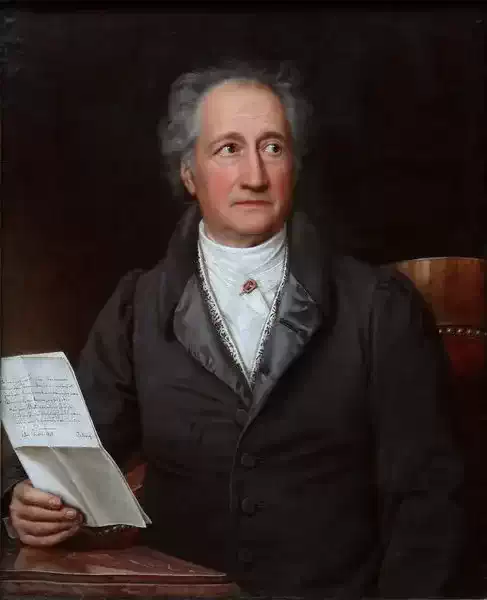
Johann Wolfgang von Goethe
On The New Year
On The New Year
FATE now allows us,
'Twixt the departing
And the upstarting,
Happy to be;
And at the call of
Memory cherish'd,
Future and perish'd
Moments we see.
Seasons of anguish,--
Ah, they must ever
Truth from woe sever,
Love and joy part;
Days still more worthy
Soon will unite us,
Fairer songs light us,
Strength'ning the heart.
We, thus united,
Think of, with gladness,
Rapture and sadness,
Sorrow now flies.
Oh, how mysterious
Fortune's direction!
Old the connection,
New-born the prize!
Thank, for this, Fortune,
Wavering blindly!
Thank all that kindly
Fate may bestow!
Revel in change's
Impulses clearer,
Love far sincerer,
More heartfelt glow!
Over the old one,
Wrinkles collected,
Sad and dejected,
Others may view;
But, on us gently
Shineth a true one,
And to the new one
We, too, are new.
As a fond couple
'Midst the dance veering,
First disappearing,
Then reappear,
So let affection
Guide thro' life's mazy
Pathways so hazy
Into the year!
FATE now allows us,
'Twixt the departing
And the upstarting,
Happy to be;
And at the call of
Memory cherish'd,
Future and perish'd
Moments we see.
Seasons of anguish,--
Ah, they must ever
Truth from woe sever,
Love and joy part;
Days still more worthy
Soon will unite us,
Fairer songs light us,
Strength'ning the heart.
We, thus united,
Think of, with gladness,
Rapture and sadness,
Sorrow now flies.
Oh, how mysterious
Fortune's direction!
Old the connection,
New-born the prize!
Thank, for this, Fortune,
Wavering blindly!
Thank all that kindly
Fate may bestow!
Revel in change's
Impulses clearer,
Love far sincerer,
More heartfelt glow!
Over the old one,
Wrinkles collected,
Sad and dejected,
Others may view;
But, on us gently
Shineth a true one,
And to the new one
We, too, are new.
As a fond couple
'Midst the dance veering,
First disappearing,
Then reappear,
So let affection
Guide thro' life's mazy
Pathways so hazy
Into the year!
396
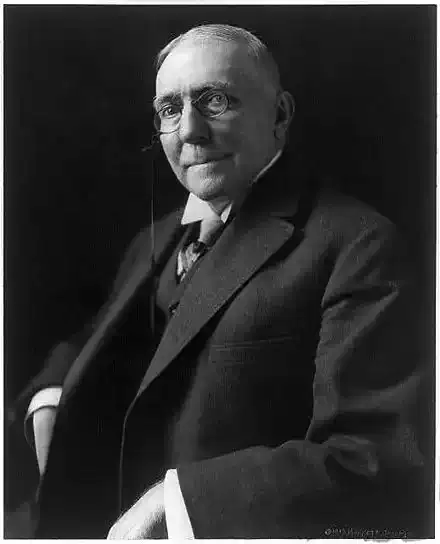
James Whitcomb Riley
Who Santy-Claus Wuz
Who Santy-Claus Wuz
Jes' a little bit o' feller--I remember still--
Ust to almost cry fer Christmas, like a youngster will.
Fourth o' July's nothin' to it!--New Year's ain't a smell!
Easter-Sunday--Circus-day--jes' all dead in the shell!
Lawzy, though! at night, you know, to set around an' hear
The old folks work the story off about the sledge an' deer,
An' 'Santy' skootin' round the roof, all wrapt in fur an' fuzz--
Long afore
I knowed who
'Santy-Claus' wuz!
Ust to wait, an' set up late, a week er two ahead;
Couldn't hardly keep awake, ner wouldn't go to bed;
Kittle stewin' on the fire, an' Mother settin' here
Darnin' socks, an' rockin' in the skreeky rockin'-cheer;
Pap gap', an' wonder where it wuz the money went,
An' quar'l with his frosted heels, an' spill his liniment;
An' me a-dreamin' sleigh-bells when the clock 'ud whir an' buzz,
Long afore
I knowed who
'Santy-Claus' wuz!
Size the fire-place up an' figger how 'Ole Santy' could
Manage to come down the chimbly, like they said he would;
Wisht 'at I could hide an' see him--wunderd what he'd say
Ef he ketched a feller layin' fer him thataway!
But I _bet_ on him, an' _liked_ him, same as ef he had
Turned to pat me on the back an' say, 'Look here, my lad,
Here's my pack,--jes' he'p yourse'f, like all good boys does!'
Long afore
I knowed who
'Santy-Claus' wuz!
Wisht that yarn was true about him, as it 'peared to be--
Truth made out o' lies like that-un's good enough fer me!--
Wisht I still wuz so confidin' I could jes' go wild
Over hangin' up my stockin's, like the little child
Climbin' in my lap to-night, an' beggin' me to tell
'Bout them reindeers, and 'Old Santy' that she loves so well
I'm half sorry fer this little-girl-sweetheart of his--
Long afore
She knows who
'Santy-Claus' is!
Jes' a little bit o' feller--I remember still--
Ust to almost cry fer Christmas, like a youngster will.
Fourth o' July's nothin' to it!--New Year's ain't a smell!
Easter-Sunday--Circus-day--jes' all dead in the shell!
Lawzy, though! at night, you know, to set around an' hear
The old folks work the story off about the sledge an' deer,
An' 'Santy' skootin' round the roof, all wrapt in fur an' fuzz--
Long afore
I knowed who
'Santy-Claus' wuz!
Ust to wait, an' set up late, a week er two ahead;
Couldn't hardly keep awake, ner wouldn't go to bed;
Kittle stewin' on the fire, an' Mother settin' here
Darnin' socks, an' rockin' in the skreeky rockin'-cheer;
Pap gap', an' wonder where it wuz the money went,
An' quar'l with his frosted heels, an' spill his liniment;
An' me a-dreamin' sleigh-bells when the clock 'ud whir an' buzz,
Long afore
I knowed who
'Santy-Claus' wuz!
Size the fire-place up an' figger how 'Ole Santy' could
Manage to come down the chimbly, like they said he would;
Wisht 'at I could hide an' see him--wunderd what he'd say
Ef he ketched a feller layin' fer him thataway!
But I _bet_ on him, an' _liked_ him, same as ef he had
Turned to pat me on the back an' say, 'Look here, my lad,
Here's my pack,--jes' he'p yourse'f, like all good boys does!'
Long afore
I knowed who
'Santy-Claus' wuz!
Wisht that yarn was true about him, as it 'peared to be--
Truth made out o' lies like that-un's good enough fer me!--
Wisht I still wuz so confidin' I could jes' go wild
Over hangin' up my stockin's, like the little child
Climbin' in my lap to-night, an' beggin' me to tell
'Bout them reindeers, and 'Old Santy' that she loves so well
I'm half sorry fer this little-girl-sweetheart of his--
Long afore
She knows who
'Santy-Claus' is!
295
James Whitcomb Riley
The Rapture of the Year
The Rapture of the Year
While skies glint bright with bluest light
Through clouds that race o'er fields and town,
And leaves go dancing left and right,
And orchard apples tumble down;
While school-girls sweet, in lane or street,
Lean 'gainst the wind and feel and hear
Its glad heart like a lover's beat,--
So reigns the rapture of the year.
The ho! and hey! and whop-hooray!
Though winter clouds be looming,
Remember a November day
Is merrier than mildest May
With all her blossoms blooming.
While birds in scattered flight are blown
Aloft and lost in dusky mist,
And truant boys scud home alone
'Neath skies of gold and amethyst;
While twilight falls, and Echo calls
Across the haunted atmosphere,
With low, sweet laughs at intervals,--
So reigns the rapture of the year.
The ho! and hey! and whop-hooray!
Though winter clouds be looming,
Remember a November day
Is merrier than mildest May
With all her blossoms blooming.
While skies glint bright with bluest light
Through clouds that race o'er fields and town,
And leaves go dancing left and right,
And orchard apples tumble down;
While school-girls sweet, in lane or street,
Lean 'gainst the wind and feel and hear
Its glad heart like a lover's beat,--
So reigns the rapture of the year.
The ho! and hey! and whop-hooray!
Though winter clouds be looming,
Remember a November day
Is merrier than mildest May
With all her blossoms blooming.
While birds in scattered flight are blown
Aloft and lost in dusky mist,
And truant boys scud home alone
'Neath skies of gold and amethyst;
While twilight falls, and Echo calls
Across the haunted atmosphere,
With low, sweet laughs at intervals,--
So reigns the rapture of the year.
The ho! and hey! and whop-hooray!
Though winter clouds be looming,
Remember a November day
Is merrier than mildest May
With all her blossoms blooming.
373
James Whitcomb Riley
The Old Year And The New
The Old Year And The New
I.
As one in sorrow looks upon
The dead face of a loyal friend,
By the dim light of New Year's dawn
I saw the Old Year end.
Upon the pallid features lay
The dear old smile--so warm and bright
Ere thus its cheer had died away
In ashes of delight.
The hands that I had learned to love
With strength of passion half divine,
Were folded now, all heedless of
The emptiness of mine.
The eyes that once had shed their bright
Sweet looks like sunshine, now were dull,
And ever lidded from the light
That made them beautiful.
II.
The chimes of bells were in the air,
And sounds of mirth in hall and street,
With pealing laughter everywhere
And throb of dancing feet:
The mirth and the convivial din
Of revelers in wanton glee,
With tunes of harp and violin
In tangled harmony.
But with a sense of nameless dread,
I turned me, from the merry face
Of this newcomer, to my dead;
And, kneeling there a space,
I sobbed aloud, all tearfully:--
By this dear face so fixed and cold,
O Lord, let not this New Year be
As happy as the old!
I.
As one in sorrow looks upon
The dead face of a loyal friend,
By the dim light of New Year's dawn
I saw the Old Year end.
Upon the pallid features lay
The dear old smile--so warm and bright
Ere thus its cheer had died away
In ashes of delight.
The hands that I had learned to love
With strength of passion half divine,
Were folded now, all heedless of
The emptiness of mine.
The eyes that once had shed their bright
Sweet looks like sunshine, now were dull,
And ever lidded from the light
That made them beautiful.
II.
The chimes of bells were in the air,
And sounds of mirth in hall and street,
With pealing laughter everywhere
And throb of dancing feet:
The mirth and the convivial din
Of revelers in wanton glee,
With tunes of harp and violin
In tangled harmony.
But with a sense of nameless dread,
I turned me, from the merry face
Of this newcomer, to my dead;
And, kneeling there a space,
I sobbed aloud, all tearfully:--
By this dear face so fixed and cold,
O Lord, let not this New Year be
As happy as the old!
285
James Whitcomb Riley
Song Of The New Year
Song Of The New Year
I heard the bells at midnight
Ring in the dawning year;
And above the clanging chorus
Of the song, I seemed to hear
A choir of mystic voices
Flinging echoes, ringing clear,
From a band of angels winging
Through the haunted atmosphere:
'Ring out the shame and sorrow,
And the misery and sin,
That the dawning of the morrow
May in peace be ushered in.'
And I thought of all the trials
The departed years had cost,
And the blooming hopes and pleasures
That are withered now and lost;
And with joy I drank the music
Stealing o'er the feeling there
As the spirit song came pealing
On the silence everywhere:
'Ring out the shame and sorrow,
And the misery and sin,
That the dawning of the morrow
May in peace be ushered in.'
And I listened as a lover
To an utterance that flows
In syllables like dewdrops
From the red lips of a rose,
Till the anthem, fainter growing,
Climbing higher, chiming on
Up the rounds of happy rhyming,
Slowly vanished in the dawn:
'Ring out the shame and sorrow,
And the misery and sin,
That the dawning of the morrow
May in peace be ushered in.'
Then I raised my eyes to Heaven,
And with trembling lips I pled
For a blessing for the living
And a pardon for the dead;
And like a ghost of music
Slowly whispered--lowly sung--
Came the echo pure and holy
In the happy angel tongue:
'Ring out the shame and sorrow,
And the misery and sin,
And the dawn of every morrow
Will in peace be ushered in.'
I heard the bells at midnight
Ring in the dawning year;
And above the clanging chorus
Of the song, I seemed to hear
A choir of mystic voices
Flinging echoes, ringing clear,
From a band of angels winging
Through the haunted atmosphere:
'Ring out the shame and sorrow,
And the misery and sin,
That the dawning of the morrow
May in peace be ushered in.'
And I thought of all the trials
The departed years had cost,
And the blooming hopes and pleasures
That are withered now and lost;
And with joy I drank the music
Stealing o'er the feeling there
As the spirit song came pealing
On the silence everywhere:
'Ring out the shame and sorrow,
And the misery and sin,
That the dawning of the morrow
May in peace be ushered in.'
And I listened as a lover
To an utterance that flows
In syllables like dewdrops
From the red lips of a rose,
Till the anthem, fainter growing,
Climbing higher, chiming on
Up the rounds of happy rhyming,
Slowly vanished in the dawn:
'Ring out the shame and sorrow,
And the misery and sin,
That the dawning of the morrow
May in peace be ushered in.'
Then I raised my eyes to Heaven,
And with trembling lips I pled
For a blessing for the living
And a pardon for the dead;
And like a ghost of music
Slowly whispered--lowly sung--
Came the echo pure and holy
In the happy angel tongue:
'Ring out the shame and sorrow,
And the misery and sin,
And the dawn of every morrow
Will in peace be ushered in.'
291
James Whitcomb Riley
John Alden And Percilly
John Alden And Percilly
We got up a Christmas-doin's
Last Christmas Eve--
Kindo' dimonstration
'At I railly believe
Give more satisfaction--
Take it up and down--
Than ary intertainment
Ever come to town!
Railly was a _theater_-That's
what it was,--
But, bein' in the church, you know,
We had a '_Santy Clause_'--
So 's to git the _old folks_
To patternize, you see,
And _back_ the institootion up
Kindo' _morally_.
Schoolteacher writ the thing-(
Was a friend o' mine),
Got it out o' Longfeller's
Pome 'Evangeline'--
Er some'rs--'bout the _Purituns_--.
_Anyway_, the part
'_John Alden_' fell to _me_--
And learnt it all by heart!
Claircy was '_Percilly_'-(
Schoolteacher 'lowed
Me and her could act them two
Best of all the crowd)-Then--
blame ef he didn't
Git her Pap, i jing!--
To take the part o' '_Santy Clause_,'
To wind up the thing.
Law! the fun o' practisun!--
Was a week er two
Me and Claircy didn't have
Nothin' else to do!--
Kep' us jes a-meetin' round,
Kindo' here and there,
Ever' night rehearsin'-like,
And gaddin' ever'where!
Game was wo'th the candle, though!--
Christmas Eve at last
Rolled around.--And 'tendance jes
Couldn't been surpassed!--
Neighbors from the country
Come from Clay and Rush--
Yes, and 'crost the county-line
Clean from Puckerbrush!
Meetin'-house jes trimbled
As 'Old Santy' went
Round amongst the childern,
With their pepperment
And sassafrac and wintergreen
Candy, and 'a ball
O' popcorn,' the preacher 'nounced,
'Free fer each and all!'
Schoolteacher suddently
Whispered in my ear,-'
Guess I got you:--_Christmas-gift_!-_
Christmas is here_!'
I give _him_ a gold pen,
And case to hold the thing,--
And _Claircy_ whispered '_Christmas-gift_!'
And I give her a _ring_.
'And now,' says I, 'jes watch _me_-Christmas-
gift,' says I,
'_I'm_ a-goin' to git one-'_
Santy's_' comin' by!'--
Then I rech and grabbed him:
And, as you'll infer,
'Course I got the old man's,
And _he_ gimme _her_!
We got up a Christmas-doin's
Last Christmas Eve--
Kindo' dimonstration
'At I railly believe
Give more satisfaction--
Take it up and down--
Than ary intertainment
Ever come to town!
Railly was a _theater_-That's
what it was,--
But, bein' in the church, you know,
We had a '_Santy Clause_'--
So 's to git the _old folks_
To patternize, you see,
And _back_ the institootion up
Kindo' _morally_.
Schoolteacher writ the thing-(
Was a friend o' mine),
Got it out o' Longfeller's
Pome 'Evangeline'--
Er some'rs--'bout the _Purituns_--.
_Anyway_, the part
'_John Alden_' fell to _me_--
And learnt it all by heart!
Claircy was '_Percilly_'-(
Schoolteacher 'lowed
Me and her could act them two
Best of all the crowd)-Then--
blame ef he didn't
Git her Pap, i jing!--
To take the part o' '_Santy Clause_,'
To wind up the thing.
Law! the fun o' practisun!--
Was a week er two
Me and Claircy didn't have
Nothin' else to do!--
Kep' us jes a-meetin' round,
Kindo' here and there,
Ever' night rehearsin'-like,
And gaddin' ever'where!
Game was wo'th the candle, though!--
Christmas Eve at last
Rolled around.--And 'tendance jes
Couldn't been surpassed!--
Neighbors from the country
Come from Clay and Rush--
Yes, and 'crost the county-line
Clean from Puckerbrush!
Meetin'-house jes trimbled
As 'Old Santy' went
Round amongst the childern,
With their pepperment
And sassafrac and wintergreen
Candy, and 'a ball
O' popcorn,' the preacher 'nounced,
'Free fer each and all!'
Schoolteacher suddently
Whispered in my ear,-'
Guess I got you:--_Christmas-gift_!-_
Christmas is here_!'
I give _him_ a gold pen,
And case to hold the thing,--
And _Claircy_ whispered '_Christmas-gift_!'
And I give her a _ring_.
'And now,' says I, 'jes watch _me_-Christmas-
gift,' says I,
'_I'm_ a-goin' to git one-'_
Santy's_' comin' by!'--
Then I rech and grabbed him:
And, as you'll infer,
'Course I got the old man's,
And _he_ gimme _her_!
267
James Whitcomb Riley
Dot Leedle Boy
Dot Leedle Boy
Ot's a leedle Gristmas story
Dot I told der leedle folks--
Und I vant you stop dot laughin'
Und grackin' funny jokes!--
So help me Peter-Moses!
Ot's no time for monkey-shine,
Ober I vast told you somedings
Of dot leedle boy of mine!
Ot vas von cold Vinter vedder,
Ven der snow vas all about--
Dot you have to chop der hatchet
Eef you got der sauerkraut!
Und der cheekens on der hind leg
Vas standin' in der shine
Der sun shmile out dot morning
On dot leedle boy of mine.
He vas yoost a leedle baby
Not bigger as a doll
Dot time I got acquaintet--
Ach! you ought to heard 'im squall!--
I grackys! dot's der moosic
Ot make me feel so fine
Ven first I vas been marriet--
Oh, dot leedle boy of mine!
He look yoost like his fader!--
So, ven der vimmen said,
'Vot a purty leedle baby!'
Katrina shake der head. . . .
I dink she must 'a' notice
Dot der baby vas a-gryin',
Und she cover up der blankets
Of dot leedle boy of mine.
Vel, ven he vas got bigger,
Dot he grawl und bump his nose,
Und make der table over,
Und molasses on his glothes--
Dot make 'im all der sveeter,--
So I say to my Katrine,
'Better you vas quit a-shpankin'
Dot leedle boy of mine!'
No more he vas older
As about a dozen months
He speak der English language
Und der German--bote at vonce!
Und he dringk his glass of lager
Like a Londsman fon der Rhine--
Und I klingk my glass togeder
Mit dot leedle boy of mine!
I vish you could 'a' seen id--
Ven he glimb up on der chair
Und shmash der lookin'-glasses
Ven he try to comb his hair
Mit a hammer!--Und Katrina
Say, 'Dot's an ugly sign!'
But I laugh und vink my fingers
At dot leedle boy of mine.
But vonce, dot Vinter morning,
He shlip out in der snow
Mitout no stockin's on 'im.--
He say he 'vant to go
Und fly some mit der birdies!'
Und ve give 'im medi-cine
Ven he catch der 'parrygoric'--
Dot leedle boy of mine!
Und so I set und nurse 'im,
Vile der Gristmas vas come roun',
Und I told 'im 'bout 'Kriss Kringle,'
How he come der chimbly down:
Und I ask 'im eef he love 'im
Eef he bring 'im someding fine?
'Nicht besser as mein fader,'
Say dot leedle boy of mine.--
Und he put his arms aroun' me
Und hug so close und tight,
I hear der gclock a-tickin'
All der balance of der night! . . .
Someding make me feel so funny
Ven I say to my Katrine,
'Let us go und fill der stockin's
Of dot leedle boy of mine.'
Vell.--Ve buyed a leedle horses
Dot you pull 'im mit a shtring,
Und a leedle fancy jay-bird--
Eef you vant to hear 'im sing
You took 'im by der topknot
Und yoost blow in behine--
Und dot make much spectakel
For dot leedle boy of mine!
Und gandies, nuts und raizens--
Und I buy a leedle drum
Dot I vant to hear 'im rattle
Ven der Gristmas morning come!
Und a leedle shmall tin rooster
Dot vould crow so loud und fine
Ven he sqveeze 'im in der morning,
Dot leedle boy of mine!
Und--vile ve vas a-fixin'--
Dot leedle boy vake out!
I t'ought he been a-dreamin'
'Kriss Kringle' vas about,--
For he say--'DOT'S HIM!--I SEE 'IM
MIT DER SHTARS DOT MAKE DER SHINE!'
Und he yoost keep on a-gryin'--
Dot leedle boy of mine,--
Und gottin' vorse und vorser--
Und tumble on der bed!
So--ven der doctor seen id,
He kindo' shake his head,
Und feel his pulse--und visper,
'Der boy is a-dyin'.'
You dink I could BELIEVE id?--
DOT LEEDLE BOY OF MINE?
I told you, friends--dot's someding,
Der last time dot he speak
Und say, 'GOOT-BY, KRISS KRINGLE!'
--Dot make me feel so veak
I yoost kneel down und drimble,
Und bur-sed out a-gryin',
'MEIN GOTT, MEIN GOTT IN HIMMEL!--
DOT LEEDLE BOY OF MINE!'
. . . . . . . . . .
Der sun don't shine DOT Gristmas!
. . . Eef dot leedle boy vould LIFF'D--
No deefer-en'! for HEAVEN vas
His leedle Gristmas gift!
Und der ROOSTER, und der GANDY,
Und me--und my Katrine--
Und der jay-bird--is awaiting
For dot leedle boy of mine.
Ot's a leedle Gristmas story
Dot I told der leedle folks--
Und I vant you stop dot laughin'
Und grackin' funny jokes!--
So help me Peter-Moses!
Ot's no time for monkey-shine,
Ober I vast told you somedings
Of dot leedle boy of mine!
Ot vas von cold Vinter vedder,
Ven der snow vas all about--
Dot you have to chop der hatchet
Eef you got der sauerkraut!
Und der cheekens on der hind leg
Vas standin' in der shine
Der sun shmile out dot morning
On dot leedle boy of mine.
He vas yoost a leedle baby
Not bigger as a doll
Dot time I got acquaintet--
Ach! you ought to heard 'im squall!--
I grackys! dot's der moosic
Ot make me feel so fine
Ven first I vas been marriet--
Oh, dot leedle boy of mine!
He look yoost like his fader!--
So, ven der vimmen said,
'Vot a purty leedle baby!'
Katrina shake der head. . . .
I dink she must 'a' notice
Dot der baby vas a-gryin',
Und she cover up der blankets
Of dot leedle boy of mine.
Vel, ven he vas got bigger,
Dot he grawl und bump his nose,
Und make der table over,
Und molasses on his glothes--
Dot make 'im all der sveeter,--
So I say to my Katrine,
'Better you vas quit a-shpankin'
Dot leedle boy of mine!'
No more he vas older
As about a dozen months
He speak der English language
Und der German--bote at vonce!
Und he dringk his glass of lager
Like a Londsman fon der Rhine--
Und I klingk my glass togeder
Mit dot leedle boy of mine!
I vish you could 'a' seen id--
Ven he glimb up on der chair
Und shmash der lookin'-glasses
Ven he try to comb his hair
Mit a hammer!--Und Katrina
Say, 'Dot's an ugly sign!'
But I laugh und vink my fingers
At dot leedle boy of mine.
But vonce, dot Vinter morning,
He shlip out in der snow
Mitout no stockin's on 'im.--
He say he 'vant to go
Und fly some mit der birdies!'
Und ve give 'im medi-cine
Ven he catch der 'parrygoric'--
Dot leedle boy of mine!
Und so I set und nurse 'im,
Vile der Gristmas vas come roun',
Und I told 'im 'bout 'Kriss Kringle,'
How he come der chimbly down:
Und I ask 'im eef he love 'im
Eef he bring 'im someding fine?
'Nicht besser as mein fader,'
Say dot leedle boy of mine.--
Und he put his arms aroun' me
Und hug so close und tight,
I hear der gclock a-tickin'
All der balance of der night! . . .
Someding make me feel so funny
Ven I say to my Katrine,
'Let us go und fill der stockin's
Of dot leedle boy of mine.'
Vell.--Ve buyed a leedle horses
Dot you pull 'im mit a shtring,
Und a leedle fancy jay-bird--
Eef you vant to hear 'im sing
You took 'im by der topknot
Und yoost blow in behine--
Und dot make much spectakel
For dot leedle boy of mine!
Und gandies, nuts und raizens--
Und I buy a leedle drum
Dot I vant to hear 'im rattle
Ven der Gristmas morning come!
Und a leedle shmall tin rooster
Dot vould crow so loud und fine
Ven he sqveeze 'im in der morning,
Dot leedle boy of mine!
Und--vile ve vas a-fixin'--
Dot leedle boy vake out!
I t'ought he been a-dreamin'
'Kriss Kringle' vas about,--
For he say--'DOT'S HIM!--I SEE 'IM
MIT DER SHTARS DOT MAKE DER SHINE!'
Und he yoost keep on a-gryin'--
Dot leedle boy of mine,--
Und gottin' vorse und vorser--
Und tumble on der bed!
So--ven der doctor seen id,
He kindo' shake his head,
Und feel his pulse--und visper,
'Der boy is a-dyin'.'
You dink I could BELIEVE id?--
DOT LEEDLE BOY OF MINE?
I told you, friends--dot's someding,
Der last time dot he speak
Und say, 'GOOT-BY, KRISS KRINGLE!'
--Dot make me feel so veak
I yoost kneel down und drimble,
Und bur-sed out a-gryin',
'MEIN GOTT, MEIN GOTT IN HIMMEL!--
DOT LEEDLE BOY OF MINE!'
. . . . . . . . . .
Der sun don't shine DOT Gristmas!
. . . Eef dot leedle boy vould LIFF'D--
No deefer-en'! for HEAVEN vas
His leedle Gristmas gift!
Und der ROOSTER, und der GANDY,
Und me--und my Katrine--
Und der jay-bird--is awaiting
For dot leedle boy of mine.
295
James Whitcomb Riley
A New Year's Time At Willards's
A New Year's Time At Willards's
1
The Hired Man Talks
There's old man Willards; an' his wife;
An' Marg'et-- S'repty's sister--; an'
There's me-- an' I'm the hired man;
An' Tomps McClure, you better yer life!
Well now, old Willards hain't so bad,
Considerin' the chance he's had.
Of course, he's rich, an' sleeps an' eats
Whenever he's a mind to: Takes
An' leans back in the Amen-seats
An' thanks the Lord fer all he makes--.
That's purty much all folks has got
Ag'inst the old man, like as not!
But there's his woman-- jes the turn
Of them-air two wild girls o' hern-Marg'et
an' S'repty-- allus in
Fer any cuttin'-up concern--
Church festibals, and foolishin'
Round Christmas-trees, an' New Year's sprees--
Set up to watch the Old Year go
An' New Year come-- sich things as these;
An' turkey-dinners, don't you know!
S'repty's younger, an' more gay,
An' purtier, an' finer dressed
Than Marg'et is-- but, lawzy-day!
She hain't the independentest!
'Take care!' old Willards used to say,
'Take care--! Let Marg'et have her way,
An' S'repty, you go off an' play
On your melodeum--!' But, best
Of all, comes Tomps! An' I'll be bound,
Ef he hain't jes the beatin'est
Young chap in all the country round!
Ef you knowed Tomps you'd like him, shore!
They hain't no man on top o' ground
Walks into my affections more--!
An' all the Settlement'll say
That Tomps was liked jes thataway
By ever'body, till he tuk
A shine to S'repty Willards--. Then
You'd ort'o see the old man buck
An' h'ist hisse'f, an' paw the dirt,
An' hint that 'common workin'-men
That didn't want their feelin's hurt
'Ud better hunt fer 'comp'ny' where
The folks was pore an' didn't care--!'
The pine-blank facts is--, the old man,
Last Christmas was a year ago,
Found out some presents Tomps had got
Fer S'repty, an' hit made him hot--
Set down an' tuk his pen in hand
An' writ to Tomps an' told him so
On legal cap, in white an' black,
An' give him jes to understand
'No Christmas-gifts o' 'lily-white'
An' bear's-ile could fix matters right,'
An' wropped 'em up an' sent 'em back!
Well, S'repty cried an' snuffled round
Consid'able. But Marg'et she
Toed out another sock, an' wound
Her knittin' up, an' drawed the tea,
An' then set on the supper-things,
An' went up in the loft an' dressed--
An' through it all you'd never guessed
What she was up to! An' she brings
Her best hat with her an her shawl,
An' gloves, an' redicule, an' all,
An' injirubbers, an' comes down
An' tells 'em she's a-goin' to town
To he'p the Christmas goin's-on
Her Church got up. An' go she does--
The best hosswoman ever was!
'An' what'll We do while you're gone?'
The old man says, a-tryin' to be
Agreeable. 'Oh! You?' says she--,
'You kin jaw S'repty, like you did,
An' slander Tomps!' An' off she rid!
Now, this is all I'm goin' to tell
Of this-here story-- that is, I
Have done my very level best
As fur as this, an' here I 'dwell,'
As auctioneers says, winkin' sly:
Hit's old man Willards tells the rest.
2
The Old Man Talks
Adzackly jes one year ago,
This New Year's day, Tomps comes to me--
In my own house, an' whilse the folks
Was gittin' dinner--, an' he pokes
His nose right in, an' says, says he:
'I got yer note-- an' read it slow!
You don't like me, ner I don't you,'
He says--, 'we're even there, you know!
But you've said, furder that no gal
Of yourn kin marry me, er shall,
An' I'd best shet off comin', too!'
An' then he says--, 'Well, them's Your views--;
But havin' talked with S'repty, we
Have both agreed to disagree
With your peculiar notions-- some;
An', that s the reason, I refuse
To quit a-comin' here, but come--
Not fer to threat, ner raise no skeer
An' spile yer turkey-dinner here--,
But jes fer S'repty's sake, to sheer
Yer New Year's. Shall I take a cheer?'
Well, blame-don! Ef I ever see
Sich impidence! I couldn't say
Not nary word! But Mother she
Sot out a cheer fer Tomps, an' they
Shuk hands an' turnt their back on me.
Then I riz-- mad as mad could be--!
But Marg'et says--, 'Now, Pap! You set
Right where you're settin'--! Don't you fret!
An' Tomps-- you warm yer feet!' says she,
'An throw yer mitts an' comfert on
The bed there! Where is S'repty gone!
The cabbage is a-scortchin'! Ma,
Stop cryin' there an' stir the slaw!'
Well--! What was Mother cryin' fer--?
I half riz up-- but Marg'et's chin
Hit squared-- an' I set down ag'in--
I allus was afeard o' her,
I was, by jucks! So there I set,
Betwixt a sinkin'-chill an' sweat,
An' scuffled with my wrath, an' shet
My teeth to mighty tight, you bet!
An' yit, fer all that I could do,
I eeched to jes git up an' whet
The carvin'-knife a rasp er two
On Tomps's ribs-- an' so would you--!
Fer he had riz an' faced around,
An' stood there, smilin', as they brung
The turkey in, all stuffed an' browned--
Too sweet fer nose, er tooth, er tongue!
With sniffs o' sage, an' p'r'aps a dash
Of old burnt brandy, steamin'-hot
Mixed kindo' in with apple-mash
An' mince-meat, an' the Lord knows what!
Nobody was a-talkin' then,
To 'filiate any awk'ardness--
No noise o' any kind but jes
The rattle o' the dishes when
They'd fetch 'em in an' set 'em down,
An' fix an' change 'em round an' round,
Like women does-- till Mother says--,
'Vittels is ready; Abner, call
Down S'repty-- she's up-stairs, I guess--.'
And Marg'et she says, 'Ef you bawl
Like that, she'll not come down at all!
Besides, we needn't wait till she
Gits down! Here Temps, set down by me,
An' Pap: say grace...!' Well, there I was--!
What could I do! I drapped my head
Behind my fists an' groaned; an' said--:
'Indulgent Parent! In Thy cause
We bow the head an' bend the knee
An' break the bread, an' pour the wine,
Feelin'--' (The stair-door suddently
Went bang! An' S'repty flounced by me--)
'Feelin',' I says, 'this feast is Thine--
This New Year's feast--' an' rap-rap-rap!
Went Marg'ets case-knife on her plate--
An' next, I heerd a sasser drap--,
Then I looked up, an' strange to state,
There S'repty set in Tomps lap--
An' huggin' him, as shore as fate!
An' Mother kissin' him k-slap!
An' Marg'et-- she chips in to drap
The ruther peert remark to me--:
'That 'grace' o' yourn,' she says, 'won't 'gee'--
This hain't no 'New Year's feast,'' says she--,
'This is a' Infair-Dinner, Pap!'
An' so it was--! Be'n married fer
Purt' nigh a week--! 'Twas Marg'et planned
The whole thing fer 'em, through an' through.
I'm rickonciled; an' understand,
I take things jes as they occur--,
Ef Marg'et liked Tomps, Tomps 'ud do--!
But I-says-I, a-holt his hand--,
'I'm glad you didn't marry Her-'
Cause Marg'et's my guardeen-- yes-sir--!
An' S'repty's good enough fer you!'
1
The Hired Man Talks
There's old man Willards; an' his wife;
An' Marg'et-- S'repty's sister--; an'
There's me-- an' I'm the hired man;
An' Tomps McClure, you better yer life!
Well now, old Willards hain't so bad,
Considerin' the chance he's had.
Of course, he's rich, an' sleeps an' eats
Whenever he's a mind to: Takes
An' leans back in the Amen-seats
An' thanks the Lord fer all he makes--.
That's purty much all folks has got
Ag'inst the old man, like as not!
But there's his woman-- jes the turn
Of them-air two wild girls o' hern-Marg'et
an' S'repty-- allus in
Fer any cuttin'-up concern--
Church festibals, and foolishin'
Round Christmas-trees, an' New Year's sprees--
Set up to watch the Old Year go
An' New Year come-- sich things as these;
An' turkey-dinners, don't you know!
S'repty's younger, an' more gay,
An' purtier, an' finer dressed
Than Marg'et is-- but, lawzy-day!
She hain't the independentest!
'Take care!' old Willards used to say,
'Take care--! Let Marg'et have her way,
An' S'repty, you go off an' play
On your melodeum--!' But, best
Of all, comes Tomps! An' I'll be bound,
Ef he hain't jes the beatin'est
Young chap in all the country round!
Ef you knowed Tomps you'd like him, shore!
They hain't no man on top o' ground
Walks into my affections more--!
An' all the Settlement'll say
That Tomps was liked jes thataway
By ever'body, till he tuk
A shine to S'repty Willards--. Then
You'd ort'o see the old man buck
An' h'ist hisse'f, an' paw the dirt,
An' hint that 'common workin'-men
That didn't want their feelin's hurt
'Ud better hunt fer 'comp'ny' where
The folks was pore an' didn't care--!'
The pine-blank facts is--, the old man,
Last Christmas was a year ago,
Found out some presents Tomps had got
Fer S'repty, an' hit made him hot--
Set down an' tuk his pen in hand
An' writ to Tomps an' told him so
On legal cap, in white an' black,
An' give him jes to understand
'No Christmas-gifts o' 'lily-white'
An' bear's-ile could fix matters right,'
An' wropped 'em up an' sent 'em back!
Well, S'repty cried an' snuffled round
Consid'able. But Marg'et she
Toed out another sock, an' wound
Her knittin' up, an' drawed the tea,
An' then set on the supper-things,
An' went up in the loft an' dressed--
An' through it all you'd never guessed
What she was up to! An' she brings
Her best hat with her an her shawl,
An' gloves, an' redicule, an' all,
An' injirubbers, an' comes down
An' tells 'em she's a-goin' to town
To he'p the Christmas goin's-on
Her Church got up. An' go she does--
The best hosswoman ever was!
'An' what'll We do while you're gone?'
The old man says, a-tryin' to be
Agreeable. 'Oh! You?' says she--,
'You kin jaw S'repty, like you did,
An' slander Tomps!' An' off she rid!
Now, this is all I'm goin' to tell
Of this-here story-- that is, I
Have done my very level best
As fur as this, an' here I 'dwell,'
As auctioneers says, winkin' sly:
Hit's old man Willards tells the rest.
2
The Old Man Talks
Adzackly jes one year ago,
This New Year's day, Tomps comes to me--
In my own house, an' whilse the folks
Was gittin' dinner--, an' he pokes
His nose right in, an' says, says he:
'I got yer note-- an' read it slow!
You don't like me, ner I don't you,'
He says--, 'we're even there, you know!
But you've said, furder that no gal
Of yourn kin marry me, er shall,
An' I'd best shet off comin', too!'
An' then he says--, 'Well, them's Your views--;
But havin' talked with S'repty, we
Have both agreed to disagree
With your peculiar notions-- some;
An', that s the reason, I refuse
To quit a-comin' here, but come--
Not fer to threat, ner raise no skeer
An' spile yer turkey-dinner here--,
But jes fer S'repty's sake, to sheer
Yer New Year's. Shall I take a cheer?'
Well, blame-don! Ef I ever see
Sich impidence! I couldn't say
Not nary word! But Mother she
Sot out a cheer fer Tomps, an' they
Shuk hands an' turnt their back on me.
Then I riz-- mad as mad could be--!
But Marg'et says--, 'Now, Pap! You set
Right where you're settin'--! Don't you fret!
An' Tomps-- you warm yer feet!' says she,
'An throw yer mitts an' comfert on
The bed there! Where is S'repty gone!
The cabbage is a-scortchin'! Ma,
Stop cryin' there an' stir the slaw!'
Well--! What was Mother cryin' fer--?
I half riz up-- but Marg'et's chin
Hit squared-- an' I set down ag'in--
I allus was afeard o' her,
I was, by jucks! So there I set,
Betwixt a sinkin'-chill an' sweat,
An' scuffled with my wrath, an' shet
My teeth to mighty tight, you bet!
An' yit, fer all that I could do,
I eeched to jes git up an' whet
The carvin'-knife a rasp er two
On Tomps's ribs-- an' so would you--!
Fer he had riz an' faced around,
An' stood there, smilin', as they brung
The turkey in, all stuffed an' browned--
Too sweet fer nose, er tooth, er tongue!
With sniffs o' sage, an' p'r'aps a dash
Of old burnt brandy, steamin'-hot
Mixed kindo' in with apple-mash
An' mince-meat, an' the Lord knows what!
Nobody was a-talkin' then,
To 'filiate any awk'ardness--
No noise o' any kind but jes
The rattle o' the dishes when
They'd fetch 'em in an' set 'em down,
An' fix an' change 'em round an' round,
Like women does-- till Mother says--,
'Vittels is ready; Abner, call
Down S'repty-- she's up-stairs, I guess--.'
And Marg'et she says, 'Ef you bawl
Like that, she'll not come down at all!
Besides, we needn't wait till she
Gits down! Here Temps, set down by me,
An' Pap: say grace...!' Well, there I was--!
What could I do! I drapped my head
Behind my fists an' groaned; an' said--:
'Indulgent Parent! In Thy cause
We bow the head an' bend the knee
An' break the bread, an' pour the wine,
Feelin'--' (The stair-door suddently
Went bang! An' S'repty flounced by me--)
'Feelin',' I says, 'this feast is Thine--
This New Year's feast--' an' rap-rap-rap!
Went Marg'ets case-knife on her plate--
An' next, I heerd a sasser drap--,
Then I looked up, an' strange to state,
There S'repty set in Tomps lap--
An' huggin' him, as shore as fate!
An' Mother kissin' him k-slap!
An' Marg'et-- she chips in to drap
The ruther peert remark to me--:
'That 'grace' o' yourn,' she says, 'won't 'gee'--
This hain't no 'New Year's feast,'' says she--,
'This is a' Infair-Dinner, Pap!'
An' so it was--! Be'n married fer
Purt' nigh a week--! 'Twas Marg'et planned
The whole thing fer 'em, through an' through.
I'm rickonciled; an' understand,
I take things jes as they occur--,
Ef Marg'et liked Tomps, Tomps 'ud do--!
But I-says-I, a-holt his hand--,
'I'm glad you didn't marry Her-'
Cause Marg'et's my guardeen-- yes-sir--!
An' S'repty's good enough fer you!'
297
James Whitcomb Riley
A Feel In The Chris'mas-Air
A Feel In The Chris'mas-Air
They's a kind o' _feel_ in the air, to me.
When the Chris'mas-times sets in.
That's about as much of a mystery
As ever I've run ag'in!--
Fer instunce, now, whilse I gain in weight
And gineral health, I swear
They's a _goneness_ somers I can't quite state--
A kind o' _feel_ in the air.
They's a feel in the Chris'mas-air goes right
To the spot where a man _lives_ at!--
It gives a feller a' appetite--
They ain't no doubt about _that_!--
And yit they's _somepin_'--I don't know what--
That follers me, here and there,
And ha'nts and worries and spares me not--
A kind o' feel in the air!
They's a _feel_, as I say, in the air that's jest
As blame-don sad as sweet!--
In the same ra-sho as I feel the best
And am spryest on my feet,
They's allus a kind o' sort of a' _ache_
That I can't lo-cate no-where;--
But it comes with _Chris'mas_, and no mistake!--
A kind o' feel in the air.
Is it the racket the childern raise?-W'y,
_no_!--God bless 'em!--_no_!--
Is it the eyes and the cheeks ablaze--
Like my _own_ wuz, long ago?--
Is it the bleat o' the whistle and beat
O' the little toy-drum and blare
O' the horn?--_No! no!_--it is jest the sweet--
The sad-sweet feel in the air.
They's a kind o' _feel_ in the air, to me.
When the Chris'mas-times sets in.
That's about as much of a mystery
As ever I've run ag'in!--
Fer instunce, now, whilse I gain in weight
And gineral health, I swear
They's a _goneness_ somers I can't quite state--
A kind o' _feel_ in the air.
They's a feel in the Chris'mas-air goes right
To the spot where a man _lives_ at!--
It gives a feller a' appetite--
They ain't no doubt about _that_!--
And yit they's _somepin_'--I don't know what--
That follers me, here and there,
And ha'nts and worries and spares me not--
A kind o' feel in the air!
They's a _feel_, as I say, in the air that's jest
As blame-don sad as sweet!--
In the same ra-sho as I feel the best
And am spryest on my feet,
They's allus a kind o' sort of a' _ache_
That I can't lo-cate no-where;--
But it comes with _Chris'mas_, and no mistake!--
A kind o' feel in the air.
Is it the racket the childern raise?-W'y,
_no_!--God bless 'em!--_no_!--
Is it the eyes and the cheeks ablaze--
Like my _own_ wuz, long ago?--
Is it the bleat o' the whistle and beat
O' the little toy-drum and blare
O' the horn?--_No! no!_--it is jest the sweet--
The sad-sweet feel in the air.
298
James Whitcomb Riley
A Christmas Memory
A Christmas Memory
Pa he bringed me here to stay
'Til my Ma she's well.--An' nen
He's go' hitch up, Chris'mus-day,
An' come take me back again
Wher' my Ma's at! Won't I be
Tickled when he comes fer me!
My Ma an' my A'nty they
'Uz each-uvver's sisters. Pa-A'nty
telled me, th' other day,--
He comed here an' married Ma....
A'nty said nen, 'Go run play,
I must work now!' ... An' I saw,
When she turn' her face away,
She 'uz cryin'.--An' nen I
'Tend-like I 'run play'--an' cry.
This-here house o' A'nty's wher'
They 'uz borned--my Ma an' her!--
An' her Ma 'uz my Ma's Ma,
An' her Pa 'uz my Ma's Pa-
Ain't that funny?--An' they're dead:
An' this-here's 'th' ole Homestead.'--
An' my A'nty said, an' cried,
It's mine, too, ef my Ma died-Don't
know what she mean--'cause my
Ma she's nuvver go' to die!
When Pa bringed me here 't 'uz night-'
Way dark night! An' A'nty spread
Me a piece--an' light the light
An' say I must go to bed.--
I cry not to---but Pa said,
'Be good boy now, like you telled
Mommy 'at you're go' to be!'
An', when he 'uz kissin' me
My good night, his cheeks' all wet
An' taste salty.--An' he held
Wite close to me an' rocked some
An' langhed-like--'til A'nty come
Git me while he's rockin' yet.
A'nty he'p me, 'til I be
Purt'-nigh strip-pud--nen hug me
In bofe arms an' lif' me 'way
Up in her high bed--an' pray
Wiv me,--'bout my Ma--an' Pa--
An' ole Santy Claus--an' Sleigh--
An' Reindeers an' little Drum--
Yes, an' Picture-books, 'Tom Thumb,'
An' 'Three Bears,' an' ole 'Fee-Faw'-
Yes, an' 'Tweedle-Dee' an' 'Dum,'
An' 'White Knight' an' 'Squidjicum,'
An' most things you ever saw!--
An' when A'nty kissed me, she
'Uz all cryin' over me!
Don't want Santy Claus--ner things
Any kind he ever brings!-Don't
want A'nty!--Don't want Pa!--
I ist only want my Ma!
Pa he bringed me here to stay
'Til my Ma she's well.--An' nen
He's go' hitch up, Chris'mus-day,
An' come take me back again
Wher' my Ma's at! Won't I be
Tickled when he comes fer me!
My Ma an' my A'nty they
'Uz each-uvver's sisters. Pa-A'nty
telled me, th' other day,--
He comed here an' married Ma....
A'nty said nen, 'Go run play,
I must work now!' ... An' I saw,
When she turn' her face away,
She 'uz cryin'.--An' nen I
'Tend-like I 'run play'--an' cry.
This-here house o' A'nty's wher'
They 'uz borned--my Ma an' her!--
An' her Ma 'uz my Ma's Ma,
An' her Pa 'uz my Ma's Pa-
Ain't that funny?--An' they're dead:
An' this-here's 'th' ole Homestead.'--
An' my A'nty said, an' cried,
It's mine, too, ef my Ma died-Don't
know what she mean--'cause my
Ma she's nuvver go' to die!
When Pa bringed me here 't 'uz night-'
Way dark night! An' A'nty spread
Me a piece--an' light the light
An' say I must go to bed.--
I cry not to---but Pa said,
'Be good boy now, like you telled
Mommy 'at you're go' to be!'
An', when he 'uz kissin' me
My good night, his cheeks' all wet
An' taste salty.--An' he held
Wite close to me an' rocked some
An' langhed-like--'til A'nty come
Git me while he's rockin' yet.
A'nty he'p me, 'til I be
Purt'-nigh strip-pud--nen hug me
In bofe arms an' lif' me 'way
Up in her high bed--an' pray
Wiv me,--'bout my Ma--an' Pa--
An' ole Santy Claus--an' Sleigh--
An' Reindeers an' little Drum--
Yes, an' Picture-books, 'Tom Thumb,'
An' 'Three Bears,' an' ole 'Fee-Faw'-
Yes, an' 'Tweedle-Dee' an' 'Dum,'
An' 'White Knight' an' 'Squidjicum,'
An' most things you ever saw!--
An' when A'nty kissed me, she
'Uz all cryin' over me!
Don't want Santy Claus--ner things
Any kind he ever brings!-Don't
want A'nty!--Don't want Pa!--
I ist only want my Ma!
347
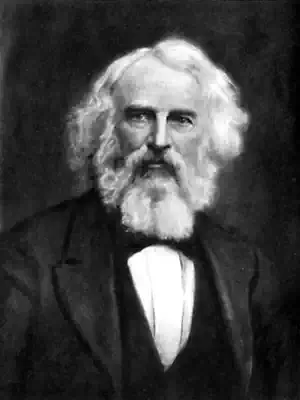
Henry Wadsworth Longfellow
The Fiftieth Birthday Of Agassiz. (Birds Of Passage. Flight The First)
The Fiftieth Birthday Of Agassiz. (Birds Of Passage. Flight The First)
It was fifty years ago
In the pleasant month of May,
In the beautiful Pays de Vaud,
A child in its cradle lay.
And Nature, the old nurse, took
The child upon her knee,
Saying: 'Here is a story-book
Thy Father has written for thee.'
'Come, wander with me,' she said,
'Into regions yet untrod;
And read what is still unread
In the manuscripts of God.'
And he wandered away and away
With Nature, the dear old nurse,
Who sang to him night and day
The rhymes of the universe.
And whenever the way seemed long,
Or his heart began to fail,
She would sing a more wonderful song,
Or tell a more marvellous tale.
So she keeps him still a child,
And will not let him go,
Though at times his heart beats wild
For the beautiful Pays de Vaud;
Though at times he hears in his dreams
The Ranz des Vaches of old,
And the rush of mountain streams
From glaciers clear and cold;
And the mother at home says, 'Hark!
For his voice I listen and yearn;
It is growing late and dark,
And my boy does not return!'
It was fifty years ago
In the pleasant month of May,
In the beautiful Pays de Vaud,
A child in its cradle lay.
And Nature, the old nurse, took
The child upon her knee,
Saying: 'Here is a story-book
Thy Father has written for thee.'
'Come, wander with me,' she said,
'Into regions yet untrod;
And read what is still unread
In the manuscripts of God.'
And he wandered away and away
With Nature, the dear old nurse,
Who sang to him night and day
The rhymes of the universe.
And whenever the way seemed long,
Or his heart began to fail,
She would sing a more wonderful song,
Or tell a more marvellous tale.
So she keeps him still a child,
And will not let him go,
Though at times his heart beats wild
For the beautiful Pays de Vaud;
Though at times he hears in his dreams
The Ranz des Vaches of old,
And the rush of mountain streams
From glaciers clear and cold;
And the mother at home says, 'Hark!
For his voice I listen and yearn;
It is growing late and dark,
And my boy does not return!'
325
Henry Wadsworth Longfellow
Christmas Bells
Christmas Bells
"I heard the bells on Christmas Day
Their old familiar carols play,
And wild and sweet
The words repeat
Of peace on earth, good-will to men!
And thought how, as the day had come,
The belfries of all Christendom
Had rolled along
The unbroken song
Of peace on earth, good-will to men!
Till, ringing, singing on its way,
The world revolved from night to day,
A voice, a chime
A chant sublime
Of peace on earth, good-will to men!
Then from each black accursed mouth
The cannon thundered in the South,
And with the sound
The carols drowned
Of peace on earth, good-will to men!
It was as if an earthquake rent
The hearth-stones of a continent,
And made forlorn
The households born
Of peace on earth, good-will to men!
And in despair I bowed my head;
"There is no peace on earth," I said;
"For hate is strong,
And mocks the song
Of peace on earth, good-will to men!"
Then pealed the bells more loud and deep:
"God is not dead; nor doth he sleep!
The Wrong shall fail,
The Right prevail,
With peace on earth, good-will to men!"
"I heard the bells on Christmas Day
Their old familiar carols play,
And wild and sweet
The words repeat
Of peace on earth, good-will to men!
And thought how, as the day had come,
The belfries of all Christendom
Had rolled along
The unbroken song
Of peace on earth, good-will to men!
Till, ringing, singing on its way,
The world revolved from night to day,
A voice, a chime
A chant sublime
Of peace on earth, good-will to men!
Then from each black accursed mouth
The cannon thundered in the South,
And with the sound
The carols drowned
Of peace on earth, good-will to men!
It was as if an earthquake rent
The hearth-stones of a continent,
And made forlorn
The households born
Of peace on earth, good-will to men!
And in despair I bowed my head;
"There is no peace on earth," I said;
"For hate is strong,
And mocks the song
Of peace on earth, good-will to men!"
Then pealed the bells more loud and deep:
"God is not dead; nor doth he sleep!
The Wrong shall fail,
The Right prevail,
With peace on earth, good-will to men!"
335
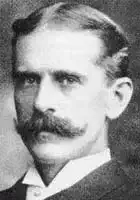
Henry Van Dyke
Thomas Bailey Aldrich
Thomas Bailey Aldrich
I
BIRTHDAY VERSES
Dear Aldrich, now November's mellow days
Have brought another Festa round to you,
You can't refuse a loving-cup of praise
From friends the fleeting years have bound to you.
Here come your Marjorie Daw, your dear Bad Boy,
Prudence, and Judith the Bethulian,
And many more, to wish you birthday joy,
And sunny hours, and sky caerulean!
Your children all, they hurry to your den,
With wreaths of honour they have won for you,
To merry-make your threescore years and ten.
You, old? Why, life has just begun for you!
There's many a reader whom your silver songs
And crystal stories cheer in loneliness.
What though the newer writers come in throngs?
You're sure to keep your charm of only-ness.
You do your work with careful, loving touch, --
An artist to the very core of you, --
You know the magic spell of "not-too-much ":
We read, -- and wish that there was more of you.
And more there is: for while we love your books
Because their subtle skill is part of you;
We love you better, for our friendship looks
Behind them to the human heart of you.
November 24, 1906.
II
MEMORIAL SONNET
THIS is the house where little Aldrich read
The early pages of Life's wonder-book:
With boyish pleasure, in this ingle-nook
He watched the drift-wood fire of Fancy spread
Bright colours on the pictures, blue and red:
Boy-like he skipped the longer words, and took
His happy way, with searching, dreamful look
Among the deeper things more simply said.
Then, came his turn to write: and still the flame
Of Fancy played through all the tales he told,
And still he won the laurelled poet's fame
With simple words wrought into rhymes of gold.
Look, here's the face to which this house is frame, --
A man too wise to let his heart grow old!
I
BIRTHDAY VERSES
Dear Aldrich, now November's mellow days
Have brought another Festa round to you,
You can't refuse a loving-cup of praise
From friends the fleeting years have bound to you.
Here come your Marjorie Daw, your dear Bad Boy,
Prudence, and Judith the Bethulian,
And many more, to wish you birthday joy,
And sunny hours, and sky caerulean!
Your children all, they hurry to your den,
With wreaths of honour they have won for you,
To merry-make your threescore years and ten.
You, old? Why, life has just begun for you!
There's many a reader whom your silver songs
And crystal stories cheer in loneliness.
What though the newer writers come in throngs?
You're sure to keep your charm of only-ness.
You do your work with careful, loving touch, --
An artist to the very core of you, --
You know the magic spell of "not-too-much ":
We read, -- and wish that there was more of you.
And more there is: for while we love your books
Because their subtle skill is part of you;
We love you better, for our friendship looks
Behind them to the human heart of you.
November 24, 1906.
II
MEMORIAL SONNET
THIS is the house where little Aldrich read
The early pages of Life's wonder-book:
With boyish pleasure, in this ingle-nook
He watched the drift-wood fire of Fancy spread
Bright colours on the pictures, blue and red:
Boy-like he skipped the longer words, and took
His happy way, with searching, dreamful look
Among the deeper things more simply said.
Then, came his turn to write: and still the flame
Of Fancy played through all the tales he told,
And still he won the laurelled poet's fame
With simple words wrought into rhymes of gold.
Look, here's the face to which this house is frame, --
A man too wise to let his heart grow old!
298
Henry Van Dyke
A Prayer for a Mother's Birthday
A Prayer for a Mother's Birthday
Lord Jesus, Thou hast known
A mother's love and tender care:
And Thou wilt hear, while for my own
Mother most dear I make this birthday prayer.
Protect her life, I pray,
Who gave the gift of life to me;
And may she know, from day to day,
The deepening glow of Life that comes from Thee.
As once upon her breast
Fearless and well content I lay,
So let her heart, on Thee at rest,
Feel fears depart and troubles fade away.
Her every wish fulfill;
And even if Thou must refuse
In anything, let Thy wise will
A comfort bring such as kind mothers use.
Ah, hold her by the hand,
As once her hand held mine;
And though she may not understand
Life's winding way, lead her in peace divine.
I cannot pay my debt
For all the love that she has given;
But Thou, love's Lord, wilt not forget
Her due reward,--bless her in earth and heaven.
Lord Jesus, Thou hast known
A mother's love and tender care:
And Thou wilt hear, while for my own
Mother most dear I make this birthday prayer.
Protect her life, I pray,
Who gave the gift of life to me;
And may she know, from day to day,
The deepening glow of Life that comes from Thee.
As once upon her breast
Fearless and well content I lay,
So let her heart, on Thee at rest,
Feel fears depart and troubles fade away.
Her every wish fulfill;
And even if Thou must refuse
In anything, let Thy wise will
A comfort bring such as kind mothers use.
Ah, hold her by the hand,
As once her hand held mine;
And though she may not understand
Life's winding way, lead her in peace divine.
I cannot pay my debt
For all the love that she has given;
But Thou, love's Lord, wilt not forget
Her due reward,--bless her in earth and heaven.
331
Henry Van Dyke
A Health to Mark Twain
A Health to Mark Twain
At his Birthday Feast
With memories old and wishes new
We crown our cups again,
And here's to you, and here's to you
With love that ne'er shall wane!
And may you keep, at sixty-seven,
The joy of earth, the hope of heaven,
And fame well-earned, and friendship true,
And peace that comforts every pain,
And faith that fights the battle through,
And all your heart's unbounded wealth,
And all your wit, and all your health,--
Yes, here's a hearty health to you,
And here's to you, and here's to you,
Long life to you, Mark Twain.
At his Birthday Feast
With memories old and wishes new
We crown our cups again,
And here's to you, and here's to you
With love that ne'er shall wane!
And may you keep, at sixty-seven,
The joy of earth, the hope of heaven,
And fame well-earned, and friendship true,
And peace that comforts every pain,
And faith that fights the battle through,
And all your heart's unbounded wealth,
And all your wit, and all your health,--
Yes, here's a hearty health to you,
And here's to you, and here's to you,
Long life to you, Mark Twain.
235

Henry Lawson
A Word from the Bards
A Word from the Bards
IT IS New Year’s Day and I rise to state that here on the Sydney side
The Bards have commenced to fill out of late and they’re showing their binjies with
pride
They’re patting their binjies with pride, old man, and I want you to understand,
That a binjied bard is a bard indeed when he sings in the Southern Land,
Old chaps,
When he sings in the Southern Land.
For the Southern Land is the Poet’s Home, and over the world’s wide roam,
There was never till now a binjied bard that lived in a poet’s home, old man;
For the poet’s home was a hell on earth, and I want you to understand,
That it isn’t exactly a paradise down here in the Southern Land,
Old chap,
Down here in the Southern Land.
The Beer and the Bailiff were gone last night and the “temple” doorstep clean,
And our heads are clear and our hearts are light with wine from the Riverine—
With wine from the Riverine, old man, and I want you to understand
That Bard, Beer and Bailiff too long were kin down here in the Southern Land,
Old man,
Down here in the Southern Land.
It is not because of a larger fee, nor yet that the bards are free,
For the bards I know and the bards I see are married enough for three;
Are married enough for three, old man, and I want you to understand,
They’ve a right to be married enough for four, down here in the Southern Land,
My girl,
Down here in the Southern Land.
But I think it’s because a bird went round and twittered in ears of men
That bards have care and the world seems bare as seen from the rhyming den,
And twittered in ears of men, old chaps, and got folks to understand
That a poet is something more than a joke down here in the Southern Land,
Old man,
Down here in the Southern Land.
IT IS New Year’s Day and I rise to state that here on the Sydney side
The Bards have commenced to fill out of late and they’re showing their binjies with
pride
They’re patting their binjies with pride, old man, and I want you to understand,
That a binjied bard is a bard indeed when he sings in the Southern Land,
Old chaps,
When he sings in the Southern Land.
For the Southern Land is the Poet’s Home, and over the world’s wide roam,
There was never till now a binjied bard that lived in a poet’s home, old man;
For the poet’s home was a hell on earth, and I want you to understand,
That it isn’t exactly a paradise down here in the Southern Land,
Old chap,
Down here in the Southern Land.
The Beer and the Bailiff were gone last night and the “temple” doorstep clean,
And our heads are clear and our hearts are light with wine from the Riverine—
With wine from the Riverine, old man, and I want you to understand
That Bard, Beer and Bailiff too long were kin down here in the Southern Land,
Old man,
Down here in the Southern Land.
It is not because of a larger fee, nor yet that the bards are free,
For the bards I know and the bards I see are married enough for three;
Are married enough for three, old man, and I want you to understand,
They’ve a right to be married enough for four, down here in the Southern Land,
My girl,
Down here in the Southern Land.
But I think it’s because a bird went round and twittered in ears of men
That bards have care and the world seems bare as seen from the rhyming den,
And twittered in ears of men, old chaps, and got folks to understand
That a poet is something more than a joke down here in the Southern Land,
Old man,
Down here in the Southern Land.
267
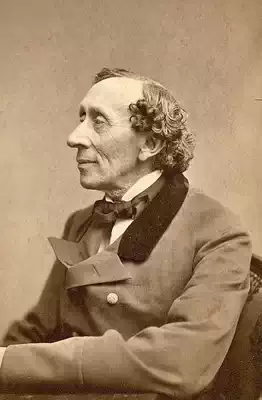
Hans Christian Andersen
Januar
Januar
'- Nyfødt Aaret er vorden!
Stolt, med den flagrende Lok, i Storm og i Blæst,
Paa sin vingede Hest
Jager Tiden hen over Jorden - !'
*
Vandringsmanden.
Et Hjem for Samojed og Pescheræ
Viser den frosne Jord med sin Snee;
Men her, som i et Feeland at see,
Staaer det riimfrosne Træ
Og løfter mod Solen sin glimrende Green
Mod en Luft, som Italiens, sortblaa, men reen.
Det er deiligt at see,
Hvor over den hvide Snee
Den sorte Rovfugl svæver,
Og Hytterne hist, hvor Røgen sig hæver,
Hvor Pigen strøer Korn af sin lille Kurv
For den qviddrende Spurv.
-Ja, nyfødt Aaret er vorden!
Stolt med den flagrende Lok, i Storm og i Blæst,
Paa sin vingede Hest
Jager Tiden hen over Jorden,
Trykker med faderlig Arm
Sine Børn, de kommende Aar, til sin Barm.
Er Maanen i Næ tolv Gange vorden,
Svæver et Barn fra hans Bryst til Jorden,
Hvorfra den ventende Broder vil stige
Igjen til sit evige Rige.
Thi Himmelens mægtige Blaa er det Hav,
Hvor Aaret forsvinder,
Hvorfra det nye oprinder
For vor Jord, denne altid blomstrende Grav.
Tiden
(paa sin vingede Hest).
Min Jord, Du er saa skjøn at see
I Sommer-Grønt, i Vinter-Snee!
Din Kamp, Din Færdsel, Død og Liv,
Alt peger til et Guddoms-Bliv!
Du Hvilepunkt for Tanken gav;
Først saae jeg kun et Taage-Hav,
Det maatte snart for Lyset døe,
Og Du fremstod, men alt var Sø!
Da voxte frem den første Ø,
Med Skov og Frugt og Blomster smaae,
Og Mennesket sin Skaber saae.
Hvert Aar et Barn jeg sendte ned,
Og gjennem Had og Kjærlighed
Det atter sig til Himlen svang,
Naar Maanen skifted' tolvte Gang.
Vandringsmanden.
See de henrundne Aar, som bevingede Smaae,
Svæve hen i det Blaae.
Men det yngste, smukt, med et flagrende Haar,
Nærmest ved Faderen staaer;
Verden det nævner: 'det gamle Aar'.
Det stirrer mod Jorden tilbage,
Hører dets Klage!
Tiden.
Hvorfor staaer Øiet fuldt af Graad?
Paa Jorden har Du endt din Daad,
Alt voxer der for Herrens Meed,
Til Frihed, Kraft og Kjærlighed.
Det yngste Barn vel græder meest,
Men har det derfor Sorger fleest?
Det gamle Aar.*
Hvor mellem Myrter og glødende Frugter
I Bugter
Floderne gaae
I den tryllende Nat, under sydlige Blaa,
Eet, kun Eet i Naturen jeg saae:
Kulsorte Ravne med hæse Skrig
Fløi om svævende Liig,
Og de sang, jeg det hører paa ny!
'- Stille det er i den mægtige By,
Stille, som her under Galgen.
Guitaren toner ei længer mod Sky,
Sværdet i Balgen!
Beder og drømmer, Qvinde og Mand,
I Tajos og Ebros blomstrende Land.
-Fra Fængslernes pestfyldte Gange,
Hvor Vandet steeg om den døende Fange,
Hørte jeg Suk og Forbandelsens Skrig;
Rundt om saae jeg tusinde blodige Liig;
Ungdommens Slægt,
Under Lænkernes Vægt,
Sendt bort, langt bort over Hav,
Til Africas brændende Grav,
Medens Munkene stolt, ved Orgelets Klang,
Sang en Vuggesang,
Og jeg, paa min sorte, fjedrede Vinge,
I mægtige Ringe,
Mig svang om Don Miguels Slot
Og sang for min Drot!'
-Saa qvad den sorte skrigende Ravn.
Men Friheds Hymner lød fra Frankrigs Havn,
Og Folket steeg paa Aandens stolte Bane;
Thi plantede jeg kjækt den franske Fane
Paa Atlasbjerget - - steeg igjen derned,
Men fandt kun Striid og Stræben, uden Meed.
-Hvor Donaufloden sig i Bugter snoer,
Hvor Vinen paa de varme Bjerge groer,
Jeg saae det ladte Trækskib glide frem,
Den stolte Flod bar Rigdom til sit Hjem.
Mod Natten sov den raske Bonde ind,
Med Sundheds-Æblet paa sin runde Kind,
Ved Dag-Gry laae han død - et sortblaa Liig,
Og hvor jeg kom, lød Skræk og vilde Skrig,
Thi Pestens fule Sot det monne være.
Den kom fra Ruslands Død-indviede Hære,
Hvis halve Magt, hvorhen mit Øie saae,
Som Aadsler paa de øde Marker laae,
Ja Ven og Fjende, henslængt Favn i Favn,
Et Bytte for den sultne Ulv og Ravn;
Men Himlen brændte i den røde Lue.
-I Grændsebyen, i den lave Stue,
Jeg saae en gammel Bedstemoer i Krogen;
Hun sad med Bibelen, hun aabned' Bogen
Og læste høit: - 'Den Rige havde
Eet tusind Faar, den Fattige kun eet,
Da tog den Rige dette eneste - -'
Hun standsede, Graad stod i hvert et Øie,
Og Sønnen, o, jeg husker det saa nøie!
'Hvor ligner det et Sagn', begyndte han,
'Som I og jeg og alle har oplevet;
Kun kom Propheten ikke der og sagde
Til ham, som gjorde dette: 'Du est Manden!'
- Tre Naboer - de vare mægtige -
Faldt paa at ville dele mellem sig
Den mindre rige Naboes Eiendomme;
Den Mægtigste tog selv hans Børn fra ham,
Og sendte disse bort, langt bort derfra,
Behandlede ham som en Hund i Lænke,
Og Lænken trængte ind i Kjødet paa ham,
Han havde intet mere - kun sit Navn,
Sit gamle Hæders-Navn, selv dette skulde
Udslettes nu. Da kogte Blodet i ham,
Han voved' Kampen mod den Mægtige;
Han kun forlangte Livet og sin Frihed!
Han stred. Han stred alene, uden Hjælp;
Og Mængden græd ved Mandens store Jammer,
Men taalte roligt dog, man slæbte ham
Til Slagterbænken, det forlangte jo
Den mægtige, den stolte Herres Ære!'
Han taug - jeg svang mig bort fra Friheds Grav
Over det svulmende Hav.
-Dybt, hvor Naturen synes at sove,
Hvor de vilde Huroners Tal
Søge Fjendernes Hjerneskal,
Hvor den svulmende Flod
Bliver Skum ved Fjeldmassens Fod,
I Amerikas uendelige Skove;
Hvor i Kredse Fuglene steeg
Om en tusindaarig Eeg,
Og hvor atter Stilheden, dyb og lang,
Gjorde Barmen trang,
Der saae jeg en Flok, nei en Hær,
Qvinder og Børn,
Hvem Øxen brød Vei over Skovens Tjørn
Ved det blaahvide Maaneskjær.
Indfødte, Kristne ved Daab og Ord,
I det blomstrende Fædreneland,
Forjagne fra Hjem og dyrkede Jord
Af den hvide Mand. -
Frihedens Land, med stigende Flor
Du hæver Dig blomstrende stor,
Mens de ældste Slægter vige og svinde!
Ja mod Vest, høit mod Polen,
Som Solen,
De hendøe bag Bjergenes Tinde.
-Dog, eet Sted fandt jeg Kjærlighed og Fred,
Hvor Bautastenen staaer ved Søens Bred,
Hvor Bøgen voxer, deilig uden Lige,
Og Danmark kaldte man det lille Rige!
-Ja der, og ved det stolte Dovrefjeld,
Flød, uden Bloddaab, Friheds Kildevæld,
Og Blomst og Frugt mit Øie kunde see,
Som Kornets Spiren under Vinter-Snee.
Tiden.
Og end Du græder, skjøndt Du saae,
Hvordan der Liv bag Døden laae?
Aarhundredet, som Aaret, har
Jo først sin kolde Januar!
Kan alt i den dit Øie see
Det Grønne bag den hvide Snee,
Da maa dit Hjerte glad Dig spaae,
Hvad Vaarens Kampe bringe maae.
Alt grønne Spirer Danmark har,
Og Jorden Friheds Januar! -
Vandringsmanden.
Forstod jeg dig, Du Tidens stærke Aand?
Forstod jeg vel Naturens dybe Tale?
Snart sprænges alle Vintrens snevre Baand,
Og Sandheds Sol bestraaler Fjeld og Dale!
Din Januar al Jorderige fik,
Snart Aandens Vaar de frie Slægter prise,
Af Januar fik Danmark Frederik,
Og Danmark kan det første Grønt fremvise!
'- Nyfødt Aaret er vorden!
Stolt, med den flagrende Lok, i Storm og i Blæst,
Paa sin vingede Hest
Jager Tiden hen over Jorden - !'
*
Vandringsmanden.
Et Hjem for Samojed og Pescheræ
Viser den frosne Jord med sin Snee;
Men her, som i et Feeland at see,
Staaer det riimfrosne Træ
Og løfter mod Solen sin glimrende Green
Mod en Luft, som Italiens, sortblaa, men reen.
Det er deiligt at see,
Hvor over den hvide Snee
Den sorte Rovfugl svæver,
Og Hytterne hist, hvor Røgen sig hæver,
Hvor Pigen strøer Korn af sin lille Kurv
For den qviddrende Spurv.
-Ja, nyfødt Aaret er vorden!
Stolt med den flagrende Lok, i Storm og i Blæst,
Paa sin vingede Hest
Jager Tiden hen over Jorden,
Trykker med faderlig Arm
Sine Børn, de kommende Aar, til sin Barm.
Er Maanen i Næ tolv Gange vorden,
Svæver et Barn fra hans Bryst til Jorden,
Hvorfra den ventende Broder vil stige
Igjen til sit evige Rige.
Thi Himmelens mægtige Blaa er det Hav,
Hvor Aaret forsvinder,
Hvorfra det nye oprinder
For vor Jord, denne altid blomstrende Grav.
Tiden
(paa sin vingede Hest).
Min Jord, Du er saa skjøn at see
I Sommer-Grønt, i Vinter-Snee!
Din Kamp, Din Færdsel, Død og Liv,
Alt peger til et Guddoms-Bliv!
Du Hvilepunkt for Tanken gav;
Først saae jeg kun et Taage-Hav,
Det maatte snart for Lyset døe,
Og Du fremstod, men alt var Sø!
Da voxte frem den første Ø,
Med Skov og Frugt og Blomster smaae,
Og Mennesket sin Skaber saae.
Hvert Aar et Barn jeg sendte ned,
Og gjennem Had og Kjærlighed
Det atter sig til Himlen svang,
Naar Maanen skifted' tolvte Gang.
Vandringsmanden.
See de henrundne Aar, som bevingede Smaae,
Svæve hen i det Blaae.
Men det yngste, smukt, med et flagrende Haar,
Nærmest ved Faderen staaer;
Verden det nævner: 'det gamle Aar'.
Det stirrer mod Jorden tilbage,
Hører dets Klage!
Tiden.
Hvorfor staaer Øiet fuldt af Graad?
Paa Jorden har Du endt din Daad,
Alt voxer der for Herrens Meed,
Til Frihed, Kraft og Kjærlighed.
Det yngste Barn vel græder meest,
Men har det derfor Sorger fleest?
Det gamle Aar.*
Hvor mellem Myrter og glødende Frugter
I Bugter
Floderne gaae
I den tryllende Nat, under sydlige Blaa,
Eet, kun Eet i Naturen jeg saae:
Kulsorte Ravne med hæse Skrig
Fløi om svævende Liig,
Og de sang, jeg det hører paa ny!
'- Stille det er i den mægtige By,
Stille, som her under Galgen.
Guitaren toner ei længer mod Sky,
Sværdet i Balgen!
Beder og drømmer, Qvinde og Mand,
I Tajos og Ebros blomstrende Land.
-Fra Fængslernes pestfyldte Gange,
Hvor Vandet steeg om den døende Fange,
Hørte jeg Suk og Forbandelsens Skrig;
Rundt om saae jeg tusinde blodige Liig;
Ungdommens Slægt,
Under Lænkernes Vægt,
Sendt bort, langt bort over Hav,
Til Africas brændende Grav,
Medens Munkene stolt, ved Orgelets Klang,
Sang en Vuggesang,
Og jeg, paa min sorte, fjedrede Vinge,
I mægtige Ringe,
Mig svang om Don Miguels Slot
Og sang for min Drot!'
-Saa qvad den sorte skrigende Ravn.
Men Friheds Hymner lød fra Frankrigs Havn,
Og Folket steeg paa Aandens stolte Bane;
Thi plantede jeg kjækt den franske Fane
Paa Atlasbjerget - - steeg igjen derned,
Men fandt kun Striid og Stræben, uden Meed.
-Hvor Donaufloden sig i Bugter snoer,
Hvor Vinen paa de varme Bjerge groer,
Jeg saae det ladte Trækskib glide frem,
Den stolte Flod bar Rigdom til sit Hjem.
Mod Natten sov den raske Bonde ind,
Med Sundheds-Æblet paa sin runde Kind,
Ved Dag-Gry laae han død - et sortblaa Liig,
Og hvor jeg kom, lød Skræk og vilde Skrig,
Thi Pestens fule Sot det monne være.
Den kom fra Ruslands Død-indviede Hære,
Hvis halve Magt, hvorhen mit Øie saae,
Som Aadsler paa de øde Marker laae,
Ja Ven og Fjende, henslængt Favn i Favn,
Et Bytte for den sultne Ulv og Ravn;
Men Himlen brændte i den røde Lue.
-I Grændsebyen, i den lave Stue,
Jeg saae en gammel Bedstemoer i Krogen;
Hun sad med Bibelen, hun aabned' Bogen
Og læste høit: - 'Den Rige havde
Eet tusind Faar, den Fattige kun eet,
Da tog den Rige dette eneste - -'
Hun standsede, Graad stod i hvert et Øie,
Og Sønnen, o, jeg husker det saa nøie!
'Hvor ligner det et Sagn', begyndte han,
'Som I og jeg og alle har oplevet;
Kun kom Propheten ikke der og sagde
Til ham, som gjorde dette: 'Du est Manden!'
- Tre Naboer - de vare mægtige -
Faldt paa at ville dele mellem sig
Den mindre rige Naboes Eiendomme;
Den Mægtigste tog selv hans Børn fra ham,
Og sendte disse bort, langt bort derfra,
Behandlede ham som en Hund i Lænke,
Og Lænken trængte ind i Kjødet paa ham,
Han havde intet mere - kun sit Navn,
Sit gamle Hæders-Navn, selv dette skulde
Udslettes nu. Da kogte Blodet i ham,
Han voved' Kampen mod den Mægtige;
Han kun forlangte Livet og sin Frihed!
Han stred. Han stred alene, uden Hjælp;
Og Mængden græd ved Mandens store Jammer,
Men taalte roligt dog, man slæbte ham
Til Slagterbænken, det forlangte jo
Den mægtige, den stolte Herres Ære!'
Han taug - jeg svang mig bort fra Friheds Grav
Over det svulmende Hav.
-Dybt, hvor Naturen synes at sove,
Hvor de vilde Huroners Tal
Søge Fjendernes Hjerneskal,
Hvor den svulmende Flod
Bliver Skum ved Fjeldmassens Fod,
I Amerikas uendelige Skove;
Hvor i Kredse Fuglene steeg
Om en tusindaarig Eeg,
Og hvor atter Stilheden, dyb og lang,
Gjorde Barmen trang,
Der saae jeg en Flok, nei en Hær,
Qvinder og Børn,
Hvem Øxen brød Vei over Skovens Tjørn
Ved det blaahvide Maaneskjær.
Indfødte, Kristne ved Daab og Ord,
I det blomstrende Fædreneland,
Forjagne fra Hjem og dyrkede Jord
Af den hvide Mand. -
Frihedens Land, med stigende Flor
Du hæver Dig blomstrende stor,
Mens de ældste Slægter vige og svinde!
Ja mod Vest, høit mod Polen,
Som Solen,
De hendøe bag Bjergenes Tinde.
-Dog, eet Sted fandt jeg Kjærlighed og Fred,
Hvor Bautastenen staaer ved Søens Bred,
Hvor Bøgen voxer, deilig uden Lige,
Og Danmark kaldte man det lille Rige!
-Ja der, og ved det stolte Dovrefjeld,
Flød, uden Bloddaab, Friheds Kildevæld,
Og Blomst og Frugt mit Øie kunde see,
Som Kornets Spiren under Vinter-Snee.
Tiden.
Og end Du græder, skjøndt Du saae,
Hvordan der Liv bag Døden laae?
Aarhundredet, som Aaret, har
Jo først sin kolde Januar!
Kan alt i den dit Øie see
Det Grønne bag den hvide Snee,
Da maa dit Hjerte glad Dig spaae,
Hvad Vaarens Kampe bringe maae.
Alt grønne Spirer Danmark har,
Og Jorden Friheds Januar! -
Vandringsmanden.
Forstod jeg dig, Du Tidens stærke Aand?
Forstod jeg vel Naturens dybe Tale?
Snart sprænges alle Vintrens snevre Baand,
Og Sandheds Sol bestraaler Fjeld og Dale!
Din Januar al Jorderige fik,
Snart Aandens Vaar de frie Slægter prise,
Af Januar fik Danmark Frederik,
Og Danmark kan det første Grønt fremvise!
338
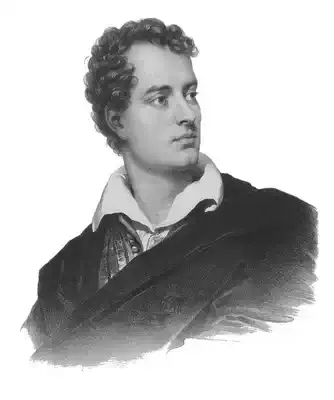
Lord Byron
On My Thirty-Third Birthday, January 22, 1821
On My Thirty-Third Birthday, January 22, 1821
Through life's dull road, so dim and dirty,
I have dragg'd to threeandthirty.
What have these years left to me?
Nothingexcept
thirtythree.
Through life's dull road, so dim and dirty,
I have dragg'd to threeandthirty.
What have these years left to me?
Nothingexcept
thirtythree.
432
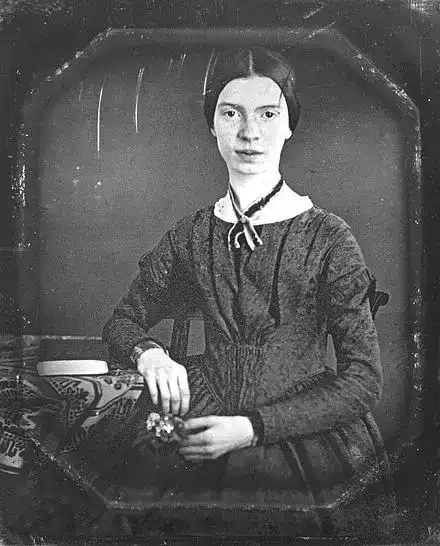
Emily Dickinson
One Year ago—jots what?
One Year ago—jots what?
296
One Year ago—jots what?
God—spell the word! I—can't—
Was't Grace? Not that—
Was't Glory? That—will do—
Spell slower—Glory—
Such Anniversary shall be—
Sometimes—not often—in Eternity—
When farther Parted, than the Common Woe—
Look—feed upon each other's faces—so—
In doubtful meal, if it be possible
Their Banquet's true—
I tasted—careless—then—
I did not know the Wine
Came once a World—Did you?
Oh, had you told me so—
This Thirst would blister—easier—now—
You said it hurt you—most—
Mine—was an Acorn's Breast—
And could not know how fondness grew
In Shaggier Vest—
Perhaps—I couldn't—
But, had you looked in—
A Giant—eye to eye with you, had been—
No Acorn—then—
So—Twelve months ago—
We breathed—
Then dropped the Air—
Which bore it best?
Was this—the patientest—
Because it was a Child, you know—
And could not value—Air?
If to be "Elder"—mean most pain—
I'm old enough, today, I'm certain—then—
As old as thee—how soon?
One—Birthday more—or Ten?
Let me—choose!
Ah, Sir, None!
296
One Year ago—jots what?
God—spell the word! I—can't—
Was't Grace? Not that—
Was't Glory? That—will do—
Spell slower—Glory—
Such Anniversary shall be—
Sometimes—not often—in Eternity—
When farther Parted, than the Common Woe—
Look—feed upon each other's faces—so—
In doubtful meal, if it be possible
Their Banquet's true—
I tasted—careless—then—
I did not know the Wine
Came once a World—Did you?
Oh, had you told me so—
This Thirst would blister—easier—now—
You said it hurt you—most—
Mine—was an Acorn's Breast—
And could not know how fondness grew
In Shaggier Vest—
Perhaps—I couldn't—
But, had you looked in—
A Giant—eye to eye with you, had been—
No Acorn—then—
So—Twelve months ago—
We breathed—
Then dropped the Air—
Which bore it best?
Was this—the patientest—
Because it was a Child, you know—
And could not value—Air?
If to be "Elder"—mean most pain—
I'm old enough, today, I'm certain—then—
As old as thee—how soon?
One—Birthday more—or Ten?
Let me—choose!
Ah, Sir, None!
287