

Poems in this topic
Anger and Indignation
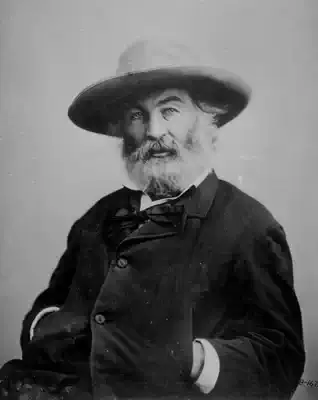
Walt Whitman
Race Of Veterans
Race Of Veterans
RACE of veterans! Race of victors!
Race of the soil, ready for conflict! race of the conquering march!
(No more credulity's race, abiding-temper'd race;)
Race henceforth owning no law but the law of itself;
Race of passion and the storm.
RACE of veterans! Race of victors!
Race of the soil, ready for conflict! race of the conquering march!
(No more credulity's race, abiding-temper'd race;)
Race henceforth owning no law but the law of itself;
Race of passion and the storm.
320
Walt Whitman
Drum-Taps
Drum-Taps
Aroused and angry,
I thought to beat the alarum, and urge relentless war;
But soon my fingers fail'd me, my face droop'd, and I resign'd
myself,
To sit by the wounded and soothe them, or silently watch the dead.
Drum-Taps
FIRST, O songs, for a prelude,
Lightly strike on the stretch'd tympanum, pride and joy in my city,
How she led the rest to arms--how she gave the cue,
How at once with lithe limbs, unwaiting a moment, she sprang;
(O superb! O Manhattan, my own, my peerless!
O strongest you in the hour of danger, in crisis! O truer than
steel!)
How you sprang! how you threw off the costumes of peace with
indifferent hand;
How your soft opera-music changed, and the drum and fife were heard
in their stead;
How you led to the war, (that shall serve for our prelude, songs of
soldiers,)
How Manhattan drum-taps led. 10
Forty years had I in my city seen soldiers parading;
Forty years as a pageant--till unawares, the Lady of this teeming and
turbulent city,
Sleepless amid her ships, her houses, her incalculable wealth,
With her million children around her--suddenly,
At dead of night, at news from the south,
Incens'd, struck with clench'd hand the pavement.
A shock electric--the night sustain'd it;
Till with ominous hum, our hive at day-break pour'd out its myriads.
From the houses then, and the workshops, and through all the
doorways,
Leapt they tumultuous--and lo! Manhattan arming. 20
To the drum-taps prompt,
The young men falling in and arming;
The mechanics arming, (the trowel, the jack-plane, the blacksmith's
hammer, tost aside with precipitation;)
The lawyer leaving his office, and arming--the judge leaving the
court;
The driver deserting his wagon in the street, jumping down, throwing
the reins abruptly down on the horses' backs;
The salesman leaving the store--the boss, book-keeper, porter, all
leaving;
Squads gather everywhere by common consent, and arm;
The new recruits, even boys--the old men show them how to wear their
accoutrements--they buckle the straps carefully;
Outdoors arming--indoors arming--the flash of the musket-barrels;
The white tents cluster in camps--the arm'd sentries around--the
sunrise cannon, and again at sunset; 30
Arm'd regiments arrive every day, pass through the city, and embark
from the wharves;
(How good they look, as they tramp down to the river, sweaty, with
their guns on their shoulders!
How I love them! how I could hug them, with their brown faces, and
their clothes and knapsacks cover'd with dust!)
The blood of the city up--arm'd! arm'd! the cry everywhere;
The flags flung out from the steeples of churches, and from all the
public buildings and stores;
The tearful parting--the mother kisses her son--the son kisses his
mother;
(Loth is the mother to part--yet not a word does she speak to detain
him;)
The tumultuous escort--the ranks of policemen preceding, clearing the
way;
The unpent enthusiasm--the wild cheers of the crowd for their
favorites;
The artillery--the silent cannons, bright as gold, drawn along,
rumble lightly over the stones; 40
(Silent cannons--soon to cease your silence!
Soon, unlimber'd, to begin the red business;)
All the mutter of preparation--all the determin'd arming;
The hospital service--the lint, bandages, and medicines;
The women volunteering for nurses--the work begun for, in earnest--no
mere parade now;
War! an arm'd race is advancing!--the welcome for battle--no turning
away;
War! be it weeks, months, or years--an arm'd race is advancing to
welcome it.
Mannahatta a-march!--and it's O to sing it well!
It's O for a manly life in the camp!
And the sturdy artillery! 50
The guns, bright as gold--the work for giants--to serve well the
guns:
Unlimber them! no more, as the past forty years, for salutes for
courtesies merely;
Put in something else now besides powder and wadding.
And you, Lady of Ships! you Mannahatta!
Old matron of this proud, friendly, turbulent city!
Often in peace and wealth you were pensive, or covertly frown'd amid
all your children;
But now you smile with joy, exulting old Mannahatta!
Aroused and angry,
I thought to beat the alarum, and urge relentless war;
But soon my fingers fail'd me, my face droop'd, and I resign'd
myself,
To sit by the wounded and soothe them, or silently watch the dead.
Drum-Taps
FIRST, O songs, for a prelude,
Lightly strike on the stretch'd tympanum, pride and joy in my city,
How she led the rest to arms--how she gave the cue,
How at once with lithe limbs, unwaiting a moment, she sprang;
(O superb! O Manhattan, my own, my peerless!
O strongest you in the hour of danger, in crisis! O truer than
steel!)
How you sprang! how you threw off the costumes of peace with
indifferent hand;
How your soft opera-music changed, and the drum and fife were heard
in their stead;
How you led to the war, (that shall serve for our prelude, songs of
soldiers,)
How Manhattan drum-taps led. 10
Forty years had I in my city seen soldiers parading;
Forty years as a pageant--till unawares, the Lady of this teeming and
turbulent city,
Sleepless amid her ships, her houses, her incalculable wealth,
With her million children around her--suddenly,
At dead of night, at news from the south,
Incens'd, struck with clench'd hand the pavement.
A shock electric--the night sustain'd it;
Till with ominous hum, our hive at day-break pour'd out its myriads.
From the houses then, and the workshops, and through all the
doorways,
Leapt they tumultuous--and lo! Manhattan arming. 20
To the drum-taps prompt,
The young men falling in and arming;
The mechanics arming, (the trowel, the jack-plane, the blacksmith's
hammer, tost aside with precipitation;)
The lawyer leaving his office, and arming--the judge leaving the
court;
The driver deserting his wagon in the street, jumping down, throwing
the reins abruptly down on the horses' backs;
The salesman leaving the store--the boss, book-keeper, porter, all
leaving;
Squads gather everywhere by common consent, and arm;
The new recruits, even boys--the old men show them how to wear their
accoutrements--they buckle the straps carefully;
Outdoors arming--indoors arming--the flash of the musket-barrels;
The white tents cluster in camps--the arm'd sentries around--the
sunrise cannon, and again at sunset; 30
Arm'd regiments arrive every day, pass through the city, and embark
from the wharves;
(How good they look, as they tramp down to the river, sweaty, with
their guns on their shoulders!
How I love them! how I could hug them, with their brown faces, and
their clothes and knapsacks cover'd with dust!)
The blood of the city up--arm'd! arm'd! the cry everywhere;
The flags flung out from the steeples of churches, and from all the
public buildings and stores;
The tearful parting--the mother kisses her son--the son kisses his
mother;
(Loth is the mother to part--yet not a word does she speak to detain
him;)
The tumultuous escort--the ranks of policemen preceding, clearing the
way;
The unpent enthusiasm--the wild cheers of the crowd for their
favorites;
The artillery--the silent cannons, bright as gold, drawn along,
rumble lightly over the stones; 40
(Silent cannons--soon to cease your silence!
Soon, unlimber'd, to begin the red business;)
All the mutter of preparation--all the determin'd arming;
The hospital service--the lint, bandages, and medicines;
The women volunteering for nurses--the work begun for, in earnest--no
mere parade now;
War! an arm'd race is advancing!--the welcome for battle--no turning
away;
War! be it weeks, months, or years--an arm'd race is advancing to
welcome it.
Mannahatta a-march!--and it's O to sing it well!
It's O for a manly life in the camp!
And the sturdy artillery! 50
The guns, bright as gold--the work for giants--to serve well the
guns:
Unlimber them! no more, as the past forty years, for salutes for
courtesies merely;
Put in something else now besides powder and wadding.
And you, Lady of Ships! you Mannahatta!
Old matron of this proud, friendly, turbulent city!
Often in peace and wealth you were pensive, or covertly frown'd amid
all your children;
But now you smile with joy, exulting old Mannahatta!
466
Walt Whitman
ARM’D year! year of the struggle!
ARM’D year! year of the struggle!
No dainty rhymes or sentimental love verses for you, terrible year!
Not you as some pale poetling, seated at a desk, lisping cadenzas
piano;
But as a strong man, erect, clothed in blue clothes, advancing,
carrying a rifle on your shoulder,
With well-gristled body and sunburnt face and hands–with a knife in
the belt at your side,
As I heard you shouting loud–your sonorous voice ringing across the
continent;
Your masculine voice, O year, as rising amid the great cities,
Amid the men of Manhattan I saw you, as one of the workmen, the
dwellers in Manhattan;
Or with large steps crossing the prairies out of Illinois and
Indiana,
Rapidly crossing the West with springy gait, and descending the
Alleghanies;
Or down from the great lakes, or in Pennsylvania, or on deck along
the Ohio river;
Or southward along the Tennessee or Cumberland rivers, or at
Chattanooga on the mountain top,
Saw I your gait and saw I your sinewy limbs, clothed in blue, bearing
weapons, robust year;
Heard your determin’d voice, launch’d forth again and again;
Year that suddenly sang by the mouths of the round-lipp’d cannon,
I repeat you, hurrying, crashing, sad, distracted year.
No dainty rhymes or sentimental love verses for you, terrible year!
Not you as some pale poetling, seated at a desk, lisping cadenzas
piano;
But as a strong man, erect, clothed in blue clothes, advancing,
carrying a rifle on your shoulder,
With well-gristled body and sunburnt face and hands–with a knife in
the belt at your side,
As I heard you shouting loud–your sonorous voice ringing across the
continent;
Your masculine voice, O year, as rising amid the great cities,
Amid the men of Manhattan I saw you, as one of the workmen, the
dwellers in Manhattan;
Or with large steps crossing the prairies out of Illinois and
Indiana,
Rapidly crossing the West with springy gait, and descending the
Alleghanies;
Or down from the great lakes, or in Pennsylvania, or on deck along
the Ohio river;
Or southward along the Tennessee or Cumberland rivers, or at
Chattanooga on the mountain top,
Saw I your gait and saw I your sinewy limbs, clothed in blue, bearing
weapons, robust year;
Heard your determin’d voice, launch’d forth again and again;
Year that suddenly sang by the mouths of the round-lipp’d cannon,
I repeat you, hurrying, crashing, sad, distracted year.
454
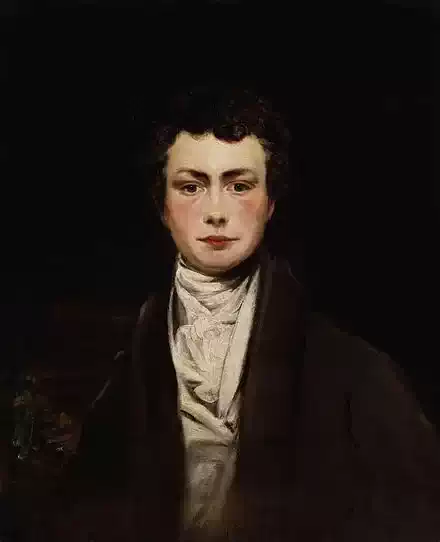
Thomas Moore
The Sinking Fund Cried
The Sinking Fund Cried
["Now what, we ask, is become of this Sinking Fund - these eight millions of surplus
above expenditure, which were to reduce the interest of the national debt by the
amount of four hundred thousand pounds annually? Where, indeed, is the Sinking Fund
itself?" - The Times]
Take your bell, take your bell,
Good Crier, and tell
To the Bulls and the Bears, till their ears are stunn'd,
That, lost or stolen,
Or fall'n through a hole in
The Treasury floor, is the Sinking Fund!
O yes! O yes!
Can anybody guess
What the deuce has become of this Treasury wonder?
It has Pitt's name on't,
All brass, in the front,
And R--b--ns--n's scrawl'd with a goose-quill under.
Folks well knew what
Would soon be its lot,
When Frederick or Jenky set hobnobbing,[]
And said to each other,
"Suppose, dear brother,
We make this funny old Fund worth robbing."
We are come, alas!
To a very pretty pass --
Eight Hundred Millions of score, to pay,
With but Five in the till,
To discharge the bill,
And even that Five too, whipp'd away!
Stop thief! stop thief! --
From the Sub to the Chief,
These Genmen of Finance are plundering cattle --
Call the watch, call Bougham
Tell Joseph Hume,
That best of Charleys, to spring his rattle.
Whoever will bring
This aforesaid thing
To the well-known house of Robinson and Jenkin,
Shall be paid, with thanks,
In the notes of banks,
Whose Funds have all learn'd "the Art of Sinking."
O yes! O yes!
Can any body guess
What the devil has become of the Treasury wonder?
It has Pitt's name on 't,
All brass, in the front,
And R--b--ns--n's, scrawl'd with a goose-quill under.
["Now what, we ask, is become of this Sinking Fund - these eight millions of surplus
above expenditure, which were to reduce the interest of the national debt by the
amount of four hundred thousand pounds annually? Where, indeed, is the Sinking Fund
itself?" - The Times]
Take your bell, take your bell,
Good Crier, and tell
To the Bulls and the Bears, till their ears are stunn'd,
That, lost or stolen,
Or fall'n through a hole in
The Treasury floor, is the Sinking Fund!
O yes! O yes!
Can anybody guess
What the deuce has become of this Treasury wonder?
It has Pitt's name on't,
All brass, in the front,
And R--b--ns--n's scrawl'd with a goose-quill under.
Folks well knew what
Would soon be its lot,
When Frederick or Jenky set hobnobbing,[]
And said to each other,
"Suppose, dear brother,
We make this funny old Fund worth robbing."
We are come, alas!
To a very pretty pass --
Eight Hundred Millions of score, to pay,
With but Five in the till,
To discharge the bill,
And even that Five too, whipp'd away!
Stop thief! stop thief! --
From the Sub to the Chief,
These Genmen of Finance are plundering cattle --
Call the watch, call Bougham
Tell Joseph Hume,
That best of Charleys, to spring his rattle.
Whoever will bring
This aforesaid thing
To the well-known house of Robinson and Jenkin,
Shall be paid, with thanks,
In the notes of banks,
Whose Funds have all learn'd "the Art of Sinking."
O yes! O yes!
Can any body guess
What the devil has become of the Treasury wonder?
It has Pitt's name on 't,
All brass, in the front,
And R--b--ns--n's, scrawl'd with a goose-quill under.
204
Thomas Moore
Ode to the Sublime Porte
Ode to the Sublime Porte
Great Sultan, how wise are thy state compositions!
And oh, above all, I admire that Decree,
In which thou command'st, that all she politicians
Shall forthwith be strangled and cast in the sea.
'Tis my fortune to know a lean Benthamite spinster --
A maid, who her faith in old Jeremy puts;
Who talks, with a lisp, of the "last new Westminster,"
And hopes you're delighted with "Mill upon Gluts";
Who tells you how clever one Mr. Fun-blank is,
How charming his Articles 'gainst the Nobility; --
And assures you that even a gentleman's rank is,
In Jeremy's school, of no sort of utility.
To see her, ye Gods, a new number perusing --
Art. - "On the Needle's variations", by Pl--e;
Art. - By her fav'rite Fun-blank - so amusing!
"Dear man! he makes poetry quite a Law case."
Art. -"Upon Fallacies", Jeremy's own --
(Chief Fallacy being, his hope to find readers); -
Art. - "Upon Honesty", author unkown; --
Art. - (by the young Mr. M--) "Hints to Breeders".
Oh, Sultan, oh, Sultan, though oft for the bag
And the bowstring, like thee, I am tempted to call --
Though drowning's too good for each blue-stocking hag,
I would bag this she Benthamite first of them all!
And, lest she should ever again lift her head
From the watery bottom, her clack to renew --
As a clog, as a sinker, far better than lead,
I would hang round her neck her own darling Review.
Great Sultan, how wise are thy state compositions!
And oh, above all, I admire that Decree,
In which thou command'st, that all she politicians
Shall forthwith be strangled and cast in the sea.
'Tis my fortune to know a lean Benthamite spinster --
A maid, who her faith in old Jeremy puts;
Who talks, with a lisp, of the "last new Westminster,"
And hopes you're delighted with "Mill upon Gluts";
Who tells you how clever one Mr. Fun-blank is,
How charming his Articles 'gainst the Nobility; --
And assures you that even a gentleman's rank is,
In Jeremy's school, of no sort of utility.
To see her, ye Gods, a new number perusing --
Art. - "On the Needle's variations", by Pl--e;
Art. - By her fav'rite Fun-blank - so amusing!
"Dear man! he makes poetry quite a Law case."
Art. -"Upon Fallacies", Jeremy's own --
(Chief Fallacy being, his hope to find readers); -
Art. - "Upon Honesty", author unkown; --
Art. - (by the young Mr. M--) "Hints to Breeders".
Oh, Sultan, oh, Sultan, though oft for the bag
And the bowstring, like thee, I am tempted to call --
Though drowning's too good for each blue-stocking hag,
I would bag this she Benthamite first of them all!
And, lest she should ever again lift her head
From the watery bottom, her clack to renew --
As a clog, as a sinker, far better than lead,
I would hang round her neck her own darling Review.
196
Thomas Moore
Avenging and Bright
Avenging and Bright
Avenging and bright fall the swift sword of Erin
On him who the brave sons of Usna betray'd! --
For every fond eye he hath waken'd a tear in
A drop from his heart-wounds shall weep o'er her blade.
By the red cloud that hung over Conor's dark dwelling,
When Ulad's three champions lay sleeping in gore --
By the billows of war, which so often, high swelling,,
Have wafted these heroes to victory's shore --
We swear to avenge them! -- no joy shall be tasted,
The harp shall be silent, the maiden unwed,
Our halls shall be mute, and our fields shall lie wasted,
Till vengeance is wreak'd on the murderer's head.
Yes, monarch! though sweet are our home recollections,
Though sweet are the tears that from tenderness fall;
Though sweet are our friendships, our hopes, our affections,
Revenge on a tyrant is sweetest of all!
Avenging and bright fall the swift sword of Erin
On him who the brave sons of Usna betray'd! --
For every fond eye he hath waken'd a tear in
A drop from his heart-wounds shall weep o'er her blade.
By the red cloud that hung over Conor's dark dwelling,
When Ulad's three champions lay sleeping in gore --
By the billows of war, which so often, high swelling,,
Have wafted these heroes to victory's shore --
We swear to avenge them! -- no joy shall be tasted,
The harp shall be silent, the maiden unwed,
Our halls shall be mute, and our fields shall lie wasted,
Till vengeance is wreak'd on the murderer's head.
Yes, monarch! though sweet are our home recollections,
Though sweet are the tears that from tenderness fall;
Though sweet are our friendships, our hopes, our affections,
Revenge on a tyrant is sweetest of all!
204
Thomas Moore
As Vanquish'd Erin
As Vanquish'd Erin
As vanquish'd Erin wept beside
The Boyne's ill-fated river,
She saw where Discord, in the tide,
Had dropp'd his loaded quiver.
"Lie hid," she cried, "ye venom'd darts,
Where mortal eye may shun you;
Lie hid -- the stain of manly hearts,
That bled for me, is on you."
But vain her wish, her weeping vain --
As Time too well hath taught her --
Each year the Fiend returns again,
And dives into that water;
And brings, triumphant, from beneath
His shafts of desolation,
And sends them, wing'd with worse than death,
Through all her maddening nation.
Alas for her who sits and mourns,
Even now, beside that river --
Unwearied still the Fiend returns,
And stored is still his quiver.
"When will this end, ye Powers of Good?"
She weeping asks for ever;
But only hears, from out that flood,
The Demon answer, "Never!"
As vanquish'd Erin wept beside
The Boyne's ill-fated river,
She saw where Discord, in the tide,
Had dropp'd his loaded quiver.
"Lie hid," she cried, "ye venom'd darts,
Where mortal eye may shun you;
Lie hid -- the stain of manly hearts,
That bled for me, is on you."
But vain her wish, her weeping vain --
As Time too well hath taught her --
Each year the Fiend returns again,
And dives into that water;
And brings, triumphant, from beneath
His shafts of desolation,
And sends them, wing'd with worse than death,
Through all her maddening nation.
Alas for her who sits and mourns,
Even now, beside that river --
Unwearied still the Fiend returns,
And stored is still his quiver.
"When will this end, ye Powers of Good?"
She weeping asks for ever;
But only hears, from out that flood,
The Demon answer, "Never!"
194
Thomas Moore
An Argument
An Argument
I've oft been told by learned friars,
That wishing and the crime are one,
And Heaven punishes desires
As much as if the deed were done.
If wishing damns us, you and I
Are damned to all our heart's content;
Come, then, at least we may enjoy
Some pleasure for our punishment!
I've oft been told by learned friars,
That wishing and the crime are one,
And Heaven punishes desires
As much as if the deed were done.
If wishing damns us, you and I
Are damned to all our heart's content;
Come, then, at least we may enjoy
Some pleasure for our punishment!
189
Thomas Moore
All In a Family Way
All In a Family Way
My banks are all furnished with rags,
So thick, even Freddy can't thin 'em;
I've torn up my old money-bags,
Having little or nought to put in 'em.
My tradesman are smashing by dozens,
But this is all nothing, they say;
For bankrupts, since Adam, are cousins,
So, it's all in the family way.
My Debt not a penny takes from me,
As sages the matter explain; --
Bob owes it to Tom and then Tommy
Just owes it to Bob back again.
Since all have thus taken to owing,
There's nobody left that can pay;
And this is the way to keep going, --
All quite in the family way.
My senators vote away millions,
To put in Prosperity's budget;
And though it were billions or trillions,
The generous rogues wouldn't grudge it.
'Tis all but a family hop,
'Twas Pitt began dancing the hay;
Hands round! -- why the deuce should we stop?
'Tis all in the family way.
My labourers used to eat mutton,
As any great man of the State does;
And now the poor devils are put on
Small rations of tea and potatoes.
But cheer up John, Sawney and Paddy,
The King is your father, they say;
So ev'n if you starve for your Daddy,
'Tis all in the family way.
My rich manufacturers tumble,
My poor ones have nothing to chew;
And, even if themselves do not grumble,
Their stomachs undoubtedly do.
But coolly to fast en famille,
Is as good for the soul as to pray;
And famine itself is genteel,
When one starves in a family way.
I have found out a secret for Freddy,
A secret for next Budget day;
Though, perhaps he may know it already,
As he, too, 's a sage in his way.
When next for the Treasury scene he
Announces "the Devil to pay",
Let him write on the bills, "Nota bene,
'Tis all in the family way."
My banks are all furnished with rags,
So thick, even Freddy can't thin 'em;
I've torn up my old money-bags,
Having little or nought to put in 'em.
My tradesman are smashing by dozens,
But this is all nothing, they say;
For bankrupts, since Adam, are cousins,
So, it's all in the family way.
My Debt not a penny takes from me,
As sages the matter explain; --
Bob owes it to Tom and then Tommy
Just owes it to Bob back again.
Since all have thus taken to owing,
There's nobody left that can pay;
And this is the way to keep going, --
All quite in the family way.
My senators vote away millions,
To put in Prosperity's budget;
And though it were billions or trillions,
The generous rogues wouldn't grudge it.
'Tis all but a family hop,
'Twas Pitt began dancing the hay;
Hands round! -- why the deuce should we stop?
'Tis all in the family way.
My labourers used to eat mutton,
As any great man of the State does;
And now the poor devils are put on
Small rations of tea and potatoes.
But cheer up John, Sawney and Paddy,
The King is your father, they say;
So ev'n if you starve for your Daddy,
'Tis all in the family way.
My rich manufacturers tumble,
My poor ones have nothing to chew;
And, even if themselves do not grumble,
Their stomachs undoubtedly do.
But coolly to fast en famille,
Is as good for the soul as to pray;
And famine itself is genteel,
When one starves in a family way.
I have found out a secret for Freddy,
A secret for next Budget day;
Though, perhaps he may know it already,
As he, too, 's a sage in his way.
When next for the Treasury scene he
Announces "the Devil to pay",
Let him write on the bills, "Nota bene,
'Tis all in the family way."
245
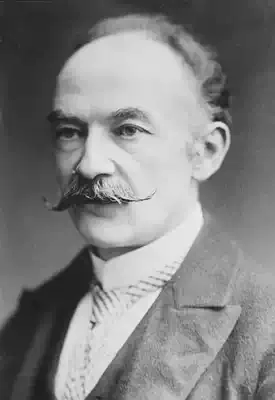
Thomas Hardy
The Pity Of It
The Pity Of It
I walked in loamy Wessex lanes, afar
From rail-track and from highway, and I heard
In field and farmstead many an ancient word
Of local lineage like "Thu bist," "Er war,"
"Ich woll," "Er sholl," and by-talk similar,
Nigh as they speak who in this month's moon gird
At England's very loins, thereunto spurred
By gangs whose glory threats and slaughters are.
Then seemed a Heart crying: "Whosoever they be
At root and bottom of this, who flung this flame
Between kin folk kin tongued even as are we,
Sinister, ugly, lurid, be their fame;
May their familiars grow to shun their name,
And their brood perish everlastingly."
I walked in loamy Wessex lanes, afar
From rail-track and from highway, and I heard
In field and farmstead many an ancient word
Of local lineage like "Thu bist," "Er war,"
"Ich woll," "Er sholl," and by-talk similar,
Nigh as they speak who in this month's moon gird
At England's very loins, thereunto spurred
By gangs whose glory threats and slaughters are.
Then seemed a Heart crying: "Whosoever they be
At root and bottom of this, who flung this flame
Between kin folk kin tongued even as are we,
Sinister, ugly, lurid, be their fame;
May their familiars grow to shun their name,
And their brood perish everlastingly."
242
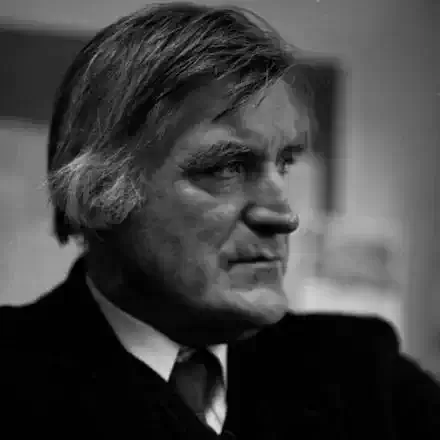
Ted Hughes
Thistles
Thistles
Against the rubber tongues of cows and the hoeing hands of men
Thistles spike the summer air
And crackle open under a blue-black pressure.
Every one a revengeful burst
Of resurrection, a grasped fistful
Of splintered weapons and Icelandic frost thrust up
From the underground stain of a decayed Viking.
They are like pale hair and the gutturals of dialects.
Every one manages a plume of blood.
Then they grow grey like men.
Mown down, it is a feud. Their sons appear
Stiff with weapons, fighting back over the same ground.
Against the rubber tongues of cows and the hoeing hands of men
Thistles spike the summer air
And crackle open under a blue-black pressure.
Every one a revengeful burst
Of resurrection, a grasped fistful
Of splintered weapons and Icelandic frost thrust up
From the underground stain of a decayed Viking.
They are like pale hair and the gutturals of dialects.
Every one manages a plume of blood.
Then they grow grey like men.
Mown down, it is a feud. Their sons appear
Stiff with weapons, fighting back over the same ground.
550
Ted Hughes
The Minotaur
The Minotaur
The mahogany table-top you smashed
Had been the broad plank top
Of my mother's heirloom sideboard-
Mapped with the scars of my whole life.
That came under the hammer.
That high stool you swung that day
Demented by my being
Twenty minutes late for baby-minding.
'Marvellous!' I shouted, 'Go on,
Smash it into kindling.
That's the stuff you're keeping out of your poems!'
And later, considered and calmer,
'Get that shoulder under your stanzas
And we'll be away.' Deep in the cave of your ear
The goblin snapped his fingers.
So what had I given him?
The bloody end of the skein
That unravelled your marriage,
Left your children echoing
Like tunnels in a labyrinth.
Left your mother a dead-end,
Brought you to the horned, bellowing
Grave of your risen father
And your own corpse in it.
The mahogany table-top you smashed
Had been the broad plank top
Of my mother's heirloom sideboard-
Mapped with the scars of my whole life.
That came under the hammer.
That high stool you swung that day
Demented by my being
Twenty minutes late for baby-minding.
'Marvellous!' I shouted, 'Go on,
Smash it into kindling.
That's the stuff you're keeping out of your poems!'
And later, considered and calmer,
'Get that shoulder under your stanzas
And we'll be away.' Deep in the cave of your ear
The goblin snapped his fingers.
So what had I given him?
The bloody end of the skein
That unravelled your marriage,
Left your children echoing
Like tunnels in a labyrinth.
Left your mother a dead-end,
Brought you to the horned, bellowing
Grave of your risen father
And your own corpse in it.
378

Siegfried Sassoon
Glory of Women
Glory of Women
You love us when we're heroes, home on leave,
Or wounded in a mentionable place.
You worship decorations; you believe
That chivalry redeems the war's disgrace.
You make us shells. You listen with delight,
By tales of dirt and danger fondly thrilled.
You crown our distant ardours while we fight,
And mourn our laurelled memories when we're killed.
You can't believe that British troops 'retire'
When hell's last horror breaks them, and they run,
Trampling the terrible corpses--blind with blood.
O German mother dreaming by the fire,
While you are knitting socks to send your son
His face is trodden deeper in the mud.
You love us when we're heroes, home on leave,
Or wounded in a mentionable place.
You worship decorations; you believe
That chivalry redeems the war's disgrace.
You make us shells. You listen with delight,
By tales of dirt and danger fondly thrilled.
You crown our distant ardours while we fight,
And mourn our laurelled memories when we're killed.
You can't believe that British troops 'retire'
When hell's last horror breaks them, and they run,
Trampling the terrible corpses--blind with blood.
O German mother dreaming by the fire,
While you are knitting socks to send your son
His face is trodden deeper in the mud.
127
Siegfried Sassoon
Fight to a Finish
Fight to a Finish
The boys came back. Bands played and flags were flying,
And Yellow-Pressmen thronged the sunlit street
To cheer the soldiers who’d refrained from dying,
And hear the music of returning feet.
‘Of all the thrills and ardours War has brought,
This moment is the finest.’ (So they thought.)
Snapping their bayonets on to charge the mob,
Grim Fusiliers broke ranks with glint of steel,
At last the boys had found a cushy job.
. . . .
I heard the Yellow-Pressmen grunt and squeal;
And with my trusty bombers turned and went
To clear those Junkers out of Parliament.
The boys came back. Bands played and flags were flying,
And Yellow-Pressmen thronged the sunlit street
To cheer the soldiers who’d refrained from dying,
And hear the music of returning feet.
‘Of all the thrills and ardours War has brought,
This moment is the finest.’ (So they thought.)
Snapping their bayonets on to charge the mob,
Grim Fusiliers broke ranks with glint of steel,
At last the boys had found a cushy job.
. . . .
I heard the Yellow-Pressmen grunt and squeal;
And with my trusty bombers turned and went
To clear those Junkers out of Parliament.
111

Sarah Teasdale
May Wind
May Wind
I said, "I have shut my heart
As one shuts an open door,
That Love may starve therein
And trouble me no more."
But over the roofs there came
The wet new wind of May,
And a tune blew up from the curb
Where the street-pianos play.
My room was white with the sun
And Love cried out in me,
"I am strong, I will break your heart
Unless you set me free."
I said, "I have shut my heart
As one shuts an open door,
That Love may starve therein
And trouble me no more."
But over the roofs there came
The wet new wind of May,
And a tune blew up from the curb
Where the street-pianos play.
My room was white with the sun
And Love cried out in me,
"I am strong, I will break your heart
Unless you set me free."
382
Rudyard Kipling
The Rhyme Of The Three Captains
The Rhyme Of The Three Captains
. . . At the close of a winter day,
Their anchors down, by London town, the Three Great Captains lay;
And one was Admiral of the North from Solway Firth to Skye,
And one was Lord of the Wessex coast and all the lands thereby,
And one was Master of the Thames from Limehouse to Blackwall,
And he was Captain of the Fleet -- the bravest of them all.
Their good guns guarded their great gray sides
that were thirty foot in the sheer,
When there came a certain trading-brig with news of a privateer.
Her rigging was rough with the clotted drift that drives in a Northern breeze,
Her sides were clogged with the lazy weed that spawns in the Eastern seas.
Light she rode in the rude tide-rip, to left and right she rolled,
And the skipper sat on the scuttle-butt and stared at an empty hold.
"I ha' paid Port dues for your Law," quoth he, "and where is the Law ye boast
If I sail unscathed from a heathen port to be robbed on a Christian coast?
Ye have smoked the hives of the Laccadives as we burn the lice in a bunk,
We tack not now to a Gallang prow or a plunging Pei-ho junk;
I had no fear but the seas were clear as far as a sail might fare
Till I met with a lime-washed Yankee brig that rode off Finisterre.
There were canvas blinds to his bow-gun ports to screen the weight he bore,
And the signals ran for a merchantman from Sandy Hook to the Nore.
He would not fly the Rovers' flag -- the bloody or the black,
But now he floated the Gridiron and now he flaunted the Jack.
He spoke of the Law as he crimped my crew -- he swore it was only a loan;
But when I would ask for my own again, he swore it was none of my own.
He has taken my little parrakeets that nest beneath the Line,
He has stripped my rails of the shaddock-frails and the green unripened pine;
He has taken my bale of dammer and spice I won beyond the seas,
He has taken my grinning heathen gods -- and what should he want o' these?
My foremast would not mend his boom, my deckhouse patch his boats;
He has whittled the two, this Yank Yahoo, to peddle for shoe-peg oats.
I could not fight for the failing light and a rough beam-sea beside,
But I hulled him once for a clumsy crimp and twice because he lied.
Had I had guns (as I had goods) to work my Christian harm,
I had run him up from his quarter-deck to trade with his own yard-arm;
I had nailed his ears to my capstan-head, and ripped them off with a saw,
And soused them in the bilgewater, and served them to him raw;
I had flung him blind in a rudderless boat to rot in the rocking dark,
I had towed him aft of his own craft, a bait for his brother shark;
I had lapped him round with cocoa husk, and drenched him with the oil,
And lashed him fast to his own mast to blaze above my spoil;
I had stripped his hide for my hammock-side,
and tasselled his beard i' the mesh,
And spitted his crew on the live bamboo
that grows through the gangrened flesh;
I had hove him down by the mangroves brown,
where the mud-reef sucks and draws,
Moored by the heel to his own keel to wait for the land-crab's claws!
He is lazar within and lime without, ye can nose him far enow,
For he carries the taint of a musky ship -- the reek of the slaver's dhow!"
The skipper looked at the tiering guns and the bulwarks tall and cold,
And the Captains Three full courteously peered down at the gutted hold,
And the Captains Three called courteously from deck to scuttle-butt: --
"Good Sir, we ha' dealt with that merchantman or ever your teeth were cut.
Your words be words of a lawless race, and the Law it standeth thus:
He comes of a race that have never a Law, and he never has boarded us.
We ha' sold him canvas and rope and spar -- we know that his price is fair,
And we know that he weeps for the lack of a Law as he rides off Finisterre.
And since he is damned for a gallows-thief by you and better than you,
We hold it meet that the English fleet should know that we hold him true."
The skipper called to the tall taffrail: -- "And what is that to me?
Did ever you hear of a Yankee brig that rifled a Seventy-three?
Do I loom so large from your quarter-deck that I lift like a ship o' the Line?
He has learned to run from a shotted gun and harry such craft as mine.
There is never a Law on the Cocos Keys to hold a white man in,
But we do not steal the niggers' meal, for that is a nigger's sin.
Must he have his Law as a quid to chaw, or laid in brass on his wheel?
Does he steal with tears when he buccaneers?
'Fore Gad, then, why does he steal?"
The skipper bit on a deep-sea word, and the word it was not sweet,
For he could see the Captains Three had signalled to the Fleet.
But three and two, in white and blue, the whimpering flags began: --
"We have heard a tale of a -- foreign sail, but he is a merchantman."
The skipper peered beneath his palm and swore by the Great Horn Spoon: --
"'Fore Gad, the Chaplain of the Fleet would bless my picaroon!"
By two and three the flags blew free to lash the laughing air: --
"We have sold our spars to the merchantman -- we know that his price is fair."
The skipper winked his Western eye, and swore by a China storm: --
"They ha' rigged him a Joseph's jury-coat to keep his honour warm."
The halliards twanged against the tops, the bunting bellied broad,
The skipper spat in the empty hold and mourned for a wasted cord.
Masthead -- masthead, the signal sped by the line o' the British craft;
The skipper called to his Lascar crew, and put her about and laughed: --
"It's mainsail haul, my bully boys all -- we'll out to the seas again --
Ere they set us to paint their pirate saint, or scrub at his grapnel-chain.
It's fore-sheet free, with her head to the sea,
and the swing of the unbought brine --
We'll make no sport in an English court till we come as a ship o' the Line:
Till we come as a ship o' the Line, my lads, of thirty foot in the sheer,
Lifting again from the outer main with news of a privateer;
Flying his pluck at our mizzen-truck for weft of Admiralty,
Heaving his head for our dipsey-lead in sign that we keep the sea.
Then fore-sheet home as she lifts to the foam -- we stand on the outward tack,
We are paid in the coin of the white man's trade --
the bezant is hard, ay, and black.
The frigate-bird shall carry my word to the Kling and the Orang-Laut
How a man may sail from a heathen coast to be robbed in a Christian port;
How a man may be robbed in Christian port while Three Great Captains there
Shall dip their flag to a slaver's rag -- to show that his trade is fair!"
. . . At the close of a winter day,
Their anchors down, by London town, the Three Great Captains lay;
And one was Admiral of the North from Solway Firth to Skye,
And one was Lord of the Wessex coast and all the lands thereby,
And one was Master of the Thames from Limehouse to Blackwall,
And he was Captain of the Fleet -- the bravest of them all.
Their good guns guarded their great gray sides
that were thirty foot in the sheer,
When there came a certain trading-brig with news of a privateer.
Her rigging was rough with the clotted drift that drives in a Northern breeze,
Her sides were clogged with the lazy weed that spawns in the Eastern seas.
Light she rode in the rude tide-rip, to left and right she rolled,
And the skipper sat on the scuttle-butt and stared at an empty hold.
"I ha' paid Port dues for your Law," quoth he, "and where is the Law ye boast
If I sail unscathed from a heathen port to be robbed on a Christian coast?
Ye have smoked the hives of the Laccadives as we burn the lice in a bunk,
We tack not now to a Gallang prow or a plunging Pei-ho junk;
I had no fear but the seas were clear as far as a sail might fare
Till I met with a lime-washed Yankee brig that rode off Finisterre.
There were canvas blinds to his bow-gun ports to screen the weight he bore,
And the signals ran for a merchantman from Sandy Hook to the Nore.
He would not fly the Rovers' flag -- the bloody or the black,
But now he floated the Gridiron and now he flaunted the Jack.
He spoke of the Law as he crimped my crew -- he swore it was only a loan;
But when I would ask for my own again, he swore it was none of my own.
He has taken my little parrakeets that nest beneath the Line,
He has stripped my rails of the shaddock-frails and the green unripened pine;
He has taken my bale of dammer and spice I won beyond the seas,
He has taken my grinning heathen gods -- and what should he want o' these?
My foremast would not mend his boom, my deckhouse patch his boats;
He has whittled the two, this Yank Yahoo, to peddle for shoe-peg oats.
I could not fight for the failing light and a rough beam-sea beside,
But I hulled him once for a clumsy crimp and twice because he lied.
Had I had guns (as I had goods) to work my Christian harm,
I had run him up from his quarter-deck to trade with his own yard-arm;
I had nailed his ears to my capstan-head, and ripped them off with a saw,
And soused them in the bilgewater, and served them to him raw;
I had flung him blind in a rudderless boat to rot in the rocking dark,
I had towed him aft of his own craft, a bait for his brother shark;
I had lapped him round with cocoa husk, and drenched him with the oil,
And lashed him fast to his own mast to blaze above my spoil;
I had stripped his hide for my hammock-side,
and tasselled his beard i' the mesh,
And spitted his crew on the live bamboo
that grows through the gangrened flesh;
I had hove him down by the mangroves brown,
where the mud-reef sucks and draws,
Moored by the heel to his own keel to wait for the land-crab's claws!
He is lazar within and lime without, ye can nose him far enow,
For he carries the taint of a musky ship -- the reek of the slaver's dhow!"
The skipper looked at the tiering guns and the bulwarks tall and cold,
And the Captains Three full courteously peered down at the gutted hold,
And the Captains Three called courteously from deck to scuttle-butt: --
"Good Sir, we ha' dealt with that merchantman or ever your teeth were cut.
Your words be words of a lawless race, and the Law it standeth thus:
He comes of a race that have never a Law, and he never has boarded us.
We ha' sold him canvas and rope and spar -- we know that his price is fair,
And we know that he weeps for the lack of a Law as he rides off Finisterre.
And since he is damned for a gallows-thief by you and better than you,
We hold it meet that the English fleet should know that we hold him true."
The skipper called to the tall taffrail: -- "And what is that to me?
Did ever you hear of a Yankee brig that rifled a Seventy-three?
Do I loom so large from your quarter-deck that I lift like a ship o' the Line?
He has learned to run from a shotted gun and harry such craft as mine.
There is never a Law on the Cocos Keys to hold a white man in,
But we do not steal the niggers' meal, for that is a nigger's sin.
Must he have his Law as a quid to chaw, or laid in brass on his wheel?
Does he steal with tears when he buccaneers?
'Fore Gad, then, why does he steal?"
The skipper bit on a deep-sea word, and the word it was not sweet,
For he could see the Captains Three had signalled to the Fleet.
But three and two, in white and blue, the whimpering flags began: --
"We have heard a tale of a -- foreign sail, but he is a merchantman."
The skipper peered beneath his palm and swore by the Great Horn Spoon: --
"'Fore Gad, the Chaplain of the Fleet would bless my picaroon!"
By two and three the flags blew free to lash the laughing air: --
"We have sold our spars to the merchantman -- we know that his price is fair."
The skipper winked his Western eye, and swore by a China storm: --
"They ha' rigged him a Joseph's jury-coat to keep his honour warm."
The halliards twanged against the tops, the bunting bellied broad,
The skipper spat in the empty hold and mourned for a wasted cord.
Masthead -- masthead, the signal sped by the line o' the British craft;
The skipper called to his Lascar crew, and put her about and laughed: --
"It's mainsail haul, my bully boys all -- we'll out to the seas again --
Ere they set us to paint their pirate saint, or scrub at his grapnel-chain.
It's fore-sheet free, with her head to the sea,
and the swing of the unbought brine --
We'll make no sport in an English court till we come as a ship o' the Line:
Till we come as a ship o' the Line, my lads, of thirty foot in the sheer,
Lifting again from the outer main with news of a privateer;
Flying his pluck at our mizzen-truck for weft of Admiralty,
Heaving his head for our dipsey-lead in sign that we keep the sea.
Then fore-sheet home as she lifts to the foam -- we stand on the outward tack,
We are paid in the coin of the white man's trade --
the bezant is hard, ay, and black.
The frigate-bird shall carry my word to the Kling and the Orang-Laut
How a man may sail from a heathen coast to be robbed in a Christian port;
How a man may be robbed in Christian port while Three Great Captains there
Shall dip their flag to a slaver's rag -- to show that his trade is fair!"
423
Rudyard Kipling
The Outlaws
The Outlaws
Through learned and laborious years
They set themselves to find
Fresh terrors and undreamed-of fears
To heap upon mankind.
ALl that they drew from Heaven above
Or digged from earth beneath,
They laid into their treasure-trove
And arsenals of death:
While, for well-weighed advantage sake,
Ruler and ruled alike
Built up the faith they meant to break
When the fit hour should strike.
They traded with the careless earth,
And good return it gave:
They plotted by their neighbour's hearth
The means to make him slave.
When all was ready to their hand
They loosed their hidden sword,
And utterly laid waste a land
Their oath was pledged to guard.
Coldly they went about to raise
To life and make more dread
Abominations of old days,
That men believed were dead.
They paid the price to reach their goal
Across a world in flame;
But their own hate slew their own soul
Before that victory came.
Through learned and laborious years
They set themselves to find
Fresh terrors and undreamed-of fears
To heap upon mankind.
ALl that they drew from Heaven above
Or digged from earth beneath,
They laid into their treasure-trove
And arsenals of death:
While, for well-weighed advantage sake,
Ruler and ruled alike
Built up the faith they meant to break
When the fit hour should strike.
They traded with the careless earth,
And good return it gave:
They plotted by their neighbour's hearth
The means to make him slave.
When all was ready to their hand
They loosed their hidden sword,
And utterly laid waste a land
Their oath was pledged to guard.
Coldly they went about to raise
To life and make more dread
Abominations of old days,
That men believed were dead.
They paid the price to reach their goal
Across a world in flame;
But their own hate slew their own soul
Before that victory came.
419
Rudyard Kipling
The Justice's Tale
The Justice's Tale
Chauser
With them there rode a lustie Engineere
Wel skilled to handel everich waie her geere,
Hee was soe wise ne man colde showe him naught
And out of Paris was hys learning brought.
Frontlings mid brazen wheeles and wandes he sat,
And on hys heade he bare an leathern hat.
Hee was soe certaine of his gouvermance,
That, by the Road, he tooke everie chaunce.
For simple people and for lordlings eke
Hee wolde not bate a del but onlie squeeke
Behinde their backes on an horne hie
Until they crope into a piggestie.
He was more wood than bull in china-shoppe,
And yet for cowes and dogges wolde hee stop,
Not our of Marcie but for Preudence-sake--
Than hys dependaunce ever was hys brake.
Chauser
With them there rode a lustie Engineere
Wel skilled to handel everich waie her geere,
Hee was soe wise ne man colde showe him naught
And out of Paris was hys learning brought.
Frontlings mid brazen wheeles and wandes he sat,
And on hys heade he bare an leathern hat.
Hee was soe certaine of his gouvermance,
That, by the Road, he tooke everie chaunce.
For simple people and for lordlings eke
Hee wolde not bate a del but onlie squeeke
Behinde their backes on an horne hie
Until they crope into a piggestie.
He was more wood than bull in china-shoppe,
And yet for cowes and dogges wolde hee stop,
Not our of Marcie but for Preudence-sake--
Than hys dependaunce ever was hys brake.
414
Rudyard Kipling
The Female of the Species
The Female of the Species
When the Himalayan peasant meets the he-bear in his pride,
He shouts to scare the monster who will often turn aside.
But the she-bear thus accosted rends the peasant tooth and nail,
For the female of the species is more deadly than the male.
When Nag, the wayside cobra, hears the careless foot of man,
He will sometimes wriggle sideways and avoid it if he can,
But his mate makes no such motion where she camps beside the trail -
For the female of the species is more deadly than the male.
When the early Jesuit fathers preached to Hurons and Choctaws,
They prayed to be delivered from the vengeance of the squaws -
'Twas the women, not the warriors, turned those stark enthusiasts pale -
For the female of the species is more deadly than the male.
Man's timid heart is bursting with the things he must not say,
For the Woman that God gave him isn't his to give away;
But when hunter meets with husband, each confirms the others tale -
The female of the species is more deadly than the male.
Man, a bear in most relations, worm and savage otherwise,
Man propounds negotiations, Man accepts the compromise;
Very rarely will he squarely push the logic of a fact
To its ultimate conclusion in unmitigated act.
Fear, or foolishness, impels him, ere he lay the wicked low,
To concede some form of trial even to his fiercest foe.
Mirth obscene diverts his anger; Doubt and Pity oft perplex
Him in dealing with an issue - to the scandal of the Sex!
But the Woman that God gave him, every fibre of her frame
Proves her launched for one sole issue, armed and engined for the same,
And to serve that single issue, lest the generations fail,
The female of the species must be deadlier than the male.
She who faces Death by torture for each life beneath her breast
May not deal in doubt or pity - must not swerve for fact or jest.
These be purely male diversions - not in these her honor dwells -
She, the Other Law we live by, is that Law and nothing else!
She can bring no more to living than the powers that make her great
As the Mother of the Infant and the Mistress of the Mate;
And when Babe and Man are lacking and she strides unclaimed to claim
Her right as femme (and baron), her equipment is the same.
She is wedded to convictions - in default of grosser ties;
Her contentions are her children, Heaven help him, who denies!
He will meet no cool discussion, but the instant, white-hot wild
Wakened female of the species warring as for spouse and child.
Unprovoked and awful charges - even so the she-bear fights;
Speech that drips, corrodes and poisons - even so the cobra bites;
Scientific vivisection of one nerve till it is raw,
And the victim writhes with anguish - like the Jesuit with the squaw!
So it comes that Man, the coward, when he gathers to confer
With his fellow-braves in council, dare not leave a place for her
Where, at war with Life and Conscience, he uplifts his erring hands
To some God of abstract justice - which no woman understands.
And Man knows it! Knows, moreover, that the Woman that God gave him
Must command but may not govern; shall enthrall but not enslave him.
And She knows, because She warns him and Her instincts never fail,
That the female of Her species is more deadly than the male!
When the Himalayan peasant meets the he-bear in his pride,
He shouts to scare the monster who will often turn aside.
But the she-bear thus accosted rends the peasant tooth and nail,
For the female of the species is more deadly than the male.
When Nag, the wayside cobra, hears the careless foot of man,
He will sometimes wriggle sideways and avoid it if he can,
But his mate makes no such motion where she camps beside the trail -
For the female of the species is more deadly than the male.
When the early Jesuit fathers preached to Hurons and Choctaws,
They prayed to be delivered from the vengeance of the squaws -
'Twas the women, not the warriors, turned those stark enthusiasts pale -
For the female of the species is more deadly than the male.
Man's timid heart is bursting with the things he must not say,
For the Woman that God gave him isn't his to give away;
But when hunter meets with husband, each confirms the others tale -
The female of the species is more deadly than the male.
Man, a bear in most relations, worm and savage otherwise,
Man propounds negotiations, Man accepts the compromise;
Very rarely will he squarely push the logic of a fact
To its ultimate conclusion in unmitigated act.
Fear, or foolishness, impels him, ere he lay the wicked low,
To concede some form of trial even to his fiercest foe.
Mirth obscene diverts his anger; Doubt and Pity oft perplex
Him in dealing with an issue - to the scandal of the Sex!
But the Woman that God gave him, every fibre of her frame
Proves her launched for one sole issue, armed and engined for the same,
And to serve that single issue, lest the generations fail,
The female of the species must be deadlier than the male.
She who faces Death by torture for each life beneath her breast
May not deal in doubt or pity - must not swerve for fact or jest.
These be purely male diversions - not in these her honor dwells -
She, the Other Law we live by, is that Law and nothing else!
She can bring no more to living than the powers that make her great
As the Mother of the Infant and the Mistress of the Mate;
And when Babe and Man are lacking and she strides unclaimed to claim
Her right as femme (and baron), her equipment is the same.
She is wedded to convictions - in default of grosser ties;
Her contentions are her children, Heaven help him, who denies!
He will meet no cool discussion, but the instant, white-hot wild
Wakened female of the species warring as for spouse and child.
Unprovoked and awful charges - even so the she-bear fights;
Speech that drips, corrodes and poisons - even so the cobra bites;
Scientific vivisection of one nerve till it is raw,
And the victim writhes with anguish - like the Jesuit with the squaw!
So it comes that Man, the coward, when he gathers to confer
With his fellow-braves in council, dare not leave a place for her
Where, at war with Life and Conscience, he uplifts his erring hands
To some God of abstract justice - which no woman understands.
And Man knows it! Knows, moreover, that the Woman that God gave him
Must command but may not govern; shall enthrall but not enslave him.
And She knows, because She warns him and Her instincts never fail,
That the female of Her species is more deadly than the male!
627
Rudyard Kipling
Late Came the God
Late Came the God
Late came the God, having sent his forerunners who were
not regarded--
Late, but in wrath;
Saying: "The wrong shall be paid, the contempt be rewarded
On all that she hath."
He poisoned the blade and struck home, the full bosom receiving
The wound and the venom in one, past cure or relieving.
He made treaty with Time to stand still that the grief might
be fresh--
Daily renewed and nightly pursued through her soul to her
flesh--
Mornings of memory, noontides of agony, midnights unslaked
for her,
Till the stones of the streets of her Hells and her Paradise ached
for her.
So she lived while her body corrupted upon her.
And she called on the Night for a sign, and a Sign was allowed,
And she builded an Altar and served by the light of her Vision--
Alone, without hope of regard or reward, but uncowed,
Resolute, selfless, divine.
These things she did in Love's honour...
What is a God beside Woman? Dust and derision!
Late came the God, having sent his forerunners who were
not regarded--
Late, but in wrath;
Saying: "The wrong shall be paid, the contempt be rewarded
On all that she hath."
He poisoned the blade and struck home, the full bosom receiving
The wound and the venom in one, past cure or relieving.
He made treaty with Time to stand still that the grief might
be fresh--
Daily renewed and nightly pursued through her soul to her
flesh--
Mornings of memory, noontides of agony, midnights unslaked
for her,
Till the stones of the streets of her Hells and her Paradise ached
for her.
So she lived while her body corrupted upon her.
And she called on the Night for a sign, and a Sign was allowed,
And she builded an Altar and served by the light of her Vision--
Alone, without hope of regard or reward, but uncowed,
Resolute, selfless, divine.
These things she did in Love's honour...
What is a God beside Woman? Dust and derision!
476
Rudyard Kipling
Hadramauti
Hadramauti
Who knows the heart of the Christian? How does he reason?
What are his measures and balances? Which is his season
For laughter, forbearance or bloodshed, and what devils move him
When he arises to smite us? I do not love him.
He invites the derision of strangers—he enters all places.
Booted, bareheaded he enters. With shouts and embraces
He asks of us news of the household whom we reckon nameless.
Certainly Allah created him forty-fold shameless!
So it is not in the Desert. One came to me weeping—
The Avenger of Blood on his track—I took him in keeping.
Demanding not whom he had slain, I refreshed him, I fed him
As he were even a brother. But Eblis had bred him.
He was the son of an ape, ill at ease in his clothing.
He talked with his head, hands and feet. I endured him with loathing.
Whatever his spirit conceived his countenance showed it
As a frog shows in a mud-puddle. Yet I abode it!
I fingered my beard and was dumb, in silence confronting him.
His soul was too shallow for silence, e'en with Death hunting him.
I said: "'Tis his weariness speaks," but, when he had rested,
He chirped in my face like some sparrow, and, presently, jested!
Wherefore slew I that stranger? He brought me dishonour.
I saddled my mare, Bijli, I set him upon her.
I gave him rice and goat's flesh. He bared me to laughter.
When he was gone from my tent, swift I followed after,
Taking my sword in my hand. The hot wine had filled him.
Under the stars he mocked me—therefore I killed him!
Who knows the heart of the Christian? How does he reason?
What are his measures and balances? Which is his season
For laughter, forbearance or bloodshed, and what devils move him
When he arises to smite us? I do not love him.
He invites the derision of strangers—he enters all places.
Booted, bareheaded he enters. With shouts and embraces
He asks of us news of the household whom we reckon nameless.
Certainly Allah created him forty-fold shameless!
So it is not in the Desert. One came to me weeping—
The Avenger of Blood on his track—I took him in keeping.
Demanding not whom he had slain, I refreshed him, I fed him
As he were even a brother. But Eblis had bred him.
He was the son of an ape, ill at ease in his clothing.
He talked with his head, hands and feet. I endured him with loathing.
Whatever his spirit conceived his countenance showed it
As a frog shows in a mud-puddle. Yet I abode it!
I fingered my beard and was dumb, in silence confronting him.
His soul was too shallow for silence, e'en with Death hunting him.
I said: "'Tis his weariness speaks," but, when he had rested,
He chirped in my face like some sparrow, and, presently, jested!
Wherefore slew I that stranger? He brought me dishonour.
I saddled my mare, Bijli, I set him upon her.
I gave him rice and goat's flesh. He bared me to laughter.
When he was gone from my tent, swift I followed after,
Taking my sword in my hand. The hot wine had filled him.
Under the stars he mocked me—therefore I killed him!
445
Rudyard Kipling
Cain and Abel
Cain and Abel
Western Version
Cain and Abel were brothers born.
(Koop-la! Come along, cows!)
One raised cattle and one raised corn.
(Koop-la! Come along! Co-hoe!)
And Cain he farmed by the river-side,
So he did not care how much it dried.
For he banked, and he sluiced, and he ditched and he led
(And the Corn don't care for the Horn)--
A-half Euphrates out of her bed
To water his dam' Corn!
But Abel herded out on the plains
Where you have to go by the dams and rains.
It happened, after a three-year drought,
The wells, and the springs, and the dams gave out.
The Herd-bulls came to Cain's new house
(They wanted water so!--)
With the hot red Sun between their brows,
Sayin' "Give us water for our pore cows!"
But Cain he told 'em--"No!"
The Cows they came to Cain's big house
With the cold white Moon between their brows,
Sayin' "Give some water to us pore cows!"
But Cain he told 'em--"No?"
The li'l Calves came to Cain's fine house
With the Evenin' Star between their brows,
Sayin' "'Give us water an' we'll be cows."
But Cain he told 'em--"No!"
The Herd-bulls led 'em back again,
An' Abel went an' said to Cain: --
"Oh sell me water, my brother dear,
Or there will be no beef this year."
And Cain he answered--"No! "
"Then draw your hatches, my brother true,
An' let a little water through."
But Cain he answered: -"No!
"My dams are tight an' my ditches are sound,
An' not a drop goes through or round
Till she's done her duty by the Corn.
"I will not sell, an' I will not draw,
An' if you breach, I'll have the Law,
As sure as you are borne! "
Then Abel took his best bull-goad,
An' holed a dyke on the Eden road.
He opened her up with foot an' hand,
An' let Euphrates loose on the land.
He spilled Euphrates out on the plain,
So's all his cattle could drink again.
Then Cain he saw what Abel done--
But, in those days, there was no Gun!
So he made him a club of a hickory-limb,
An' halted Abel an' said to him: --
"I did not sell an' I did not draw,
An' now you've breached I'll have the Law.
"You ride abroad in your hat and spurs,
Hell-hoofin' over my cucumbers!
"You pray to the Lord to send you luck
An' you loose your steers in my garden-truck:
"An' now you're bust, as you ought to be,
You can keep on prayin' but not to me!"
Then Abel saw it meant the life;
But, in those days, there was no Knife:
So he up with his big bull-goad instead,
But--Cain hit first and dropped him dead!
The Herd-bulls ran when they smelt the blood,
An' horned an' pawed in that Red Mud.
The Calves they bawled, and the Steers they milled,
Because it was the First Man Killed;
An' the whole Herd broke for the Land of Nod,
An' Cain was left to be judged by God!
But, seein' all he had had to bear,
I never could call the Judgment fair!
Western Version
Cain and Abel were brothers born.
(Koop-la! Come along, cows!)
One raised cattle and one raised corn.
(Koop-la! Come along! Co-hoe!)
And Cain he farmed by the river-side,
So he did not care how much it dried.
For he banked, and he sluiced, and he ditched and he led
(And the Corn don't care for the Horn)--
A-half Euphrates out of her bed
To water his dam' Corn!
But Abel herded out on the plains
Where you have to go by the dams and rains.
It happened, after a three-year drought,
The wells, and the springs, and the dams gave out.
The Herd-bulls came to Cain's new house
(They wanted water so!--)
With the hot red Sun between their brows,
Sayin' "Give us water for our pore cows!"
But Cain he told 'em--"No!"
The Cows they came to Cain's big house
With the cold white Moon between their brows,
Sayin' "Give some water to us pore cows!"
But Cain he told 'em--"No?"
The li'l Calves came to Cain's fine house
With the Evenin' Star between their brows,
Sayin' "'Give us water an' we'll be cows."
But Cain he told 'em--"No!"
The Herd-bulls led 'em back again,
An' Abel went an' said to Cain: --
"Oh sell me water, my brother dear,
Or there will be no beef this year."
And Cain he answered--"No! "
"Then draw your hatches, my brother true,
An' let a little water through."
But Cain he answered: -"No!
"My dams are tight an' my ditches are sound,
An' not a drop goes through or round
Till she's done her duty by the Corn.
"I will not sell, an' I will not draw,
An' if you breach, I'll have the Law,
As sure as you are borne! "
Then Abel took his best bull-goad,
An' holed a dyke on the Eden road.
He opened her up with foot an' hand,
An' let Euphrates loose on the land.
He spilled Euphrates out on the plain,
So's all his cattle could drink again.
Then Cain he saw what Abel done--
But, in those days, there was no Gun!
So he made him a club of a hickory-limb,
An' halted Abel an' said to him: --
"I did not sell an' I did not draw,
An' now you've breached I'll have the Law.
"You ride abroad in your hat and spurs,
Hell-hoofin' over my cucumbers!
"You pray to the Lord to send you luck
An' you loose your steers in my garden-truck:
"An' now you're bust, as you ought to be,
You can keep on prayin' but not to me!"
Then Abel saw it meant the life;
But, in those days, there was no Knife:
So he up with his big bull-goad instead,
But--Cain hit first and dropped him dead!
The Herd-bulls ran when they smelt the blood,
An' horned an' pawed in that Red Mud.
The Calves they bawled, and the Steers they milled,
Because it was the First Man Killed;
An' the whole Herd broke for the Land of Nod,
An' Cain was left to be judged by God!
But, seein' all he had had to bear,
I never could call the Judgment fair!
565
Rudyard Kipling
Bill 'Awkins
Bill 'Awkins
"'As anybody seen Bill 'Awkins?"
"Now 'ow in the devil would I know?"
"'E's taken my girl out walkin',
An' I've got to tell 'im so --
Gawd -- bless -- 'im!
I've got to tell 'im so."
"D'yer know what 'e's like, Bill 'Awkins?"
"Now what in the devil would I care?"
"'E's the livin', breathin' image of an organ-grinder's monkey,
With a pound of grease in 'is 'air --
Gawd -- bless -- 'im!
An' a pound o' grease in 'is 'air."
"An' s'pose you met Bill 'Awkins,
Now what in the devil 'ud ye do?"
"I'd open 'is cheek to 'is chin-strap buckle,
An' bung up 'is both eyes, too --
Gawd -- bless -- 'im!
An' bung up 'is both eyes, too!"
"Look 'ere, where 'e comes, Bill 'Awkins!
Now what in the devil will you say?"
"It isn't fit an' proper to be fightin' on a Sunday,
So I'll pass 'im the time o' day --
Gawd -- bless -- 'im!
I'll pass 'im the time o' day!"
"'As anybody seen Bill 'Awkins?"
"Now 'ow in the devil would I know?"
"'E's taken my girl out walkin',
An' I've got to tell 'im so --
Gawd -- bless -- 'im!
I've got to tell 'im so."
"D'yer know what 'e's like, Bill 'Awkins?"
"Now what in the devil would I care?"
"'E's the livin', breathin' image of an organ-grinder's monkey,
With a pound of grease in 'is 'air --
Gawd -- bless -- 'im!
An' a pound o' grease in 'is 'air."
"An' s'pose you met Bill 'Awkins,
Now what in the devil 'ud ye do?"
"I'd open 'is cheek to 'is chin-strap buckle,
An' bung up 'is both eyes, too --
Gawd -- bless -- 'im!
An' bung up 'is both eyes, too!"
"Look 'ere, where 'e comes, Bill 'Awkins!
Now what in the devil will you say?"
"It isn't fit an' proper to be fightin' on a Sunday,
So I'll pass 'im the time o' day --
Gawd -- bless -- 'im!
I'll pass 'im the time o' day!"
412
Rudyard Kipling
A Servant When He Reigneth
"A Servant When He Reigneth"
Three things make earth unquiet
And four she cannot brook
The godly Agur counted them
And put them in a book --
Those Four Tremendous Curses
With which mankind is cursed;
But a Servant when He Reigneth
Old Agur entered first.
An Handmaid that is Mistress
We need not call upon.
A Fool when he is full of Meat
Will fall asleep anon.
An Odious Woman Married
May bear a babe and mend;
But a Servant when He Reigneth
Is Confusion to the end.
His feet are swift to tumult,
His hands are slow to toil,
His ears are deaf to reason,
His lips are loud in broil.
He knows no use for power
Except to show his might.
He gives no heed to judgment
Unless it prove him right.
Because he served a master
Before his Kingship came,
And hid in all disaster
Behind his master's name,
So, when his Folly opens
The unnecessary hells,
A Servant when He Reigneth
Throws the blame on some one else.
His vows are lightly spoken,
His faith is hard to bind,
His trust is easy boken,
He fears his fellow-kind.
The nearest mob will move him
To break the pledge he gave --
Oh, a Servant when he Reigneth
Is more than ever slave!
Three things make earth unquiet
And four she cannot brook
The godly Agur counted them
And put them in a book --
Those Four Tremendous Curses
With which mankind is cursed;
But a Servant when He Reigneth
Old Agur entered first.
An Handmaid that is Mistress
We need not call upon.
A Fool when he is full of Meat
Will fall asleep anon.
An Odious Woman Married
May bear a babe and mend;
But a Servant when He Reigneth
Is Confusion to the end.
His feet are swift to tumult,
His hands are slow to toil,
His ears are deaf to reason,
His lips are loud in broil.
He knows no use for power
Except to show his might.
He gives no heed to judgment
Unless it prove him right.
Because he served a master
Before his Kingship came,
And hid in all disaster
Behind his master's name,
So, when his Folly opens
The unnecessary hells,
A Servant when He Reigneth
Throws the blame on some one else.
His vows are lightly spoken,
His faith is hard to bind,
His trust is easy boken,
He fears his fellow-kind.
The nearest mob will move him
To break the pledge he gave --
Oh, a Servant when he Reigneth
Is more than ever slave!
483