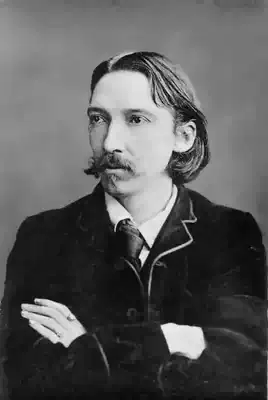
Identification and basic context
Robert Louis Balfour Stevenson was a prolific Scottish writer. He is celebrated for his novels, novellas, poems, and travel writings. His most famous works include "Treasure Island," "Strange Case of Dr Jekyll and Mr Hyde," and "Kidnapped." Stevenson's writing often delves into the complexities of human nature, the allure of adventure, and the darker aspects of the psyche. His contributions span various genres, leaving a lasting impact on literature.
Childhood and education
Born into a family of prominent civil engineers, Stevenson's early life was marked by a frail constitution and frequent illnesses, including respiratory problems. Despite his physical challenges, he received a rigorous education. He attended the University of Edinburgh, initially studying engineering and then law, though his passion for writing led him to pursue literature. His childhood was filled with stories and a vivid imagination, which would later fuel his creative endeavors. He was exposed to a wide range of literature and intellectual discussions within his family and social circles.
Literary trajectory
Stevenson's literary career began to gain momentum in the 1870s. His early works included essays and travelogues, such as "An Inland Voyage" and "Travels with a Donkey in the Cévennes." He gained significant recognition with the publication of "Treasure Island" in 1883, followed by "Strange Case of Dr Jekyll and Mr Hyde" in 1886. His output was prolific, encompassing novels, short stories, poetry, and essays. His work evolved over time, moving from travel writing and essays to powerful fictional narratives that explored moral and psychological themes. He also contributed to various periodicals and collaborated on plays.
Works, style, and literary characteristics
Stevenson's major works include "Treasure Island" (1883), "Strange Case of Dr Jekyll and Mr Hyde" (1886), "Kidnapped" (1886), and "The Master of Ballantrae" (1889). His dominant themes often revolve around adventure, morality, the duality of human nature, the supernatural, and the exotic. His style is characterized by clarity, vivid imagery, and a strong narrative drive. He masterfully employed storytelling techniques, creating memorable characters and compelling plots. His poetic works, such as "A Child's Garden of Verses," showcase a different, more lyrical and imaginative side. He was adept at creating suspense and exploring psychological depths within his characters. His language is precise and evocative, contributing to the immersive quality of his stories. While often associated with adventure fiction, his works also carry profound philosophical and moral undertones.
Cultural and historical context
Stevenson lived during the Victorian era, a period of significant social, industrial, and intellectual change in Britain. His work often reflects the era's fascination with exploration, empire, and the contrasting forces of progress and tradition. He was part of a literary scene that included contemporaries like George Meredith and Andrew Lang. His adventurous spirit and extensive travels also positioned him as a chronicler of different cultures and landscapes, engaging with the burgeoning interest in anthropology and geography of his time. His exploration of the darker side of human nature and societal hypocrisy can be seen as a commentary on the complexities of Victorian society.
Personal life
Stevenson's personal life was marked by his ongoing struggles with ill health, which significantly influenced his writing and his choice of residence. He married Fanny Vandegrift Osbourne, an American woman he met in France. Their relationship was a source of support and inspiration for him. His travels, often undertaken in search of a healthier climate, led him to live in various parts of the world, including the United States, Samoa, and the South Pacific. These experiences deeply enriched his understanding of different cultures and provided settings for his later works. He maintained friendships with other writers and artists, though his health often limited his social engagements.
Recognition and reception
During his lifetime, Stevenson achieved considerable fame and critical acclaim, particularly for his adventure novels. He was recognized as a significant literary voice of his generation. Posthumously, his reputation continued to grow, cementing his status as a classic author. His works have been widely translated and have remained consistently in print, appealing to both young and adult readers. While some critics have focused on his adventure elements, others have delved into the deeper psychological and philosophical aspects of his writing.
Influences and legacy
Stevenson was influenced by a range of authors, including Sir Walter Scott, Charles Dickens, and Edgar Allan Poe. His own work, in turn, has had a profound influence on countless writers, particularly in the genres of adventure, gothic, and children's literature. His innovative narrative techniques and explorations of character have left an indelible mark on storytelling. "Treasure Island" remains a cornerstone of adventure fiction, and "Dr Jekyll and Mr Hyde" has become a cultural touchstone for exploring themes of duality. His legacy endures through his enduring popularity and his continued presence in educational curricula and popular culture.
Interpretation and critical analysis
Stevenson's works are often analyzed for their exploration of moral dilemmas, the conflict between civilization and savagery, and the nature of identity. The duality presented in "Dr Jekyll and Mr Hyde" has been interpreted in various ways, from psychoanalytic perspectives to broader social commentary on repression and freedom. Critics often examine his use of symbolism, his engagement with themes of the uncanny, and his ability to create gripping narratives that also provoke thought. His exploration of the exotic and the 'other' in works like "The Beach of Falesá" also invites critical discussion regarding colonialism and cultural representation.
Curiosities and lesser-known aspects
Stevenson was known for his distinctive appearance, often wearing a velvet jacket and a jaunty hat. He had a lifelong fascination with the macabre and the supernatural, which informed much of his fiction. His intense desire to write and create, despite his chronic ill health, is a testament to his determination. He was also a keen observer of human nature and social customs, which he captured vividly in his writings. His nomadic lifestyle, dictated by his health, allowed him to experience a wide array of environments and cultures, shaping his unique perspective.
Death and memory
Robert Louis Stevenson died of a cerebral hemorrhage in 1894. He was buried on Mount Vaea in Samoa, overlooking the Pacific Ocean. His tomb is marked by an inscription of his own poem, "Requiem." His death was mourned by many, and his legacy has been preserved through his enduring literary works, which continue to be read, studied, and adapted worldwide.