
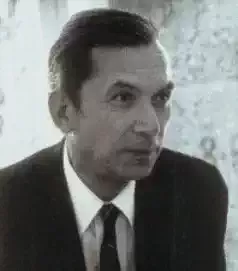
Ruy Cinatti
 PT
PT
Ruy Cinatti was a Portuguese-Italian poet, ethnologist, and physician whose poetic work is deeply marked by his experience in Timor, where he spent much of his life. His poetry explores the relationship between man and nature, identity, Timorese culture, and the human condition, with intense lyricism and precise language. With a strong connection to surrealism and avant-garde poetry, Cinatti left behind a unique body of work that reflects his life experiences in exotic lands and his profound reflections on the world and existence.
n. 1915-03-08, Londres · m. 1986-10-12, Lisboa
Bio
Identification and basic context
Ruy de Almeida Cinatti de França e Silva was a Portuguese-Italian poet, ethnologist, and physician. He was born in Lisbon in 1915 and died in 1986. He is known for his poetic work and his work as an ethnologist, with a special focus on the culture of Timor, where he lived for many years.Childhood and education
Born in Portugal, Ruy Cinatti moved to Italy at a young age, where he completed his medical studies. His medical training influenced his worldview and his approach to life and art. It was in Italy that he came into contact with European avant-garde movements, such as surrealism, which would influence his writing.Literary career
Ruy Cinatti's literary career began to take shape during his stay in Timor. There, he began writing poetry, absorbing the local landscape, culture, and people. His poetry evolved from an initial phase marked by avant-garde influences to a more personal and mature expression, strongly linked to his experience in Timorese lands. He published several poetic works, as well as ethnographic studies.Work, style, and literary characteristics
Ruy Cinatti's poetic works include titles such as "As Ilhas de Fogo" (1942) and "Cronos e o Mar" (1960). The central themes of his work are the relationship between human beings and exuberant, primitive nature, cultural identity, otherness, solitude, the passage of time, and the human condition. His poetry is marked by intense lyricism, precise vocabulary, and vivid imagery, often with a dreamlike and surreal touch. He frequently uses free verse and explores resources such as metaphor and synesthesia. His style is distinctive, combining surrealist influence with deep ethnographic and existential observation. His work engages with poetic modernity, presenting a unique vision of the exotic and the universal.Work, style, and literary characteristics
Cultural and historical context Ruy Cinatti lived during a period of intense transformations in the 20th century. His experience in Timor, a Portuguese territory at the time, places him in a colonial context, but his perspective transcends mere observation of the empire, focusing on the universality of the human condition. He was a contemporary of important Portuguese and European poets, and his work, although sometimes marginal in relation to metropolitan literary circles, established a dialogue with the artistic avant-gardes of the time.Work, style, and literary characteristics
Personal life Ruy Cinatti's life was profoundly shaped by his passion for Timor, where he worked as a doctor and conducted ethnographic research. This cultural and geographical immersion gave him a unique perspective on life and art. His personal relationships, although less publicly documented, seem to have been influenced by his introspective nature and his dedication to study and creation.Work, style, and literary characteristics
Recognition and reception Although Ruy Cinatti's work has been valued by critics and poets, his public recognition may not have reached the extent that his uniqueness and literary quality would justify. His poetry is appreciated for its originality, the depth of its reflections, and its ability to capture the essence of a different world.Work, style, and literary characteristics
Influences and legacy Cinatti was influenced by European surrealism and by poets who explored the relationship between man and nature. His legacy lies in his ability to merge ethnographic experience with poetic creation, offering a unique voice in Portuguese literature. He influenced poets who seek a deeper connection with the natural world and with other cultures.Work, style, and literary characteristics
Interpretation and critical analysis Cinatti's work is often interpreted as a meditation on otherness, identity, and the intrinsic relationship between man and the cosmos. His poetry invites contemplation of wild beauty, the fragility of existence, and the search for meaning in a constantly changing world.Work, style, and literary characteristics
Curiosities and lesser-known aspects His dual training as a physician and poet, combined with his life experience in Timor, gives him a unique profile. The way his ethnographic and poetic work intertwine demonstrates a holistic vision of the human being and their place in the world.Work, style, and literary characteristics
Death and memory Ruy Cinatti died in 1986, leaving behind a body of work that continues to be rediscovered and appreciated for its originality and depth.Poems
0No poems found
Videos
50
Comments (0)
No comments yet. Be the first to comment.