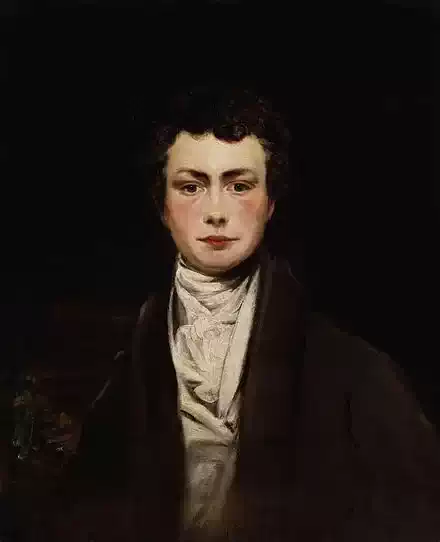
Sail On, Sail On
Sail On, Sail On
Sail on, sail on, thou fearless bark --
Where'er blows the welcome wind,
It cannot lead to scenes more dark,
More sad than those we leave behind.
Each wave that passes seems to say,
"Though death beneath our smile may be,
Less cold we are, less false than they,
Whose smiling wreck'd thy hopes and thee."
Sail on, sail on -- through endless space --
Through calm -- through tempest -- stop no more:
The stormiest sea's a resting-place
To him who leaves such hearts on shore.
Or -- if some desert land we meet,
Where never yet false-hearted men
Profaned a world, that else were sweet --
Then rest thee, bark, but not till then.
Remember Thee!
Remember Thee!
Remember thee! yes, while there's life in this heart,
It shall never forget thee, all lorn as thou art;
More dear in thy sorrow, thy gloom, and thy showers,
Than the rest of the world in their sunniest hours.
Wert thou all that I wish thee, great, glorious, and free,
First flower of the earth, and first gem of the sea,
I might hail thee with prouder, with happier brow,
But oh! could I love thee more deeply tha now?
No, thy chains as they rankle, thy blood as it runs,
But make thee more painfully dear to thy sons --
Whose hearts, like the young of the desert-bird's nest,
Drink love in each life-drop that flows from thy breast.
Quantum Est Quod Desit
Quantum Est Quod Desit
'Twas a new feeling - something more
Than we had dar'd to own before,
Which then we hid not;
We saw it in each other's eye,
And wish'd in every broken sigh
To speak, but did not!
She felt my lips' impassion'd touch;
'Twas the first time I dar'd so much,
And yet, she chid not;
But whisper'd o'er my burning brow,
'Oh! do you doubt I love you now?'
Sweet soul! I did not!
Warmly I felt her bosom thrill,
I prest it closer, closer still,
Though gently bid not;
Till - oh! the world hath seldom heard
Of lovers, who so nearly err'd,
And yet who - did not!
On Music
On Music
When through life unblest we rove,
Losing all that made life dear,
Should some notes we used to love,
In days of boyhood, meet our ear,
Oh! how welcome breathes the strain!
Wakening thoughts that long have slept,
Kindling former smiles again
In faded eyes that long have wept.
Like the gale, that sighs along
Beds of oriental flowers,
Is the grateful breath of song,
That once was heard in happier hours.
Fill'd with balm the gale sighs on,
Though the flowers have sunk in death;
So, when pleasure's dream is gone,
Its memory lives in Music's breath.
Music, oh, how faint, how weak,
Language fades before thy spell!
Why should Feeling ever speak,
When thou canst breathe her soul so well?
Friendship's balmy words may feign,
Love's are even more false than they;
Oh! 'tis only music's strain
Can sweetly soothe, and not betray.
Oh, the Shamrock
Oh, the Shamrock
Through Erin's Isle
To sport awhile
As Love and Valour wander'd,
With Wit, the sprite,
Whose quiver bright
A thousand arrows squander'd;
Where'er they pass,
A triple grass
Shoots up, with dew-drops streaming,
As softly green
As emeralds seen
Through purest crystal gleaming.
Oh the Shamrock, the green, immortal Shamrock!
Chosen leaf
Of Bard and Chief,
Old Erin's native Shamrock!
Says Valour, "See,
They spring for me,
Those leafy gems of morning!" --
Says Love, "No, no,
For me they grow,
My fragrant path adorning."
But Wit perceives
The triple leaves,
And cries, "Oh! do not sever
A type that blends
Three godlike friends,
Love, Valour, Wit, for ever!"
Oh, the Shamrock, the green, immortal Shamrock!
Chosen leaf, etc.
So firmly fond
May last the bond
They wove that morn together,
And ne'er may fall
One drop of gall
On Wit's celestial feather.
May Love, as twine
His flowers divine,
Of thorny falsehood weed 'em:
May Valour ne'er
His standard rear
Against the cause of Freedom!
Oh the Shamrock, the green, immortal Shamrock!
Chosen leaf, etc.
Oh, Ye Dead!
Oh, Ye Dead!
Oh, ye Dead! oh, ye Dead! whom we know by the light you give
From your cold gleaming eyes, though you move like men who live,
Why leave you thus your graves,
In far off fields and waves,
Where the worm and the sea-bird only know your bed,
To haunt this spot where all
Those eyes that wept your fall,
And the hearts that wail'd you, like your own, lie dead?
It is true, it is true, we are shadows cold and wan;
And the fair and the brave whom we loved on earth are gone;
But still thus even in death,
So sweet the living breath
Of the fields and the flowers in our youth we wander'd o'er,
That ere, condemn'd, we go
To freeze 'mid Hecla's snow,
We would taste it a while, and think we live once more!
Oh! Had We Some Bright Little Isle of Our Own
Oh! Had We Some Bright Little Isle of Our Own
Oh! had we some bright little isle of our own,
In a blue summer ocean, far off and alone,
Where a leaf never dies in the still blooming bowers,
And the bee banquets on through a whole year of flowers;
Where the sun loves to pause
With so fond a delay,
That the night only draws
A thin veil o'er the day;
Where simply to feel that we breathe, that we live,
Is worth the best joy that life elsewhere can give.
There with souls ever ardent and pure as the clime,
We should love, as they loved in the first golden time;
The glow of the sunshine, the balm of the air,
Would steal to our hearts, and make all summer there.
With affection as free
From decline as the bowers,
And, with hope, like the bee,
Living always on flowers,
Our life should resemble a long day of light,
And our death come on, holy and calm as the night.
Oh, Banquet Not
Oh, Banquet Not
Oh, banquet not in those shining bowers,
Where Youth resorts, but come to me,
For mine's a garden of faded flowers,
More fit for sorrow, for age, and thee.
And there we shall have our feast of tears,
And many a cup in silence pour;
Our guests, the shades of former years,
Our toasts, to lips that bloom no more.
There, while the myrtle's withering boughs
Their lifeless leaves around us shed,
We'll brim the bowl to broken vows
To friends long lost, the changed, the dead.
Or, while some blighted laurel waves
Its branches o'er the dreary spot,
We'll drink to those neglected graves
Where valour sleeps, unnamed, forgot.
Oh! Arranmore, Loved Arranmore
Oh! Arranmore, Loved Arranmore
Oh! Arranmore, loved Arranmore,
How oft I dream of thee,
And of those days when, by thy shore,
I wander'd young and free.
Full many a path I've tried, since then,
Through pleasure's flowery maze,
But ne'er could find the bliss again
I felt in those sweet days.
How blithe upon thy breezy cliffs
At sunny morn I've stood,
With heart as bounding as the skiffs
That danced along thy flood;
Or, when the western wave grew bright
With daylight's parting wing,
Have sought that Eden in its light
Which dreaming poets sing;
That Eden where the immortal brave
Dwell in a land serene --
Whose bowers beyond the shining wave
At sunset, oft are seen.
Ah, dream too full of saddening truth!
Those mansions o'er the main
Are like the hopes I built in youth --
As sunny and as vain!
Oh! Breathe Not His Name
Oh! Breathe Not His Name
Oh! breathe not his name, let it sleep in the shade,
Where cold and unhonour'd his relics are laid:
Sad, silent, and dark, be the tears that we shed,
As the night-dew that falls on the grass o'er his head.
But the night-dew that falls, though in silence it weeps,
Shall brighten with verdure the grave where he sleeps;
And the tear that we shed, though in secret it rolls,
Shall long keep his memory green in our souls.