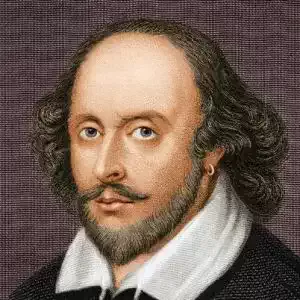
Identification and basic context
William Shakespeare is the most celebrated playwright and poet in the English language. He is often referred to by his pseudonyms, though none were widely adopted during his lifetime. He was born and died in Stratford-upon-Avon, England. His father was a glover and alderman, placing him in a respectable social standing within the town. Shakespeare was an English national and wrote exclusively in English.
Childhood and education
Details of Shakespeare's childhood are scarce, but it is generally assumed he attended the Stratford grammar school, where he would have received a solid grounding in Latin and classical literature. This formal education, supplemented by his keen observation of life and his prodigious reading, laid the foundation for his literary genius. He did not pursue higher education at university.
Literary trajectory
Shakespeare began his career in London in the late 1580s or early 1590s, likely as an actor and adapter of plays before establishing himself as a playwright. His career spanned roughly two decades, during which he wrote approximately 39 plays, 154 sonnets, and several longer poems. His work evolved over time, moving from early comedies and historical plays to his great tragedies and later romances. He was a key member of the acting company the Lord Chamberlain's Men (later the King's Men) and a shareholder in the Globe Theatre.
Works, style, and literary characteristics
Shakespeare's major works encompass tragedies ('Hamlet', 'Othello', 'King Lear', 'Macbeth', 'Romeo and Juliet'), comedies ('A Midsummer Night's Dream', 'Twelfth Night', 'As You Like It'), history plays ('Richard III', 'Henry V'), and his sonnets. His dominant themes are universal and enduring: love, death, ambition, jealousy, revenge, fate, appearance versus reality, and the nature of power. He masterfully employed various forms, including blank verse (iambic pentameter) and rhyming couplets, experimenting with structure and pacing. His poetic devices are legendary, utilizing metaphor, simile, personification, and wordplay with extraordinary skill to create rich imagery and profound meaning. His tone varies dramatically, from the profound despair of tragedy to the lighthearted wit of comedy. His poetic voice is multifaceted, capable of capturing the inner lives of kings, commoners, lovers, and fools. His language is renowned for its richness, inventiveness, and rhetorical power, coining countless words and phrases that have entered common usage.
Cultural and historical context
Shakespeare lived during the Elizabethan and Jacobean eras, a period of significant cultural, political, and economic change in England. His plays reflect the political machinations of the court, the exploration of new territories, and the prevailing religious and social anxieties of the time. He was part of a vibrant London theatre scene, interacting with contemporaries like Christopher Marlowe and Ben Jonson. His work engages with Renaissance humanism, the concept of divine right of kings, and evolving ideas about psychology and human nature.
Personal life
While much of Shakespeare's personal life remains private, he married Anne Hathaway and had three children: Susanna, and twins Hamnet and Judith. The death of his son Hamnet at a young age is speculated to have influenced themes in plays like 'Hamlet'. His friendships within the theatre world were crucial to his career. He maintained strong ties to his hometown of Stratford-upon-Avon, where he eventually retired and purchased property. His religious beliefs are a subject of scholarly debate, but his works often engage with Christian morality and theology.
Recognition and reception
Shakespeare achieved considerable fame and financial success during his lifetime, though perhaps not the same level of academic reverence as he enjoys today. His plays were popular with audiences across social classes. Posthumously, his reputation grew exponentially, and he came to be recognized as the pre-eminent figure in English literature. His works are continuously performed, studied, and celebrated worldwide, solidifying his place in the global literary canon.
Influences and legacy
Shakespeare drew inspiration from classical Roman and Greek literature (Plutarch, Ovid, Seneca), medieval morality plays, and earlier English chronicles and romances. His influence on subsequent literature, theatre, and language is immeasurable. He has inspired countless playwrights, poets, novelists, and artists across centuries and cultures. His works have been translated into virtually every major language and continue to be a cornerstone of literary education and theatrical production. His inventive use of language has permanently enriched the English lexicon.
Interpretation and critical analysis
Shakespeare's plays have been subjected to endless critical interpretation, exploring themes of political power, social justice, gender roles, psychology, and existentialism. Scholars and critics continue to debate character motivations, historical accuracy, and the philosophical underpinnings of his works. His texts are constantly re-examined through new critical lenses, including feminist, post-colonial, and psychoanalytic approaches.
Curiosities and lesser-known aspects
Shakespeare's handwriting is notoriously difficult to decipher, with only a few authenticated signatures surviving. His acting career is less documented than his playwriting. The authorship question, suggesting someone else wrote the plays attributed to him, persists despite overwhelming scholarly consensus supporting Shakespeare of Stratford. His knowledge of legal matters and Italian settings in his plays has also been a subject of curiosity.
Death and memory
William Shakespeare died on April 23, 1616, in Stratford-upon-Avon. He was buried in the chancel of Holy Trinity Church. His will famously leaves his 'second-best bed' to his wife. His enduring memory is primarily preserved through the continuous performance and study of his plays and poems, the preservation of his birthplace and home, and his monumental impact on the English language and global culture.