
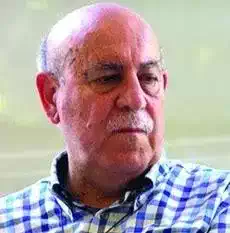
Armando Silva Carvalho
 PT
PT
Armando Silva Carvalho was a Portuguese poet, essayist, and translator whose work is marked by a profound reflection on the human condition, memory, and the passage of time. His poetry, characterized by careful language and restrained lyricism, explores universal themes with unique sensitivity. A key figure in contemporary Portuguese literature, Silva Carvalho also distinguished himself through his work as a translator, bringing important works of universal literature into Portuguese, and as an essayist, deepening his vision of art and life.
n. 1938-03-28, Olho Marinho · m. 2017-06-01, Caldas da Rainha
Biografía
Identification and basic context
Armando Silva Carvalho, full name Armando de Silva Carvalho, was a Portuguese poet, essayist, translator, and literary critic. Born in Lourenço Marques (present-day Maputo), Mozambique, on May 22, 1938, he passed away in Lisbon, Portugal, on May 22, 2018. Son of a Portuguese father and a Mozambican mother, his family background and the cultural context of colonial Mozambique profoundly shaped his worldview and early work. He was a Portuguese citizen and wrote in Portuguese. He lived a large part of his adult life in Portugal, during a period of intense political and social transformations, from the end of the Estado Novo to the consolidation of democracy, which was subtly reflected in his writing.Childhood and education
Armando Silva Carvalho's childhood took place in Mozambique, in an environment marked by the cultural diversity of the African colony. He received a formal education that gave him access to a wide range of knowledge. From an early age, he developed an interest in reading and writing, absorbing diverse literary influences and the cultural and social environment in which he was immersed.Literary career
The beginning of his literary activity dates back to the 1950s, with publications in newspapers and magazines. His evolution as a poet was marked by a continuous search for new forms of expression, while always maintaining a line of thematic and stylistic continuity. Over time, his work became consolidated as one of the most significant in contemporary Portuguese poetry. He actively participated in Portuguese cultural life, collaborating with various literary publications. He was also a renowned translator, responsible for introducing important works of universal literature into the Portuguese language.Work, style, and literary characteristics
Work, style, and literary characteristics Among his most important works are "Comenda da Morte" (1962), "Sol Árabe" (1970), "No Meio da Noite" (1992), and "A Poesia Essencial" (2004). The dominant themes in his work are the human condition, the ephemerality of life, memory, time, death, solitude, and the search for meaning. He frequently explores the relationship between the individual and the universe, intimacy and transcendence. His style is characterized by restrained lyricism, refined and precise language, and subtle musicality. He favors free verse but demonstrates a remarkable mastery of traditional forms when he uses them. He employs poetic devices such as metaphor, imagery, and rhythm to create an atmosphere of introspection and melancholy. The poetic voice is often personal and confessional, but transcends the individual to reach a universal dimension, engaging with the anxieties and aspirations of all human beings. His language is dense, imagistic, and sometimes enigmatic, inviting reflection. Silva Carvalho did not exclusively associate himself with a single literary movement, but his work dialogues with the legacy of symbolism and absorbs elements of modernism, while maintaining a unique identity.Work, style, and literary characteristics
Cultural and historical context Armando Silva Carvalho's work reflects the concerns of a Portugal in transition, from the final decades of the dictatorship to the consolidation of democracy. His education in Mozambique and subsequent life in Portugal give him a unique perspective on identity and belonging. He maintained relationships with other writers and intellectuals of his generation, actively participating in the Portuguese literary scene. His intellectual and artistic position was always aligned with profound humanity and a critical view of society.Work, style, and literary characteristics
Personal life Armando Silva Carvalho had personal relationships that, although not explicit in his work, certainly informed his sensitivity. His life experiences, his questioning, and his worldview shaped his introspective and philosophical writing. He was known for his discretion and dedication to literature. His primary profession was not writing, but his passion for poetry and translation marked his life.Work, style, and literary characteristics
Recognition and reception Armando Silva Carvalho is recognized as one of the great Portuguese poets of the latter half of the 20th century and the early 21st century. His work has gained a prominent place in the Portuguese literary canon, being studied and appreciated by both the public and critics. He received several awards and distinctions throughout his career, attesting to the importance of his contribution to literature.Work, style, and literary characteristics
Influences and legacy Armando Silva Carvalho was influenced by authors such as Fernando Pessoa, Luís Vaz de Camões, and poets from the universal tradition. His legacy lies in the depth of his reflections, the beauty of his language, and his ability to connect with the reader intimately and universally. His work continues to influence later generations of poets and writers, consolidating his place as a master of the word.Work, style, and literary characteristics
Interpretation and critical analysis Silva Carvalho's poetry invites multiple readings, exploring the complexity of human existence, the fragility of relationships, and the incessant search for meaning in a constantly changing world. His work is an invitation to contemplation and introspection.Work, style, and literary characteristics
Curiosities and lesser-known aspects An interesting aspect of his biography is his connection with Africa, which remained present in his work in various ways. His dedication to translation also reveals an important facet of his work, which significantly contributed to cultural exchange.Work, style, and literary characteristics
Death and memory Armando Silva Carvalho passed away in Lisbon, on his birthday, in 2018. His work continues to be disseminated and studied, keeping his memory and the relevance of his poetry alive.Poemas
0No se encontraron poemas
Videos
50
Comentarios (0)
Aún no hay comentarios. Sé el primero en comentar.