John Donne

John Donne

1572–1631 · lived 59 years GB GB

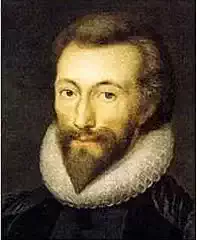
John Donne was a leading figure of the metaphysical poets, renowned for his intellectual and passionate verse that explored complex themes of love, death, religion, and the human condition. His poetry is characterized by its ingenious conceits, sharp wit, and a profound exploration of spiritual and physical experiences. Donne's career spanned roles as a poet, lawyer, and Anglican priest, culminating in his appointment as Dean of St. Paul's Cathedral. His works, including "Songs and Sonnets" and "Holy Sonnets," continue to be celebrated for their originality, emotional depth, and theological insight.

n. 1572-01-22, Londres · m. 1631-03-31, Londres

32,655 Views

Ascension

Ascension


Salute the last and everlasting day,
Joy at th' uprising of this Sun, and Son,
Ye whose true tears, or tribulation
Have purely wash'd, or burnt your drossy clay.
Behold, the Highest, parting hence away,
Lightens the dark clouds, which He treads upon ;
Nor doth He by ascending show alone,
But first He, and He first enters the way.
O strong Ram, which hast batter'd heaven for me !
Mild Lamb, which with Thy Blood hast mark'd the path !
Bright Torch, which shinest, that I the way may see !
O, with Thy own Blood quench Thy own just wrath ;
And if Thy Holy Spirit my Muse did raise,
Deign at my hands this crown of prayer and praise.
Read full poem
Bio

Identification and basic context

Full name: John Donne. Pseudonyms or heteronyms: Not known to have used significant pseudonyms or heteronyms for his published works. Date and place of birth: Baptized January 30, 1572, London, England. Date and place of death: March 31, 1631, London, England. Family background, social class, and cultural context of origin: Born into a prominent Roman Catholic family during a time of religious persecution of Catholics in Protestant England. His mother was descended from Sir Thomas More. His father was a prosperous ironmonger. This background instilled in him a complex relationship with religious and political authority. Nationality and language(s) of writing: English. Historical context in which they lived: Lived during the Elizabethan and Jacobean eras in England, a period of significant religious tension, exploration, and political intrigue.

Childhood and education

Family background and social environment: Raised in a devout Catholic household, he received a rigorous early education. His family experienced hardship due to their faith. Formal education and self-education: Studied at Hart Hall, Oxford, and Lincoln's Inn for law. He did not take degrees from Oxford, likely due to his Catholic faith. He was highly self-educated, mastering languages and theology. Early influences (readings, culture, religion, politics): Influenced by Catholic theology, Stoic philosophy, classical literature (Latin and Greek poets), and the intellectual climate of Renaissance England. His family's religious affiliations and the prevailing political climate shaped his worldview. Literary, philosophical, or artistic movements absorbed: While not strictly adhering to a single movement, his work reflects Renaissance humanism and later absorbs elements that would define metaphysical poetry. Significant events in youth: His early education, his studies at law, and the early conflicts arising from his Catholic faith.

Literary trajectory

Beginning of writing (when and how it started): Began writing poetry early in his life, initially secular and often satirical, exploring themes of love and human desire. His "Songs and Sonnets" are believed to have been composed during his twenties. Development over time (phases, changes in style): His work evolved from secular love poetry to deeply spiritual and religious verse. This shift occurred significantly after his controversial marriage and subsequent loss of favor, leading him to focus on theology and a career in the Church. Chronological evolution of the work: Early works are characterized by wit, paradox, and often scandalous themes. Later works, particularly the "Holy Sonnets" and his sermons, are marked by profound spiritual struggle, theological depth, and a direct engagement with faith and salvation. Contributions to magazines, newspapers, and anthologies: Not applicable in the modern sense; his works circulated in manuscript form among his friends and admirers. Activity as a critic, translator, or editor: He was not primarily a critic or editor of others' works, though he produced scholarly theological writings.

Works, style, and literary characteristics

Major works with dates and context of production: "Songs and Sonnets" (composed c. 1590s-1610s, published posthumously in 1633), "Holy Sonnets" (composed c. 1609-1610, published posthumously), "Devotions upon Emergent Occasions" (1624). His most famous poems, like "The Flea," "A Valediction: Forbidding Mourning," and "Death, Be Not Proud," are representative of his diverse output. Dominant themes — love, death, time, nature, identity, homeland, spirituality, etc.: Love (both erotic and divine), death (its nature, power, and conquest through faith), time (its passage and the urgency of salvation), spirituality (doubt, faith, sin, redemption), and the complexities of human experience. Form and structure — use of the sonnet, free verse, fixed forms, metrical experimentation: Masterful use of the sonnet form, often with complex rhyme schemes and syllabic variations. Also wrote in other stanzaic forms. His metrical experimentation contributes to the intellectual and dramatic quality of his verse. Poetic devices (metaphor, rhythm, musicality): Famous for his "conceits" – extended, often surprising and elaborate metaphors that connect disparate ideas (e.g., lovers to a compass in "A Valediction: Forbidding Mourning"). His rhythm is often conversational yet highly structured, creating a powerful, logical flow. Tone and poetic voice — lyrical, satirical, elegiac, epic, ironic, confessional: Highly varied: witty and satirical in early love poems, passionate and confessional in spiritual sonnets, didactic and moving in his sermons. His voice is often intellectual, argumentative, and intensely personal. Poetic voice (personal, universal, fragmented, etc.): Often personal and confessional, grappling with individual sin and salvation, yet his meditations on universal themes like love and death resonate broadly. Language and style — vocabulary, imagery density, preferred rhetorical devices: Rich, often Latinate vocabulary, intellectualized language, and extremely dense imagery. He employed paradox, irony, hyperbole, and the metaphysical conceit with great skill. Formal or thematic innovations introduced into literature: Popularized and elevated the "metaphysical conceit," a hallmark of metaphysical poetry. He brought a new intellectual rigor, emotional intensity, and dramatic realism to English poetry. Relationship with tradition and modernity: He engaged deeply with classical and Renaissance traditions but injected them with a new, modern sensibility characterized by intellectual dynamism and psychological exploration. Associated literary movements (e.g., symbolism, modernism): Primarily associated with Metaphysical poetry, which predates modernism but shares a spirit of intellectual experimentation and formal innovation. Lesser-known or unpublished works: His "Paradoxes and Problems" and extensive sermons.

Cultural and historical context

Relationship with historical events (wars, revolutions, regimes): Lived through religious conflicts and political shifts in England. His conversion to Anglicanism and subsequent clerical career were influenced by the religious climate. Relationship with other writers or literary circles: Part of a circle of intellectuals and courtiers. Contemporaries included Ben Jonson, George Herbert, and William Shakespeare. Generation or movement to which they belong (e.g., Romanticism, Modernism, Surrealism): Metaphysical poets. Political or philosophical stance: Initially secular and perhaps anti-clerical, he later became a devout Anglican, a staunch defender of the Church of England, and a trusted preacher for King James I. Influence of society and culture on the work: The intellectual ferment of the Renaissance, the religious divisions of the era, and the courtly culture all influenced his writing. Dialogues and tensions with contemporaries: Engaged in literary and intellectual debates, notably with Ben Jonson, who initially criticized Donne's "verse in droves." Critical reception during life vs. posthumous recognition: His poetry circulated widely in manuscript and was admired by contemporaries, but it was only after his death that his poems were collected and published, leading to a broader appreciation and influence.

Personal life

Significant emotional and family relationships and how they shaped the work: His marriage to Ann More was passionate but led to disgrace and financial hardship, profoundly influencing his early love poetry and later his theological writings. His wife's death was a deeply felt loss. Friendships and literary rivalries: Maintained friendships with prominent figures, including Sir Robert Drury and Sir Henry Wotton. His relationship with Ben Jonson was complex, marked by both respect and criticism. Personal experiences and crises, illnesses, or conflicts: Faced imprisonment for his secret marriage, financial struggles, and ill health, most notably his near-fatal illness which inspired "Devotions upon Emergent Occasions." Parallel professions (if they did not live solely from poetry): Lawyer, politician (Member of Parliament), and later a clergyman and preacher. Religious, spiritual, or philosophical beliefs: Began as a Catholic, converted to Anglicanism, and became a prominent preacher. His spiritual journey was central to his later life and work. Political positions and civic engagement: Served as a Member of Parliament and later as Dean of St. Paul's, engaging in public life and royal service.

Recognition and reception

Place in national and international literature: Considered one of the most important English poets of the 17th century and a foundational figure of English literature. Awards, distinctions, and institutional recognition: Became Dean of St. Paul's Cathedral, a highly prestigious position. Critical reception at the time and over time: Admired by contemporaries in manuscript circulation, but his works were not widely published until after his death. His reputation grew significantly in the 20th century, particularly through the work of T.S. Eliot, who championed the Metaphysical poets. Popularity vs. academic recognition: Highly regarded in academic circles for his intellectual depth and influence, while his more accessible poems like "Go, Lovely Rose" and "Death, Be Not Proud" have achieved broader recognition.

Influences and legacy

Authors who influenced them: Classical poets (Virgil, Horace, Ovid), medieval theologians, St. Augustine, Thomas Aquinas, Montaigne, Petrarch, and contemporaries like Shakespeare. Poets and movements they influenced: Hugely influential on subsequent poets of the Metaphysical school (e.g., George Herbert, Henry Vaughan, Richard Crashaw) and later poets who appreciated intellectual rigor and emotional intensity, including the "New Verse" poets of the 20th century. Impact on national and world literature and on later generations of poets: His innovative use of language, complex thought, and intense emotion profoundly shaped English poetry. His legacy lies in his intellectual daring and his ability to bridge the sacred and the secular. Inclusion in the literary canon: Essential figure in the English literary canon. Translations and international dissemination: His works are widely translated and studied internationally. Adaptations (music, theater, film): His poems have been set to music by numerous composers. Academic studies dedicated to the work: An immense body of scholarly work exists on his poetry, prose, and theological writings.

Interpretation and critical analysis

Possible readings of the work: His love poems are analyzed for their complex psychological portrayals of desire and emotional states. His religious poetry is seen as a testament to faith, doubt, and the struggle for salvation. Philosophical and existential themes: Explores the paradoxes of human existence, the nature of reality, the tension between the material and spiritual worlds, and the ultimate triumph of faith over death. Controversies or critical debates: Debates have centered on his conversion from Catholicism to Anglicanism, the authenticity of his spiritual expressions, and the interpretation of his often paradoxical and provocative conceits.

Curiosities and lesser-known aspects

Lesser-known aspects of personality: Despite his public roles, he maintained a private and often tormented inner life. Contradictions between life and work: The contrast between his youthful, often scandalous secular poetry and his later role as a sober, respected Dean of St. Paul's. Significant or anecdotal episodes that illuminate the author’s profile: His clandestine marriage to Ann More, his subsequent imprisonment, and his famous deathbed sermon, "Death's Duell." Objects, places, or rituals associated with poetic creation: His sermons were delivered with immense passion and theatricality, often improvising from notes. Writing habits: He was known for his prolific output and for refining his poems over long periods. Curious episodes: The legend that he had himself painted as a corpse for a portrait while still alive, to contemplate death.

Death and memory

Circumstances of death: Died of stomach cancer. Posthumous publications: His sermons were published posthumously, and his poetry collections "Songs and Sonnets" and "Holy Sonnets" became foundational texts. His "Devotions" also gained significant recognition.

Poems

96

Holy Sonnet V: I Am a Little World

Holy Sonnet V: I Am a Little World

I am a little world made cunningly
Of Elements, and an Angelike spright,
But black sinne hath betraid to endlesse night
My worlds both parts, and (oh) both parts must die.
You which beyond that heaven which was most high
Have found new sphears, and of new lands can write,
Powre new seas in mine eyes, that so I might
Drowne my world with my weeping earnestly,
Or wash it if it must be drown'd no more;
But oh it must be burnt! alas the fire
Of lust and envie have burnt it heretofore,
And made it fouler; Let their flames retire,
And burne me o Lord, with a fiery zeale
Of thee and thy house, which doth in eating heale.
358

Holy Sonnet IV: Oh my black soul!

Holy Sonnet IV: Oh my black soul!

Oh my black soul! now art thou summoned
By sickness, death's herald, and champion;
Thou art like a pilgrim, which abroad hath done
Treason, and durst not turn to whence he is fled;
Or like a thief, which till death's doom be read,
Wisheth himself delivered from prison,
But damned and haled to execution,
Wisheth that still he might be imprisoned.
Yet grace, if thou repent, thou canst not lack;
But who shall give thee that grace to begin?
Oh make thy self with holy mourning black,
And red with blushing, as thou art with sin;
Or wash thee in Christ's blood, which hath this might
That being red, it dyes red souls to white.
303

Holy Sonnet II: As Due By Many Titles I Resign

Holy Sonnet II: As Due By Many Titles I Resign

As due by many titles I resign
My self to Thee, O God; first I was made
By Thee, and for Thee, and when I was decayed
Thy blood bought that, the which before was Thine;
I am Thy son, made with Thy Self to shine,
Thy servant, whose pains Thou hast still repaid,
Thy sheep, thine image, and, till I betrayed
My self, a temple of Thy Spirit divine;
Why doth the devil then usurp on me?
Why doth he steal, nay ravish that's thy right?
Except thou rise and for thine own work fight,
Oh I shall soon despair, when I do see
That thou lov'st mankind well, yet wilt not choose me,
And Satan hates me, yet is loth to lose me.
334

Hero and Leander

Hero and Leander

Both robb'd of air, we both lie in one ground ;
Both whom one fire had burnt, one water drown'd
313

Holy Sonnet I: Thou Hast Made Me

Holy Sonnet I: Thou Hast Made Me

Thou hast made me, and shall thy work decay?
Repair me now, for now mine end doth haste;
I run to death, and death meets me as fast,
And all my pleasures are like yesterday.
I dare not move my dim eyes any way,
Despair behind, and death before doth cast
Such terror, and my feeble flesh doth waste
By sin in it, which it towards hell doth weigh.
Only thou art above, and when towards thee
By thy leave I can look, I rise again;
But our old subtle foe so tempteth me
That not one hour myself I can sustain.
Thy grace may wing me to prevent his art,
And thou like adamant draw mine iron heart.
351

From ‘The Cross’

From ‘The Cross’

Who can blot out the Cross, which th’instrument
Of God, dew’d on me in the Sacrament?
Who can deny me power, and liberty
To stretch mine arms, and mine own Cross to be?
Swim, and at every stroke, thou art thy Cross;
The Mast and yard make one, where seas do toss;
Look down, thou spiest out Crosses in small things;
Look up, thou seest birds rais’d on crossed wings;
All the Globes frame, and spheres, is nothing else
But the Meridians crossing Parallels.
Material Crosses then, good physic bee,
But yet spiritual have chief dignity.
These for extracted chemic medicine serve,
And cure much better, and as well preserve;
Then are you your own physic, or need none,
When Still’d, or purg’d by tribulation.
For when that Cross ungrudg’d, unto you sticks,
Then are you to your self, a Crucifix.
As perchance, Carvers do not faces make,
But that away, which hid them there, do take;
Let Crosses, so, take what hid Christ in thee,
And be his image, or not his, but he.
295

Good Friday, 1613. Riding Westward

Good Friday, 1613. Riding Westward

Let mans Soule be a Spheare, and then, in this,
The intelligence that moves, devotion is
And as the other Spheares, by being growne
Subject to forraigne motions, lose their owne
And being by others hurried every day,
Scarce in a yeare their natural! forme obey:
Pleasure or businesse, so, our Soules admit
For their first mover, and are whirld by it.
Hence is's, that I am carryed towards the West
This day, when my Soules forme bends toward the East.
There I should see a Sunne, by rising set,
And by that setting endlesse day beget;
But that Christ on this Crosse, did rise and fall,
Sinne had eternally benighted all.
Yet dare ['almost be glad, I do not see
That spectacle of too much weight for meet
Who sees Gods face, that is selfe life, must dye;
What a death were it then to see God dye?
It made his owne Lieutenant Nature shrinke,
It made his footstoole crack, and the Sunne winke.
Could I behold those hands which span the Poles,
And tune all spheares at once, peirc'd with those holes?
Could I behold that endlesse height which is
Zenith to us, and to'our Antipodes,
Humbled below us? or that blood which is
The seat of all our Soules, if not of his,
Make curt of dust, or that flesh which was worne
By God, for his apparel!, rag'd, and tome?
If on these things I durst not looke, durst I
Upon his miserable mother cast mine eye,
Who was Gods partner here, and furnish'd thus
Halfe of that Sacrifice, which ransom'd us?
Though these things, as I ride, be from mine eye,
They'are present yet unto my memory,
For that looks towards them; and thou look'st towards mee,
O Saviour, as thou hang'st upon the tree;
I turne my backe to thee, but to receive
Corrections, till thy mercies bid thee leave.
O thinke mee worth shine anger, punish mee,
Burne off my rusts, and my deformity,
Restore shine Image, so much, by thy grace,
That thou may'st know mee, and I'll turne my face.
294

Farewell to Love

Farewell to Love

Whilst yet to prove,
I thought there was some deity in love
So did I reverence, and gave
Worship, as atheists at their dying hour
Call, what they cannot name, an unknown power,
As ignorantly did I crave:
Thus when
Things not yet known are coveted by men,
Our desires give them fashion, and so
As they wax lesser, fall, as they size, grow.


But, from late fair
His highness sitting in a golden chair,
Is not less cared for after three days
By children, than the thing which lovers so
Blindly admire, and with such worship woo;
Being had, enjoying it decays:
And thence,
What before pleased them all, takes but one sense,
And that so lamely, as it leaves behind
A kind of sorrowing dullness to the mind.


Ah cannot we,
As well as cocks and lions jocund be,
After such pleasures ? Unless wise
Nature decreed (since each such act, they say
Diminish the length of life a day)
This; as she would man should despise
The sport,
Because that other curse of being short,
And only for a minute made to be
Eager, desires to raise posterity.


Since so, my mind
Shall not desire what no man else can find,
I`ll no more dote and run
To purse things which had, endamaged me.
And when I come where moving beauties be,
As men do when the summer’s sun
Grows great,
Though I admire their greatness, shun their heat;
Each place can afford shadow. If all fail,
’Tis but applying worm-seed to the tail.
375

Epithalamion Made At Lincoln's Inn

Epithalamion Made At Lincoln's Inn

I

HAIL sun-beams in the east are spread ;
Leave, leave, fair bride, your solitary bed ;
No more shall you return to it alone ;
It nurseth sadness, and your body's print,
Like to a grave, the yielding down doth dint ;
You, and your other you, meet there anon.
Put forth, put forth, that warm balm-breathing thigh,
Which when next time you in these sheets will smother,
There it must meet another,
Which never was, but must be, oft, more nigh.
Come glad from thence, go gladder than you came ;
To-day put on perfection, and a woman's name.
Daughters of London, you which be
Our golden mines, and furnish'd treasury ;
You which are angels, yet still bring with you
Thousands of angels on your marriage days ;
Help with your presence, and devise to praise
These rites, which also unto you grow due ;
Conceitedly dress her, and be assign'd,
By you fit place for every flower and jewel ;
Make her for love fit fuel,
As gay as Flora and as rich as Ind ;
So may she, fair and rich in nothing lame,
To-day put on perfection, and a woman's name.


And you frolic patricians,
Sons of those senators, wealth's deep oceans ;
Ye painted courtiers, barrels of other's wits ;
Ye countrymen, who but your beasts love none ;
Ye of those fellowships, whereof he's one,
Of study and play made strange hermaphrodites,
Here shine ; this bridegroom to the temple bring.
Lo, in yon path which store of strew'd flowers graceth,
The sober virgin paceth ;
Except my sight fail, 'tis no other thing.
Weep not, nor blush, here is no grief nor shame,
To-day put on perfection, and a woman's name.


Thy two-leaved gates, fair temple, unfold,
And these two in thy sacred bosom hold,
Till mystically join'd but one they be ;
Then may thy lean and hunger-starvèd womb
Long time expect their bodies, and their tomb,
Long after their own parents fatten thee.
All elder claims, and all cold barrenness,
All yielding to new loves, be far for ever,
Which might these two dissever ;
Always, all th'other may each one possess ;
For the best bride, best worthy of praise and fame,
To-day puts on perfection, and a woman's name.


Winter days bring much delight,
Not for themselves, but for they soon bring night ;
Other sweets wait thee than these diverse meats,
Other disports than dancing jollities,
Other love-tricks than glancing with the eyes,
But that the sun still in our half sphere sweats ;
He flies in winter, but he now stands still.
Yet shadows turn ; noon point he hath attain'd ;
His steeds will be restrain'd,
But gallop lively down the western hill.
Thou shalt, when he hath run the heaven's half frame,
To-night put on perfection, and a woman's name.


The amorous evening star is rose,
Why then should not our amorous star inclose
Herself in her wish'd bed ? Release your strings,
Musicians ; and dancers take some truce
With these your pleasing labours, for great use
As much weariness as perfection brings.
You, and not only you, but all toil'd beasts
Rest duly ; at night all their toils are dispensed ;
But in their beds commenced
Are other labours, and more dainty feasts.
She goes a maid, who, lest she turn the same,
To-night puts on perfection, and a woman's name.


Thy virgin's girdle now untie,
And in thy nuptial bed, love's altar, lie
A pleasing sacrifice ; now dispossess
Thee of these chains and robes, which were put on
To adorn the day, not thee ; for thou, alone,
Like virtue and truth, art best in nakedness.
This bed is only to virginity
A grave, but to a better state, a cradle.
Till now thou wast but able
To be, what now thou art ; then, that by thee
No more be said, “ I may be,” but, “ I am,”
To-night put on perfection, and a woman's name.


Even like a faithful man content,
That this life for a better should be spent,
So she a mother's rich stile doth prefer,
And at the bridegroom's wish'd approach doth lie,
Like an appointed lamb, when tenderly
The priest comes on his knees to embowel her.
Now sleep or watch with more joy ; and, O light
Of heaven, to-morrow rise thou hot, and early ;
This sun will love so dearly
Her rest, that long, long we shall want her sight.
Wonders are wrought, for she, which had no maim,
To-night puts on perfection, and a woman's name.
464

Elegy XX (Alternate) Love's War

Elegy XX (Alternate) Love's War

Till I have peace with thee, warr other Men,
And when I have peace, can I leave thee then?
All other Warrs are scrupulous; Only thou
0 fayr free Citty, maist thyselfe allow
To any one: In Flanders, who can tell
Whether the Master presse; or men rebell?
Only we know, that which all Ideots say,
They beare most blows which come to part the fray.
France in her lunatique giddines did hate
Ever our men, yea and our God of late;
Yet she relyes upon our Angels well,
Which nere returne; no more than they which fell.
Sick Ireland is with a strange warr possest
Like to an Ague; now raging, now at rest;
Which time will cure: yet it must doe her good
If she were purg'd, and her head vayne let blood.
And Midas joyes our Spanish journeys give,
We touch all gold, but find no food to live.
And I should be in the hott parching clime,
To dust and ashes turn'd before my time.
To mew me in a Ship, is to inthrall
Mee in a prison, that weare like to fall;
Or in a Cloyster; save that there men dwell
In a calme heaven, here in a swaggering hell.
Long voyages are long consumptions,
And ships are carts for executions.
Yea they are Deaths; Is't not all one to flye
Into an other World, as t'is to dye?
Here lett mee warr; in these armes lett mee lye;
Here lett mee parle, batter, bleede, and dye.
Thyne armes imprison me, and myne armes thee,
Thy hart thy ransome is, take myne for mee.
Other men war that they their rest may gayne;
But wee will rest that wee may fight agayne.
Those warrs the ignorant, these th'experienc'd love,
There wee are alwayes under, here above.
There Engins farr off breed a just true feare,
Neere thrusts, pikes, stabs, yea bullets hurt not here.
There lyes are wrongs; here safe uprightly ly;
Tltere men kill men, we'will make one by and by,
Thou nothing; I not halfe so much shall do
In these Warrs, as they may which from us two
Shall spring. Thousands wee see which travaile not
To warrs; But stay swords, armes, and shott
To make at home; And shall not I do then
More glorious service, staying to make men?
316

Quotes

40

Videos

50

Comments (0)

Share
Log in to post a comment.

No comments yet. Be the first to comment.