
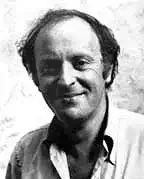
Joseph Brodsky
 RU
RU
Joseph Brodsky was a Russian-American poet and essayist, Nobel laureate in Literature. His work is marked by erudition, formal complexity, and profound reflection on themes such as exile, time, memory, and the human condition. His poetry, often dense and challenging, engages with Russian and Western literary tradition, exploring the ambiguities of language and the search for meaning in a constantly changing world. His life, marked by exile and opposition to the Soviet regime, lends an autobiographical and resistant dimension to his literary production.
n. 1940-05-24, São Petersburgo · m. 1996-01-28, Brooklyn
Bio
Identification and basic context
Joseph Brodsky (in Russian: Иосиф Александрович Бродский, Iosif Aleksandrovich Brodsky) was a Russian poet and essayist, naturalized American. He was born in Leningrad (now St. Petersburg), Soviet Union, on May 24, 1940, and died in New York, United States, on January 28, 1996. Son of Jewish parents of Russian origin, he grew up in an environment marked by the memories of World War II and the cultural and political atmosphere of the Soviet Union. He wrote predominantly in Russian, but also produced essays and poems in English after his exile. He was a central figure in 20th-century poetry, distinguished by his profound erudition and his critical view of reality.Childhood and education
Joseph Brodsky spent his childhood in Leningrad, in a family of intellectuals. His father, Alexander Brodsky, was a photographer and journalist, and his mother, Maria Volpert, was a text editor and actress. The war and the Siege of Leningrad left deep marks on his memory and his work. Brodsky attended high school but dropped out at 15 to work in precarious jobs, such as stevedore and factory worker, while dedicating himself to self-study and learning languages (English and Polish). He was influenced by poets such as T.S. Eliot, W.H. Auden, Konstantín Balmont, and Osip Mandelstam, as well as by philosophy and classical music.Literary career
Brodsky began writing poetry in his adolescence. His early work already showed unusual talent and precocious maturity. However, his poetic output and way of life diverged from the norms of Soviet socialist realism, which caused him difficulties with the authorities. In 1964, he was accused of "social parasitism" and sentenced to five years of hard labor on a remote farm in the Arkhangelsk region, a traumatic experience reflected in poems such as "Gorbunok" (The Hunchback). After being released early, he continued to write and be published in dissident circles. In 1972, he was forced to emigrate from the Soviet Union and settled in Vienna, Austria, before moving to the United States, where he became a university professor and one of the most prominent Russian-language poets.Work, style, and literary characteristics
Brodsky's work is characterized by its intellectual density, lexical richness, and structural complexity. He explored themes such as exile, loss, time, memory, the human condition, the relationship between art and life, and the search for identity in a fragmented world. His poetry is marked by a constant dialogue with Western and Russian literary tradition, with erudite cultural references and an often ironic and melancholic perspective. He used a wide range of poetic forms, from sonnets to freer forms, with particular attention to the musicality of verse and rhythm. His language is precise, economical, and imagistic, capable of evoking deep states of soul and philosophical reflections. His poetic voice is distinctly personal, but transcends the autobiographical to achieve existential universality. His best-known works include "Stikhotvoreniya i poemy" (Poems and Verse), "Chast' rechi" (A Part of Speech), and "Soedinenie dlya odnogo" (A Duet for One).Cultural and historical context
Joseph Brodsky lived and wrote during a period of great historical upheaval, including the Cold War, political repression in the Soviet Union, and the subsequent fall of communism. His forced exile in 1972 profoundly marked his life and work, making him a symbol of resistance to oppression and freedom of expression. He was a contemporary of other great Russian poets such as Anna Akhmatova and Boris Pasternak, and maintained relationships with international literary and intellectual figures, such as W.H. Auden and Isaiah Berlin. His political stance was critical of totalitarianism and in defense of individual freedom, although he remained detached from any party affiliation.Personal life
Joseph Brodsky never married nor had children in Russia. In the United States, he married the Italian ballerina Maria Sozzani in 1977, with whom he lived until the end of his life. He maintained a close friendship with other writers and intellectuals, such as the poet Derek Walcott and the literary critic John Updike. His experiences of exile and longing for his homeland, combined with fragile health, marked his personal life and influenced his worldview and his art.Recognition and reception
Joseph Brodsky's international recognition culminated in the awarding of the Nobel Prize in Literature in 1987, "for his comprehensive poetic work, imbued with clarity of thought and intensity of verse." He was also awarded the Pulitzer Prize for Poetry in 1988 for his book "City of a Full Moon." His work has been widely translated and studied worldwide, consolidating his place as one of the greatest poets of the 20th century.Influences and legacy
Brodsky was influenced by poets such as John Donne, Alexander Pope, Robert Frost, T.S. Eliot, W.H. Auden, and by Russian poets Mandelstam, Akhmatova, and Tsvetaeva. In turn, his work has influenced generations of Russian and English-language poets, admired for his formal mastery, thematic depth, and existential vision. His legacy lies in his ability to merge tradition with modernity, to explore the complexities of the human condition through rigorous poetic language, and to defend the integrity of the individual against the forces of history and ideology.Interpretation and critical analysis
Brodsky's work is often interpreted as a meditation on the condition of modern man, marked by fragmentation, exile, and the incessant search for meaning. His reflections on time, memory, and language invite a deep philosophical analysis of the nature of reality and existence. His poetry challenges the reader to confront life's ambiguities and to find beauty and meaning even in adversity. The tension between formal order and existential chaos is a recurring theme in his work.Curiosities and lesser-known aspects
Brodsky was known for his dry wit and encyclopedic erudition. He had a particular fondness for Shakespeare and science fiction. His dedication to poetry was absolute, and he described writing as a way of dealing with time and death. His experience in the Gulag, though traumatic, was also a period of intense introspection and poetic maturation. He was a fierce critic of bureaucracy and conformity, always defending individuality and artistic integrity.Death and memory
Joseph Brodsky died prematurely at the age of 55, from a heart attack. His ashes were transferred to Venice, Italy, a place he loved and where he spent many happy moments. His work continues to be celebrated and studied, keeping alive his memory as one of the most important figures in contemporary poetry.Poems
0No poems found
Quotes
11No poems found
Comments (0)
No comments yet. Be the first to comment.