
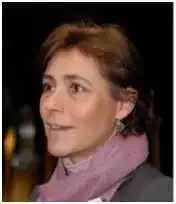
Maria do Rosário Pedreira
b. 1959
 PT
PT
PT
Maria do Rosário Pedreira was a Portuguese writer, journalist, and poet, known for her work that straddles poetry and prose, addressing themes such as memory, identity, the female condition, and urban life. With a careful and sensitive writing style, her work reflects a deep observation of everyday life and human relationships, marked by accessible yet meaningful language. Her contribution to contemporary Portuguese literature is recognized for its originality and expressive power.
n. 1959, Lisboa
73
Views
Bio
Identification and basic context
Maria do Rosário Pedreira was a Portuguese writer, journalist, and poet. She was born in Lisbon in 1961 and passed away in the same city in 2016. She was of Portuguese nationality and wrote in Portuguese. She lived most of her life in Lisbon, in the context of democratic Portugal, marked by profound social and cultural transformations.Childhood and education
She grew up in Lisbon, where she pursued her studies. She graduated in Modern Languages and Literatures, specializing in Portuguese Studies, at the Nova University of Lisbon. Her academic background and her professional career as a journalist shaped her worldview and her writing.Literary career
Her literary career began to consolidate with the publication of poetry and prose. She collaborated in various publications, including the magazine "Máxima" and the newspaper "Diário de Notícias," where she worked as a cultural journalist and literary critic. She published books of poetry and short stories, with "O Sangue na Lua" (2001) being one of her notable works.Work, style, and literary characteristics
Maria do Rosário Pedreira explored themes such as memory, identity, the city, human relationships, the female condition, and the passage of time. Her poetic work is characterized by clear and direct language, yet laden with emotion and subtlety. Her prose, often with autobiographical and fictional elements, reflects a sharp sensitivity to the details of everyday life. Her style is marked by introspection, the ability to capture the complexity of feelings, and the construction of engaging atmospheres. In poetry, she experimented with free verse, prioritizing musicality and the power of imagery. In prose, she demonstrated mastery in character development and narrative construction that engage with contemporary experience.Cultural and historical context
As a journalist and literary critic, Maria do Rosário Pedreira was in contact with contemporary Portuguese cultural production, engaging with other writers and following literary trends. Her work is part of the panorama of post-1980s Portuguese literature, addressing themes relevant to Portuguese society.Personal life
Her personal life, though discreet, was fundamental to her work, which often drew from lived experience. Her passion for reading and writing marked her trajectory.Recognition and reception
Her work received critical recognition and was appreciated by readers who identified with her sensitivity and her approach to the themes she addressed. Although she was not an author with a significant media presence, her work earned a prominent place in contemporary Portuguese literature.Influences and legacy
Influenced by Portuguese literary tradition and contemporary literature, Maria do Rosário Pedreira left a legacy of an authentic body of work with a singular voice. Her poetry and prose continue to be read and inspire with their depth and their ability to touch upon the essential questions of human existence.Interpretation and critical analysis
Critics have highlighted Maria do Rosário Pedreira's ability to translate the complexity of inner life and human relationships into accessible and beautiful language, exploring the fragility and strength of being.Curiosities and lesser-known aspects
In addition to her literary activity, she dedicated herself to cultural journalism, contributing to the dissemination and analysis of literature in Portugal.Death and memory
She passed away prematurely in 2016, leaving behind a body of work that continues to be valued and reveals its importance to Portuguese literature.Poems
0No poems found
Comments (0)
Log in
to post a comment.
No comments yet. Be the first to comment.