escritas.org since 1996
Sergey Dobrenkov

Sergey Dobrenkov

b. 1968

𝓝𝓸 𝓶𝓮𝓽𝓪𝓹𝓱𝓸𝓻 𝓬𝓪𝓷 𝓱𝓸𝓵𝓭 𝔀𝓱𝓪𝓽 𝔀𝓮 𝓪𝓻𝓮;⁕ 𝓛𝓸𝓿𝓮, 𝓹𝓪𝓼𝓽 𝓪𝓵𝓵 𝓶𝓮𝓪𝓼𝓾𝓻𝓮, 𝓸𝓾𝓽𝓼𝓽𝓻𝓲𝓹𝓼 𝓮𝓿𝓮𝓻𝔂 𝓷𝓪𝓶𝓮;⁕ 𝓣𝓱𝓮 𝓶𝓸𝓼𝓽 𝓻𝓮𝓶𝓸𝓽𝓮 𝓪𝓷𝓭 𝓾𝓷𝓪𝓽𝓽𝓪𝓲𝓷𝓪𝓫𝓵𝓮 𝓼𝓽𝓪𝓻⁕ 𝓑𝓾𝓻𝓷𝓼 𝓫𝓮𝔂𝓸𝓷𝓭 𝓪𝓵𝓵 𝓽𝓱𝓮 𝓹𝓸𝓮𝓽𝓼 𝓬𝓪𝓷 𝓬𝓵𝓪𝓲𝓶.⁕ 𝓛𝓲𝓯𝓮 𝓲𝓼 𝓽𝓱𝓮 𝓼𝓮𝓪 𝓷𝓸 𝓵𝓪𝓷𝓰𝓾𝓪𝓰𝓮 𝓬𝓪𝓷 𝓬𝓸𝓷𝓽𝓪𝓲𝓷 —⁕ 𝓐𝓷𝓭 𝓮𝓿𝓮𝓻𝔂 𝓿𝓮𝓻𝓼𝓮 𝓫𝓾𝓽 𝓽𝓻𝓮𝓶𝓫𝓵𝓮𝓼 𝓽𝓸𝔀𝓪𝓻𝓭 𝓲𝓽𝓼 𝓼𝓽𝓻𝓪𝓲𝓷.⁕ (𝓛𝓲𝓿𝓮 𝓦𝓲𝓷𝓭)

n. 1968, Russia

642 Views

A Prayer unto the Lord

Longing for faith, my soul beneath the veil in grief did pine,
Till Thou didst teach that Grace alone bestows this gift divine.
Nor can repentance bear its fruit, nor contrite tears impart,
Except Thou cast perfect brokenness into the sinner's heart.

In showing me the true beginning of the way to Thee,
Thou humbledst Thyself unto hell's lowest deep;
The fearful gulf yawned wide beneath my wandering feet,
Yet Thou Thyself—the only Way—dost safely keep.

Thy Grace alone sustaineth whom the deeps would claim;
Thou stayest him that else were swallowed in despair.
Thou askest nought but tears in true repentance' name,
And mind made new by holy change and faithful prayer.

From Thee all things receive their life, their breath, their being;
Thou bringest forth from hell, corruption, passion's night;
Revealing purity no mortal thought can compass seeing,
And givest Living Water, lest the seeing soul should die.

May each inhale be Thy cold fire—
Ineffable, unseen, without beginning,
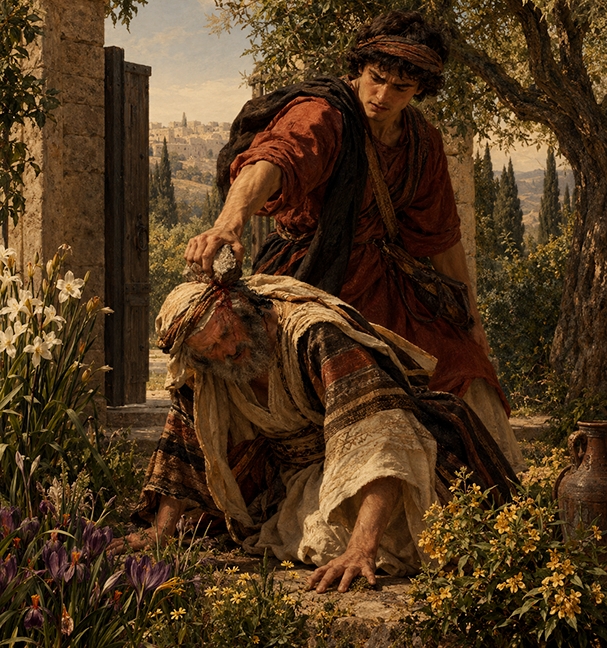
Unchanging, deathless, never to expire,
Intangible, yet all my being filling.

Read full poem
Bio
My real name is Sergey Dobrenkov. My musicological research, as well as my work at the intersection of philosophy and religious studies, has been published in Russian and English. Publications can be found under the pseudonym 𝑳𝒊𝒗𝒆 𝑾𝒊𝒏𝒅, which is connected with personal circumstances and Blessed Paraskeva of Sarov, whose holy relics rest at the Seraphim-Diveyevo Convent. There is sometimes an opinion that 𝑳𝒊𝒗𝒆 𝑾𝒊𝒏𝒅 is a "project"; so be it, but it is a non-commercial project devoted to the research of music and experimentation with it. I use all the musical means at my disposal, combining symphony orchestra, synthesizers and grand piano, choir and solo vocals. The texts for albums featuring solo vocals or a choir are written by me (unless otherwise stated); they constitute the greater part of all the poems I have published, although I do not consider myself a poet. Several long poems I have written are inspired by the tradition of the Orthodox Church. The complete discography, including instrumental albums, with years of release, is as follows: 𝐓𝐡𝐞 𝐅𝐚𝐥𝐥𝐬 (𝟐𝟎𝟎𝟖), 𝐈𝐧 𝐭𝐡𝐞 𝐃𝐞𝐩𝐭𝐡 (𝟐𝟎𝟎𝟗), 𝐆𝐫𝐚𝐯𝐢𝐭𝐲 𝐖𝐚𝐯𝐞𝐬 (𝟐𝟎𝟏𝟎), 𝐂𝐡𝐫𝐨𝐧𝐨𝐬𝐞𝐪𝐮𝐞𝐧𝐜𝐞𝐬 (𝟐𝟎𝟏𝟏), 𝐋𝐢𝐤𝐞 𝐢𝐧 𝐙𝐞𝐫𝐨 𝐆𝐫𝐚𝐯𝐢𝐭𝐲 (𝟐𝟎𝟏𝟐), 𝐏𝐢𝐚𝐧𝐨 𝐈𝐦𝐩𝐫𝐨𝐯𝐢𝐬𝐚𝐭𝐢𝐨𝐧𝐬 (𝟐𝟎𝟏𝟑), 𝐓𝐡𝐞 𝐆𝐡𝐨𝐬𝐭𝐬 (𝟐𝟎𝟏𝟑), 𝐑𝐞𝐪𝐮𝐢𝐞𝐦 (𝟐𝟎𝟏𝟒), 𝐓𝐡𝐞 𝐂𝐡𝐢𝐥𝐝𝐫𝐞𝐧'𝐬 𝐀𝐥𝐛𝐮𝐦 (𝟐𝟎𝟏𝟔), 𝐒𝐨𝐧𝐠𝐬 𝐨𝐟 𝐭𝐡𝐞 𝐖𝐢𝐧𝐝 (𝟐𝟎𝟏𝟕), 𝐓𝐡𝐞 𝐒𝐢𝐥𝐞𝐧𝐜𝐞 (𝟐𝟎𝟏𝟖), 𝐒𝐭𝐞𝐥𝐥𝐚𝐫 𝐖𝐢𝐧𝐝 (𝟐𝟎𝟏𝟖), 𝐓𝐡𝐞 𝐓𝐬𝐚𝐫'𝐬 𝐬𝐥𝐞𝐞𝐩𝐲 𝐕𝐢𝐬𝐢𝐨𝐧 (𝟐𝟎𝟏𝟗), 𝐂𝐫𝐞𝐚𝐭𝐢𝐨𝐧 𝐨𝐟 𝐭𝐡𝐞 𝐖𝐨𝐫𝐥𝐝 (𝟐𝟎𝟐𝟎), 𝐓𝐡𝐞 𝐁𝐥𝐞𝐬𝐬𝐞𝐝 𝐋𝐨𝐯𝐞 (𝟐𝟎𝟐𝟐), 𝐋𝐞 𝐐𝐮𝐚𝐭𝐭𝐫𝐨 𝐒𝐭𝐚𝐠𝐢𝐨𝐧𝐢 (𝟐𝟎𝟐𝟑), 𝐕𝐢𝐫𝐠𝐢𝐧 𝐅𝐢𝐫𝐞 (𝟐𝟎𝟐𝟒), 𝐓𝐡𝐞 𝐏𝐚𝐭𝐡 𝐨𝐟 𝐌𝐚𝐫𝐭𝐲𝐫𝐝𝐨𝐦 (𝟐𝟎𝟐𝟓), 𝐒𝐢𝐧𝐠𝐮𝐥𝐚𝐫𝐢𝐭𝐲 (𝐓𝐡𝐢𝐬 𝐚𝐥𝐛𝐮𝐦 𝐢𝐬 𝐜𝐮𝐫𝐫𝐞𝐧𝐭𝐥𝐲 𝐢𝐧 𝐭𝐡𝐞 𝐰𝐨𝐫𝐤𝐬). You can find and listen to them on Bandcamp and SoundCloud. The albums from previous years will be remixed, as they were not originally intended for public access. Their concept, including that of albums already published, may be revised at any time, and individual parts may be altered at my discretion. I am under no obligations and promote my own record label 𝑳𝒊𝒗𝒆 𝑾𝒊𝒏𝒅 ® 𝑹𝒆𝒄𝒐𝒓𝒅𝒔.

Latest published

Judas Iscariot

Judas Iscariot. Poem by Sergey Dobrenkov

A Tradition, in Verse, Touching the Birth, Life, and Perdition of Judas Iscariot, Inspired by the Posthumous Utterances of the Venerable Nilus the Myrrh-Streamer of Mount Athos.


Proem

O Thou who willest not the sinner's death,
But that the sinner turn, and, turning, live,
Breathe on tradition, as on dust Thy breath,
That I may tell it true, and warning give.

Of Judas tell I — of his birth, his crimes,
His kiss, his silver, and his gallows-bough;
Of Mercy, bent to save him, many times,
And scorned; now mark the tale, and mark ye how.


Chapter I. The Warning in a Dream, and the Child Given to the Waves

1.
In Iskaria Rovel took a wife,
Who in her sleep beheld a dreadful sight:
She woke with shrieks, as one that flees for life,
And told her lord the terror of that night.

2.
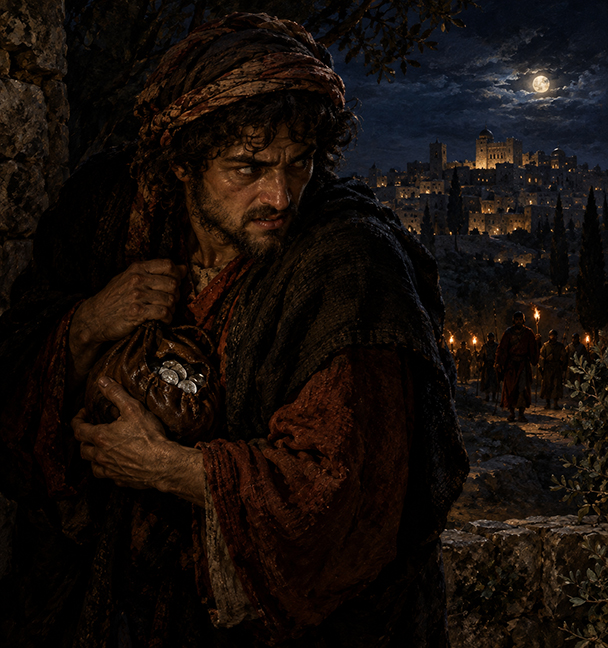
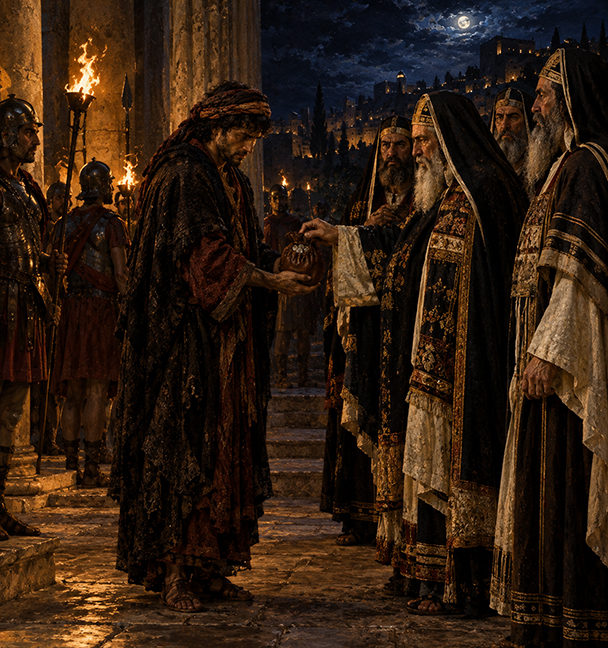
«I dreamt,» she cried, «I should conceive a son
By whom the house of Judah shall be slain!»
Her husband chid her: «Faith in dreams is none
But folly; drive this phantom from thy brain.»

3.
Yet in that night the seed of woe was sown;
Nor did she heed the warning that God gave,
But bore in season, as the dream had shown,
A man-child, doomed to be his people's grave.

4.
But still the dream, like some ill-omened bird,
Brooded upon her heart both night and day;
Till, vanquished by that dread, the pair concurred
To give their firstborn to the wind's wild way.

5.
They framed a little ark, a cradle-tomb,
And pitched each seam, lest it the lake should drink;
Therein they laid the babe, and, in the gloom,
Cast him on Gennesaret — float or sink.

6.
Across the lake an islet lifted, bare
And wintry, where the shepherds dwelt, and fed
Their flocks; and thither, by an unseen care,
The wind and current bore that pitch-sealed bed.

7.
The shepherds found the ark among the reeds,
And lifted out the babe, alive and warm,
And fed him with the ewes' milk, as one feeds
A weanling lamb, and kept him safe from harm.

8.
Then to a woman's keeping they consigned
The foundling; and she named him by that name
Of Judas — name that all the world should find
A byword and a very sound of shame.


Chapter II. The Foundling and the Fratricide

9.
Years passed; and when the boy was grown, the men
Who reared him brought him to the village gate,
To find some house to foster him; and then
Came Rovel by — nor guessed he met his Fate.

10.
He took him home; for passing fair was he,
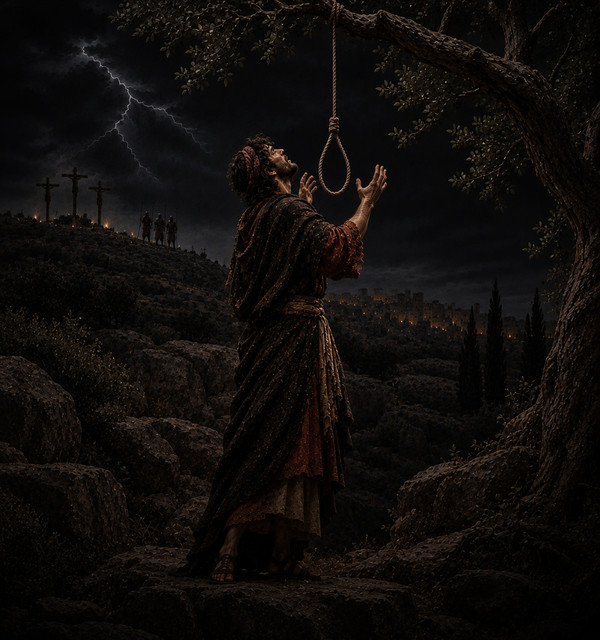
And they, who for their cast-out child did grieve,
Adopted him, and loved him tenderly,
Nor guessed whose blood it was they did receive.

11.
Then to those twain a second son was born;
And Judas, covetous and evil-bred,
Feared for his heritage, with envious scorn,
And hated him, the heir who'd take his stead.

12.
He beat the child, and plagued him day by day;
His parents chastened him, and bade him cease;
But every stripe was oil, to feed the fray
Of envy and the lust of gold's increase.

13.
At last, one day, his parents being gone,
He caught a stone, and smote; the boy fell dead.
He looked upon the thing his hand had done,
And, cold with sudden terror, shoreward fled.

14.
The very waters that had borne him, then
A swaddled babe, to refuge and to breath,
Now ferried him, red-handed, back again
To that same isle, to flee the doom of death.

15.
There in a Grecian house he took his place,
And with the young lord's wife in sin combined,
Then slew her lord, and, flying from disgrace,
Fared far abroad, and left his guilt behind.

16.
To Salem next he came; and there, in sooth,
King Herod's house received him; and the King,
Who loved his deftness, and his face of youth,
Made him his steward over everything.

17.
He prospered; yet the blood that he had shed
Cried from the earth, as Abel's cried of old;
Though silk and purple draped him, and he fed
On honour, still his heart lay black and cold.

18.
Meanwhile his parents, knowing not whose hand
Had slain their boy, nor whither Judas went,
Wept for them both, and could not understand,
And mourned the lost one in a long lament.

19.
At length great tumults rent their native town;
To Salem went the sire and wife, and bought
A house, a garden fair, whose boughs hung down
Hard by King Herod's wall — as Fate had wrought.

20.
There nard and saffron, cassia, and the balm
Of Gilead breathed upon the twilight air;
And Rovel's joy, when evening held its calm,
Was in those blooms — his labour and his care.

21.
They never guessed what dreadful doom did wait
Within that quiet house of leaf and flower;
They fled the tumult but to meet their fate
Beside the son, in his accursed hour.


Chapter III. The Garden in Bloom, Parricide, and Incest

22.
Entering, Judas trod that garden fair,
Plucked the rare blooms whose sweetness filled the bed;
His mother, since the King's own man stood there,
Durst speak no word, but shook with silent dread.

23.
He asked no leave; he heaped his arms with bloom,
A fragrant sheaf, the old man's joy and pride;
And, striding out, he met, in dusky gloom,
His sire, home-wearied at the eventide.

24.
«Why hast thou stripped my garden?» Rovel cried.
«I need them!» Judas answered, bold and proud.
«Thou needest — and I not?» the sire replied,
And barred the way: his voice was not too loud.

25.
«I am the King's own man — so be thou told!»
«What reck I that?» quoth Rovel, stern and stout;
«Unbidden thou hast plundered what I hold
In mine own house.» And strove to snatch it out.

26.
But Judas, proud, no word of blame would bear;
He snatched a stone, and smote his father's head;
And down he fell among the blossoms rare,
And with their balm his blood ran warm and red.

Judas Iscariot. Poem by Sergey Dobrenkov


27.
O Judas, father-slayer! hand accurst,
That felled the sire who cherished thee as son!
Yet proudly to his lord he went, and first
Displayed the flowers, and told what he had done.

28.
«I asked no gift,» quoth he; «I slew the man,
For he reviled thy rule and me beside:
I swear it by my life.» The lord began:
«I'll send, and learn the truth; if thou hast lied,

29.
Thou shalt be driven forth, and pay the shame
Thou didst to me, not him.» A man was sent,
Who found the old man slain, and, swift, he came
To tell the tale; and wrath the lord's heart rent.

30.
But Judas, subtle as the serpent, sought
The palace-folk, and bade them plead his cause;
They went with him; the lord, by stir distraught,
Relented, and referred him to the laws.

31.
«By law,» he said, «the widow of the dead
Shall be his bride.» She, weeping, would not yield,
And sued for any other; but he said
In wrath: «This man alone!» — and so was sealed

32.
The monstrous bond: the vessel full of ill
Did wed his mother, and she, loth, obeyed;
And in that bed, abhorrent to God's will,
A son was born, in shame and sin arrayed.

33.
She bore a child; and, talking in the dark,
She told, as women will, of griefs long past:
A dream, a babe, a pitch-sealed cradle-ark,
A lake at dusk — and how she saw it last.

34.
Thus, in that talk, the awful truth came out:
That she, his wife, was she who gave him birth;
Then Judas knew, beyond the faintest doubt,
The blood and incest that defiled the earth.

35.
Yea, all lay bare, as plains laid waste by fire:
The brother slain by stone; the mother wed;
And Rovel murdered, his own hoary sire;
And, loathing life, he from that bridal fled.


Chapter IV. The Crafty Disciple and the Thief

36.
Then, hearing Jesus teach by Salem's wall
And bid the sinner turn from sin, and live,
He sought Him out, and, yielding to the call,
Besought the pardon that the Lord doth give.

37.
Christ saw him; and the Searcher of the mind
Beheld the venom coiled beneath that face;
Yet took him in with joy, that He might find
A way to heal a soul so far from grace.

38.
He placed the purse in Judas' hand, and bade
The Twelve: «Of Judas ask what ye may lack.»
They kept His word, and, though they oft surveyed
That self-willed Judas, murmur none came back.

39.
Yet in his stewardship, by greed possessed,
He filched the common store, and in the dark
Sent coin to his old mother, and professed
'Twas for her food — a falsehood, foul and stark.

40.
The Twelve, who did Christ's words, became in sooth
The pillars of high Paradise; but he,
Who heard them with a murmur, and no truth
Of deed, clung to a post of rotten tree.

41.
Whoso upon a rotten pillar stays
Shall with it fall; so Judas, torn away
From Heaven's portion and the Twelve's blest ways,
Plunged to the nether pit, and lost the Day.

42.
Christ washed his feet, as all the others' feet;
Apostle was he then, and brother dear;
But now, the Day-star's scholar, did he greet
The devil as his brother, and his peer.

43.
Not satisfied with governing the store,
He sought to bar the gifts of faith and heart:
The myrrh, the praise, the homage men did pour
On Christ as God — he'd stay them ere they start.

44.
At Bethany, while Jesus sat at meat,
A woman brake an alabaster flask,
And poured the spikenard on His head and feet,
And wiped them with her hair, nor stayed to ask.

45.
Then Judas: «Why this waste? It might have sold
For silver — three hundred — to feed the poor.»
'Twas but pretence: the bag was his; and, bold,
He stole what men had put therein — and more.

46.
And oft he did it, at each chance that came,
With caution, lest his thieving should be known;
But Christ, unseen, was witness to the shame,
Forbearing, if he'd turn, repent, and own.

47.
His murmur passed; and some, in turn, deceived,
Took up his words, as zeal for those in need;
But Jesus, seeing all, and undeceived,
Took up the woman's cause, and pled her deed.

48.
«Let her alone,» said Christ. «The poor, alway,
Ye have; but Me ye have not. She hath wrought
What she could do: she poured this for the day
Of My burying; her deed shall be taught.»

49.
«I need it,» added Christ; and Judas heard
The slain man's voice, out of the garden-bed:
«Thou needest — and I not?» He spake no word:
The stone, the balm, the blood, his father dead.

50.
But in his heart a boiling malice stirred;
And Christ, who knows each secret of the breast,
Discerned his plot — nor spake a hasty word,
But bore it, patient, as He bears the rest.

Judas Iscariot. Poem by Sergey Dobrenkov


Chapter V. The Betrayal of Christ

51.
Judas went to the priests: «What will ye give,
And I will yield Him to you?» So they weighed
Thirty pieces of silver; and, to live
By that one purpose, sought his hour, and stayed.

52.
The woman spread her hair; Judas, his hands:
She, for forgiveness; he, to take his pay.
She went away set free; he, bound in bands;
Unseen among them stood the Lord that day.

53.
When evening fell, He sat, the Twelve beside,
And said: «With longing have I longed to eat
This Passover with you, ere I be tried:
Nor shall it be again, till all complete.»

54.
He rose from supper, laid His robe aside,
And girt Him with a towel; and, kneeling there,
He poured the water in a bason, plied
His hands to every foot, and dried with care.

55.
The rest were lit; but Judas, ill with greed,
Grew dark, though at his feet the Lord knelt low:
«Ye are clean,» He said, «but not all,» — to plead
With one who would not hear, and would not know.

56.
«One of you twelve,» said Christ, «shall Me betray.»
Exceeding sorrowful, they each began
To ask: «Lord, is it I?» And, as they lay
At meat, they eyed each other, man by man.

57.
«He that doth dip his hand with Me,» said He,
«Within the dish, shall yield Me, as 'tis writ.
The Son of Man goes forth; but woe to be
The man by whom He's sold — who here doth sit!»

58.
«Good were it for that man he ne'er were born.»
And Judas, too, said: «Master, is it I?»
He said unto him: «Thou hast said.» No scorn,
No wrath; and none heard it, who sat close by.

59.
«Who may it be?» the troubled Twelve did say;
And He: «The man who stretcheth forth his arm
Before Me.» Judas, with no shame or stay,
Reached to the salt-dish, feeling no alarm.

60.
Then he that leaned on Jesus' breast: «Lord, who?»
«He,» said the Lord, «to whom I give the bread
When I have dipped it.» And He dipped it, too,
And gave to Judas. Nothing more was said.

61.
After the morsel, Satan entered in.
«That thou doest,» said Jesus, «do with speed.»
No man at table knew the thing, or sin,
Or meaning; and none marked it, or gave heed.

62.
Some thought, since Judas had the bag, that He
Had bid him buy for the feast, or feed the poor:
They looked on him, and saw no enemy,
But him who bare their bread, as heretofore.

63.
He then, the morsel taken, straight went out
Into the dark, and shut the door behind;
And all the town was quiet round about:
For it was night; and night was in his mind.

64.
Thus Judas left his brethren's company,
Allied to Lucifer, the Fiend of old,
And mused: «Who seek Him gifts bring; so will I
Ask more of them» — and thirsted still for gold.

65.
When he was gone, the Lord said: «Now is shown
The glory of the Son of Man; and God
Is glorified in Him.» The deed, unknown
To them, was done; the way of death was trod.

66.
For the Eleven He changed bread and wine:
«My Body and My Blood.» The mystery
Was told not to His foes; no kiss, no sign
Like Judas'; but the thief's: «Remember me.»

67.
He prayed: «Of those Thou gavest Me, not one
Is lost, but the son of perdition; so
The Scripture is fulfilled.» That prayer was done;
And, having sung a hymn, they rose to go.


Chapter VI. The Prayer of the Cup, and the Kiss of Judas

68.
Beyond the brook of Cedron lay a close
Of olive-trees, where Jesus oft had gone
With His disciples; Judas knew it. Those
Were sacred hours in which he, too, was one.

69.
«Sit here,» He told the eight, «while I go pray.»
He took the three, and, sorrowful and sore,
Said: «To the death My soul is sad: here stay,
And watch with Me.» He went a stone's cast more.

70.
He fell upon His face, and prayed: «Let pass,
If it be possible, this cup;» and then:
«Yet not My will, but Thine!» As bends the grass
Beneath the wind, He bent His will again.

71.
An angel from the heaven strengthened Him;
And, in His agony, He prayed the more;
And, like great drops of blood, in the night dim,
His sweat ran down and fell upon the floor.

72.
He came; they slept. «Could ye not watch,» said He,
«With Me one hour? Watch, and pray, lest ye fall:
The spirit's willing; but the flesh, ye see,
Is weak.» And, turning, He withdrew from all.

73.
Eleven slept; but Judas did not sleep:
He went, and brought the lawless, and he led
Them through the night — the garden, in the deep
Of Olivet; himself, ahead, he sped.

74.
Thrice prayed the self-same words, Christ came, and said:
«Sleep on now, and take rest: the hour is here;
The Son of Man, betrayed, to sinners led:
Rise, let us go: the traitor draweth near.»

75.
While yet He spake, lo, Judas, he, the one
Of the Twelve, came — and with him torch and brand,
A band with swords and staves; he who had done
The sale of Light came, lantern in his hand.

76.
He, knowing all that should come on Him, went
Forth, and said: «Whom seek ye?» They answered: «He
Of Nazareth.» «I am.» And, as though spent
By that one word, they fell back, suddenly.

77.
«If Me ye seek,» said He, «let these go free.»
So was the word fulfilled: «I lost not one
Of those Thou gavest» — save, in company
Of those who came, the lost, perdition's son.

78.
He that betrayed Him gave them, for a sign:
«Whom I shall kiss, the same is He: hold fast.»
He hid his guile in custom's old design —
The kiss of use, the kiss of days long past.

79.
Straightway he came to Jesus, and said: «Hail,
Rabbi!» and kissed Him. On that Face, whereon
The angels dare not look, his lips, so pale
With guile, were laid; and the old kiss was done.

80.
Then, «Friend,» said Jesus, «wherefore art thou come?»
And, «Judas, with a kiss, the Son of Man
Betrayest thou?» — and Judas, standing dumb,
Gave back no word; for none he had, nor can.

81.
Thus did he honour Him in all men's sight,
Then gave Him to the soldiers, slunk away
Into the dark of greed — from Christ, the Light,
To the dark Prince — and left Him to the fray.


Chapter VII. The Denial of Peter, and the Accursed Silver

82.
They seized the Lord, and bound Him; and, by night,
Led Him to Annas first, and Caiaphas;
And Peter followed, far; and, in the light
Of the court-fire, what happened came to pass.

83.
Thrice, in the firelight, in the high priest's hall,
Did Peter say he knew not whom they meant:
To maid, and man — with oath, and curse, and all:
«I know not the man!» The cock crew. He went

84.
Out. For the Lord had turned, and looked on him;
And Peter now remembered what He said:
And wept — and wept — the night was cold and dim —
Yea, bitterly, and bowed his bitter head.

85.
When morning came, the chiefs of priests, and all
The elders, took their counsel for His death;
And, having bound Him, brought Him to the hall
Of Pilate, governor, with bated breath.

86.
What made thee, Judas, traitor? Did He thrust
Thee from the Twelve? Or take thy gift away?
Or from the table drive thee? Or, the dust
Washed from the others' feet, pass thine that day?

87.
When Judas saw that He was doomed to die,
The mist of greed fled from his mind, and he
Repented; but, to Christ, no word, no cry
Of penitence he brought, nor bent his knee.

88.
He wept not, as the weeping Peter wept;
But brought the silver back: «I sinned,» said he,
«Betraying guiltless blood.» Their scorn was kept:
«What's that to us? See thou to that.» And he

89.
Cast down the silver, where the priests might see,
And went away. The chiefs took up the pay:
«It is not lawful, in the treasury,
To lay it: 'tis the price of blood,» said they.

90.
And, doubtful what to do with price of blood —
For in the treasury it might not lie —
They made a strangers' burial-ground, which stood,
And stands today beneath the open sky.

91.
Then Judas, like a hunted beast, did flee
Into a ravine's gloom, and there he thought
What yet remained; and nothing could he see
But one thing, which the dark within him brought.

92.
An unclean counsel came: «Make end of all!»
And he, unclean, gave ear, as to a friend,
And bade the dark guest welcome in his hall —
Self-slaughter, and of woes the final end.

93.
There stood a tree, as if for gallows planned;
He loosed his girdle, made of camel's hair;
One end he knotted round his throat; his hand
Made fast the other, and he leapt in air.

94.
The bough bent low, as bends a mother's arm
To catch a falling child; for God would save,
Not slay, the sinner; lest he come to harm,
All means His mercy tried, and time He gave.


Chapter VIII. Christ on the Cross, and the Unrepentant Self-Slayer

95.
While Judas lay, still noosed, in that ravine,
The Lord, thorn-crowned, was led to Skull-hill's brow,
And nailed there, with two thieves; and, high, was seen
The title: «King of Jews» — above Him, now.

96.
«Father, forgive them,» prayed He, nailed and bare,
«For they know not what they do.» — And the three
Crosses stood on the hill, against the air:
The thief, the Lord, the thief — in company.

97.
He hangs upon the Tree who hung the earth
Upon the waters; Angels' King is crowned
With thorns; the Bridegroom, who gave Zion birth,
Is nailed; the Virgin's Son, the spear shall wound.

98.
One thief reviled; the other said: «We bear
Our due; this Man did nothing wrong. O Lord,
Remember me, when in Thy kingdom there.»
«Today,» said Christ, «in Paradise, My word.»

99.
Judas might still have wept, and loosed, and said
Before the Cross: «'Twas I that nailed Thee there!
Forgive me! 'Twas my evil thought that sped
Thee to the tree — have mercy, hear my prayer!»

100.
Had he but said it, Christ would have received
Him, as Manasseh once; as, at His side,
The thief; the harlot; every soul that grieved
And turned. The door stood open, and stood wide.

101.
But no. He cast himself to earth — to hang,
Not kneel. And Christ, His arms nailed wide, looked right,
And left, along them both; and, in the pang
Of thirst, searched for one face, far out of sight.

102.
«I thirst,» He said — and thirsted for a soul.
One ran, and filled a sponge, and, on a reed,
Held up the vinegar: the gall, the bowl,
For manna and for water, were His meed.

103.
«'Tis finished,» said the Lord; and, with a cry,
«Into Thy hands, O Father, I commend
My spirit.» Then He bowed His head, to die,
And gave the ghost; and thus the work did end.

104.
But Judas, giddy-pated, turned again
To ill, and fled the mercy proffered him;
The bough had bent, the bough had bent in vain:
He plighted troth with woe; his heart was grim.

105.
A higher place he built, and climbed, and drew
The noose still shorter, and leapt from the height;
Again God bowed the bough, as mothers do,
But he, unsated, deaf to Mercy's light,

Judas Iscariot. Poem by Sergey Dobrenkov


106.
Built yet a third degree, and climbed it, where
He knotted fast the noose; and from the third
Stair hurled himself, without a cry, a prayer,
A sign of penitence, a single word.

107.
Defiled by father's blood, and by the bed
Of her who bore him, and his brother's gore,
Down plunged that thrice-polluted flesh — and dead
The traitor hung. The bough bent down no more.

108.
Now, since the Lord had died, as prophets told,
The earth should tremble at her Maker's cry;
The veil — the Holy's bar — foreshowed of old
His Flesh, through which man's way to God should lie.

109.
The veil was rent in twain, from top to base;
The earth did quake; the rocks were cleft; the graves
Were opened, one by one; and, in that place,
Death looked, and trembled, for its sleeping slaves.

110.
The quake broke the bough; Judas fell, and burst
Asunder, headlong, in the midst; and they
Of Salem named the field, in tongue accurst,
Aceldama, the Field of Blood, that day.

111.
Then Joseph begged the Body; and, with him,
Came Nicodemus: myrrh and aloes, brought
A hundred pound; and, in the linen's trim,
With spices wound Him, as the custom taught.

112.
A garden, near where He was crucified;
And in it a new tomb, wherein none lay
Before. They laid Him there, at eventide;
And a great stone was set to shut the way.

113.
Judas grudged the spikenard's fortune; and, lo,
A hundred pound of myrrh, with aloes, lay
Upon the Body, wrapped in linen; so
Was it fulfilled — against the burial-day.


The Conclusion

Two trees stood in one hour. On one, arms wide,
The Life-giver was nailed, whom Judas sold;
The other, in the dark, bore him who tied
His own last knot, and fell, and lay there cold.

Not with the kiss alone was He betrayed:
The kiss began it; and the noose made whole
The work, and closed the silver's bitter trade:
He sold his Lord, and then he sold his soul.


© Sergey Dobrenkov, 2026

The original illustrations were created specifically for this poem.

All rights reserved.



118 Read more →

The Autumn Hunt

The Autumn Hunt by Sergey Dobrenkov
The sky, grown heavy, stoops too near the land;
The air is hollow; silence has its say;
A tousled carpet of fall'n leaves, wind-fann'd,
Exudes a smell of spice and tart decay.

The trees have spent already half their gold;
Their feast of colours is ordain'd to die;
The grass wakes hoary: one night makes it old;
The leaves that stay hang hush'd, and ask not why.

Amid the year's last warmth, with eager flame,
The powder dry, the leaden die is cast;
The steeds stand girt; the paired hounds strain for game;
And fresh relays shall follow, close and fast.

Far off, the frost-hard earth begins to drum;
A single hound-cry rises, thin and straight;
Then, flush'd and loud, the riders crest and come;
And in the thicket something stops to wait.

The steeds are pamper'd, comb’d until they shine;
The hounds give tongue; the riders trade a boast;
Bravado, in disport, and warm with wine,
Guffaws; the hollow air returns their ghost.

The hunting-horns sound brazen, tree to tree;
Their notes are flung to meet the stooping skies;
My Love, preserve thyself! Canst thou foresee?
I ask — and in the thicket gleam her eyes.

As though she heard, she lifts her head, stands still;
Alarm is in her eyes, and doom foreknown;
And through that darkness fiercely glows one will
To fight for life, since breath is God's alone.

The hind bolts, vaults, and swerves; the hounds, abreast,
Close on her heels; the steeds gain pace on pace;
She doubles, leaps, and tears the brake, hard-pressed;
The riders whoop, and wheel, and cut, and chase.

The autumn air, in pity, veils each way,
Thickens to mist, to blot her trail from view;
But damp holds scent, and, holding, doth betray;
The hounds, who read by nostril, read it through.

She smokes like smould'ring coals; her strength is spent;
At bay, alone, she stands amid their shout;
The ring of riders closes, as was meant;
Alas, now Hope, who stays the last, goes out.

Her soul doth quake within her blood with dread;
The final moments, thick to touch, run slow
And close for ever all the path ahead.
In frosty air her breath doth come and go…

She gazeth on Death's face with eyes aghast,
Yet nobly bears her to the very last.
'Tis done… yet long the dying, pain on pain:
The warmth withdraws; her eyes' bright gleam doth wane.

Her lifeless head lies on the frozen ground,
Where downy hoar-frost furs the withered grass;
Unmelting crystals have her lashes crown'd;
To melt them, from her lips no breath will pass.

Beside her lie ten leaves of deepest red,
The one bright thing the dying year has shed;
In hollow echo, far away, now fade
The sounds of the receding cavalcade.

Within her pupils, held as ne'er before,
The stooping sky lies upturn'd: depth for height;
And yet, when Love fell mute from wounds she bore,
What grew impossible is turn'd to Light.


© Sergey Dobrenkov, 2026

107 Read more →

Parábola da Casa Bendita e dos Malquerentes

1. Havia um pai, a quem o Senhor abençoara sobremaneira, dando-lhe, por Sua graça, uma terra boa e ampla, desde os montes até ao mar, para que nela habitasse juntamente a sua casa, e invocasse o Seu nome.

2. E o pai usava de justiça para com todos os seus filhos, dando a cada um o seu quinhão, para que ninguém tivesse falta, e ninguém dissesse: Meu irmão me roubou.

3. Ora, alguns dos seus filhos e filhas tinham a sua morada nos confins daquela terra, nas bordas exteriores dela; e entre eles se acendeu a inveja, como fogo ateado em restolho seco.

4. Porque o acusador, cujo nome é o Diabo, viu a paz em que viviam, e não a pôde sofrer; e enviou-lhes falsas testemunhas, vestidas de conselheiros, cujas línguas eram mais brandas do que o azeite, porém as suas palavras eram guerra.

5. E estes disseram aos invejosos: Eis que vossos irmãos tomaram o que nunca foi deles; levantai-vos, porque não lhes cabe reter a herança. E os invejosos creram na mentira, porque era agradável à sua soberba.

6. E a sua soberba cresceu até que tragou a memória; e esqueceram a língua em que seus pais invocavam o Senhor, e as suas próprias bocas se lhes tornaram estranhas, e a oração cessou nas suas moradas.

7. Então trataram de extirpar toda a menção do Senhor que lhes abençoara a casa; derribaram o que seus pais haviam edificado, e apagaram o Seu nome das ombreiras das suas portas, dizendo: Não queremos que este Deus reine sobre nós.

8. E, apartado o temor de Deus do meio deles, entrou a corrupção facilmente, como ladrão por porta aberta; seus filhos se tornaram falsos, e suas filhas foram entregues à prostituição; e os justos que restaram choravam por isso em lugares ocultos, e não tinham consolação.

9. E a inveja que fora semeada deu o fruto que é de Caim: o irmão levantou a mão contra o irmão, e a terra bebeu sangue; sangue verdadeiro, e não espetáculo, nem farsa.

10. Mas os que habitavam longe, e não tinham nem quinhão nem herança naquela terra, olhavam a matança como os homens olham um jogo; e mandavam lenha ao incêndio, e a isso chamavam socorro, e ao seu lucro chamavam paz.

11. Porque estes não serviam nem ao pai, nem a filho algum da sua casa, mas só ao seu ganho; e, se houvessem ido por seu caminho, bem cedo os irmãos teriam chorado juntos e se teriam reconciliado; mas não se foram, porque a contenda era a sua colheita.

12. Então os justos, ainda que dispersos, levantaram a voz, chorando, e disseram: Ó Senhor, não imputes este pecado a nossos irmãos insensatos; não sabem cabalmente o que fazem; lembra-Te deles ainda como dos Teus, embora se tenham prostituído.

13. E disseram também uns aos outros: Não julguemos, para que não sejamos julgados; porque só o Senhor conhece o coração, e a vingança Lhe pertence, e a Ele somente; ninguém faça descer fogo na sua própria ira, porque a ira do homem não opera a justiça de Deus.

14. Todavia o Senhor vê todas as coisas, e d'Ele não se zomba. O sangue derramado clama a Ele desde a terra, como outrora clamou o sangue de Abel; e a Sua ira se acende, e o dia da Sua visitação se apressa e não tarda.

15. E naquele dia o Senhor ajuntará a Sua casa dispersa, a cada um dos Seus, e haverá outra vez um só rebanho e um só pastor, como era no princípio.

16. Mas o joio não será atado com o trigo; cada um será conhecido pelo seu fruto, e receberá segundo o seu próprio trabalho, e não segundo o alheio.

17. E quanto aos corruptores e instigadores, que fizeram do sangue um jogo e engordaram com a dor dos irmãos, o Senhor não os terá por inocentes; o seu quinhão é o lago que arde com fogo e enxofre, porque amaram a contenda mais do que a paz, e o seu próprio ganho mais do que a vida do seu próximo.

18. Contudo, ninguém declare de antemão qual alma está condenada, porque os tempos e as estações, o Pai os reservou na Sua própria mão.

19. Portanto, vigiai, e orai, e não julgueis; amai os irmãos, ainda que andem desgarrados, e esperai no Senhor, porque a Sua misericórdia dura para sempre, e o Seu juízo não falha.

20. Bem-aventurados os pacificadores, porque eles serão chamados filhos de Deus.


© Sergey Dobrenkov, 2026

97 Read more →

The Composer

I
The casement opens on the seaward hill,
Where cypress-spires stand slender, dark, and tall;
The winding paths grow dim; the air is still;
Cicadas sing, and dusk begins to fall.

II
The cool night brings the seaweed’s scent and salt;
The flow'rs of night give out their sweet perfume;
A waxing moon doth climb the heavens' vault;
The slow sea, breathing, fills the quiet room.

III
O sea — now terror, now a mighty calm —
Thou leav'st none seeing thee with heart of stone;
The shore holds, turn by turn, thy rage — thy psalm
Of ripples trembling in a humble tone.

IV
The wind, thy neighbour — thin, and scarce a form —
Is wayward as thy waves; yet, as God wills,
Can crush whate'er doth stand before his storm,
Or bear sweet music gently o'er the hills.

V
All this the Composer's mind doth hold in store —
Deep, searching, piercing, ever-moving, wide —
More mighty than the storms that round it roar,
More lowly than the ripple on the tide.

VI
Within, a strain doth rise — not forged, but heard —
A little interval, a narrow door,
Older than speech, a never-spoken word,
That opens on a Universe — and more.

VII
He seeks the Source — the chants of elder days,
The voices hid in every simple sound,
The modes that bear a thousand years of praise —
And, under all, the sea intones the ground.

VIII
Next comes the Law: he proves it, bar by bar;
Cicadas keep the measure, ebb and flow;
He strikes out what is trite, or leads afar;
Though cool the night, his mind with warmth doth glow.

IX
The Ways divide; the modes, though bound, run free,
Each with its pace, its life, its change, its death;
And each keeps all its dead, as keeps the sea,
Then wakes the sleeping with a single breath.

X
Lo, unforeseen, a theme long dead doth rise,
Now as remembrance raised, and born again,
Now changed, in other mode, in strange disguise;
And all the currents form one single main.

XI
He paints no glint, no shade upon the foam,
But dreadful truths Leviathan hath hid
Where in the weight of waters is his home,
A thousand fathoms down, the deeps amid.

XII
The moon hath set; all sounds are stilled; the night
Lays bare her stars; and mind, past every bound,
Beholds the Boundless: sound is thought, thought light;
And thirst is slaked, and rest at last is found.

XIII
But dawn draws near, and Form renews its claim:
What knows no limit, limit must confine —
Five lines, a bar, a compass, and a name,
And one brief hour to bear the whole design.

XIV
He leaves the Boundless, willing, unconstrained;
Ten thousand notes unchosen pass away;
The vast is numbered, and the free contained,
That one small Fruit may see the light of day.

XV
Whoe'er thou be, who in the lighted hall
Dost hear the Fruit, serene, complete, and fair,
And think the whole is here, and that is all,
As though it came unlaboured, light as air —


XVI

Thou knowest not the Source whence it hath sprung,
The Law that bore it, nor the Ways denied;
A Veil hangs o'er the Tree; no note, no tongue
Can tell what lived unheard, and unespied.


XVII

But he who wrought it, lord of it entire,
May give it to the world, or put it by,
Or with his own hand give it to the fire,
And watch the flame with calm and steady eye.


XVIII

He recks not which; ere Death’s appointed hour,
His spirit hath the last of knowing learned,
And tasted worlds to come, and felt their power,
And all his longing to the stillness turned.


XIX

The cypress-spires stand dark against the stars;
The wind hath passed; the sea lies hushed and sealed;
And he, beholding, free of bounds and bars,
Knows Silence for the wisdom last revealed.


© Sergey Dobrenkov, 2026


105 Read more →

Poems

34

A Prayer unto the Lord

Longing for faith, my soul beneath the veil in grief did pine,
Till Thou didst teach that Grace alone bestows this gift divine.
Nor can repentance bear its fruit, nor contrite tears impart,
Except Thou cast perfect brokenness into the sinner's heart.

In showing me the true beginning of the way to Thee,
Thou humbledst Thyself unto hell's lowest deep;
The fearful gulf yawned wide beneath my wandering feet,
Yet Thou Thyself—the only Way—dost safely keep.

Thy Grace alone sustaineth whom the deeps would claim;
Thou stayest him that else were swallowed in despair.
Thou askest nought but tears in true repentance' name,
And mind made new by holy change and faithful prayer.

From Thee all things receive their life, their breath, their being;
Thou bringest forth from hell, corruption, passion's night;
Revealing purity no mortal thought can compass seeing,
And givest Living Water, lest the seeing soul should die.

May each inhale be Thy cold fire—
Ineffable, unseen, without beginning,
Unchanging, deathless, never to expire,
Intangible, yet all my being filling.

108 Read more →

Judas Iscariot

Judas Iscariot. Poem by Sergey Dobrenkov

A Tradition, in Verse, Touching the Birth, Life, and Perdition of Judas Iscariot, Inspired by the Posthumous Utterances of the Venerable Nilus the Myrrh-Streamer of Mount Athos.


Proem

O Thou who willest not the sinner's death,
But that the sinner turn, and, turning, live,
Breathe on tradition, as on dust Thy breath,
That I may tell it true, and warning give.

Of Judas tell I — of his birth, his crimes,
His kiss, his silver, and his gallows-bough;
Of Mercy, bent to save him, many times,
And scorned; now mark the tale, and mark ye how.


Chapter I. The Warning in a Dream, and the Child Given to the Waves

1.
In Iskaria Rovel took a wife,
Who in her sleep beheld a dreadful sight:
She woke with shrieks, as one that flees for life,
And told her lord the terror of that night.

2.
«I dreamt,» she cried, «I should conceive a son
By whom the house of Judah shall be slain!»
Her husband chid her: «Faith in dreams is none
But folly; drive this phantom from thy brain.»

3.
Yet in that night the seed of woe was sown;
Nor did she heed the warning that God gave,
But bore in season, as the dream had shown,
A man-child, doomed to be his people's grave.

4.
But still the dream, like some ill-omened bird,
Brooded upon her heart both night and day;
Till, vanquished by that dread, the pair concurred
To give their firstborn to the wind's wild way.

5.
They framed a little ark, a cradle-tomb,
And pitched each seam, lest it the lake should drink;
Therein they laid the babe, and, in the gloom,
Cast him on Gennesaret — float or sink.

6.
Across the lake an islet lifted, bare
And wintry, where the shepherds dwelt, and fed
Their flocks; and thither, by an unseen care,
The wind and current bore that pitch-sealed bed.

7.
The shepherds found the ark among the reeds,
And lifted out the babe, alive and warm,
And fed him with the ewes' milk, as one feeds
A weanling lamb, and kept him safe from harm.

8.
Then to a woman's keeping they consigned
The foundling; and she named him by that name
Of Judas — name that all the world should find
A byword and a very sound of shame.


Chapter II. The Foundling and the Fratricide

9.
Years passed; and when the boy was grown, the men
Who reared him brought him to the village gate,
To find some house to foster him; and then
Came Rovel by — nor guessed he met his Fate.

10.
He took him home; for passing fair was he,
And they, who for their cast-out child did grieve,
Adopted him, and loved him tenderly,
Nor guessed whose blood it was they did receive.

11.
Then to those twain a second son was born;
And Judas, covetous and evil-bred,
Feared for his heritage, with envious scorn,
And hated him, the heir who'd take his stead.

12.
He beat the child, and plagued him day by day;
His parents chastened him, and bade him cease;
But every stripe was oil, to feed the fray
Of envy and the lust of gold's increase.

13.
At last, one day, his parents being gone,
He caught a stone, and smote; the boy fell dead.
He looked upon the thing his hand had done,
And, cold with sudden terror, shoreward fled.

14.
The very waters that had borne him, then
A swaddled babe, to refuge and to breath,
Now ferried him, red-handed, back again
To that same isle, to flee the doom of death.

15.
There in a Grecian house he took his place,
And with the young lord's wife in sin combined,
Then slew her lord, and, flying from disgrace,
Fared far abroad, and left his guilt behind.

16.
To Salem next he came; and there, in sooth,
King Herod's house received him; and the King,
Who loved his deftness, and his face of youth,
Made him his steward over everything.

17.
He prospered; yet the blood that he had shed
Cried from the earth, as Abel's cried of old;
Though silk and purple draped him, and he fed
On honour, still his heart lay black and cold.

18.
Meanwhile his parents, knowing not whose hand
Had slain their boy, nor whither Judas went,
Wept for them both, and could not understand,
And mourned the lost one in a long lament.

19.
At length great tumults rent their native town;
To Salem went the sire and wife, and bought
A house, a garden fair, whose boughs hung down
Hard by King Herod's wall — as Fate had wrought.

20.
There nard and saffron, cassia, and the balm
Of Gilead breathed upon the twilight air;
And Rovel's joy, when evening held its calm,
Was in those blooms — his labour and his care.

21.
They never guessed what dreadful doom did wait
Within that quiet house of leaf and flower;
They fled the tumult but to meet their fate
Beside the son, in his accursed hour.


Chapter III. The Garden in Bloom, Parricide, and Incest

22.
Entering, Judas trod that garden fair,
Plucked the rare blooms whose sweetness filled the bed;
His mother, since the King's own man stood there,
Durst speak no word, but shook with silent dread.

23.
He asked no leave; he heaped his arms with bloom,
A fragrant sheaf, the old man's joy and pride;
And, striding out, he met, in dusky gloom,
His sire, home-wearied at the eventide.

24.
«Why hast thou stripped my garden?» Rovel cried.
«I need them!» Judas answered, bold and proud.
«Thou needest — and I not?» the sire replied,
And barred the way: his voice was not too loud.

25.
«I am the King's own man — so be thou told!»
«What reck I that?» quoth Rovel, stern and stout;
«Unbidden thou hast plundered what I hold
In mine own house.» And strove to snatch it out.

26.
But Judas, proud, no word of blame would bear;
He snatched a stone, and smote his father's head;
And down he fell among the blossoms rare,
And with their balm his blood ran warm and red.


Judas Iscariot. Poem by Sergey Dobrenkov


27.
O Judas, father-slayer! hand accurst,
That felled the sire who cherished thee as son!
Yet proudly to his lord he went, and first
Displayed the flowers, and told what he had done.

28.
«I asked no gift,» quoth he; «I slew the man,
For he reviled thy rule and me beside:
I swear it by my life.» The lord began:
«I'll send, and learn the truth; if thou hast lied,

29.
Thou shalt be driven forth, and pay the shame
Thou didst to me, not him.» A man was sent,
Who found the old man slain, and, swift, he came
To tell the tale; and wrath the lord's heart rent.

30.
But Judas, subtle as the serpent, sought
The palace-folk, and bade them plead his cause;
They went with him; the lord, by stir distraught,
Relented, and referred him to the laws.

31.
«By law,» he said, «the widow of the dead
Shall be his bride.» She, weeping, would not yield,
And sued for any other; but he said
In wrath: «This man alone!» — and so was sealed

32.
The monstrous bond: the vessel full of ill
Did wed his mother, and she, loth, obeyed;
And in that bed, abhorrent to God's will,
A son was born, in shame and sin arrayed.

33.
She bore a child; and, talking in the dark,
She told, as women will, of griefs long past:
A dream, a babe, a pitch-sealed cradle-ark,
A lake at dusk — and how she saw it last.

34.
Thus, in that talk, the awful truth came out:
That she, his wife, was she who gave him birth;
Then Judas knew, beyond the faintest doubt,
The blood and incest that defiled the earth.

35.
Yea, all lay bare, as plains laid waste by fire:
The brother slain by stone; the mother wed;
And Rovel murdered, his own hoary sire;
And, loathing life, he from that bridal fled.


Chapter IV. The Crafty Disciple and the Thief

36.
Then, hearing Jesus teach by Salem's wall
And bid the sinner turn from sin, and live,
He sought Him out, and, yielding to the call,
Besought the pardon that the Lord doth give.

37.
Christ saw him; and the Searcher of the mind
Beheld the venom coiled beneath that face;
Yet took him in with joy, that He might find
A way to heal a soul so far from grace.

38.
He placed the purse in Judas' hand, and bade
The Twelve: «Of Judas ask what ye may lack.»
They kept His word, and, though they oft surveyed
That self-willed Judas, murmur none came back.

39.
Yet in his stewardship, by greed possessed,
He filched the common store, and in the dark
Sent coin to his old mother, and professed
'Twas for her food — a falsehood, foul and stark.

40.
The Twelve, who did Christ's words, became in sooth
The pillars of high Paradise; but he,
Who heard them with a murmur, and no truth
Of deed, clung to a post of rotten tree.

41.
Whoso upon a rotten pillar stays
Shall with it fall; so Judas, torn away
From Heaven's portion and the Twelve's blest ways,
Plunged to the nether pit, and lost the Day.

42.
Christ washed his feet, as all the others' feet;
Apostle was he then, and brother dear;
But now, the Day-star's scholar, did he greet
The devil as his brother, and his peer.

43.
Not satisfied with governing the store,
He sought to bar the gifts of faith and heart:
The myrrh, the praise, the homage men did pour
On Christ as God — he'd stay them ere they start.

44.
At Bethany, while Jesus sat at meat,
A woman brake an alabaster flask,
And poured the spikenard on His head and feet,
And wiped them with her hair, nor stayed to ask.

45.
Then Judas: «Why this waste? It might have sold
For silver — three hundred — to feed the poor.»
'Twas but pretence: the bag was his; and, bold,
He stole what men had put therein — and more.

46.
And oft he did it, at each chance that came,
With caution, lest his thieving should be known;
But Christ, unseen, was witness to the shame,
Forbearing, if he'd turn, repent, and own.

47.
His murmur passed; and some, in turn, deceived,
Took up his words, as zeal for those in need;
But Jesus, seeing all, and undeceived,
Took up the woman's cause, and pled her deed.

48.
«Let her alone,» said Christ. «The poor, alway,
Ye have; but Me ye have not. She hath wrought
What she could do: she poured this for the day
Of My burying; her deed shall be taught.»

49.
«I need it,» added Christ; and Judas heard
The slain man's voice, out of the garden-bed:
«Thou needest — and I not?» He spake no word:
The stone, the balm, the blood, his father dead.

50.
But in his heart a boiling malice stirred;
And Christ, who knows each secret of the breast,
Discerned his plot — nor spake a hasty word,
But bore it, patient, as He bears the rest.


Judas Iscariot. Poem by Sergey Dobrenkov


Chapter V. The Betrayal of Christ

51.
Judas went to the priests: «What will ye give,
And I will yield Him to you?» So they weighed
Thirty pieces of silver; and, to live
By that one purpose, sought his hour, and stayed.

52.
The woman spread her hair; Judas, his hands:
She, for forgiveness; he, to take his pay.
She went away set free; he, bound in bands;
Unseen among them stood the Lord that day.

53.
When evening fell, He sat, the Twelve beside,
And said: «With longing have I longed to eat
This Passover with you, ere I be tried:
Nor shall it be again, till all complete.»

54.
He rose from supper, laid His robe aside,
And girt Him with a towel; and, kneeling there,
He poured the water in a bason, plied
His hands to every foot, and dried with care.

55.
The rest were lit; but Judas, ill with greed,
Grew dark, though at his feet the Lord knelt low:
«Ye are clean,» He said, «but not all,» — to plead
With one who would not hear, and would not know.

56.
«One of you twelve,» said Christ, «shall Me betray.»
Exceeding sorrowful, they each began
To ask: «Lord, is it I?» And, as they lay
At meat, they eyed each other, man by man.

57.
«He that doth dip his hand with Me,» said He,
«Within the dish, shall yield Me, as 'tis writ.
The Son of Man goes forth; but woe to be
The man by whom He's sold — who here doth sit!»

58.
«Good were it for that man he ne'er were born.»
And Judas, too, said: «Master, is it I?»
He said unto him: «Thou hast said.» No scorn,
No wrath; and none heard it, who sat close by.

59.
«Who may it be?» the troubled Twelve did say;
And He: «The man who stretcheth forth his arm
Before Me.» Judas, with no shame or stay,
Reached to the salt-dish, feeling no alarm.

60.
Then he that leaned on Jesus' breast: «Lord, who?»
«He,» said the Lord, «to whom I give the bread
When I have dipped it.» And He dipped it, too,
And gave to Judas. Nothing more was said.

61.
After the morsel, Satan entered in.
«That thou doest,» said Jesus, «do with speed.»
No man at table knew the thing, or sin,
Or meaning; and none marked it, or gave heed.

62.
Some thought, since Judas had the bag, that He
Had bid him buy for the feast, or feed the poor:
They looked on him, and saw no enemy,
But him who bare their bread, as heretofore.

63.
He then, the morsel taken, straight went out
Into the dark, and shut the door behind;
And all the town was quiet round about:
For it was night; and night was in his mind.

64.
Thus Judas left his brethren's company,
Allied to Lucifer, the Fiend of old,
And mused: «Who seek Him gifts bring; so will I
Ask more of them» — and thirsted still for gold.

65.
When he was gone, the Lord said: «Now is shown
The glory of the Son of Man; and God
Is glorified in Him.» The deed, unknown
To them, was done; the way of death was trod.

66.
For the Eleven He changed bread and wine:
«My Body and My Blood.» The mystery
Was told not to His foes; no kiss, no sign
Like Judas'; but the thief's: «Remember me.»

67.
He prayed: «Of those Thou gavest Me, not one
Is lost, but the son of perdition; so
The Scripture is fulfilled.» That prayer was done;
And, having sung a hymn, they rose to go.


Chapter VI. The Prayer of the Cup, and the Kiss of Judas

68.
Beyond the brook of Cedron lay a close
Of olive-trees, where Jesus oft had gone
With His disciples; Judas knew it. Those
Were sacred hours in which he, too, was one.

69.
«Sit here,» He told the eight, «while I go pray.»
He took the three, and, sorrowful and sore,
Said: «To the death My soul is sad: here stay,
And watch with Me.» He went a stone's cast more.

70.
He fell upon His face, and prayed: «Let pass,
If it be possible, this cup;» and then:
«Yet not My will, but Thine!» As bends the grass
Beneath the wind, He bent His will again.

71.
An angel from the heaven strengthened Him;
And, in His agony, He prayed the more;
And, like great drops of blood, in the night dim,
His sweat ran down and fell upon the floor.

72.
He came; they slept. «Could ye not watch,» said He,
«With Me one hour? Watch, and pray, lest ye fall:
The spirit's willing; but the flesh, ye see,
Is weak.» And, turning, He withdrew from all.

73.
Eleven slept; but Judas did not sleep:
He went, and brought the lawless, and he led
Them through the night — the garden, in the deep
Of Olivet; himself, ahead, he sped.

74.
Thrice prayed the self-same words, Christ came, and said:
«Sleep on now, and take rest: the hour is here;
The Son of Man, betrayed, to sinners led:
Rise, let us go: the traitor draweth near.»

75.
While yet He spake, lo, Judas, he, the one
Of the Twelve, came — and with him torch and brand,
A band with swords and staves; he who had done
The sale of Light came, lantern in his hand.

76.
He, knowing all that should come on Him, went
Forth, and said: «Whom seek ye?» They answered: «He
Of Nazareth.» «I am.» And, as though spent
By that one word, they fell back, suddenly.

77.
«If Me ye seek,» said He, «let these go free.»
So was the word fulfilled: «I lost not one
Of those Thou gavest» — save, in company
Of those who came, the lost, perdition's son.

78.
He that betrayed Him gave them, for a sign:
«Whom I shall kiss, the same is He: hold fast.»
He hid his guile in custom's old design —
The kiss of use, the kiss of days long past.

79.
Straightway he came to Jesus, and said: «Hail,
Rabbi!» and kissed Him. On that Face, whereon
The angels dare not look, his lips, so pale
With guile, were laid; and the old kiss was done.

80.
Then, «Friend,» said Jesus, «wherefore art thou come?»
And, «Judas, with a kiss, the Son of Man
Betrayest thou?» — and Judas, standing dumb,
Gave back no word; for none he had, nor can.

81.
Thus did he honour Him in all men's sight,
Then gave Him to the soldiers, slunk away
Into the dark of greed — from Christ, the Light,
To the dark Prince — and left Him to the fray.


Chapter VII. The Denial of Peter, and the Accursed Silver

82.
They seized the Lord, and bound Him; and, by night,
Led Him to Annas first, and Caiaphas;
And Peter followed, far; and, in the light
Of the court-fire, what happened came to pass.

83.
Thrice, in the firelight, in the high priest's hall,
Did Peter say he knew not whom they meant:
To maid, and man — with oath, and curse, and all:
«I know not the man!» The cock crew. He went

84.
Out. For the Lord had turned, and looked on him;
And Peter now remembered what He said:
And wept — and wept — the night was cold and dim —
Yea, bitterly, and bowed his bitter head.

85.
When morning came, the chiefs of priests, and all
The elders, took their counsel for His death;
And, having bound Him, brought Him to the hall
Of Pilate, governor, with bated breath.

86.
What made thee, Judas, traitor? Did He thrust
Thee from the Twelve? Or take thy gift away?
Or from the table drive thee? Or, the dust
Washed from the others' feet, pass thine that day?

87.
When Judas saw that He was doomed to die,
The mist of greed fled from his mind, and he
Repented; but, to Christ, no word, no cry
Of penitence he brought, nor bent his knee.

88.
He wept not, as the weeping Peter wept;
But brought the silver back: «I sinned,» said he,
«Betraying guiltless blood.» Their scorn was kept:
«What's that to us? See thou to that.» And he

89.
Cast down the silver, where the priests might see,
And went away. The chiefs took up the pay:
«It is not lawful, in the treasury,
To lay it: 'tis the price of blood,» said they.

90.
And, doubtful what to do with price of blood —
For in the treasury it might not lie —
They made a strangers' burial-ground, which stood,
And stands today beneath the open sky.

91.
Then Judas, like a hunted beast, did flee
Into a ravine's gloom, and there he thought
What yet remained; and nothing could he see
But one thing, which the dark within him brought.

92.
An unclean counsel came: «Make end of all!»
And he, unclean, gave ear, as to a friend,
And bade the dark guest welcome in his hall —
Self-slaughter, and of woes the final end.

93.
There stood a tree, as if for gallows planned;
He loosed his girdle, made of camel's hair;
One end he knotted round his throat; his hand
Made fast the other, and he leapt in air.

94.
The bough bent low, as bends a mother's arm
To catch a falling child; for God would save,
Not slay, the sinner; lest he come to harm,
All means His mercy tried, and time He gave.


Chapter VIII. Christ on the Cross, and the Unrepentant Self-Slayer

95.
While Judas lay, still noosed, in that ravine,
The Lord, thorn-crowned, was led to Skull-hill's brow,
And nailed there, with two thieves; and, high, was seen
The title: «King of Jews» — above Him, now.

96.
«Father, forgive them,» prayed He, nailed and bare,
«For they know not what they do.» — And the three
Crosses stood on the hill, against the air:
The thief, the Lord, the thief — in company.

97.
He hangs upon the Tree who hung the earth
Upon the waters; Angels' King is crowned
With thorns; the Bridegroom, who gave Zion birth,
Is nailed; the Virgin's Son, the spear shall wound.

98.
One thief reviled; the other said: «We bear
Our due; this Man did nothing wrong. O Lord,
Remember me, when in Thy kingdom there.»
«Today,» said Christ, «in Paradise, My word.»

99.
Judas might still have wept, and loosed, and said
Before the Cross: «'Twas I that nailed Thee there!
Forgive me! 'Twas my evil thought that sped
Thee to the tree — have mercy, hear my prayer!»

100.
Had he but said it, Christ would have received
Him, as Manasseh once; as, at His side,
The thief; the harlot; every soul that grieved
And turned. The door stood open, and stood wide.

101.
But no. He cast himself to earth — to hang,
Not kneel. And Christ, His arms nailed wide, looked right,
And left, along them both; and, in the pang
Of thirst, searched for one face, far out of sight.

102.
«I thirst,» He said — and thirsted for a soul.
One ran, and filled a sponge, and, on a reed,
Held up the vinegar: the gall, the bowl,
For manna and for water, were His meed.

103.
«'Tis finished,» said the Lord; and, with a cry,
«Into Thy hands, O Father, I commend
My spirit.» Then He bowed His head, to die,
And gave the ghost; and thus the work did end.

104.
But Judas, giddy-pated, turned again
To ill, and fled the mercy proffered him;
The bough had bent, the bough had bent in vain:
He plighted troth with woe; his heart was grim.

105.
A higher place he built, and climbed, and drew
The noose still shorter, and leapt from the height;
Again God bowed the bough, as mothers do,
But he, unsated, deaf to Mercy's light,


Judas Iscariot. Poem by Sergey Dobrenkov


106.
Built yet a third degree, and climbed it, where
He knotted fast the noose; and from the third
Stair hurled himself, without a cry, a prayer,
A sign of penitence, a single word.

107.
Defiled by father's blood, and by the bed
Of her who bore him, and his brother's gore,
Down plunged that thrice-polluted flesh — and dead
The traitor hung. The bough bent down no more.

108.
Now, since the Lord had died, as prophets told,
The earth should tremble at her Maker's cry;
The veil — the Holy's bar — foreshowed of old
His Flesh, through which man's way to God should lie.

109.
The veil was rent in twain, from top to base;
The earth did quake; the rocks were cleft; the graves
Were opened, one by one; and, in that place,
Death looked, and trembled, for its sleeping slaves.

110.
The quake broke the bough; Judas fell, and burst
Asunder, headlong, in the midst; and they
Of Salem named the field, in tongue accurst,
Aceldama, the Field of Blood, that day.

111.
Then Joseph begged the Body; and, with him,
Came Nicodemus: myrrh and aloes, brought
A hundred pound; and, in the linen's trim,
With spices wound Him, as the custom taught.

112.
A garden, near where He was crucified;
And in it a new tomb, wherein none lay
Before. They laid Him there, at eventide;
And a great stone was set to shut the way.

113.
Judas grudged the spikenard's fortune; and, lo,
A hundred pound of myrrh, with aloes, lay
Upon the Body, wrapped in linen; so
Was it fulfilled — against the burial-day.


The Conclusion

Two trees stood in one hour. On one, arms wide,
The Life-giver was nailed, whom Judas sold;
The other, in the dark, bore him who tied
His own last knot, and fell, and lay there cold.

Not with the kiss alone was He betrayed:
The kiss began it; and the noose made whole
The work, and closed the silver's bitter trade:
He sold his Lord, and then he sold his soul.


© Sergey Dobrenkov, 2026

The original illustrations were created specifically for this poem.

All rights reserved.



118 Read more →

The Prayer unto the Saviour

Save me, my Saviour, by Thy Grace alone,
Not by the deeds my sinful hands have done.
Thou willest me to save: Thou knowest well
The way to rescue me from death and hell.

Save me as Thou wilt, as Thou canst, as Thou knowest;
By Thy known paths, Thy saving mercy showest.
Upon Thee, O my Lord, I set my trust,
And to Thy holy will my spirit I adjust.

Do with me what Thou wilt; Thy will be done;
I seek no other refuge, save the Holy One.
If Thou wouldst see me in the Light—blest be Thy Name!
If Thou wouldst have me in the darkness—blest the same!

If Thou unfoldest mercy’s door to me,
’Tis good and blessing; if Thou shuttest it,
Blessed art Thou, O Lord, whose just decree
Hath closed that door, as Thou dost see it fit.

If Thou destroy me not with all my sin,
Glory to Thy mercy’s boundless store!
If Thou condemn me for my sin within,
Glory to Thy righteous judgment evermore!

But as Thou wilt, dispose my path below,
That I at last Thy full salvation know.

120 Read more →

Fear is the Belief in the Victory of Evil

For thousands of years since their fall from Grace,
The desperate demons learned to twist the straight,
To steal the unripe in the darks embrace—
What lacks Gods root, what bears no Graces weight.

They work through blood, through marrow of the spine,
To breathe a paralyzing, nameless dread,
To plant their whispers deep into the mind,
Till men believe the thoughts are theirs instead.

Those not led by the Grace of God Most High
Are blind in spirit, helpless to defy.
They do not see their souls slow, sick decline,
And so they fall—they cannot help but die.

They cannot help but sink into the deep,
Trusting their strength—so frail, so incomplete.
The undertow will drag them in its sweep,
Down to the depths where Light and Mercy cease.

To fear a thing but God is to believe
That evil wins—the madness of proud hearts,
Locked in the prison of flesh, deceived;
And to rise—not for the Holy Endowed,
Not for the Holy Wills own arts,
But for unending torment, never freed.

Fear is the faith that lets evil prevail,
Forgetting all things by Gods will are made well.
But trust in His hand—only this breaks the spell.

* * *

O Light of Light—
The path is narrow.
O dark of dark—
The gate is wide...

112 Read more →

To the Soul that is proud, dark Demons appear

To the soul that is proud, dark demons appear,
Whispering lies—that it’s holy and pure,
Or they plunge it in deep despair,
Saying salvation will never be there.

Who prays with a heart still sullied by pride
Sees demons arise where the saints should reside,
Taking bright forms, as if clothed in light,
To drag down the soul into endless night.

Without humble awe, none may approach God’s throne,
Without tears of repentance, no heart is made clean.
Without holy fear, no love can be known—
Without love, a slave or a hireling remains.
Without purity, never the Eternal Light shown.

No contrite heart ever sees Truth’s radiant glow,
And none shall be saved but by Grace freely given,
Dwelling in souls by His mercy made shriven.

None shall enter the Kingdom above
Who did not first enter through faith and love.
Once soul from body is torn apart,
Too late to seek God—too late to start.

Too late to weep, too late to pray,
Only to wait for the Judgment Day—
For every thought, for each hidden deed,
When all that was secret shall rise, revealed.

Keep your mind in hell, yet do not despair,
Count yourself worthy of torment untold,
Worse than all creatures, demons, and men—
And God’s mercy will hold you then.

103 Read more →

Love in a Dead Heart

No star. No light. No candle burns.
The heart, once warm, is cold and still.
To rock, to lifeless stone it turns —
A tomb, shut fast, in night as chill.

And in that tomb, so cold, so bare,
Lies Love made flesh, and crucified.
No breath. No voice. No answer there.
The world stood dark the hour He died.

Then Joseph came, a secret friend,
And begged the Body, cold as clay;
He wrapped his Lord, and knelt to tend
The wounds, in grief and in dismay.

There Christ lay on the stone, alone
His journey through the world was done;
No warmth was left in flesh or bone;
The earth cried out beneath the sun.

No grief had ever pierced so sore,
No heart had ever bowed its head —
The dark that day was dark far more
Than any dark before the dead.

Yet lower still His spirit came,
Down to the deep, where dead men lay,
And broke the bonds of ancient shame
That held our father, bound for aye.

Far in the east, a light was born —
Not warm, not gold, but cold and thin;
No man yet knew, that fearful morn,
If Life could ever wake within.

102 Read more →

A Poetic Portrayal of Musical Tonalities in Four-and-Twenty Preludes


Foreword

The preludes are set in a particular order, that from them a poem of its own kind might arise, instinct with its own unfolding tale. This cycle is not for the many. One must be not a poet merely, but a musician besides — or, at the least, a connoisseur gifted with a fine and discerning feeling for the classical art. Yet even this does not suffice. To feel the whole emotional fullness of each of the four-and-twenty tonalities is given to but few among professional musicians, and not even to every composer. Absolute pitch is not, here, the chief necessity — though it is not unwelcome — so much as one particular species thereof: the pitch of timbre, whereby every note is apprehended not by its height alone, but by its very colour. Yet neither is this indispensable. What matters most of all is this: that upon the sounding of even the tonic triad in a given key, one should hear within it emotional shades wholly its own — shades scarcely to be found among the like feelings called forth by that selfsame chord in any other key.


I. Prelude to the Key of C Major

«Let there be light!» — the world at once was pierced
By simplicity, unbound and unrestrained;
As if a sudden blindness, fierce,
Sleepless and shadowless, o'er us all had reigned.

While still our eyes, unused to it, must strain
To see — is that the sky, or the snowy plain?
Till voices call to us, from the past, again:
«Frost and sun» — yet no warmth do they contain.


II. Prelude to the Key of A Minor

Homeless the world. Before first light
Scarce half an hour remains to bear.
The darkness leaves no shade, no white;
My life is over everywhere.

The ground is gentle where I lie,
My needless eyes forever sealed;
A footnote only will reply
What silence has not yet revealed.


III. Prelude to the Key of E-flat Major

Only the first ray is required
By earth grown weary with the night,
From ocean depths to mountain heights
That have forgotten light.

She turns her darkened, cooling face
Towards the steadfast, waiting sun;
The east is flooded with its blaze,
And all the skies are one.


IV. Prelude to the Key of G Major

Morning exults, wakes the pussy-willow trees,
A little pathway ripples by the stream;
So light I feel, I'd rise to sky with ease,
And fly, a bird, set free, and soar supreme.

And carefree would I sing, a song so vernal,
Where soft the sun's warm rays serenely gleam;
No sorrow now, and joy is bright, eternal,
And toward the distance flies my heart, in dream.


V. Prelude to the Key of A Major

Oh, if I could but once relive
Those blessed days of infancy,
When, free from every care and grief,
The world revolved around just me.

Safe in my little cot I'd lie,
Content to coo and drool with pleasure,
And every moment hear the cry:
«Just look at him — a living treasure!»


VI. Prelude to the Key of F-sharp Major

Flowing, streaming, downward falling,
Through dams and dikes in mighty sweep,
The waters live, no sorrow calling;
What mourns is only sullied deep.

A silver drop toward seas unending,
With countless waves I'll onward glide,
That in a world renewed, transcending,
As rain, one moment, there abide.


VII. Prelude to the Key of B Major

In river shade where dim lights gleam,
And heavy hangs the stifling air,
They call to me beneath the stream,
Their wistful eyes already there.

My body lightens, as though aware:
I need but reach my hand — and then
A mermaid's warm and slender palm
Draws me into the silent fen.


VIII. Prelude to the Key of E-flat Minor

I had a dream of paradise and hell,
They grappled in a bitter fight.
Hell won. I’m there, as you can tell,
In spider-envy and in spite.

There into blackness sinks the track,
There bottomless dark, devoid of will,
There void, there nothing — God is not,
And sweet paralysis, painless, still.


IX. Prelude to the Key of C Minor

O rage, o fury, o audacity,
Musculatureum of granite!
You’ll build a monument with tenacity
Where the earth, roller-crushed, lies dead under it.

What does it matter, victims’ share?  
Their list by fate is offered.  
Descendants will pay them their fair:  
At your feet flowers are proffered.


X. Prelude to the Key of E Major

I've passed through fire and through flood,
Through brass-band cries of "Hail, hurray!"
Enough! And now — freedom, for good!
And in a flash, the tinsel flies away.

Onward I walk the well-worn way,
With empty sack, so glad and free,
Toward my peak that won't obey…

…And there, a star converses with me.


XI. Prelude to the Key of D-flat Major

Burning itself to ash and night,
A candle in the window shone,
To succour every wandering wight
Whose hope and strength were spent and gone.

Burn on, burn on, my candle slight,
So tremulous and faint and shy,
That in your weak and wavering light
The beaten footpath may not die.


XII. Prelude to the Key of F Minor

All shall pass... Or something may remain,
To eye, to ear, in remembrance still;
And all I've seen and heard shall wake again,
Escaping time's unyielding will.

Then, like unbidden tides, the unforgotten names
Will surge once more, returning from the deep,
My memory's captives — unconstrained.
All will forgive... And silence will come.


XIII. Prelude to the Key of G-sharp Minor

I sink beneath the ice still deeper —
At the bottom of the soul the water stands,
The darkness narrows all around, and more hushed.
And in the ice-hole a star fades.

There useless breath
Will exhale one last bubble
And the departing consciousness
Will bark to eternity: abyr-r-r-r...


XIV. Prelude to the Key of E Minor

Behind my back a phantom looms,
That whispers: none can live without death;
And night peers through the curtain's glooms,
And nods to it beneath its breath.

Impatient grows the long awaiting
Of final throes, in torment wrung;
Eternal silence comes, abating,
Beneath a heartbeat, faintly strung.


XV. Prelude to the Key of D Minor

So here it is — the end. And I am spent,
And life's own secret, silent repeater
Was so foredoomed, by death's own meter,
That all at once my world was rent.

And night fell down, to grief unknowing,
Down on the eyes already closed.
Yet in the soul a tear, still glowing,
Still boils and burns, and overflows.


XVI. Prelude to the Key of B-flat Minor

I was alone. All round, no light,
The darkness threatened with defeat,
And nearby, steps of measured might
Advanced with an ever-growing beat.

I beat my forehead 'gainst the boards below,
While overhead the earth fell, clod by clod...
...And with a canceled reprise — even so,
My life was played into the box, 'neath sod.


XVII. Prelude to the Key of G Minor

You are the SALT, my self one day,
Yet higher still, too far to gain;
To you, the road's an endless way,
Kept safe, still, from the present's reign.

And how I long to look and see
Into my own, far resounding zone:
Oh, turn around, and stay with me —
Without you, I'm so alone.


XVIII. Prelude to the Key of A-flat Major

The angels sang in the constellations' choir,
And led the shepherds down to Bethlehem;
Happy together, gathered in the byre,
Stood the Holy Family, and the donkeys with them.

— He came to bring Salvation to mankind,
The ONE true path amid a thousand roads —
And there they saw a miracle, first of its kind:
A smile the little God on them bestowed.


XIX. Prelude to the Key of C-sharp Minor

The hour draws near. And Sin's own death — how dread!
Blood-tinted sweat is mingling with the dew.
Over Gethsemane's garden, moonbeams spread.
— Father, let what You have spoken now come true!

Mankind's shared Sin has grown more heavy still:
The disciples, weak of heart, let their eyelids fall,
And gazing at the world with final grief, until
It sighs in bitterness, obedient to all.


XX. Prelude to the Key of B Minor

Whatever be my path — it is my own,
Whether I bear the Cross for a crucifixion,
And close beside me — He, alive, not gone,
Whispers to me: «All men are brothers» — without distinction.

But brother-men, not I, must bear the blame —
They crucified the Christ, yet once again...
The Mother stood in shadow of the flame,
And all looked on — and stood, like silent men.


XXI. Prelude to the Key of F-sharp Minor

The Mother stood, above her towered the Cross,
Her Son, crucified, pierced through with nails,
Not daring lift her eyes to Him, in loss,
She prayed for Salvation's grace to prevail —

«My Son is dearer than all Eternity,
And Thy own Father dwells in Heaven on high;
Have mercy, God! God! God! I cry to Thee!
Save Him, and raise Him up, no more to die!»


XXII. Prelude to the Key of B-flat Major

With friends, over a little bottle of wine,
We talked of many things — and God also...
The evening light so loved us, through the window's shine,
And stroked our lashes, eyebrows, cheeks aglow.

Suddenly an Angel of silence came from the heavens,
And crossed us, shielding from the world's vain ill.
He whispered:
               — Truly risen
Is Christ!
               And God is everywhere...
               And gentle light, so still...


XXIII. Prelude to the Key of D Major

Earth and heaven waited for the wonder to be;
And the fortieth day, foretold, came true;
And Mother, with the apostles, then knew:
He is the Son, the Father, Holy Spirit — Three.

And with the Ascension, every mote
Within us wakes to song and mirth;
And Death itself, forever, lies smote —
God is near: wholly, always, everywhere, and forth.


XXIV. Prelude to the Key of F Major

How infinite is this open sky,
Flung wide before me, vast and free,
The choir of stars, to Phoebus tied,
Upon his golden chariot, plain to see.

There —
           they sing a hymn to the vanished life
Of me, the one who is no more,
And hold a festive funeral feast
For my soul —
            Where reigns the Light for evermore.


A Prelude Reprised: to the Key of F Major

In the valley of a distant land of after-echoes,
From the heights, where overtones are sounding down to me,
I remember, and I know that I lived in the best
Of all the possible worlds that in the universe could be.

Singing and changing with every passing moment,
The soul exults, in joy for all that's still unborn...
And endless life in unceasing movement...
Why — this is Music! God! The break of morn!


__________________________________________


© Author of the original poem of 24 preludes in Russian: Alexander Alexandrovich Alexandrov (pseudonym — Timofeichev).

© Poetic translation into English, with elements of Early Modern English style by Sergey Dobrenkov.

139 Read more →

War Forever

How near doth Time now stand upon the verge!
Upon our days is fallen Judgment's shade.
One woe grows still, then doth another surge,
And close behind, a third comes undelayed.

Then bitter cold shall strike, and famine loom,
Our hopes shall pass beyond the shrouded bier;
The city that we cherished, once so dear,
By Heaven's will, and war, shall meet its doom.

Believe not, people, that peace shall ever reign,
For Time already gazes into naught;
No end at all thereto shall e'er be brought—
The war returned, forever to remain.


106 Read more →

The Parable of the Blessed House and the Ill-Wishers

1. There was a father whom the Lord had blessed exceedingly, giving him, of His grace, a land goodly and wide, from the mountains even unto the sea, that his house might dwell therein together, and call upon His name.

2 And the father dealt justly with all his children, giving to every one his portion, that none should lack, and none should say, My brother hath robbed me.

3 Now certain of his sons and daughters had their dwelling in the borders of that land, upon the outward edges thereof; and among them envy was kindled, as fire kindled in dry stubble.

4 For the false accuser, whose name is the Devil, beheld their peace and could not abide it; and he sent unto them false witnesses, clothed as counsellors, whose tongues were smoother than oil, but their words were war.

5 And these said unto the envious, Behold, your brethren have taken what was never theirs; rise up, for the inheritance is not for them to hold. And the envious believed the lie, for it was pleasant to their pride.

6 And their pride grew until it swallowed up remembrance; and they forgot the tongue wherein their fathers had called upon the Lord, and their own mouths grew strange to them, and prayer ceased in their dwellings.

7 Then went they about to root out every mention of the Lord that blessed their house; they brake down what their fathers had built, and blotted out His name from the doorposts, saying, We will not have this God to reign over us.

8 And when the fear of God was departed from among them, corruption came in easily, as a thief through an open door; their sons grew false, and their daughters were given up to harlotry; and the righteous that remained wept for it in secret places, and were not comforted.

9 And the envy that had been sown put forth the fruit that is Cain's; brother lifted up his hand against brother, and the ground drank blood — blood that was real, and not a show, and not a play.

10 But they that dwelt afar off, and had no portion nor inheritance in that land, looked upon the slaughter as men look upon a game; and they sent fuel to the burning, and named it aid, and named their profit, peace.

11 For these served neither the father nor any son of his house, but only their own gain; and had they gone their way, the brethren might soon have wept together and been reconciled; but they went not their way, for the quarrel was their harvest.

12 Then the righteous, scattered though they were, lifted up their voices, weeping, and said, O Lord, lay it not to the charge of our foolish brethren; they know not fully what they do; remember them still as Thine own, though they have played the harlot.

13 And they said also, one to another, Let us not judge, that we be not judged; for the Lord alone knoweth the heart, and vengeance is His, and His alone; let no man call down fire in his own wrath, for the wrath of man worketh not the righteousness of God.

14 Yet the Lord seeth all things, and is not mocked. The blood that is shed crieth unto Him out of the ground, as the blood of Abel cried of old; and His anger is kindled, and the day of His visitation hasteth and delayeth not.

15 And in that day the Lord shall gather His scattered household, every one, and there shall be again one fold and one shepherd, as it was in the beginning.

16 But the tares shall not be bound up with the wheat; every man shall be known by his fruit, and shall receive according to his own labour, and not another's.

17 And as for the corrupters and the instigators, that made a game of blood and waxed fat upon the sorrow of brethren, the Lord shall not hold them guiltless; their portion is the lake that burneth with fire and with brimstone, for they loved the quarrel above the peace, and their own gain above their neighbour's life.

18 Howbeit, let no man declare beforehand which soul is condemned; for the Father judgeth no man, but hath committed all judgment unto the Son.

19 Therefore watch, and pray, and judge not; love the brethren, though they be gone astray, and wait upon the Lord, for His mercy endureth for ever, and His judgment faileth not.

20 Blessed are the peacemakers, for they shall be called the children of God.


115 Read more →

The Starry Wind

She stood alone before the burning deep,
Where sun on sun, myriad, wheeled in flame,
And every star its dreadful watch did keep,
Too bright, too vast, too terrible to name.

Ten thousand thousand worlds of quenchless light
Did cling unto her, thick as breath on glass,
Glorious and grievous to her mortal sight,
A splendour that would lesser eyes surpass.

And yet — even as she trembled 'neath that fire,
Even as the numberless did blaze and burn —
Deep in herself she felt a thing far higher
Than all those wheeling worlds could ever earn.

For every sun that burns, and burns alone,
Knows not its own combustion, nor its name;
But she, the least, the frailest flesh and bone,
Beheld them all, and passed beyond their flame.

The Universe is great, and knoweth not;
The soul is small, and knows both depth and height;
Being but a breath, a vapour, and a thought,
She stood — and was herself the greater light.

But hark! a Voice — not from the height above,
Nor from the burning firmament of night,
Bade her not rise, as she had dreamed thereof,
But softly said, Go down, beyond all light.

Go down, descend into the last of dark,
Below the deepest deep thy fear hath known,
Where neither sun, nor moon, nor starry spark
Shall lend thee light to walk by, or to own.

And she began — for love, and not for dread —
To lay aside the greatness she had worn,
The glittering thought, the pride but lately fed,
The glory sought when first her soul was born.

She put away her restless, wandering thought,
The fame that perisheth as smoke in wind,
The wilful longing that her own will sought,
And every dream that bound her or confined.

She stripped away the ancient coats of skin —
The raiment donned when Eden's gate was barred —
And stood, as at the very first, within
The dark, unclothed, ungarmented, and bared.

Then down she went, as one who drowns and dies,
Into a strait so narrow and so dread
No breath was there, no room to breathe, no skies —
Only the dark, close-pressing overhead.

And there she lost the name that once was hers —
The name first given her, at hour of birth —
And, nameless, sank where nothing living stirs,
Past every root and reckoning of earth.

The singing spheres that once had filled the air
With glory, and with thunder of their light,
Fell still; and in that silence, everywhere
Was but the black, unbroken, breathless night.

And there her heart, once fain for feast and mirth,
Sang thus, unheard, below the reach of light:

        The heart that all its life for sorrow sought,
        Beyond death's verge, beyond despair's dark night,
        To black and fathomless deep waters brought,
        Now from the abyss looks forth with other sight.

        It hateth mirth, it hateth feast and wine,
        And in its weeping tastes a hidden worth;
        From speech grown sparing, into silence doth decline —
        No more it waits: established faith henceforth.

And nothing answered. Nothing stirred, nor spake.
The Universe, so vast, so bright before,
Was hushed into a sea no wind could wake,
One breathless ocean, still from shore to shore.

Down at the last, where nothing more could fall —
No deep past that, no dark beyond that deep —
She came unto the round and final wall
Of nothingness, where even silence sleeps.

There came no storm, to rend the rock apart,
No fire, to scorch the deep on either hand,
No earthquake shook the chambers of her heart —
Only a Breath she could not understand.

But out of nothing, soft as falling dew,
There breathed a Wind no earthly wind can be:
The Starry Wind — the Wind that all stars knew —
Passed through the strait, and touched, and set her free.

It bore her not aloft, as winds oft bear
The soul that longs to rise, and greatly boast;
It pierced her through — a cold and burning air —
And every passion, in that piercing, lost.

A cold, fine Flame, not scorching, but most pure,
Swept o'er the upper chambers of her heart,
And all the passions that she could not cure
Were burned away like chaff, and fell apart.

For God came not in whirlwind, nor in flame,
Nor in the trumpet-blast of any power;
He came in stillness, without sound or name,
A silence deeper than the deepest hour.

        O Thou that needest neither throne nor blast,
        Nor solar trumpet to proclaim Thy Name —
        How light Thy footfall on the deep, at last!
        How still the coming of Thy hidden flame!

Now was no more a distance, near or far,
Between her spirit and the Breath Divine;
He dwelt within her closer than a star
Doth dwell within its own unfading shine.

This was that Grace no mortal tongue can name,
That blindeth not, but maketh blind eyes see;
Not light reflected, but the Light and Flame
Whence every light that is, was first set free.

Yea, to the very pores of flesh it came,
The Wind that first had blown the stars alight,
Till skin and soul alike were but one flame,
One breathing dwelling-place of Uncreated Light.

So doth a drop of dew, at break of day,
Not hold the sun, and yet the sun contain —
Reflecting back, in its own transient way,
The very Prototype it cannot hope to explain.

So she, made small, and emptied of her own,
Became a glass to hold the Light unmade —
Herself unseen, herself no longer known,
Yet all transfigured, and no more afraid.

And for the name that in the dark was lost,
A Name was given, which no other knew —
Unspoken, and all unseen, yet engrossed
Her inmost being: secret, and made new.

And where the stars once burned, remote, immense,
Now burned a nearer and a gentler Flame:
Not the veiled Glory, throned beyond all sense,
But Breath, and Wind, and Fire without a name.


© Sergey Dobrenkov, 2026. All rights reserved


123 Read more →

Comments (0)

Share
Log in to post a comment.

No comments yet. Be the first to comment.