

Authors List
Browse our collection of authors

José Nuno Pereira Pinto

1937-09-01 – 2025-10-21
José Nuno Pereira Pinto is a poet whose work is characterized by an introspective lyricism and a deep reflection on the human condition, time, and memory. His poetry explores the nuances of emotions, the beauty and transience of existence, with careful language and a strong sensory appeal. Pereira Pinto has built a poetic universe marked by sensitivity and the ability to evoke inner and outer landscapes, leaving behind a body of work that resonates with its authenticity and depth.

Abel Botelho
1854-09-23 – 1917-04-24
Abel Botelho was a Portuguese novelist and short-story writer, known for his realist and naturalist work. He frequently explored social and psychological themes, depicting the society of his time with a critical and, at times, pessimistic eye. His narratives are distinguished by their deep analysis of human motivations and social conditioning, reflecting the concerns of a period of great transformations in Portugal.
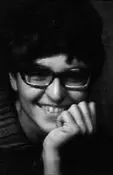
Susana Thénon

1935-05-07 – 1991-04-05
Susana Thénon was an Argentine poet, associated with the avant-garde movement and experimental poetry. Her work is known for its formal daring, its exploration of humor, irony, and its trenchant social criticism. Thénon challenged literary and social conventions, using language innovatively to address themes such as identity, the body, and power relations.

Luísa de Andrade Leite

1934
Luísa de Andrade Leite was a poet whose work is part of the Portuguese literary landscape. Her poetry explores the depth of human emotions and the complexity of interpersonal relationships, often through lyrical and introspective language. Her writing stands out for its sensitivity in approaching universal themes.

Rabia de Basra

717ac – 0801-01-01
Rabia of Basra, also known as Rabi'a al-Adawiyya, was an 8th-century Sufi ascetic and Muslim mystic, revered for her unwavering devotion to God and her approach to divine love. She is considered one of the most important figures in Islamic mysticism, pioneering the doctrine of pure, selfless, and liberating divine love. Her life and teachings continue to inspire, highlighting the importance of total surrender to God, renunciation of the ego, and the pursuit of spiritual union as the path to true fulfillment. Rabia represents an ideal of female sainthood and a profound expression of the mystical experience.
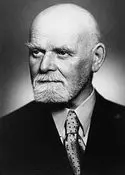
Theodor Körner

1791-09-23 – 1813-08-26
Theodor Körner was a German poet and soldier, known for his patriotic works and his involvement in the Napoleonic Wars. He is remembered for his war poems, which inspired German nationalism, and for his heroic death in battle.
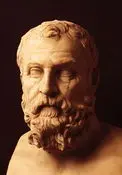
Sólon

630ac – 560ac
Solon (c. 630 – c. 560 BC) was an Athenian poet, legislator, and philosopher, considered one of the Seven Sages of Greece. He lived in a time of great social and economic instability in Athens, marked by the growing debt of peasants and the concentration of power in the hands of the aristocracy. His reforms aimed to alleviate the crisis and establish a more just basis for Athenian society, promoting what would be the embryo of democracy.

Theodor Gottlieb von Hippel
1741-01-31 – 1796-04-23
Theodor Gottlieb von Hippel was a Prussian jurist, writer, and civil servant. Known for his satirical works and writings on the condition of women, he was an influential intellectual figure of his time, promoting ideas on female education and women's rights.
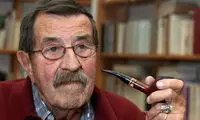
Günter Grass
1927-10-16 – 2015-04-13
Günter Grass was a German writer, born in 1927 and died in 2015, winner of the Nobel Prize in Literature in 1999. He is one of the most influential and recognized German-language authors of the post-war period, known for his works that address German history, guilt, and collective memory.
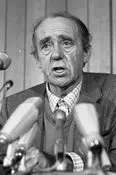
Heinrich Böll
1917-12-21 – 1985-07-16
Heinrich Böll was a prominent German writer, awarded the Nobel Prize in Literature in 1972. His work is known for its strong social and political engagement, criticizing militarism, nationalism, and the hypocrisy of post-World War II German society. He addressed themes such as guilt, memory, and the reconstruction of Germany. Böll explored the lives of ordinary people, the marginalized, and the victims of war, giving voice to those who were silenced. His writing is characterized by clarity, humanism, and a deep empathy with his characters. He was an important figure in German literature and an active defender of human rights.

Elfriede Jelinek

1946-10-20
Elfriede Jelinek is an Austrian writer awarded the Nobel Prize in Literature in 2004. Her work is known for its critical exploration of power structures, sexuality, politics, and for its use of transgressive and fragmented language. Jelinek addresses themes such as fascism, patriarchy, and consumer society in her works.

Derek Walcott

1930-01-23 – 2017-03-17
Derek Walcott was a Saint Lucian poet and playwright, celebrated for his sweeping epics and lyrical meditations on Caribbean identity, history, and the enduring power of the natural world. His work often explored the complex legacy of colonialism, the interplay of different cultures, and the search for selfhood in a postcolonial landscape. Educated in the British tradition yet deeply rooted in the Caribbean, Walcott's poetry is characterized by its rich imagery, classical allusions, and masterful use of language, often blending European literary forms with the rhythms and spirit of his native islands. He received numerous accolades for his contributions to literature, including the Nobel Prize in Literature.
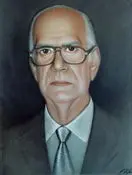
Camilo José Cela

1916-05-11 – 2002-01-17
Camilo José Cela was a prominent Spanish writer, awarded the Nobel Prize in Literature in 1989. His work, which includes novels, short stories, and poetry, is known for its rich language, raw realism, and exploration of the complexities of Spanish society. He is considered a central figure in 20th-century Spanish literature, particularly known for novels such as "The Family of Pascual Duarte" and "The Hive," which portray the harsh reality of post-civil war Spain.
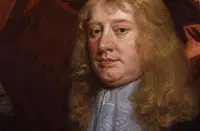
Abraham Cowley

1618-01-01 – 1667-07-28
Abraham Cowley was an influential English poet and essayist of the Baroque period, known for his exuberant style and his exploration of philosophical and moral themes. His poetic works frequently employ complex metaphors and allegories, reflecting the taste of the era for elaboration and ingenuity. As an essayist, Cowley addressed a variety of subjects, from nature and society to the human condition, with a prose that combines erudition and insight.

Lao Zi

0604-01-01 – -600ac
Lao Zi (or Lao Tzu) is traditionally credited as the author of the "Tao Te Ching" and a central figure in Taoist philosophy. His historical existence is debated, but his influence through the teachings on the Tao – the Way – is immeasurable. His philosophy emphasizes harmony with nature, simplicity, non-action (wu wei), and wisdom through introspection and observation of the universe.
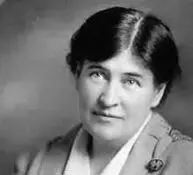
Willa Cather

1873-12-07 – 1947-04-24
Willa Sibert Cather was an American novelist, short-story writer, and poet known for her depictions of life on the American frontier and the American West.
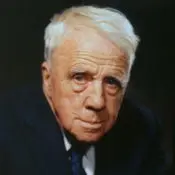
Robert Frost
1874-03-26 – 1963-01-29
Robert Frost was an American poet whose work is often associated with the rural life of New England. His poetry is characterized by its accessible language, conversational tone, and exploration of profound themes about nature, human existence, and the choices people make. Despite often being perceived as a simple observer of country life, Frost's poems delve into complex psychological states and philosophical questions, making him one of America's most celebrated and enduring literary figures.
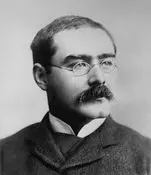
Rudyard Kipling
1865-12-30 – 1936-01-18
Rudyard Kipling was a prolific English writer and poet, best known for his works on British India and his children's stories. He championed the idea of the 'White Man's Burden' and his writings often reflected imperialist sentiments. Despite controversy surrounding his political views, his imaginative storytelling and mastery of language continue to be recognized, with works like 'The Jungle Book' and 'Kim' remaining popular.

Oliver Goldsmith

1728-11-10 – 1774-04-04
Oliver Goldsmith was an Anglo-Irish novelist, poet, and physician. He is best known for his novel "The Vicar of Wakefield" and his play "She Stoops to Conquer". Goldsmith was a member of London's literary society and a close friend of prominent figures such as Samuel Johnson.
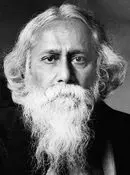
Rabindranath Tagore

1861-05-07 – 1941-08-07
Rabindranath Tagore was a Bengali poet, writer, playwright, composer, philosopher, social reformer, and painter, widely regarded as the most important figure in modern Indian literature. A polymath, his vast creative output spanned poetry, novels, short stories, dramas, essays, and songs, often exploring themes of nature, spirituality, human relationships, and the complexities of life in a changing world. Tagore was the first non-European to win the Nobel Prize in Literature in 1913, a testament to his profound lyrical genius and universal appeal. His work championed humanism, internationalism, and the harmonious integration of Eastern and Western thought.

Muhammad Ali
1931 – 2011-10-02
Muhammad Ali was a legendary American boxer, widely regarded as one of the greatest heavyweights of all time. Known for his speed, skill, and charisma, Ali was also a significant cultural and political figure. He was a civil rights advocate and a critic of the Vietnam War, which led to his suspension from boxing and the revocation of his title. His life was marked by struggles both inside and outside the ring, inspiring millions with his courage and conviction.
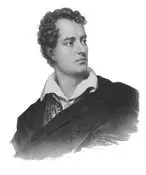
Lord Byron
1788-01-22 – 1824-04-19
George Gordon Byron, famously known as Lord Byron, was a leading figure of the Romantic movement in English literature. His life and works were marked by passionate idealism, flamboyant rebellion against social conventions, and intense personal experiences. Byron's poetry often explored themes of love, freedom, and the sublime, characterized by its lyrical power, dramatic intensity, and engagement with classical and contemporary concerns. His adventurous life, including his involvement in the Greek War of Independence, contributed significantly to his enduring image as a heroic and Byronic figure.

Johann Wolfgang von Goethe
1749-08-28 – 1832-03-22
Johann Wolfgang von Goethe was a prolific German writer, poet, playwright, and statesman whose vast body of work significantly impacted European literature and thought. His writings explored profound themes of nature, humanity, science, and the human condition, often blending romantic idealism with classical restraint. Goethe's influence extended beyond literature; he was also a respected figure in science and politics, embodying the ideal of the well-rounded Renaissance man. His literary creations, such as "Faust," remain cornerstones of world literature.
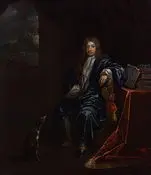
John Dryden
1631-08-09 – 1700-05-01
John Dryden (1631-1700) was an English poet, playwright, and literary critic. A dominant figure in the literary life of Restoration England, he was appointed the first Poet Laureate in 1668. His work spans a wide range of genres, including satire, religious poetry, plays, and translations. Dryden is known for his mastery of the heroic couplet and his influence on English poetry and drama. He became a master of the English language, shaping its development through his clear and powerful prose and verse. His work often reflects the political and religious turmoil of his time.