

Authors List
Browse our collection of authors

Fernando De Rojas

1470 – 1541-01-01
Fernando de Rojas was a Spanish writer and jurist of the 15th century, known mainly for being the author of the masterpiece of Spanish literature, "La Celestina". His life took place in a period of transition between the Middle Ages and the Renaissance, a context that is reflected in the moral and social complexities of his most famous work. Despite being a literary figure of great relevance, details about his personal life are scarce, which has generated debate and speculation over the centuries. "La Celestina" is a dialogue work that breaks with the literary conventions of its time, presenting a raw and realistic vision of human passions and social miseries. The complexity of its characters and the depth of its psychological analysis make it a landmark of universal literature, influencing the subsequent development of the novel and theater. Rojas's authorship, although mostly accepted, has been the subject of discussion, adding a veil of mystery to his figure.

José María Iparraguirre
1820-08-12 – 1881-04-06
José María Iparraguirre Balerdi was a Spanish poet and composer, known mainly for being the author of the lyrics of "Gernikako Arbola", considered the unofficial anthem of the Basque Country. Born into a Basque family, his life was marked by exile and commitment to the Basque cause, which was deeply reflected in his poetic and musical work. His poetry, written in Euskera and Spanish, conveys a strong feeling of love for the land, its culture, and its people, as well as a deep longing and denunciation of oppression. Through his verses and songs, Iparraguirre became a symbol of the identity and resistance of the Basque people, leaving a lasting legacy in collective memory.

Armando Buscarini
1904-07-16 – 1940-06-09
Armando Buscarini was a Spanish poet known for his avant-garde style and linguistic experimentation. His work, often surrealist and dreamlike, explored the limits of language and the representation of reality, seeking to create his own transgressive poetic universe. Buscarini stood out for his originality and his audacity in renewing poetic forms, leaving a legacy of surprising and provocative poems that continue to captivate with their boundless imagination and deep inquiry into the irrational.

Pepín Bello
1904-05-13 – 2008-01-11
An eccentric and enigmatic figure of Spanish surrealism, José Bello Lasierra, known as Pepín Bello, was a multifaceted artist and intellectual. Although he did not leave an extensive literary work published during his lifetime, his presence was fundamental in the avant-garde circles of Madrid and Paris. His life, marked by bohemianism and friendships with great figures of art and literature, was characterized by a constant search for creative freedom and experimentation.
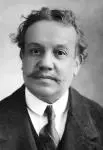
Luis Gonzaga Urbina
1864-02-08 – 1934-11-18
Luis Gonzaga Urbina was a prominent Mexican poet, essayist, and literary critic, a key figure of Modernism in Mexico. His work is characterized by formal elegance, the musicality of verse, and a deep sensitivity towards beauty, love, and melancholy. Urbina is remembered for his contribution to the development of Mexican Modernism, providing a refined lyrical voice and an exceptional command of poetic language. His influence extended through his writings and his teaching, leaving an indelible mark on his country's literature.

Manuel Asur
1947-10-12
Spanish poet and narrator, Manuel Asur has developed a work marked by introspection and the exploration of the depths of being. His verses, often laden with subtle melancholy and profound sensitivity, traverse universal themes such as love, solitude, and the transience of time. His style is characterized by a careful lexical selection and a particular musicality, which invite reflection and aesthetic enjoyment. Asur has cultivated both poetry and prose, demonstrating a versatility that enriches his literary production. His work is part of the Spanish lyrical tradition, but with his own voice that dialogues with contemporary concerns. The depth of his reflections and the beauty of his language make him a relevant figure in current literature.

Nicomedes Guzmán
1914-06-25 – 1964-06-26
Nicomedes Guzmán was a prominent Ecuadorian narrator and poet, a central figure in the indigenist narrative of his country. His work is characterized by deep empathy towards the oppressed and a forceful social critique, exploring the realities of the peasantry and indigenous communities. His writing is distinguished by a rich and evocative language, often capturing the worldview of the original peoples and the injustices they face. Guzmán became a representative voice for the social struggles and Ecuadorian cultural identity, leaving an important legacy in Latin American literature.

Germán Espinosa
1938-04-20 – 2007-10-17
Germán Espinosa was a prominent Colombian poet and essayist, recognized for his profound lyrical work and his sharp reflection on the human condition, identity, and the social reality of his country. His poetry is characterized by powerful language, vivid imagery, and a constant exploration of the mysteries of existence. Throughout his career, he established himself as an influential voice in Hispanic American literature, addressing universal themes with a unique and committed perspective.

Efraín Jara Idrovo
1926-02-26 – 2018-04-08
Efraín Jara Idrovo was an Ecuadorian poet, essayist, and critic, whose work is distinguished by his profound reflection on existence, identity, and the human condition, often tinged with sharp melancholy and lucidity. His poetry, characterized by purified language and great musicality, explores the labyrinths of being and the fleetingness of time, seeking in the word a refuge and a means to unravel the complexity of the world. Jara Idrovo is a central figure in 20th-century Ecuadorian poetry, appreciated for his aesthetic rigor and intellectual commitment.

Rosario Ferré
1938-09-28 – 2016-02-18
Rosario Ferré was a prominent Puerto Rican writer whose work explores the complexities of identity, gender, social class, and the history of Puerto Rico. Known for her powerful style and engaging prose, Ferré addressed themes such as the oppression of women, the colonial relationship of her island, and the search for one's own voice in a context of marginalization. Her writing, often imbued with fantastic and realistic elements, established her as one of the most important voices in contemporary Caribbean literature.

Mauricio Bacarisse
1895-08-20 – 1931-02-04
Spanish poet whose work is associated with the Generation of '27, although his personal style and the evolution of his poetry give him his own identity. Bacarisse explored universal themes such as love, death, time, and solitude, often with a melancholic sensitivity and profound introspection. His poetry is characterized by its musicality, verbal precision, and a constant search for beauty, both in form and content.

José Carlos Cataño
1954-01-01
José Carlos Cataño is a Spanish poet whose work is characterized by a profound reflection on language, identity, and the human condition. His poetry explores the capacity of words to name and, at the same time, to hide reality, weaving a discourse where the lyrical intertwines with the philosophical and the autobiographical. Throughout his career, he has demonstrated mastery in the handling of verse and a particular sensitivity for capturing the subtleties of feeling and thought. His work is part of the tradition of reflective and experimental poetry, constantly seeking new forms of expression that suit the complexity of the contemporary world. Cataño is recognized for his stylistic rigor and the depth of his existential questions, which resonate with a reader facing the same vital concerns.

Liliana Bodoc
1958-07-21 – 2018-02-06
Liliana Bodoc was a prominent Argentine writer, recognized for her deep connection with children's and young adult literature, as well as for her poetic and narrative work for adults. Her writing is characterized by a powerful voice and a great ability to evoke complex worlds and memorable characters, often exploring themes of identity, memory, and social justice. She was an influential figure in the Latin American literary landscape, leaving a legacy of works that continue to inspire readers and writers alike. Her commitment to the written word and her ability to transcend genres established her as one of the most important voices of her generation.

Claudio Bertoni
1961-09-09
Claudio Bertoni is a Chilean poet whose work is characterized by deep introspection and an often dense and reflective language. Throughout his career, he has explored themes such as identity, memory, time, and the human condition, using a style that combines lyrical intensity with careful formal elaboration. His poetry is distinguished by its ability to delve into the complexities of existence, offering a lucid and sometimes raw look at the inner and outer world of the being. Bertoni has been a relevant figure in contemporary Chilean poetry, recognized for his coherence and the depth of his aesthetic proposal. His work invites attentive reading, which deciphers the layers of meaning and emotional resonances that shape his poetic universe. Through his verses, he articulates a unique voice that remains true to a constant search for authenticity and transcendence.

Ricardo Garibay
1923-01-18 – 1999-05-03
Ricardo Garibay was a prominent Mexican writer, playwright, and screenwriter, whose work is characterized by a sharp observation of Mexico's social and political reality, as well as a deep exploration of the human condition. His writing, marked by a direct and often raw style, addresses themes such as corruption, violence, injustice, and the complexity of interpersonal relationships. As a playwright, Garibay contributed significantly to Mexican theater, creating works that questioned the power structures and morality of his time. His foray into cinema as a screenwriter also left an important mark. Garibay's work is a faithful and often uncomfortable reflection of Mexican society, seen through a critical and committed lens.

César Brañas
1899-12-13 – 1976-02-22
César Brañas was a Costa Rican poet whose work is characterized by a deep connection with the nature and land of his country, as well as by an intimate and reflective lyricism. His poetry explores themes such as love, melancholy, the fleetingness of time, and identity, always from a personal and emotional perspective. Brañas is recognized for the musicality of his verses and the clarity of his language, which manage to evoke vivid images and deep sensations in the reader. Throughout his career, he contributed significantly to the literary landscape of Costa Rica, leaving a legacy of poems that celebrate the beauty of the world and the complexity of the human experience.

Max Jiménez
1900-04-16 – 1947-05-03
Max Jiménez was a poet and essayist whose work is characterized by deep introspection and an exploration of the human condition. His poetry, often marked by a melancholic and reflective tone, addresses universal themes such as love, death, the passage of time, and the search for meaning. Throughout his career, he developed a distinctive style, with careful language and suggestive imagery that invited contemplation. His contribution to literature is highlighted by his ability to express the complexities of the soul and existential concerns in a context of cultural effervescence.

Inca Garcilaso de la Vega
1539-04-12 – 1616-04-23
El Inca Garcilaso de la Vega was a Peruvian chronicler and historian, recognized as the first mestizo writer to achieve literary fame in Europe. His masterpiece, 'Comentarios Reales de los Incas' (Royal Commentaries of the Incas), is a valuable chronicle of the history, culture, and civilization of the Inca Empire, written from a unique perspective that fuses indigenous heritage and European education. He is a crucial figure for understanding the identity and history of Peru and Latin America.

Max Henríquez Ureña
1887-11-16 – 1968-01-23
Max Henríquez Ureña was a prominent Dominican intellectual, essayist, literary critic, and poet, whose work contributed significantly to the study and dissemination of Hispano-American literature. Born in Santo Domingo, his life was marked by a deep humanistic vocation and a commitment to the culture of his country and the continent. His intellectual output ranged from the analysis of the works of great authors to reflections on the identity and destiny of Hispano-America. He is remembered for his erudition, his critical sharpness, and his elegant and rigorous style, which established him as one of the most relevant figures in Spanish-language thought and literary criticism.

Román Chalbaud
1931-10-10 – 2023-09-12
Román Chalbaud was a prominent Venezuelan playwright, film director, and screenwriter, recognized for his deep exploration of the social and political reality of his country. His work is characterized by a raw and direct language, reflecting the tensions and conflicts of society, often with a critical and unvarnished approach. His prolific career spanned both theater and film, leaving a significant legacy in both disciplines. Chalbaud became a fundamental voice for understanding the complexities of Venezuela, addressing themes such as violence, inequality, and the struggle for power with a mastery that earned him national and international recognition.

Jotamario Arbeláez
1940-11-30
Jotamario Arbeláez is a Colombian poet known for his sharp social criticism and irreverent language. His work is characterized by exploring the human condition, politics, and daily life with a mix of humor, irony, and deep reflection. He often uses a conversational and direct tone, bringing poetry closer to the common reader. His style has been associated with "nadaísmo," a countercultural movement that sought to break with artistic and social conventions.

Manuel Curros Enríquez
1851-09-15 – 1908-03-07
Galician poet whose full name is Manuel Narciso Bernardo Curros Enríquez. He is a prominent figure in Galician literature, especially of the Rexurdimento, a movement that revitalized the language and culture of Galicia in the 19th century. His work is characterized by a strong social and political commitment, as well as a deep melancholy and love for his homeland. Despite having written in Castilian, his Galician identity and his use of Galician in works like "A Gaita Gallega" establish him as a pillar of literature in this language.

José Carlos Becerra
1936-05-21 – 1970-05-27
José Carlos Becerra was a Spanish poet and essayist whose work is primarily framed in the second half of the 20th century. His poetry is characterized by deep introspection, the exploration of existential themes, and careful formal elaboration. Becerra is recognized for his ability to combine lyrical tradition with a personal and contemporary voice, addressing the human condition with particular sensitivity.

Arturo Barea
1897-09-20 – 1957-12-24
Arturo Barea was a Spanish writer and journalist, exiled in the United Kingdom after the Spanish Civil War. He is mainly known for his autobiographical work "The Forging of a Rebel", a trilogy that narrates his experiences in Spain in the early 20th century, the Civil War, and his subsequent exile. His work is characterized by a deep social commitment, a critical view of Spanish reality, and a vivid and moving prose that portrays the life of the popular classes and the complexity of Spanish history.