
02 de January
Born on this day
6
Débora Duarte is a Brazilian actress with a notable career in theater, cinema, and television. Although best known for her acting, her connection with poetry is marked by her interpretative ability and her deep artistic sensitivity, which is reflected in her approach to characters and texts. Her presence in the artistic scene for decades gives her a prominent place in Brazilian culture.
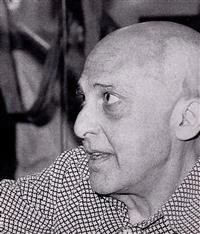
Mário Henrique Batista Leiria, Portuguese surrealist writer. He was a student at the Escola Superior de Belas Artes, from which he was expelled in 1942 for political reasons. He participated in the activities of the Lisbon Surrealist Group between 1949 and 1951 and in 1962.

Raul Gustavo Aguirre was an Argentine poet, an important figure of surrealism and the poetic renewal movement in Argentina. His work is marked by the exploration of the unconscious, dreamlike images and an innovative language, reflecting the anxieties of his generation.

Mark Tredinnick is an acclaimed Australian writer and poet whose works frequently explore the relationship between humans and the natural world, especially in environments like Australia. His writing is known for its vivid and poetic prose, addressing themes of place, belonging, and the landscape. Tredinnick is also recognized for his work in non-fiction prose, where he deepens his investigation into nature and the human experience, often with a reflective and philosophical tone. His keen eye for the land and its stories makes him an important voice in contemporary literature.

Died on this day
9
Poet and fiction writer. Born in the early 1940s, António Gancho's poetry remained unpublished until 1985, when Herberto Helder gathered eleven poems by the hitherto completely unknown author in his anthology *Edoi Lelia Doura*.

Portuguese journalist, literary critic, essayist, historian and university professor (1887-1975)
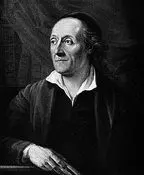
Johann Kaspar Lavater was a Swiss poet, theologian, and art critic. He is best known for his work on physiognomy, the art of judging a person's character from the appearance of their face. Lavater believed that facial features could reveal personality traits and morality, and his publications on the subject had a significant influence on 18th-century European thought.
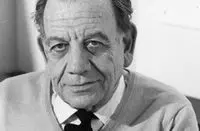
Edmond Jabès was a Franco-Egyptian poet, known for his profoundly philosophical work and for exploring themes such as the book, the desert, exile, and the word. His poetry is characterized by dense language and a fragmented structure.
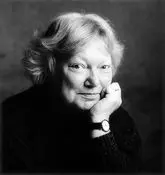
Inger Christensen's best-known work is the 1981 serial-poem/book Alfabet, in which the poet uses the letters of the alphabet from A to N, and the so-called Fibonacci sequence, to drive one of the most beautiful poems of that decade.


Roland Flint was an American poet whose poems often explored themes of love, loss, and the human condition with direct and emotional language. His work is marked by a deep sensitivity and an ability to capture intimate moments of life with clarity and impact. He stood out in the literary scene for his authenticity and the resonance of his verses, which touched many readers with their sincerity and the beauty contained in his everyday observations. His contribution to American poetry lies in his distinct voice and the honest exploration of the complexities of human relationships and personal experience.
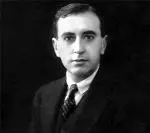
Chilean poet, a central figure of the 20th-century literary avant-garde. Huidobro was a bold innovator, creator of "creationism," a movement that proposed that the poet should create a new reality through words, independent of imitating the outside world. His work, vast and experimental, explored diverse forms and languages, notably influencing Latin American and universal poetry. He was a cultural agitator, editor, and promoter of the arts, leaving a legacy of creative boldness and aesthetic renewal.
The poet is a little god.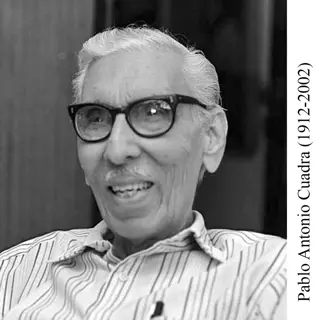
Manolo Cuadra was a distinguished Uruguayan poet and literary critic, recognized for his deep connection with the literary tradition of his country and for his work in cultural dissemination. His poetic work, although not extensive, is characterized by an intimate and reflective lyricism, exploring themes such as nature, the passage of time, and the search for identity. In addition to his role as a poet, Cuadra played a crucial role as a literary critic and editor, contributing significantly to the study and promotion of Uruguayan literature. His legacy lies both in his verses and in his tireless work of rescuing and analyzing the work of other authors, establishing himself as a fundamental figure in Uruguay's literary landscape.