Poem of the day

Do Not Go Gentle Into That Good Night

Dylan Thomas
Do not go gentle into that good night, 
Old age should burn and rave at close of day; 
Rage, rage against the dying of the light. 

Though wise men at their end know dark is right, 
Because their words had forked no lightning they 
Do not go gentle into that good night. 

Good men, the last wave by, crying how bright 
Their frail deeds might have danced in a green bay, 
Rage, rage against the dying of the light. 

Wild men who caught and sang the sun in flight, 
And learn, too late, they grieved it on its way, 
Do not go gentle into that good night. 

Grave men, near death, who see with blinding sight 
Blind eyes could blaze like meteors and be gay, 
Rage, rage against the dying of the light. 

And you, my father, there on that sad height, 
Curse, bless, me now with your fierce tears, I pray. 
Do not go gentle into that good night. 
Rage, rage against the dying of the light.
Read full poem

Born on this day

11
Clément Marot

Clément Marot was a French poet of the Renaissance, known for his versatility and his lyrical and witty style. His work ranges from love poetry and satire to religious poetry and translations of psalms. Marot is considered a master of poetic form, skillfully using verse and rhyme, and his writing significantly influenced later French poetry.

Geraldo Lyra

Geraldo Lyra was a Brazilian poet and playwright, whose work stands out for its exploration of identity and the human condition in settings of deep introspection. His poetry is marked by a rich and imagistic language, exploring universal themes such as love, death, and the search for meaning. Lyra moved between lyricism and drama, leaving a legacy that reflects on the complexity of existence.

Claudio Willer

Claudio Willer is a Brazilian poet, translator, and literary critic, whose poetic work stands out for its exploration of themes such as urban modernity, spirituality, philosophy, and the fantastic. His poetry, often marked by a dense and imagistic language, engages with the transformations of the contemporary world and with the existential questions of human beings. As a translator and critic, he has a relevant presence in the Brazilian literary landscape.

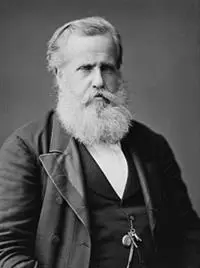
D. Pedro II

D. Pedro II was a central figure in Brazilian history, known for his role as Emperor of Brazil. During his long reign, the country went through a period of significant political stability and economic development, consolidating its independence and advancing in various areas. His governance was marked by a pragmatic approach and the pursuit of national progress, facing internal and external challenges with diplomacy and firmness. D. Pedro II is remembered as an erudite monarch dedicated to the well-being of his people, leaving a lasting legacy in the formation of modern Brazil.

Francis Jammes

Francis Jammes was a French symbolist poet, known for his lyrical and imagistic poetry, often inspired by rural life and nature. He was born on December 2, 1868, in Tournay, France. His work is marked by simple and direct language, evoking sensations and landscapes with great sensitivity. Jammes also explored religious and philosophical themes in his writing, developing a unique style that distinguished him in the literary scene of his time.

Alfredo Alves

Alfredo Alves was a Portuguese poet known for his lyrical and introspective work. His poetry often explores themes such as the ephemerality of time, the fleeting beauty of nature, and the complexities of human relationships. His language, while accessible, is marked by a unique delicacy and musicality that have captivated readers over time. Alves left a poetic legacy that continues to be appreciated for its emotional depth and its ability to capture the essence of the human experience in carefully crafted verses.

António Luís de Seabra

António Luís de Seabra was a Portuguese poet, magistrate, and politician, known for his poetic work that falls within Neotrovadorismo and Arcadismo. His writing shows a deep love for the homeland, for Portuguese history and tradition, often exploring themes such as heroism, past glory, and saudade. With careful language and a style marked by rhetoric, Seabra sought to revive the nation's values and ideals through his verses, reflecting a sense of nostalgia for Portugal's historical greatness and a desire for national renewal. His figure is representative of a literary sensibility that valued collective identity and memory.

Olvido García Valdés

Olvido García Valdés is a Spanish poet whose work stands out for its exploration of language, memory, and identity, with a strong connection to the land and cultural roots. Her poetry is marked by intense sensitivity, a unique rhythm, and an ability to evoke mystery and the sacred in the everyday.

Uwe Frisch

Uwe Frisch is an author known for his multifaceted writing, exploring themes ranging from the social to the personal. His works are characterized by psychological depth and an innovative approach to literary language, always seeking to push the boundaries of expression. He has a keen eye for the nuances of human experience, translating them into narratives that resonate with readers. His contribution to contemporary literature lies in his ability to create vivid worlds and complex characters, inviting reflection on the human condition.

Pedro Miguel Obligado

Pedro Miguel Obligado is an Argentine writer who has left his mark on literature through a body of work rich in descriptions and reflections on life and society. His writing is often praised for its clarity and depth in addressing various themes, from everyday life to more complex philosophical questions. He stands out for his ability to create vivid settings and memorable characters, using a language that makes his narratives accessible and captivating. Obligado's work is an invitation to carefully observe the world and reflect on the individual's role in their various spheres of action.

Died on this day

13
Décio Pignatari

Décio Pignatari was a Brazilian poet, translator, and essayist, a central figure of concretism. His work is marked by formal experimentation and the search for a concise and visual poetic language, exploring the relationships between word, image, and sound, and addressing contemporary themes with a critical and innovative perspective.

Philip Larkin

Philip Larkin was an English poet, novelist, and librarian, widely regarded as one of the most important British writers of the second half of the 20th century. His poetic work is characterized by raw realism, a frequently melancholic and cynical tone, and a profound reflection on themes such as love, death, time, and disillusionment. Larkin is also recognized for his clear and accessible style, albeit laden with existential depth and irony.

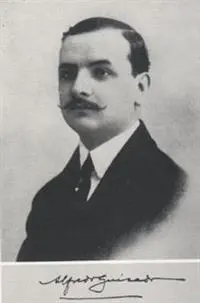
Alfredo Pedro de Meneses Guisado

Alfredo Guisado was a Portuguese poet, playwright, and journalist. Connected to the saudosismo movement, his poetic work is marked by a strong lyrical expression, with recurring themes such as love, saudade (longing), and melancholy. He developed a multifaceted career, actively contributing to the cultural and literary life of his time through writing and criticism. His literary production, although not extensive, solidified his presence in the Portuguese poetic landscape of the first half of the 20th century, engaging with the aesthetic sensibilities of his era.

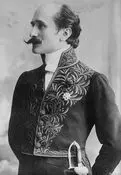
Edmond Rostand

Edmond Rostand was a French playwright and poet, famous for his play "Cyrano de Bergerac". His work is marked by romanticism, eloquent rhetoric, and a certain escapism that distinguished him from the naturalism dominant in his time.

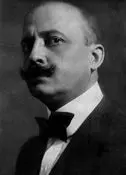
Filippo Tommaso Marinetti

Filippo Tommaso Marinetti was an Italian poet, editor, and literary theorist. He is best known as the founder of Futurism, an artistic and social movement that he described in his 1909 "Futurist Manifesto". Marinetti advocated for speed, technology, youth, and violence, and Futurism had a significant impact on visual arts, literature, theater, and music. His work sought to break with tradition and celebrate the dynamism of the modern era. Marinetti believed that art should reflect the constantly changing world, with its machines, industries, and vibrant cities. He was a controversial figure, with some of his ideas being associated with fascism.

Joaquim Marrão

Joaquim Marrão was a Portuguese poet whose work was characterized by the exploration of universal themes such as love, death, time, and nature, often from a lyrical and introspective perspective. His poetry is distinguished by the musicality of its verses, the richness of its imagery, and the delicacy in its exploration of human feelings. Marrão demonstrated particular mastery in the use of traditional poetic forms, such as the sonnet, without abandoning a language that, while refined, proved accessible and emotive. His literary contribution lies in his ability to evoke the beauty of the world and the complexity of the human soul through a pure and sensitive poetic expression.

António Dacosta

António Dacosta was a Portuguese poet, essayist, and art critic, a central figure of surrealism in Portugal. His poetic work, marked by dreamlike and subversive imagery, explores the depths of the unconscious, desire, and transgression. He was also an important disseminator of modern and contemporary art.

Pedro Rocha

Pedro Rocha is a poet whose work is distinguished by its lyrical depth and exploration of existential themes. His writing, often marked by a pronounced introspection, addresses the complexity of human emotions, the ephemerality of time, and the search for meaning in a constantly changing world. With careful language and an engaging rhythm, Rocha manages to create poetic universes where melancholy intersects with hope, inviting the reader to reflect on the human condition.

Joaquim Correia da Costa

Joaquim Correia da Costa was a Portuguese poet whose work is part of the context of contemporary poetry. His writing is characterized by a deep reflection on existence, time, and memory, using careful language and a sometimes introspective and melancholic tone. He explored universal themes with sensitivity, leaving a mark of lyricism and depth in his poetic compositions.

Ferenc Juhász

Ferenc Juhász was a renowned Hungarian poet, considered one of the most important voices of 20th-century Hungarian poetry. His work is marked by vivid imagination, deep symbolism, and an intrinsic connection with nature and mythology. He explored themes such as life, death, love, and the human condition with a unique intensity.