Poem of the day

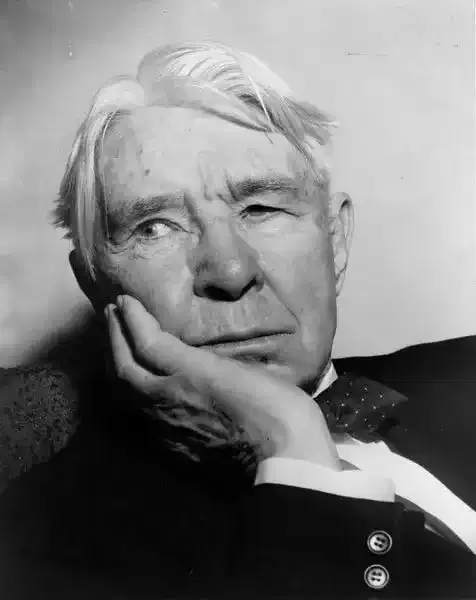
Grass

Carl Sandburg
Pile the bodies high at Austerlitz and Waterloo.
Shovel them under and let me work
-I am the grass; I cover all.

And pile them high at Gettysburg
And pile them high at Ypres and Verdun.
Shovel them under and let me work.
Two years, ten years, and the passengers ask the conductor:

What place is this?
Where are we now?

I am the grass.
Let me work.
Read full poem

Born on this day

14
Bárbara Heliodora

Bárbara Heliodora was a prominent Brazilian journalist, translator, columnist, and theater critic, recognized for her vast contribution to the performing arts and literature. Her career was marked by intelligence, critical acumen, and a deep love for art, which is evident in her analyses and writings. Throughout her career, Heliodora established herself as a benchmark in the cultural scene, leaving a legacy of rigor and passion for artistic expression in its various manifestations.

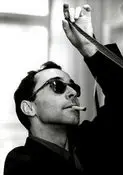
Jean-Luc Godard

Jean-Luc Godard was a Franco-Swiss filmmaker, a seminal figure in the French "Nouvelle Vague." His work is known for radical experimentation in terms of narrative, structure, and cinematic aesthetics, challenging conventions and exploring the nature of image and language. Godard addressed themes such as alienation, politics, philosophy, and the very condition of cinema, leaving a legacy of films that continue to influence and provoke.

Mario Wirz

Mario Wirz is a poet and writer known for his work that explores the human condition, the ephemerality of time, and the search for meaning. His poetry is distinguished by introspection, careful language, and the ability to evoke deep emotions, reflecting on life, death, and love with a unique sensitivity. His works invite reflection on existence and the passage of time, marked by a melancholic and philosophical tone.

Tarso de Melo

Tarso de Melo is a contemporary poet whose work is distinguished by introspection and the exploration of the complexities of human existence. His poetry navigates themes such as the ephemerality of time, the search for identity, and the beauty found in life's fleeting moments. With careful and imagistic language, Melo constructs verses that invite reflection, combining lyrical sensitivity with a philosophical perspective. His writing, which dialogues with literary tradition while renewing it with a personal outlook, has established him as an important voice in current poetry, capable of touching the reader through the authenticity and depth of his emotions and thoughts.

Pedro Rocha

Pedro Rocha is a poet whose work is distinguished by its lyrical depth and exploration of existential themes. His writing, often marked by a pronounced introspection, addresses the complexity of human emotions, the ephemerality of time, and the search for meaning in a constantly changing world. With careful language and an engaging rhythm, Rocha manages to create poetic universes where melancholy intersects with hope, inviting the reader to reflect on the human condition.

Alfredo Pimenta

Alfredo Pimenta was a Portuguese poet, professor, and politician, whose work is distinguished by its lyrical depth and reflection on identity and the human condition. Although recognized for his contribution to poetry, his multifaceted career as an educator and public figure also marked the cultural and social landscape of his time. His writing is often associated with introspective lyricism and a concern for moral and spiritual values.

Emiliano da Costa

Emiliano da Costa was a Portuguese writer whose literary contributions spanned poetry and prose. He stood out for his ability to explore the human condition through rich and evocative language. His work, though perhaps less known to the general public, is valued for the depth of its reflections and the aesthetic quality of its verses.

Adeodato Barreto

Adeodato Barreto was a Portuguese-language poet, known for his intimate and reflective poetry. His work explores universal themes such as love, the ephemerality of time, and the search for meaning. With a lyrical and musical style, he built a body of work that stands out for its sensitivity and the depth of his observations on the human condition, leaving a legacy of verses that continue to resonate for their beauty and honesty.

Francisco Xavier Cândido Guerreiro

Francisco Xavier Cândido Guerreiro, known by his literary pseudonym Cândido Guerreiro, was a Portuguese poet whose work falls at the end of the 19th and beginning of the 20th century. His poetry is marked by an intimate lyricism, with strong expressions of the Alentejo landscape and themes such as loneliness, saudade, and religiosity. He was one of the exponents of the so-called "Geração de 1890" and a singular poet in his ability to evoke the soul of Alentejo.

Cruzeiro Seixas

Manuel António Cruz Seixas, known artistically as Cruzeiro Seixas, was a Portuguese poet, a prominent figure of Surrealism in Portugal. His poetic work is characterized by the exploration of the unconscious, the dreamlike, and the illogical, breaking with narrative and rational conventions. Through transgressive language and surprising imagery, Seixas invites the reader to delve into the depths of the human mind, challenging the perception of reality.

W. S. Di Piero

W. S. Di Piero is an American poet and critic known for his poetry that explores the intersection between everyday life and classical mythology, often incorporating literary and philosophical references. His work is marked by precise language and a deep reflection on the human condition, memory, and art. He is also recognized for his prose and critical essays, where he analyzes poetry and literature with insight, addressing themes such as the nature of poetry, the relationship between art and life, and the history of Western literature. His style is erudite, yet accessible, inviting the reader to an intellectual and aesthetic exploration.

Anna Montero

Anna Montero is a Catalan writer and poet, known for her work that spans both poetry and prose. Her writing is often characterized by a sensitive and introspective approach, exploring themes such as identity, emotions, and human relationships. With a careful and evocative language, Montero builds literary universes that invite the reader to a deep immersion. Her contribution to contemporary Catalan literature is marked by originality and the ability to connect with the audience through universal themes treated with authenticity.

Salvador Rueda

Spanish poet, a towering figure of culteranismo and Andalusian modernism. His work is characterized by an exuberant and sensorial style, the use of rich and musical language, and the evocation of the beauty of nature and the Andalusian world. He was an innovator of poetic meter and vocabulary.

Died on this day

12
Maria Rachel Lopes

Maria Rachel Lopes was a Brazilian poet whose work is distinguished by the delicacy and depth with which she addresses human emotions and the experience of everyday life. Her poetry is characterized by accessible language, yet laden with meaning, capable of evoking subtle images and intense feelings. Through her verses, Lopes weaves reflections on life, love, and the passage of time, inviting the reader on a journey of introspection and contemplation. Her literary contribution lies in her ability to find beauty and lyricism in the simplest aspects of existence.

Tasso da Silveira

Tasso da Silveira was a Brazilian poet, essayist, literary critic, and professor, a prominent figure in Portuguese-language literature. His poetic work is marked by a deep reflection on existence, spirituality, and the human condition, often imbued with a mystical and transcendental tone. As an essayist and critic, he dedicated himself to exploring the intersections between literature, philosophy, and religion. Recognized for his erudition and the originality of his thought, Tasso da Silveira left a significant intellectual legacy, influencing generations of readers and scholars through his ability to link artistic expression to profound existential questions.

Lewis Thomas

Lewis Thomas was an American physician, poet, and essayist. He is widely known for his essays on science, medicine, and human nature, often published in "The New England Journal of Medicine". His writing is characterized by its clarity, beauty, and a deep admiration for life and the universe, seeking to connect scientific discoveries with human experience.

We are, perhaps uniquely among the earth’s creatur
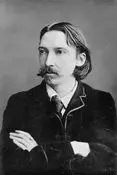
Robert Louis Stevenson

Robert Louis Stevenson was a Scottish poet, novelist, and travel writer, best known for "Treasure Island" and "Strange Case of Dr Jekyll and Mr Hyde." His work often explores themes of duality, adventure, and the supernatural, blending romanticism with a keen psychological insight. Stevenson's vivid prose and compelling narratives have secured his place as a significant figure in English literature.

Perpetual devotion to what a man calls his busines
Johann Peter Eckermann

Johann Peter Eckermann was a German poet and writer, best known for his work as secretary and close friend of Johann Wolfgang von Goethe. Born in Winsen, Lower Saxony, Eckermann dedicated himself to recording and publishing Goethe's conversations and thoughts, preserving a valuable testimony of his life and work.

Sarah Pinto Coelho

Sarah Pinto Coelho is a poet whose writing is characterized by the exploration of the human condition, addressing themes such as identity, love, and the passage of time with a particular sensitivity. With a language that combines delicacy with expressive force, the author constructs poems that invite reflection on the inner world and the complexities of human relationships, establishing herself in contemporary poetry.

Gwendolyn Brooks

Gwendolyn Brooks was a pioneering American poet whose work chronicled the lives of ordinary African Americans with vivid imagery and profound empathy. She broke significant ground as the first African American to win a Pulitzer Prize for Poetry, an achievement that underscored her distinctive voice and her commitment to portraying the realities of urban Black life. Brooks's poetry often explored themes of identity, social justice, community, and the challenges and triumphs of Black existence in America, using both traditional forms and more experimental approaches to capture the rhythms and spirit of her subjects.

She did not scream.
Alfonso Vallejo

Alfonso Vallejo is a Spanish playwright and writer, recognized for his contribution to contemporary theater. His theatrical work is marked by a strong sense of social criticism and the exploration of human conflicts in extreme situations. He stands out for the originality of his plots and his ability to create complex and believable characters. Vallejo also engages in other literary genres, demonstrating versatility. His writing is incisive and provocative, inviting the audience and the reader to reflect on the contradictions of society and human nature.

Francisco Gregorio de Salas

Francisco Gregorio de Salas was a Spanish writer and politician of the 19th century. His work is part of late romanticism and incipient realism, addressing social and political issues of his time. He excelled in both poetry and prose, showing a concern for public affairs and a particular sensitivity to the problems of his era. His figure represents an important link in the transition of literary currents of the 19th century in Spain.

Dulce Chacón

Dulce Chacón was a Spanish poet and novelist whose work was characterized by her social commitment and her deep sensitivity towards minorities and the oppressed. Her writing, marked by a powerful and emotional voice, explored themes such as historical memory, injustice, and the human condition with heartbreaking lyricism and direct prose. Through her verses and narratives, Chacón established herself as a relevant figure in contemporary Spanish literature, passionately defending freedom and dignity.