Poem of the day

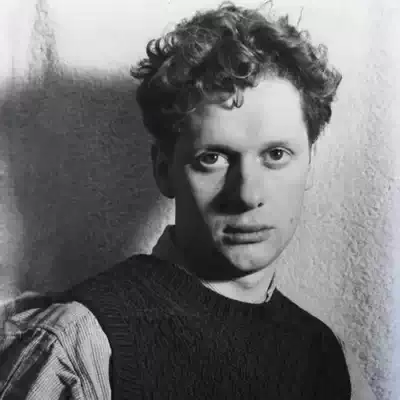
Do Not Go Gentle Into That Good Night

Dylan Thomas
Do not go gentle into that good night, 
Old age should burn and rave at close of day; 
Rage, rage against the dying of the light. 

Though wise men at their end know dark is right, 
Because their words had forked no lightning they 
Do not go gentle into that good night. 

Good men, the last wave by, crying how bright 
Their frail deeds might have danced in a green bay, 
Rage, rage against the dying of the light. 

Wild men who caught and sang the sun in flight, 
And learn, too late, they grieved it on its way, 
Do not go gentle into that good night. 

Grave men, near death, who see with blinding sight 
Blind eyes could blaze like meteors and be gay, 
Rage, rage against the dying of the light. 

And you, my father, there on that sad height, 
Curse, bless, me now with your fierce tears, I pray. 
Do not go gentle into that good night. 
Rage, rage against the dying of the light.
Read full poem

Born on this day

11
Rainer Maria Rilke

Rainer Maria Rilke was a German-language poet, widely considered one of the most important lyric poets in the German language. His work is marked by a profound exploration of existence, art, beauty, nature, and the human condition, with a highly imagistic and musical language. Rilke is known for his ability to capture the interiority and mystery of life, indelibly influencing modern poetry.

Carlos Rocha

Carlos Rocha is a poet distinguished by his multifaceted approach to language and the exploration of themes ranging from the everyday to profound existential questions. His poetic work is characterized by a unique ability to move between the lyrical and the conceptual, the intimate and the social. With a writing style that challenges conventions and invites reflection, Rocha demonstrates a mastery in the art of constructing images and evoking senses, making his poetry an enriching experience for the reader. His literary contribution is recognized for its originality and depth.

Filinto de Almeida

Filinto de Almeida was a prominent Portuguese poet, playwright, and journalist, a key figure in the development of Parnassianism and Symbolism in Portugal. His poetic work is recognized for its technical mastery, formal rigor, and exploration of themes such as beauty, love, death, and the transcendent, often with unique musicality and sonority. He stood out for his contribution to the renewal of Portuguese lyricism, introducing a more careful and elaborate language, and for his active role in important literary publications. His influence extended across several generations of poets, consolidating him as one of the most important names in Portuguese poetry.

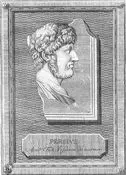
Aulo Pérsio Flaco

Aulus Persius Flaccus, more commonly known as Persius, was a Roman poet from Cisalpine Gaul, born in Volterra, Etruria. Although his work is relatively small, consisting of six satires, it is considered a landmark in Latin literature for its philosophical depth and complex style. Persius belonged to the Stoic school, and his satires reflect the ideals and concerns of this philosophy.

António Lopes dos Santos Valente

António Lopes dos Santos Valente was a Portuguese poet whose work is part of the Neorealism context. With poetry marked by social intervention and denunciation of injustices, he explored themes such as the human condition, the struggle for freedom, and hope for a better future. His lyricism, sometimes harsh and interventionist, reflects a deep concern with the social and political reality of his time, seeking to give voice to the marginalized and oppressed.

Américo Cortez Pinto

Américo Cortez Pinto was a distinguished Portuguese poet, a relevant figure in the literary landscape of the 20th century. His poetic work is recognized for its lyrical depth, for the exploration of themes such as identity, memory, and the passage of time, and for its elaborate and musical language. Throughout his career, he demonstrated a unique sensitivity in capturing the nuances of the human experience, consolidating a prominent place in contemporary Portuguese poetry.

Luís Amorim de Sousa

Luís Amorim de Sousa is a poet whose work is part of the context of contemporary Portuguese poetry. His writing is marked by a lyrical and reflective exploration of themes such as identity, memory, and the individual's relationship with time and space. His poetry seeks an authentic expression of human experiences, often with a contemplative tone and careful language.

Maria do Carvalhal

Maria do Carvalhal was a singular literary figure, whose work stands out for its lyrical depth and exploration of themes such as nature, love, and the transience of time. Her writing is marked by careful language and refined sensibility, reflecting an intimate dialogue with the world around her. Although less known to the general public, her poetry maintains a timeless quality, inviting reflection on the human condition and the beauty of the ephemeral. Her contribution to literature, though discreet, lies in the authenticity of her voice and the intrinsic beauty of her verses, which continue to resonate with those who read them.

Ken Smith

Ken Smith is a British poet and novelist, known for his work that frequently moves between the personal and the political, with incisive and reflective language. His writing explores the complexities of the human condition in the face of social and existential challenges. Smith also dedicates himself to teaching and mentoring young writers, sharing his vast experience and literary vision. His influence extends to the promotion of engaged and aesthetically rigorous literature.

Died on this day

19
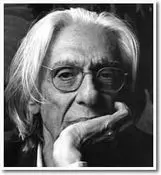
Ferreira Gullar

José Ribamar Ferreira de Araújo da Costa, known as Ferreira Gullar, was one of the most influential Brazilian poets and intellectuals. His work spans various phases, from concrete poetry to more existential and reflective poetry, always marked by a deep engagement with social and human reality. Gullar also stood out as a columnist, art critic, and essayist, leaving a multifaceted legacy in Brazilian culture.

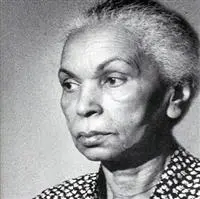
Noémia de Sousa

Noémia de Sousa is one of the most important voices in Mozambican and Portuguese-language African poetry. Her work, strongly marked by the experience of colonialism, Mozambican identity, and the condition of Black women, expresses a deep feeling of revolt, love for the land, and desire for freedom. With direct and emotive language, she gave voice to social and existential themes, becoming a symbol of resistance and the quest for self-determination.

Gilberto Mendonça Teles

Gilberto Mendonça Teles is a Brazilian poet, literary critic, and professor, whose work is notable for its intelligence, lyricism, and profound reflection on language and the human condition. His poetry moves between the personal and the universal, with formal rigor and expressive clarity. With a vast academic and literary career, he is an unavoidable figure in contemporary Brazilian literature, influencing generations of writers and scholars.

José Paulo Moreira da Fonseca

José Paulo Moreira da Fonseca was a multifaceted Portuguese artist, recognized as a poet, painter, and sculptor. His poetic work is distinguished by its lyrical depth and exploration of universal themes, reflecting a keen sensitivity to the complexities of human existence. As a painter and sculptor, he demonstrated equally remarkable talent, exploring different artistic languages to express his worldview. His artistic production, although not always widely publicized during his lifetime, left an indelible mark on the Portuguese cultural landscape. His poetic work, in particular, continues to be valued for its originality and its ability to touch the reader with its honesty and beauty.

Virgílio Martinho

Virgílio Martinho was a Portuguese poet linked to the surrealist movement. His work is marked by formal experimentation, the exploration of the unconscious, and a language loaded with dreamlike and subversive imagery. He questioned social and literary conventions, seeking radical expressive freedom.

John Gay

John Gay (1685-1732) was an English poet and playwright. He is best known for his ballad opera, 'The Beggar's Opera', which became a landmark in British musical theatre. Gay was a member of London's literary circle, which included figures like Alexander Pope and Jonathan Swift. His work is often characterized by a satirical tone and keen observation of the society of his time.

Robert Mallet

Robert Mallet was an Irish civil engineer and seismologist. He is best known for his pioneering work in the study of earthquakes, including the development of a seismograph and the investigation of the causes and effects of seismic events.

Constantin Noica

Constantin Noica was an influential Romanian philosopher, considered one of the most important thinkers of the 20th century in Romania. His work is marked by a deep reflection on metaphysics, history, culture, and Romanian identity, often with a poetic and aphoristic style. He was a defender of the 'Romanian man' and his spirituality, seeking to rescue and reinterpret the country's philosophical tradition. His influence extended beyond philosophy, touching Romanian literature and cultural thought.

H.C. Artmann

Hans Carl Artmann was an influential Austrian poet, playwright, and translator, known for his linguistic experimentation and for being a central figure in post-war German-language literature. His work encompasses poetry, prose, drama, and essays, innovatively exploring the possibilities of language and challenging literary conventions. Artmann is often associated with the "Wiener Gruppe" (Vienna Group), a collective of artists who explored concrete poetry and performance, seeking new forms of artistic expression. His writing is characterized by the subversion of grammar, the creation of neologisms, and the use of dialects, reflecting a critical and playful view of society and language itself.

Luís Augusto Palmeirim

Luís Augusto Palmeirim was a Portuguese poet whose work is part of the 19th-century literary context. He stood out for his lyricism, exploring themes such as love, nature, and the fleetingness of life, with accessible language and notable musicality. His poetry reflects the sensibilities of his time, engaging with the prevailing aesthetic currents, but always with a personal and reflective touch.

Francisco Matos de Sá

Francisco Matos de Sá is a poet distinguished by his exploration of the depths of the human soul and his ability to weave verses of intense existential reflection. His work is marked by an elaborate language and an often melancholic and philosophical tone, addressing universal themes such as the passage of time, the fragility of existence, and the search for meaning. He is an author who invites introspection.

Luiz de Macedo

Luiz de Macedo is a poet whose work is distinguished by its strong lyrical charge and the deep exploration of themes such as love, nature, and the passage of time. His poetry is marked by careful language, full of evocative imagery and a unique musicality that captivates the reader. Throughout his literary career, he has demonstrated an unparalleled ability to translate the most intimate emotions and reflections on the human condition into verse, establishing himself as a relevant voice in contemporary literature.

Xabier Lete

Xabier Lete Aranguren was a Spanish poet, singer, and composer, considered one of the most important figures in Basque poetry and song. His work is deeply marked by melancholy, reflection on Basque identity, the land, and the human condition, expressed through verses full of emotion and lyricism.

Adolfo Cueto

Adolfo Cueto is a writer whose works fall within the realm of fiction, exploring narratives that often address the human condition and its complexities. His writing is marked by the ability to create rich fictional worlds and memorable characters, which challenge conventions and invite reflection. He is dedicated to the art of storytelling, using his creativity to weave engaging plots and provoke in the reader a sense of discovery and questioning about reality and imagination.

Pedro Salinas

Pedro Salinas was a central figure of the Generation of '27, distinguished by a lyrical and intellectual poetry that explored the depths of love, knowledge, and self-awareness. His work is characterized by a sharp reflection on reality and human experience, using purified language and innovative imagery that fuses the everyday with the metaphysical. Recognized for both his academic work and his unique poetic voice, Salinas left a legacy that influenced subsequent generations of poets, establishing himself as one of the foremost exponents of 20th-century Spanish poetry.

Claudio Rodríguez

Claudio Rodríguez was a Spanish poet whose work is characterized by his profound reflection on existence, nature, and transcendence. His poetry, rooted in Spanish tradition but open to contemporary currents, stands out for its vigorous language and its ability to find the extraordinary in the everyday. Throughout his career, he explored universal themes with a hopeful and vitalistic perspective, becoming a key figure in Spanish poetry of the second half of the 20th century.