Poem of the day

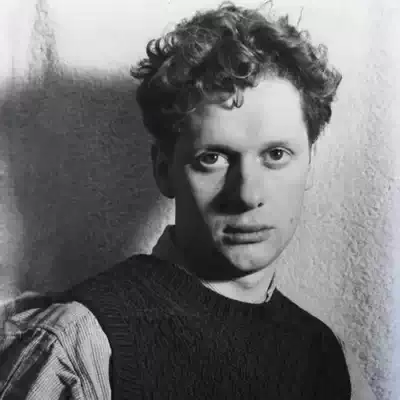
Do Not Go Gentle Into That Good Night

Dylan Thomas
Do not go gentle into that good night, 
Old age should burn and rave at close of day; 
Rage, rage against the dying of the light. 

Though wise men at their end know dark is right, 
Because their words had forked no lightning they 
Do not go gentle into that good night. 

Good men, the last wave by, crying how bright 
Their frail deeds might have danced in a green bay, 
Rage, rage against the dying of the light. 

Wild men who caught and sang the sun in flight, 
And learn, too late, they grieved it on its way, 
Do not go gentle into that good night. 

Grave men, near death, who see with blinding sight 
Blind eyes could blaze like meteors and be gay, 
Rage, rage against the dying of the light. 

And you, my father, there on that sad height, 
Curse, bless, me now with your fierce tears, I pray. 
Do not go gentle into that good night. 
Rage, rage against the dying of the light.
Read full poem

Born on this day

8
Artur Gomes

Artur Gomes was a Portuguese poet whose work is predominantly associated with surrealism and neorealism. His writing is characterized by the exploration of the unconscious, social criticism, and reflection on the human condition. Despite a less extensive poetic output compared to other authors, his distinct poetic voice and his ability to combine formal experimentation with a profound sense of commitment to social reality grant him a special place in 20th-century Portuguese poetry.

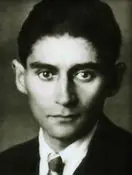
Franz Kafka

Franz Kafka was a German-language writer from Prague whose works explore themes of the absurd, alienation, oppressive bureaucracy, and existential angst. His writing is marked by a dreamlike and disturbing atmosphere, where characters struggle against inexplicable forces and impersonal systems. Considered one of the most influential authors of the 20th century, Kafka left a complex and dark literary legacy, whose narratives frequently portray the individual isolated in a hostile and incomprehensible world. His works, such as "The Metamorphosis" and "The Trial," continue to challenge and provoke reflection on the human condition.

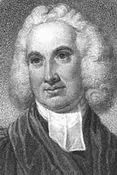
Edward Young

Edward Young was an English poet and critic. He is best known for his long poem 'Night-Thoughts,' a work of the graveyard school of poetry. Young held various positions, including fellow of All Souls College, Oxford, and rector of Welwyn.

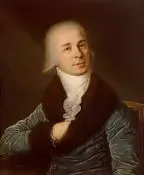
Gavrila Romanovich Derzhavin

Gavrila Romanovich Derzhavin was a Russian poet and a prominent public figure of the Russian Enlightenment. He is considered one of the greatest poets in the Russian language, known for his eloquence and originality.

João Rasteiro

João Rasteiro is a poet whose work is characterized by a deep exploration of language and the human condition. With a style that moves between the lyrical and the experimental, Rasteiro is dedicated to unraveling the complexities of feeling and existence, using metaphors and images that resonate with contemporary experience. His poetry invites reflection on themes such as memory, time, and identity, solidifying his place as an important voice in Portuguese literature.

Joaquín Pérez Azaústre

Joaquín Pérez Azaústre is a renowned Spanish poet and essayist, known for his profound reflection on language and the human condition. His poetic work stands out for its musicality, for the exploration of themes such as memory, time, and the search for meaning, often intertwining the personal with the universal. With a lyrical and dense prose, Pérez Azaústre addresses philosophical and existential questions, consolidating himself as an important voice in contemporary Spanish-language poetry. His essays also explore the intersections between literature, philosophy, and culture.

Died on this day

6
Ivan Junqueira

Ivan Junqueira was a Brazilian poet, journalist, and translator, known for his poetic work that frequently explores themes such as the metropolis, urban life, the passage of time, and human relationships, with a keen and sometimes melancholic eye. His writing, marked by clarity and imagistic strength, oscillates between lyricism and chronicle, reflecting the experience of the individual in contemporary society. He was also an active figure in journalism and literary translation.

Roberto Piva

Roberto Piva was a Brazilian poet, a prominent figure in marginal and experimental poetry in Brazil. His work is marked by a visceral, urban, and irreverent language, exploring themes such as the city, the body, desire, and social criticism in a raw and direct way. Piva stood out for his ability to capture the effervescence and conflicts of modern life, using an innovative style that broke with the literary conventions of his time. His poetry, often performative, reflected the challenging and libertarian spirit of the 1970s, consolidating him as one of the most original and impactful names in contemporary Brazilian poetry.

Mário Chamie

Mário Chamie was a Brazilian poet and translator, recognized for his work that moves between tradition and experimentation, exploring themes such as identity, religiosity, love, and the human condition. His poetry is marked by formal rigor, dense language, and innovative imagery, reflecting a deep interest in philosophy and various cultural manifestations. He was also an important promoter of foreign literature in Brazil through his translations.

Álvaro Abranches

Álvaro Abranches was a Portuguese poet whose work is distinguished by its lyrical intensity and exploration of themes such as nature, time, and melancholy. His writing is characterized by evocative language and a musical rhythm, which give his compositions a particular sound. Abranches frequently addressed the relationship between human beings and the cosmos, and the fleetingness of existence. His poetry reflects a refined sensitivity to the nuances of the natural world and a deep contemplation of the passage of seasons and life stages. While he may not be a household name, his poetic legacy lies in the aesthetic quality of his works and his ability to evoke universal feelings through refined artistic expression.

Libero de Libero

Libero de Libero was an Italian poet and writer known for his lyrical work and his profound exploration of the human condition. His poetry is marked by evocative language and keen sensibility, addressing themes such as love, death, memory, and the passage of time. With a literary career spanning several decades, de Libero left a significant legacy in 20th-century Italian poetry. His writing reflects a constant search for beauty and truth, in an attempt to capture the nuances of existential experience.