Poem of the day

Do Not Go Gentle Into That Good Night

Dylan Thomas
Do not go gentle into that good night, 
Old age should burn and rave at close of day; 
Rage, rage against the dying of the light. 

Though wise men at their end know dark is right, 
Because their words had forked no lightning they 
Do not go gentle into that good night. 

Good men, the last wave by, crying how bright 
Their frail deeds might have danced in a green bay, 
Rage, rage against the dying of the light. 

Wild men who caught and sang the sun in flight, 
And learn, too late, they grieved it on its way, 
Do not go gentle into that good night. 

Grave men, near death, who see with blinding sight 
Blind eyes could blaze like meteors and be gay, 
Rage, rage against the dying of the light. 

And you, my father, there on that sad height, 
Curse, bless, me now with your fierce tears, I pray. 
Do not go gentle into that good night. 
Rage, rage against the dying of the light.
Read full poem

Born on this day

8
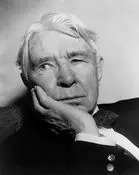
Carl Sandburg

Carl Sandburg was an American poet, historian, novelist, and lexicographer. He is considered one of the most important American poets of the 20th century, known for his free verse and his focus on the American working class and the landscapes of the American Midwest. His poetry often celebrated the common man and the industrial might of America, earning him a reputation as the "poet of the people." Beyond his poetry, Sandburg was also a prolific biographer, most notably of Abraham Lincoln, and a collector of folklore and songs.

A Coin
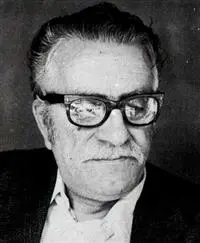
Celso Emilio Ferreiro

Celso Emilio Ferreiro was a Galician poet, journalist, and political activist, considered one of the central figures of contemporary Galician poetry. His work is marked by strong social and political engagement, the exploration of Galician identity, and direct, vigorous language. He was a tireless defender of Galician culture and language in times of repression.

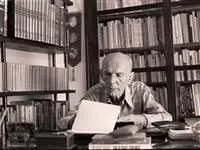
Moreira Campos

Moreira Campos was a Portuguese poet whose work falls within the poetry of intervention and social reflection. He was characterized by direct language and a strong critical charge, addressing themes such as social injustice, freedom, and the human condition. His poetry, although at times marked by a somber tone, is also a call to conscience and action, reflecting his civic engagement and his concern for the world around him. He always sought an authentic and forceful expression of his feelings and ideas, leaving a legacy of verses that continue to resonate for their relevance and expressive power.

Domingos dos Reis Quita

Domingos dos Reis Quita was an 18th-century Portuguese poet, associated with Arcadianism, a literary movement that sought simplicity, clarity, and inspiration from nature and classical antiquity. His work is marked by a bucolic and pastoral tone, celebrating country life and the ideals of harmony and serenity. A poet of great sensitivity, Quita dedicated himself to exploring the themes of love, nature, and simple life, using elegant and musical language. His poetry reflects the search for an idealized refuge from the hustle and bustle of the world, finding in nature a source of inspiration and solace. He is considered one of the most significant representatives of Arcadian poetry in Portugal.

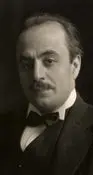
Khalil Gibran

Khalil Gibran was a Lebanese-American poet, writer, and philosopher. He is best known for his philosophical essays and prose poetry, particularly his iconic work "The Prophet." Gibran's writings explore themes of love, freedom, spirituality, and the human condition with a distinctive blend of Eastern and Western thought. His poetic style is characterized by its lyrical beauty, profound wisdom, and universal appeal, making him one of the most widely read poets of the 20th century.

Are you a politician who says to himself: ‘I will
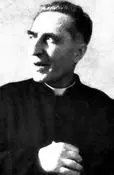
Clemente Rebora

Clemente Rebora was an Italian poet, professor, and soldier, known for his work marked by deep spirituality and engagement in reflections on faith, war, and the human condition. His poetry, often associated with crepuscularism and intense religious sensibility, explores inner struggle and the search for meaning in a changing world. Despite not having a vast literary output, his work left an indelible mark on 20th-century Italian poetry, recognized for its authenticity and existential depth.

P. J. Kavanagh

Peter John Kavanagh was a British poet, writer, and literary critic. His poetic work is known for its clarity, introspection, and often for a connection to nature and rural life. He addressed themes such as time, memory, and the search for meaning in a constantly changing world. In addition to his poetry, Kavanagh also wrote prose, including memoirs and essays, in which he explored his personal experiences and observations on literature and society. He worked as a literary critic for several publications, demonstrating a deep knowledge and appreciation for the art of the word.

Died on this day

4
Alfredo de Barros

Alfredo de Barros was a poet whose work manifests a deep connection with literary tradition, while also revealing a unique sensitivity for capturing the essence of the world around him. His poetry, often imbued with subtle melancholy and reflection on the human condition, is characterized by refined language and strong musicality. Although his name may not be among the most prominent, his poetic contribution is a valuable legacy for literature.

José María Gabriel y Galán

José María Gabriel y Galán was a Spanish poet known for his work deeply rooted in popular tradition and the Extremaduran landscape. His poetry, often costumbrista and lyrical in nature, is characterized by formal simplicity and expressive authenticity. He addressed themes such as rural love, nature, popular religiosity, and village life, managing to capture the essence of life in Extremadura of his time. His style, close to traditional lyrics and folklore, earned him a prominent place in Spanish literature of the late 19th and early 20th centuries, being recognized as the "poet of the Extremaduran countryside".