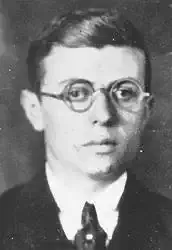
Jorge Luis Borges
Author of the day

Jorge Luis Borges

Jorge Luis Borges was an Argentine writer, poet, essayist, and translator. His work is characterized by its philosophical depth, intricate plots, and exploration of themes such as time, infinity, identity, and the nature of reality. Borges is considered one of the most significant literary figures of the 20th century, renowned for his innovative use of literary devices and his profound influence on postmodern literature.

Poem of the day

Grass

Carl Sandburg
Pile the bodies high at Austerlitz and Waterloo.
Shovel them under and let me work
-I am the grass; I cover all.

And pile them high at Gettysburg
And pile them high at Ypres and Verdun.
Shovel them under and let me work.
Two years, ten years, and the passengers ask the conductor:

What place is this?
Where are we now?

I am the grass.
Let me work.
Read full poem

Born on this day

10
Hélio Pellegrino

Hélio Pellegrino was a Brazilian physician, psychoanalyst, writer, and activist, known for his multifaceted work that spans poetry, fiction, and essays on social and psychoanalytic themes. His writing, often marked by deep sensitivity and a critical eye on the human condition and Brazilian society, explored the complexities of the psyche, love, death, and the search for meaning. Pellegrino left a significant legacy as an engaged intellectual and sensitive artist.

Friedrich Dürrenmatt

Friedrich Dürrenmatt was a prominent Swiss playwright, novelist, and essayist, known for his grotesque and philosophical plays that explore the complexities of the human condition, justice, and morality. He often used elements of black humor, satire, and the absurd to question reality and society. His plays, such as "The Visit" and "The Physicists," achieved international recognition.

Emotions have no place in business, unless you do
Forough Farrokhzad

Forough Farrokhzad was an Iranian poet, filmmaker, and intellectual, considered one of the most influential voices in modern Persian poetry. Her work is characterized by boldness, exploration of the female condition, social criticism, and lyrical intensity. Through a personal and transgressive language, she addressed themes such as love, freedom, religion, and alienation, challenging the social and literary conventions of her time. Her short but impactful life and work left a lasting legacy in Iran's literature and cinema.

Alfredo Conde

Alfredo Conde is a Galician writer who stands out in contemporary narrative in the Galician and Spanish languages. His work often explores the human condition, the complexities of interpersonal relationships, and historical memory. With careful and profound writing, Conde addresses themes such as identity, exile, and the passage of time, reflecting on contemporary society and culture. His literary production covers both fiction and essay, consolidating him as an important voice in literature in the Galician language.

Óscar Oliva

Óscar Oliva is a poet and writer recognized for his deep lyricism and his exploration of universal themes such as love, death, and the human condition. His poetic work is marked by careful language and a unique sensitivity in addressing emotions. With a career dedicated to the art of words, Oliva has been consolidating his voice in literature, offering readers unique perspectives on life and the universe. His poetry invites reflection and contemplation, weaving verses that resonate with the soul.

Manuel González Prada

Manuel González Prada was a prominent Peruvian writer, essayist, and poet, a key figure of the Modernist literary movement in his country and a fervent social and political critic. His work is characterized by a deep reflection on Peruvian reality, the denunciation of injustice and colonialism, and a marked influence of Krausism and anarchism. Prada advocated for the modernization of Peru, educational reform, and the vindication of indigenous cultures. His poetry, often avant-garde and challenging, explores themes such as national identity, criticism of religion and established morality, and a pessimistic view of human destiny. He is considered one of the most influential intellectuals of republican Peru.

Gaspar Melchor de Jovellanos

Gaspar Melchor de Jovellanos was a towering figure of the Spanish Enlightenment, excelling as a jurist, writer, politician, and reformer. His thought, deeply rooted in the principles of reason and progress, encompassed a wide range of interests, from education and economics to politics and social criticism. He was a tireless promoter of Enlightenment ideas in Spain, seeking to modernize the country and improve the living conditions of his fellow citizens. His literary work, though not as extensive as his essayistic and political output, reveals a profound knowledge of the language and a notable sensitivity, especially in his poetic and theatrical compositions. Jovellanos is remembered as one of the great intellectuals of his time, a statesman committed to the welfare of his nation, and a staunch advocate for reform and progress.

Died on this day

12
Lanza del Vasto

Lanza del Vasto, secular name of Jean-René, was an Italian poet, philosopher and activist, known for his philosophy of non-violence and his engagement in social and political causes. With a vast literary and essayistic work, Del Vasto explored themes such as spirituality, social justice and critique of industrial society, becoming an influential figure in the pacifist movement.

Carlos Eduardo da Rocha

Carlos Eduardo da Rocha is a name associated with literary production in Portuguese, with a body of work that tends to explore the depths of human experience and its interconnections with the surrounding world. His writing, marked by a strong poetic and reflective vein, addresses universal themes such as identity, the passage of time, and the search for meaning, using language that strives for precision and expressiveness. With a style that combines introspection with keen observation of reality, Rocha invites the reader on a journey into the inner workings of emotions and the landscapes of memory. His literary work seeks to establish a dialogue with contemporary concerns, offering perspectives that resonate with the complexity of modern life.

Maciel Monteiro

Maciel Monteiro was a Brazilian poet whose work, although not as widely publicized as that of his contemporaries, is an important testament to 19th-century poetry. His writing is characterized by Romantic sensibility, with themes that address love, nature, and saudade (longing), reflecting the spirit of his time. His contribution, though sometimes forgotten, is relevant to understanding the Brazilian literary landscape. Maciel Monteiro navigated the literary currents of Romanticism, expressing in his verses the melancholy and yearnings characteristic of this period. His poetry, marked by a particular lyricism, invites reflection on the human condition and the ephemeral beauty of life, consolidating his place in the history of Brazilian literature as a poet of notable sensitivity and expression.

Manuel Botelho de Oliveira

Manuel Botelho de Oliveira was a Portuguese poet and jurist, notable for his work "Musa Desterrada" (Exiled Muse), a landmark in Lusitanian Baroque poetry. He stood out for his exploration of themes such as nature and religiosity, with a rich and ornate language. His writing reflects the cultural and religious context of his time, and he is considered one of the exponents of 18th-century poetry in Portugal.

João Mello

João Mello was a Portuguese poet and university professor, whose poetic work developed from the second half of the 20th century. His poetry is often characterized by a strong existential charge and the exploration of themes such as memory, time, and identity, with a language that combines lyricism and intellectual rigor. In addition to his literary activity, he dedicated himself to teaching and research in the field of literature.

Malangatana Valente Ngwenya

Malangatana Valente Ngwenya was a prominent Mozambican visual artist and poet, known for his vibrant and multifaceted work that explores cultural roots, Mozambique's history, and the struggles of its people. His paintings, sculptures, and poems are marked by strong expressiveness, intense colors, and stylized figures that evoke spirituality, ancestry, and social reality. Malangatana dedicated his life to art as a form of expression and intervention, becoming a cultural icon of Mozambique.

Vasko Popa

Vasko Popa was a Serbian poet considered one of the most important figures in modern Serbian and European poetry. His work, marked by concise and imagistic language, explores universal themes such as identity, memory, and the human condition, often through a mythical and folkloric approach. Popa is known for his ability to transform elements of everyday life and popular imagination into powerful metaphors, creating a unique poetic universe of great depth.

Pier Luigi Bacchini

Pier Luigi Bacchini was an Italian poet, novelist, essayist, and translator. His work is diverse, encompassing different literary genres, but maintaining a line of continuity in the exploration of the human condition and language. With a remarkable poetic vein, Bacchini also ventured into prose, where he developed narratives that explore philosophical and existential themes. His work as a translator enriched cultural exchange in Italy, and his essays reveal a thinker attentive to the nuances of literature and culture.