Bertolt Brecht
Author of the day

Bertolt Brecht

Bertolt Brecht was a highly influential German playwright, poet, and theatre director. He is renowned for his pioneering work in epic theatre, which aimed to provoke critical thought rather than emotional immersion. His writings often carried strong political and social messages, critiquing capitalism, war, and injustice. Brecht's innovative techniques, such as the alienation effect (Verfremdungseffekt), revolutionized modern theatre.

Poem of the day

Grass

Carl Sandburg
Pile the bodies high at Austerlitz and Waterloo.
Shovel them under and let me work
-I am the grass; I cover all.

And pile them high at Gettysburg
And pile them high at Ypres and Verdun.
Shovel them under and let me work.
Two years, ten years, and the passengers ask the conductor:

What place is this?
Where are we now?

I am the grass.
Let me work.
Read full poem

Born on this day

10
Geraldo Falcão

Geraldo Falcão was an Angolan poet and professor, known for his work that explores the nuances of identity and the human condition in post-colonial contexts. His poetry is marked by a rich and reflective language, addressing themes such as memory, the land, and the search for meaning amidst social and political transformations.

Bruno Seabra

Bruno Seabra is a Portuguese writer, translator, and editor, known for his foray into contemporary literature with works that explore the human condition, identity, and the complexity of interpersonal relationships. His writing is distinguished by its careful language and his ability to address profound themes with a modern and sometimes melancholic perspective. With a multifaceted career in the publishing world, Seabra has been consolidating his literary voice, engaging with the concerns of current society. His works invite reflection on existential dilemmas and the search for meaning in a constantly changing world.

Antonio Cicero

Antonio Cicero was a Brazilian poet, university professor, and literary critic. His poetic work is marked by a profound reflection on language, time, and the human condition, combined with formal rigor and sharp intelligence. His poetry explores the ambiguities of modern experience, the everyday, and the search for meaning in a complex world. He was also an influential intellectual, known for his essays on culture, literature, and philosophy, as well as his work as a professor.

Guimarães Rocha

Guimarães Rocha was a Brazilian poet and author whose work stood out for its exploration of existential and social themes with a rich and imagistic language. His poetry is marked by a deep reflection on the human condition, time, and the ephemerality of life, intertwined with sharp observations about everyday life and the complexities of human relationships. The strength of his writing lies in his ability to evoke intense sensations and feelings, inviting the reader on an introspective journey.

Luis Romano

Luis Romano is a poet recognized for his ability to evoke landscapes and feelings with precise and sensitive language. His work moves between introspection and observation of the surrounding world, exploring themes such as memory, identity, and the passage of time. Romano's poetry is characterized by subtle musicality and formal rigor that, without being excessive, gives a solid structure to his verses, inviting the reader to a deep immersion in his lyrical universes.

Bo Hjalmar Bergman

Bo Hjalmar Bergman was a Swedish writer, primarily known for his novels and plays. Born in Stockholm City, his work is often marked by a melancholic and introspective tone, exploring the complexities of the human condition.

Maria Lamas

Maria Lamas was a Portuguese writer, journalist, and activist, whose work spanned various literary genres, with a notable focus on the novel. Her writing frequently addressed the female condition, social inequalities, and the yearning for freedom, within a historical context of great challenges. She was a prominent figure in the feminist movement in Portugal, dedicating a large part of her life to the struggle for women's rights. Her legacy is marked by her courage, her assertive voice, and her significant contribution to literature and social activism.

Luis Vicente de Aguinaga

Luis Vicente de Aguinaga was a Spanish writer and intellectual, known for his participation in literary and cultural movements of his time. His work, although perhaps less known today, reflects the intellectual and social context of Spain in the early 20th century, with an interest in social and aesthetic themes.

Elisa Díaz Castelo

Elisa Díaz Castelo is a Mexican writer recognized for her prose work, especially short stories and novels, which frequently explore identity, memory, and the complexities of human relationships. Her writing is characterized by precise prose and deep sensitivity in the construction of characters and narratives, with a keen eye for the nuances of everyday life.

Ventura Gassol

Ventura Gassol was a Spanish poet, doctor, and politician, a relevant figure in Catalan literature. His poetic work, deeply rooted in Catalan culture and tradition, is characterized by its lyricism, its connection with nature, and its commitment to the ideals of his land. He was an intellectual committed to his time and a defender of the Catalan language and culture.

Died on this day

9
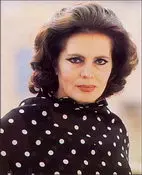
Amália Rodrigues

Amália Rodrigues, known as the Queen of Fado, was one of the greatest performers of Portuguese music and a key figure in Lusophone culture. Her unmistakable voice and her ability to convey the deep emotion of fado made her a global icon. She performed a vast repertoire, ranging from the most traditional fado to original compositions, marking generations with her art and unique personality.

Elizabeth Bishop

Elizabeth Bishop was an American poet renowned for her meticulously crafted, observant, and subtly emotional verse. Her work is characterized by its precise imagery, quiet tone, and profound empathy for the subjects she described, often focusing on landscapes, travel, and the details of everyday life. Despite a relatively small output of published work during her lifetime, she gained significant critical acclaim and is now considered one of the most important American poets of the 20th century. Her poetry is marked by its formal control and deep engagement with the physical world.

A Miracle for Breakfast
Dzore Drzic

Dzore Drzic (1461–1508) was a Dalmatian humanist poet and playwright. He is considered one of the most important figures of Croatian Renaissance literature, known for his works in Latin and vernacular.

Antonio Cisneros

Antonio Cisneros was a prominent Peruvian poet, whose work stood out for its expressive force, irony, and reflection on social reality and the human condition. His poetry is marked by vibrant language and a critical look at his time, exploring themes such as identity, politics, and the complexities of daily life. Cisneros established himself as one of the most important voices in Latin American poetry of his generation.

Raymond Federman

Raymond Federman was a French-born American novelist, poet, literary critic, and professor, known for his experimental writing and exploration of the boundaries of language and narrative. His work is marked by a deep interest in memory, identity, and the human condition, often with an autobiographical tone and a fragmented approach.

Antónia Gertrudes Pusich

Antónia Gertrudes Pusich was an intellectual and literary figure of the 19th century in Portugal, noted for her work as a writer, translator, and educator. Her work, though less known today, reflects her engagement with the cultural currents and intellectual debates of her time. She contributed to the dissemination of knowledge and education, making her mark in a period of cultural effervescence.

S.A. Stepanek

S.A. Stepanek is an author whose works frequently explore the boundaries of imagination and reality, with narratives that combine elements of fantasy, science fiction, and magical realism. His writing is known for its originality and for creating immersive worlds.

Miguel Rasch Isla

Miguel Rasch Isla was a distinguished Chilean poet and literary critic. His poetic work, often framed within the "neobaroque" or "conceptual" tradition, is characterized by great semantic density, wordplay, and reflection on the very nature of poetry and reality. As a critic, Rasch Isla made significant contributions to the study of Latin American literature, especially regarding contemporary poetry. His figure is relevant for his intellectual rigor and his profound vocation for aesthetic inquiry.