Jean-Paul Sartre
Author of the day

Jean-Paul Sartre

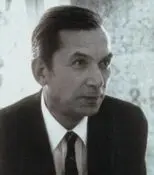
Jean-Paul Sartre was a French philosopher, writer, playwright, and literary critic, a central figure of atheistic existentialism. His vast and multifaceted work explores human freedom, individual responsibility, bad faith, and social commitment. Sartre rejected the Nobel Prize in Literature, advocating for a stance of refusal of bourgeois institutions. His thought profoundly influenced 20th-century philosophy, literature, and political debate, marking a generation with his emphasis on autonomy a…

Poem of the day

Grass

Carl Sandburg
Pile the bodies high at Austerlitz and Waterloo.
Shovel them under and let me work
-I am the grass; I cover all.

And pile them high at Gettysburg
And pile them high at Ypres and Verdun.
Shovel them under and let me work.
Two years, ten years, and the passengers ask the conductor:

What place is this?
Where are we now?

I am the grass.
Let me work.
Read full poem

Born on this day

6
Ruy Cinatti

Ruy Cinatti was a Portuguese-Italian poet, ethnologist, and physician whose poetic work is deeply marked by his experience in Timor, where he spent much of his life. His poetry explores the relationship between man and nature, identity, Timorese culture, and the human condition, with intense lyricism and precise language. With a strong connection to surrealism and avant-garde poetry, Cinatti left behind a unique body of work that reflects his life experiences in exotic lands and his profound reflections on the world and existence.

José Blanc de Portugal

José Blanc de Portugal was a Portuguese poet, essayist, and literary critic, a prominent figure in contemporary poetry. His work is distinguished by its exploration of themes such as time, memory, the relationship with nature, and the human condition itself, approached with a reflective and, at times, melancholic tone. With a refined style and careful language, Blanc de Portugal managed to combine lyrical tradition with modern sensibility, creating poetry that invites introspection and contemplation. Considered one of the most unique poets of his generation, his literary career was marked by a constant aesthetic search and a deep dialogue with existential questions. His writing, rich in imagery and subtlety, solidified him as an important voice in Portuguese literature.

Maria A. Oliveira

Maria A. Oliveira is a poetic figure whose work stands out for its lyrical depth and exploration of universal themes such as love, loss, and the passage of time. Her writing, characterized by careful language and intrinsic musicality, invites reflection on the human condition and its complexities. Her poetic compositions resonate with a unique sensibility, touching the reader with their authenticity and the beauty of their imagery.

Neimar de Barros

Neimar de Barros is a poet whose work stands out for its lyrical depth and exploration of existential themes and the human condition. His poetry is marked by careful language and strong musicality, inviting reflection on the passage of time, memory, and the ephemerality of life. The author navigates between the personal and the universal, constructing vivid and sensory images that resonate with the reader's experience. His poetic production as a whole reflects a keen sensitivity to the nuances of the soul and the world, with verses that evoke both melancholy and hope. His work is part of a contemporary literary context, dialoguing with the aesthetic and thematic concerns of current poetry, while affirming a distinctive authorial voice and an attentive gaze on the complexity of existence.

Juana de Ibarbourou

Juana de Ibarbourou, also known as Juana de América, was a Uruguayan poet of great renown, whose work is marked by a delicate lyricism and an accessible style. She explored themes such as love, nature, childhood, and the passage of time, with a language that combined sensuality and simplicity. Her poetry achieved great popularity, making her one of the most beloved voices in Latin American literature.

João de Deus de Nogueira Ramos

João de Deus de Nogueira Ramos, better known as João de Deus, was a Portuguese poet of the 19th century, whose work is an exponent of Romanticism in Portugal. He distinguished himself by his lyricism with a strong sentimental and spiritual bent, exploring themes such as love, religion, and nature with a musical and melancholic language. His poetry, marked by deep religiosity and a yearning for the infinite, captivated generations of readers and established him as an important figure in Portuguese literature.

Died on this day

3
Jorge Eduardo Eielson

Jorge Eduardo Eielson was a Peruvian poet and artist, a key figure in the Latin American literary avant-garde. His poetic work is distinguished by profound formal and linguistic experimentation, exploring the materiality of language and its relationship with identity and memory. With a career spanning poetry, sculpture, and performance, Eielson was characterized by his constant search for new forms of expression. His poetry, often dense and enigmatic, delves into the depths of being, existence, and the human condition, leaving a legacy of originality and artistic boldness.