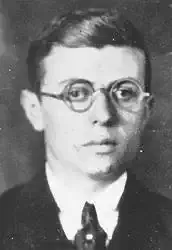
Juan Ramón Jiménez
Author of the day

Juan Ramón Jiménez

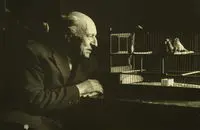
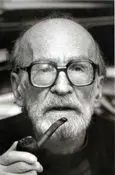
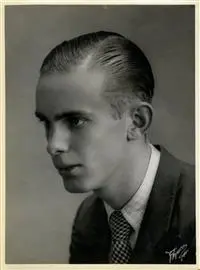
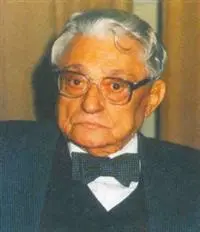
Juan Ramón Jiménez was a Spanish poet, awarded the Nobel Prize in Literature in 1956. His work, profoundly marked by symbolism and the desire for "pure poetry," evolved towards an incessant search for beauty and transcendence. His poetry explores themes such as nature, spirituality, love, and the very essence of poetry, with a refined, musical, and visionary style. He is considered one of the great renovators of 20th-century Spanish poetry.

Poem of the day

Do Not Go Gentle Into That Good Night

Dylan Thomas
Do not go gentle into that good night, 
Old age should burn and rave at close of day; 
Rage, rage against the dying of the light. 

Though wise men at their end know dark is right, 
Because their words had forked no lightning they 
Do not go gentle into that good night. 

Good men, the last wave by, crying how bright 
Their frail deeds might have danced in a green bay, 
Rage, rage against the dying of the light. 

Wild men who caught and sang the sun in flight, 
And learn, too late, they grieved it on its way, 
Do not go gentle into that good night. 

Grave men, near death, who see with blinding sight 
Blind eyes could blaze like meteors and be gay, 
Rage, rage against the dying of the light. 

And you, my father, there on that sad height, 
Curse, bless, me now with your fierce tears, I pray. 
Do not go gentle into that good night. 
Rage, rage against the dying of the light.
Read full poem

Born on this day

12
Gisela Rao

Gisela Rao is a poet whose writing delves into the depths of the human experience, exploring themes such as memory, identity, and the transience of life. Her poetry is recognized for its imagistic strength and its ability to evoke complex sensations and emotions, often in an introspective and melancholic tone. Her work is distinguished by its exploration of language, which is shaped to give form to deep feelings and reflections. Gisela Rao constructs a lyrical universe where the personal intersects with the universal, inviting the reader on a journey of self-knowledge and contemplation of the human condition.

Umberto Saba

Umberto Saba, born Umberto Poli, was an Italian poet, known for his lyrical, autobiographical poetry with a strong intimate tone. His work is characterized by colloquial language, the exploration of daily life, the city of Trieste, and the complexities of the human soul, including motherhood, fatherhood, and identity itself. Despite a life marked by personal difficulties and instability, Saba maintained a constant dedication to poetry, becoming a unique voice in 20th-century Italian literature.

João Carlos Teixeira Gomes

João Carlos Teixeira Gomes was a Portuguese poet, playwright, and short story writer, known for his lyrical work and his strong connection to the Generation of 50 movement. His poetry often explores themes such as solitude, the passage of time, and the search for meaning, with a careful language and a sometimes melancholic tone.

Vitor L. Mendes

Vitor L. Mendes is a poet whose work is distinguished by its ability to capture the essence of human experience through accessible yet meaningful poetic language. His verses often explore melancholy, the passage of time, and the beauty found in the simple things of everyday life. His poetry reveals a deep sensitivity to human emotions and to the attentive observation of the world around him. Mendes constructs a lyrical universe that invites introspection and contemplation, leaving a mark of authenticity and emotional resonance on his readers.

Francisco Matos Paoli

Francisco Matos Paoli was a Macanese poet and essayist whose work explores identity, memory, and the complexity of the human condition in an insular context. His writing, often marked by deep introspection and rich symbolism, reflects his umbilical connection to the island and his life experience. Matos Paoli is recognized for his contribution to Macanese and Portuguese literature, standing out for his originality and poetic sensibility.

Paulo Colina

Paulo Colina is a contemporary poet whose work is distinguished by the exploration of existential themes and formal experimentation. His writing navigates between lyricism and reflection, addressing the human condition with a careful and imagistic language. With an approach that dialogues with the poetic tradition, but without neglecting the innovations of modern writing, Colina constructs a literary universe that invites introspection and contemplation of life and its complexities.

João Vaz

João Vaz was a poet whose work stands out for its lyrical depth and exploration of existentialist themes. His poetry is characterized by introspective language and an incessant search for the meaning of life and human existence, often permeated by a melancholic and philosophical atmosphere. His literary production reflects the anxieties of his time, engaging with currents of thought that question reality and the nature of identity. Although his name is not among the most prominent in the history of Portuguese poetry, his work offers a unique perspective on the human condition.

Miguel de Sousa Alvim

Miguel de Sousa Alvim was a Portuguese poet whose work is distinguished by its lyrical depth and exploration of universal themes such as love, the ephemerality of time, and the search for transcendence. With a refined language and sharp sensibility, Alvim left a poetic legacy that resonates through his ability to evoke emotions and reflections on the human condition. His literary career, although not extensively documented in terms of public milestones, is recognized for the intrinsic quality of his verses, which combine a unique musicality with penetrating introspection. His poetry, marked by a melancholic beauty and a constant existential questioning, continues to be appreciated by those who seek in art an authentic expression of the soul.

Leonardo Sinisgalli

Leonardo Sinisgalli was an Italian poet, writer, and advertiser, known for his poetry that stands between tradition and modernity, exploring themes of daily life, work, and the human condition with a clear and incisive language. His poetic work is marked by a lyrical realism, where banal objects and experiences gain deeper meaning. Sinisgalli also stood out in the field of advertising, where he applied his artistic sensitivity and mastery of language, leaving a multifaceted legacy in Italian culture.

Vicente García de la Huerta

Vicente García de la Huerta was a prominent Spanish poet and playwright of the 18th century, known for his participation in Neoclassicism. His poetic work is characterized by the influence of classical models and the pursuit of formal perfection, addressing themes such as mythology, morality, and nature with a refined and elegant style. Although his theatrical production had considerable resonance in his time, his poetic legacy has endured as an example of Neoclassical lyric poetry in the Spanish language, standing out for its metrical rigor and aesthetic sense.

Died on this day

10
Álvaro Feijó

Álvaro Feijó was a Portuguese poet whose work is part of the Neorealism context. His poetry is marked by strong social commitment and denunciation of injustices, reflecting the concerns of a time of profound political and social transformations in Portugal. With direct language and an interventionist tone, Feijó sought to give voice to the oppressed and exiled, exploring themes such as freedom, hope, and resistance. His literary production, although sometimes marked by censorship and publication difficulties, left an important testimony of poetic strength in times of adversity, consolidating him as a relevant figure in 20th-century Portuguese social poetry.

Gerardo Mello Mourão

Gerardo Mello Mourão was a Brazilian poet, journalist, and literary critic, a prominent figure in 20th-century poetry. His work is marked by dense language and a profound reflection on the human condition, time, and memory. With an erudite yet accessible style, Mello Mourão left a significant poetic legacy, exploring universal themes with singular sensitivity.

Alda Pereira Pinto

Alda Pereira Pinto was a singular figure in Portuguese-language poetry, whose work stands out for its lyrical depth and exploration of universal themes. Her writing, marked by a refined sensibility, addresses the human condition with a language that transitions between the colloquial and the elaborate, creating a bridge between the reader and their own experiences. Her legacy lies in her ability to evoke complex emotions and in how her poetry continues to resonate through its authenticity and beauty.

Alda do Espírito Santo

Alda do Espírito Santo was a Santomean poet, writer, and educator, a prominent figure in Portuguese-language African literature. Her poetic work, deeply marked by identity, the struggle for liberation, and the valorization of African and Santomean culture, is a testament to her experiences and her social and political commitment. With a lyrical and expressive language, she explored themes such as the land, ancestry, women, justice, and hope. She was an essential voice in the construction of the national identity of São Tomé and Príncipe and in the affirmation of its literature on the Lusophone and global stage.

Charles Bukowski

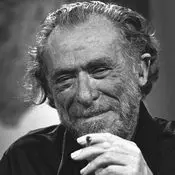
Charles Bukowski was a German-American poet and writer, known for his raw, visceral, and autobiographical work. His writing, often associated with the so-called "Beat Generation" and the counterculture, portrays marginalized life, vices, poverty, sex, and alienation with direct and straightforward language. Bukowski celebrated the underworld and the misfits, becoming an icon for many who felt on the fringes of society.

Helder de Mendonça Cunha

Helder de Mendonça Cunha was a poet whose work is characterized by a deep sensibility and an attentive eye on the human condition. His poetry, often melancholic and introspective, addresses universal themes such as love, loss, and the ephemerality of life. With a careful language and accentuated lyricism, Mendonça Cunha built a body of work that is distinguished by its authenticity and emotional depth.

Paulo Quintela

Paulo Quintela was a notable Portuguese philologist and university professor. He dedicated a large part of his career to the study of Portuguese literature and language, with a special emphasis on medieval literature and Portuguese philology studies. His work contributed significantly to the understanding and dissemination of Portugal's literary and linguistic heritage.

María Elvira Lacaci

María Elvira Lacaci was a Spanish writer, known for her literary work that addresses social and existential themes with sensitivity and depth. Her writing is characterized by the exploration of the human condition, interpersonal relationships, and the complexities of modern life. Through her short stories and novels, Lacaci offered readers reflections on identity, loneliness, and the search for meaning in a constantly changing world. Her literary voice stands out for its authenticity and its ability to portray the nuances of human experience.

Julio Herrera y Reissig

Julio Herrera y Reissig was a Uruguayan poet, a key figure of Hispano-American modernism, whose work is distinguished by its verbal exuberance, its baroque style, and its imaginative originality. His poetry is a whirlwind of dazzling images, bold metaphors, and a deep yearning for beauty and the exotic. His style, often complex and sensory, consecrates him as a renovator of poetic language in Spanish, exploring the musicality of verse and the plasticity of words to create dreamlike and suggestive worlds. Despite a brief life and a literary production limited to a few volumes, his impact on later generations of poets was significant, establishing him as one of the undisputed masters of Spanish-language poetry.