Johann Wolfgang von Goethe
Author of the day

Johann Wolfgang von Goethe

Johann Wolfgang von Goethe was a prolific German writer, poet, playwright, and statesman whose vast body of work significantly impacted European literature and thought. His writings explored profound themes of nature, humanity, science, and the human condition, often blending romantic idealism with classical restraint. Goethe's influence extended beyond literature; he was also a respected figure in science and politics, embodying the ideal of the well-rounded Renaissance man. His literary creati…

Poem of the day

Grass

Carl Sandburg
Pile the bodies high at Austerlitz and Waterloo.
Shovel them under and let me work
-I am the grass; I cover all.

And pile them high at Gettysburg
And pile them high at Ypres and Verdun.
Shovel them under and let me work.
Two years, ten years, and the passengers ask the conductor:

What place is this?
Where are we now?

I am the grass.
Let me work.
Read full poem

Born on this day

9
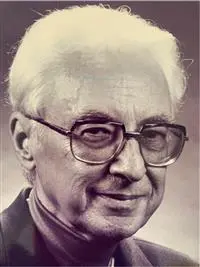
José Jorge Letria

José Jorge Letria was a multifaceted Portuguese creator, known for his vast work spanning poetry, prose, and children's literature. His writing is characterized by accessible yet meaningful language, exploring themes such as childhood, memory, social justice, and the very nature of writing. Letria dedicated a large part of his life to promoting reading and culture, being a staunch advocate for universal access to books. His poetry, in particular, reveals a restrained yet profoundly human lyricism, capable of touching the reader with its authenticity and its ability to capture the essence of small things and great feelings.

Carlos Eduardo Armando

Carlos Eduardo Armando is a poet whose writing is distinguished by his ability to capture the essence of human emotions with language that is both accessible and profound. His work often explores the intersection between the individual and the collective, addressing themes such as memory, identity, and the search for meaning in existence. Carlos Eduardo Armando's poetry is marked by subtle lyricism and attentive observation of the world, inviting the reader to reflect on the small and large epiphanies of everyday life.

Américo Falcão

Américo Falcão was a Portuguese poet, whose work manifested itself in a period of literary transition and renewal. His poetry, marked by a lyrical and reflective tone, addresses universal themes such as the transience of time, nature, and the search for meaning. Through careful language and sharp sensitivity, Américo Falcão left a poetic record that, although perhaps less publicized than that of other contemporaries, contributes to the richness of Portuguese-language literature.

Edmir Domingues

Edmir Domingues is a contemporary Brazilian poet, short story writer, and essayist. His poetic work is recognized for its exploration of language, subjectivity, and reflection on existential and social themes. With a writing style that ranges between lyricism and experimentation, Domingues has established himself as a relevant name in current Brazilian poetry.

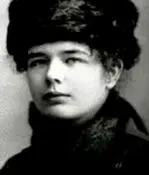
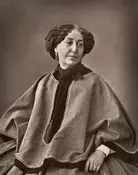
Marguerite Yourcenar

Marguerite Yourcenar was a French-American writer, translator, and literary critic, born in Belgium. She was the first woman elected to the French Academy in 1980. Her work is marked by a scholarly, reflective style and a profound exploration of the human condition, history, and mythology.

For me, a poet is someone who is “in contact.” Som
Manuel de Arriaga

Manuel de Arriaga was a Portuguese jurist and politician, mainly known for being the first President of the Portuguese Republic. His political career was marked by his intervention in the establishment of the Republic and the organization of the new democratic regime. He had a distinguished career as an orator and parliamentarian, defending republican and democratic ideals. His professional trajectory included law and university teaching, where he lectured on Law. He was a prominent figure in Portugal's transition to the Republic, playing an active role in drafting the 1911 Constitution. His leadership was fundamental in the early years of the new regime.

Lutz Seiler

Lutz Seiler is a German poet and novelist, known for his work that frequently evokes landscapes and memories of former East Germany. His writing is marked by precise and atmospheric language, exploring themes such as the search for identity, the passage of time, and the complexity of human relationships. Seiler stands out for his ability to create engaging narratives that blend the personal with the historical, offering a sensitive and insightful look at the human experience in specific contexts. His work has been widely awarded and recognized.

Died on this day

10
António Manuel Couto Viana

António Manuel Couto Viana was a Portuguese poet of great relevance, whose work is characterized by deep lyricism and a strong connection to the poetic tradition. His writing frequently explores themes such as nature, faith, saudade, and Portuguese identity, with an elaborate language and striking musicality. Associated with important literary movements, Couto Viana left a poetic legacy that reflects both his individual sensibility and a deep rooting in the culture and history of Portugal.

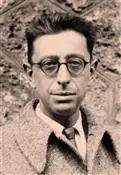
Robert Desnos

Robert Desnos was a French surrealist poet, a central figure of the movement, known for his exploration of the unconscious, dreams, and psychic automatism in writing. His poetry is marked by formal freedom, prodigious imagination, and a frequently dreamlike and visionary tone. Desnos also distinguished himself through his active participation in the French Resistance during World War II, which cost him his life. He is remembered as one of the great French poets of the 20th century, whose work continues to fascinate with its originality and depth.

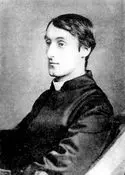
Gerard Manley Hopkins

Gerard Manley Hopkins was an English Jesuit poet, known for his innovative approach to meter and the intensity of his poetic language. His work, marked by profound spirituality and keen observation of nature, was only widely published after his death but influenced generations of modern poets. He is celebrated for his unique use of 'sprung rhythm' and his ability to capture the vitality and beauty of the natural and spiritual world.

Maria da Conceição Campos

Maria da Conceição Campos is a Portuguese writer whose work, predominantly poetic, explores the intimacy of being, the fragility of human relationships, and the search for meaning in a constantly transforming world. Her writing is marked by keen sensitivity, a confessional tone, and a language that combines delicacy with expressive strength. She has participated in various cultural initiatives and anthologies, contributing to the renewal of contemporary Portuguese poetry.

José Manuel Sarmento de Beires

José Manuel Sarmento de Beires was a poet, journalist, and a prominent figure in the surrealist movement in Portugal. His poetic work, full of dreamlike imagery and strong subversive undertones, explored the limits of language and perception, reflecting his commitment to the surrealist ideals of liberating the spirit and imagination. As a journalist, he also dedicated himself to cultural dissemination and criticism, leaving his mark on the literary and artistic scene of his time.

Bernardete Falcão

Bernardete Falcão is a contemporary Portuguese writer, known for her poetry that moves between intimate lyricism and subtle social critique. Her work is characterized by a refined language and a deep sensitivity to the less visible aspects of human existence, exploring themes such as memory, identity, and the female condition.

Mariano Brull. Cuba

Mariano Brull was a Cuban poet whose work is mainly associated with creacionismo and the literary avant-gardes of the early 20th century. His poetry is distinguished by a constant search for formal and thematic novelty, exploring the poetic image as the central element of creation. He was a promoter of the avant-gardes in Cuba and a poet who sought to integrate modernity and experimentation into his work. His legacy remains as a reference for the innovative Cuban poetry of his time.