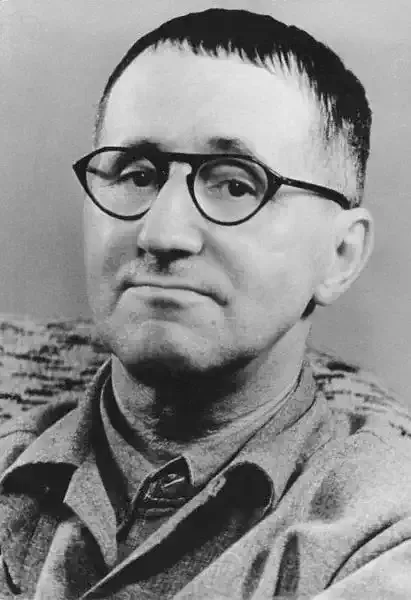
Walt Whitman
Author of the day

Walt Whitman

Walt Whitman was an American poet, essayist, journalist, and a deliberate humanist who became one of the most influential figures in American poetry. He is often called the "father of free verse." His seminal work, "Leaves of Grass," was a radical departure from the conventional poetry of its time, celebrating the individual, democracy, the body, and the spirit in expansive, cataloging lines. Whitman's poetry embraced a wide range of subjects, from the natural world and urban life to the experi…

Poem of the day

Do Not Go Gentle Into That Good Night

Dylan Thomas
Do not go gentle into that good night, 
Old age should burn and rave at close of day; 
Rage, rage against the dying of the light. 

Though wise men at their end know dark is right, 
Because their words had forked no lightning they 
Do not go gentle into that good night. 

Good men, the last wave by, crying how bright 
Their frail deeds might have danced in a green bay, 
Rage, rage against the dying of the light. 

Wild men who caught and sang the sun in flight, 
And learn, too late, they grieved it on its way, 
Do not go gentle into that good night. 

Grave men, near death, who see with blinding sight 
Blind eyes could blaze like meteors and be gay, 
Rage, rage against the dying of the light. 

And you, my father, there on that sad height, 
Curse, bless, me now with your fierce tears, I pray. 
Do not go gentle into that good night. 
Rage, rage against the dying of the light.
Read full poem

Born on this day

16
Roque da Silva Ferreira

Roque da Silva Ferreira was a Portuguese poet whose work stands out for its lyrical depth and exploration of universal themes such as love, saudade, and man's relationship with nature and the transcendent. With an often evocative and musical language, Ferreira managed to create a poetic universe rich in images and sensations, capable of touching the reader with its authenticity and sensitivity to the beauties and pains of life. His poetry is an invitation to contemplation and introspection.

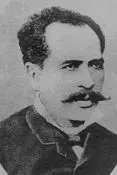
Tobias Barreto

Tobias Barreto was a Brazilian poet, jurist, and journalist, one of the main figures of pre-modernism and symbolism in Brazil. Born in Sergipe, he stood out for his poetry with a social and philosophical bent, marked by a vigorous and innovative style. He was a fierce critic of the society and politics of his time, advocating for reforms and freer thought. His work, although less known compared to other figures of his time, is fundamental for understanding the literary and intellectual trends of the late 19th and early 20th centuries in Brazil, anticipating many of the concerns that would be central to Brazilian modernism.

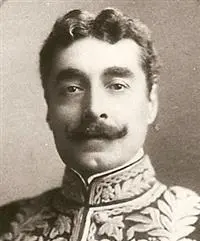
Fontoura Xavier

Fontoura Xavier is an Angolan poet, whose poetic work is distinguished by the exploration of identity, memory, and the landscapes of Angola. His poetry is often marked by an introspective lyricism and the search for expression of the complexities of the African experience. With a language rich in imagery and symbolism, Xavier dialogues with the Angolan literary tradition, while imprinting his unique voice on contemporary poetry.

Dolores Duran

Dolores Duran was a Brazilian singer and songwriter, known for her melancholic voice and her songs that addressed themes such as love, longing, and disillusionment. Her work is marked by a deep sensibility and poetic writing that made her one of the most important voices in Brazilian popular music in the mid-20th century. She left a legacy of songs that continue to be interpreted and admired for their authenticity and emotional strength, consolidating her place as an icon of Brazilian music and poetry.

Étienne Pasquier

Étienne Pasquier was a French jurist and humanist, known for being one of the main historians of French law. He served as advocate-general in the Parliament of Paris and was an important intellectual of the Renaissance.

Mira Schendel

Mira Schendel was a Swiss visual artist and poet, based in Brazil, known for her innovative and experimental approach to visual arts and literature. Her work, often associated with concretism and neoconcretism, explores the relationship between object, text, and space, questioning the boundaries of art and language. As a poet, Schendel stood out for her concise and conceptual writing, often integrated into her installations and visual works. Her poetry is characterized by abstraction, the exploration of the sign, and the dematerialization of the word, inviting the viewer-reader to a profound sensory and intellectual experience.

Luís de Abreu de Melo

Luís de Abreu de Melo was a Portuguese poet whose work is situated within the context of 19th-century poetry. His writing is marked by a romantic sensibility and a deep reflection on themes such as the fleeting nature of time, saudade, and the beauty of nature. Although he did not achieve the notoriety of some contemporaries, his poetry reveals an authentic voice and a subtle lyricism that deserves to be rediscovered.

José da Silva Maia Ferreira

José da Silva Maia Ferreira, also known by the pseudonym João da Maia, was a Portuguese poet, playwright, and journalist. His work, inserted in the context of Portuguese Romanticism and Post-Romanticism, is marked by strong lyricism, the exploration of themes such as love, nature, and saudade, and an often melancholic and idealistic tone. He had an active participation in the cultural and political life of his time.

João Vário

João Vário, pseudonym of Manuel de Mello Moser, was a multifaceted Portuguese writer, known for his innovative and experimental work, which challenged the literary conventions of his time. His production spanned poetry, prose, and essay, always marked by a profound reflection on language, identity, and the human condition. With an irreverent and erudite style, João Vário left a significant legacy in contemporary Portuguese literature.

Cláudio Lima

Cláudio Lima is an Angolan poet known for his lyrical sensitivity and exploration of themes such as identity, memory, and the African landscape. His poetic work reflects a deep connection with cultural roots and the complexities of the human experience, often expressed through evocative and musical language.

Gwendolyn Brooks

Gwendolyn Brooks was a pioneering American poet whose work chronicled the lives of ordinary African Americans with vivid imagery and profound empathy. She broke significant ground as the first African American to win a Pulitzer Prize for Poetry, an achievement that underscored her distinctive voice and her commitment to portraying the realities of urban Black life. Brooks's poetry often explored themes of identity, social justice, community, and the challenges and triumphs of Black existence in America, using both traditional forms and more experimental approaches to capture the rhythms and spirit of her subjects.

She did not scream.
Fernando Lamberg

Fernando Lamberg is a Brazilian writer and visual artist, with a body of work that spans literature and visual arts. His literary production frequently explores existential and social themes, often with an ironic and critical tone. His influence in the artistic and literary scene extends across different platforms, reflecting a keen sensitivity to the nuances of modern life.

José Manuel Díez

José Manuel Díez is a Spanish author known for his versatility and the quality of his narratives, which span diverse literary genres. His work is marked by the ability to create engaging stories and memorable characters that explore facets of the human experience. With a style that combines rigor and sensitivity, Díez manages to move between different themes, offering the reader unique perspectives on the world. His writing is often praised for its clarity and expressive force, making him a relevant name in contemporary literature.

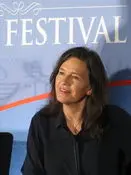
Deryn Rees-Jones

Deryn Rees-Jones is a British poet, academic, and editor. Her poetry is known for its emotional intensity, intelligence, and exploration of themes such as feminism, motherhood, history, and the relationship between private life and the public sphere, often with an innovative approach.

Died on this day

17
Paulo Leminski

Paulo Leminski was a Brazilian poet, translator, literary critic, and professor. Recognized for his innovative and experimental work, he moved between poetry, prose, and criticism, exploring new languages and forms of expression. His literary production is marked by creative freedom, humor, metalinguistics, and the influence of various cultural traditions, including Eastern and indigenous ones. Leminski left a significant legacy in Brazilian literature, with a body of work that continues to be studied and celebrated for its originality and depth.

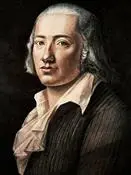
Friedrich Hölderlin

Friedrich Hölderlin was one of the most important poets of German Romanticism. His work, profoundly marked by the influence of Ancient Greece and the search for an aesthetic and spiritual ideal, is characterized by an elevated and musical language. His reflections on nature, homeland, and human destiny, often expressed in odes and hymns, reveal a deep melancholy and an incessant search for lost harmony. His life was marked by a mental collapse that distanced him from literary activity in the last decades of his existence.

José Carlos Augusto Ferreira

José Carlos Augusto Ferreira was a poet whose works explored the depths of the human condition, the ephemerality of time, and the search for meaning amidst the complexity of existence. His poetry is marked by a rich and evocative language, capable of transitioning between melancholic lyricism and profound philosophical reflection. Ferreira dedicated himself to investigating the nuances of emotions and the existential dilemmas that shape individual and collective experience. Through his verses, the poet wove an intimate dialogue with the reader, inviting them to contemplate the beauty and fragility of life. His poetic legacy lies in his ability to capture the essence of human feelings and express them with unique sensitivity. Ferreira's work continues to resonate with readers who seek in poetry a way to understand themselves and the world around them, appreciating the mastery with which he approached universal themes with depth and originality.

Adalgisa Nery

Adalgisa Nery was a Brazilian poet, journalist, and political activist, known for her lyrical and social poetry, which addressed themes such as love, the condition of women, social injustice, and hope. With a body of work that moves between intimate lyricism and civic engagement, Adalgisa Nery marked 20th-century Brazilian literature. Her poetic voice, strong and sensitive, echoed her work as a defender of humanitarian and social causes.

Teresa Tenório

Teresa Tenório is a Portuguese writer and poet, whose work is distinguished by its lyrical delicacy and exploration of themes such as nature, identity, and the small observations of everyday life. With a writing style that moves between contemplation and introspection, Tenório has been building a literary body marked by sensitivity and the pursuit of a language that captures the essence of her reflections.

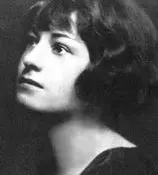
Dorothy Parker

Dorothy Parker was an American poet, short story writer, critic, and satirist, celebrated for her sharp wit and cynical observations. A founding member of the Algonquin Round Table, she became a prominent voice in early 20th-century American literature. Her work, often characterized by its brevity and poignant irony, explored themes of love, loss, and societal hypocrisy, cementing her reputation as a master of the epigram and a keen social commentator.

Star Light, Star Bright--
Tomaz Vieira da Cruz

Tomaz Vieira da Cruz is an Azorean poet whose work is distinguished by its deep connection with the land, the sea, and island identity. His poetry is a testament to the landscape and culture of the Azores, expressed in an authentic and evocative language. His writing explores the roots, traditions, and specificities of the archipelago, giving his poetry a unique and highly lyrical character. Tomaz Vieira da Cruz is an essential voice in Azorean and contemporary poetry, celebrating the identity and landscapes of his people.

Christine Lavant

Christine Lavant was an Austrian poet whose work is distinguished by its lyrical intensity and raw exploration of human fragility, suffering, and the search for transcendence. Marked by a life of hardship and isolation, her poetry emerged as a powerful cry against pain, but also as a testament to the resilience of the spirit and the search for meaning amidst adversity. Her writing, often associated with existentialism and deep spirituality, captivates with its brutal honesty and the painful beauty of its imagery. Lavant addressed themes such as loneliness, death, faith, and despair with a unique voice, establishing herself as one of the most significant figures in 20th-century Austrian poetry, whose work continues to resonate for its universality and emotional power.

Hans Arp

Hans Arp, also known as Jean Arp, was a Franco-German visual artist and poet, a prominent figure in the 20th-century avant-garde movements. His artistic work, characterized by organic and biomorphic forms, often abstract and playful, extended to poetry, where he explored language experimentally, breaking with semantic and syntactic conventions. A key collaborator of Dadaism and co-founder of Surrealism, Arp sought to liberate art and poetry from rational and bourgeois constraints. His poetry, often composed of word and sound collages, reflects a quest for spontaneity, the unconscious, and pure creative energy, leaving a lasting legacy in Surrealist art and literature.

Marcelino Mesquita

Marcelino Mesquita was a Portuguese poet, known for his foray into the universe of poetry, especially during the 20th century. His work reflects lyrical sensibilities and, at times, an introspective look at the human condition and the beauty of the world. Although not a prominent figure in the Portuguese literary canon, his poetry contributes to the diversity of the lyrical production of his time.

Carlos Fernández Shaw

Carlos Fernández Shaw was a Spanish poet and playwright, a prominent figure of literary modernism in Spain. His work is characterized by refined language, the musicality of his verses, and themes that explore sensuality, exoticism, and melancholy. As a poet, he contributed to renewing the metrics and poetic themes of his time, influenced by French authors and modernist aesthetics. In theater, he wrote plays that reflect the taste of his time, with elaborate dialogues and plots that explore passionate and social conflicts. His influence extended to other writers and artists.

Gaspar María de la Nava Álvarez

Gaspar María de la Nava Álvarez was a poet whose work is framed within the Spanish literary tradition. Through his verses, he explored recurring themes in lyric poetry, seeking formal beauty and the expression of universal feelings. His style, although rooted in past currents, attempted to connect with the sensibility of his time, leaving a legacy of poems that reflect the depth of the human soul.

Enrique Díez Canedo

Enrique Díez Canedo was a prominent Spanish poet and literary critic, a key figure in the renewal of lyric poetry in the early 20th century. His work is characterized by a deep aesthetic sensibility, a masterful command of language, and a constant exploration of themes such as love, melancholy, and the transience of time. His work as a critic and introducer of avant-garde poetry in Spain was fundamental to the development of the literature of his time, leaving an important legacy in contemporary criticism and poetry.

Baldomero Fernández Moreno

Argentine poet known for his lyrical and costumbrista work. His poetry is characterized by simplicity, musicality, and the evocation of daily life, especially that of Buenos Aires. He addressed themes such as love, nature, and the city with an accessible and emotional language.