Poem of the day

Do Not Go Gentle Into That Good Night

Dylan Thomas
Do not go gentle into that good night, 
Old age should burn and rave at close of day; 
Rage, rage against the dying of the light. 

Though wise men at their end know dark is right, 
Because their words had forked no lightning they 
Do not go gentle into that good night. 

Good men, the last wave by, crying how bright 
Their frail deeds might have danced in a green bay, 
Rage, rage against the dying of the light. 

Wild men who caught and sang the sun in flight, 
And learn, too late, they grieved it on its way, 
Do not go gentle into that good night. 

Grave men, near death, who see with blinding sight 
Blind eyes could blaze like meteors and be gay, 
Rage, rage against the dying of the light. 

And you, my father, there on that sad height, 
Curse, bless, me now with your fierce tears, I pray. 
Do not go gentle into that good night. 
Rage, rage against the dying of the light.
Read full poem

Born on this day

8
Rômulo do Amaral Filho

Rômulo do Amaral Filho was a Brazilian poet whose work explored the depth of the human soul, addressing universal themes such as love, saudade (longing), and the ephemerality of life. His poetry is marked by accessible language, yet imbued with lyricism and sensitivity, capable of touching the reader in their innermost emotions. The poet dedicated himself to capturing the beauty and melancholy of everyday life, transforming simple moments into verses that resonate with the human experience. His poetic legacy lies in the ability to evoke deep feelings through genuine and touching expression.

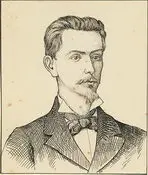
Teófilo Dias

Teófilo Dias was a 19th-century Brazilian poet, known for his participation in the Parnassian movement. His poetry is marked by the pursuit of formal perfection, objectivity, and themes inspired by classical and historical subjects. His work reflects the Parnassian ideal of "art for art's sake," with great attention to meter, rhyme, and erudite vocabulary, seeking beauty in form and meticulous description, which established him as an important representative of this literary school in Brazil.

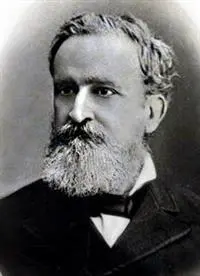
José Bonifácio, o Moço

José Bonifácio de Andrade e Silva, known as o Moço, was a prominent figure in the Empire of Brazil, acting as a politician, diplomat, jurist, and professor. He was the nephew of José Bonifácio de Andrade e Silva, the Patriarch of Independence, and played a crucial role in the consolidation of the regency period and in the defense of Brazilian territorial unity. His political activity was marked by the defense of abolitionism and the pursuit of a political system that guaranteed the country's stability at a time of great transformations.

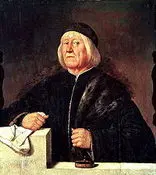
Teofilo Folengo

Teofilo Folengo was an Italian Benedictine monk and poet, known primarily for his satirical work in macaronic Latin, a mixture of Latin with Italian vernacular elements. His writing is characterized by humor, parody, and biting social criticism, disguised under a jocular language.

Fernando de Paços

Fernando de Paços was a poet whose work is based on a deep reflection on existence, identity, and the inner landscape. His poetry is marked by dense and sometimes enigmatic language, which invites the reader to unravel layers of meaning, exploring the complexities of the human soul and its intrinsic relationship with the world. With a keen sensitivity to the nuances of feeling, Paços dedicated himself to a lyrical exploration that, although sometimes challenging, reveals a singular beauty and an unparalleled ability to evoke emotional and existential landscapes, consolidating his place as a distinctive voice in literature.

Visconde de Vila-Moura

The Viscount of Vila-Moura was a poet and a figure in Portuguese literary society, known for his poetic output that reflects the values and style of his era. His work, while rooted in a more traditional context, demonstrates a sensitivity to melancholy, nature, and the themes of love and saudade. His literary legacy is marked by his active participation in cultural circles and his contribution to Portuguese lyrical poetry of the 19th and early 20th centuries.

Lagrifa Fernandes

Lagrifa Fernandes is a name associated with contemporary Portuguese poetry. His poetic work is characterized by a deep exploration of language and the approach to existential and social themes. Through careful and reflective writing, the author seeks to establish a dialogue with the reader about the complexities of modern life. His poetry, although sometimes introspective, reveals a strong connection with the surrounding reality.

Liu Banjiu

Liu Banjiu was a distinguished Chinese intellectual and writer. His work spanned various literary genres, contributing significantly to his country's literature. He is remembered for his refined prose and the depth of his themes. Throughout his career, Liu Banjiu explored the complexities of the human condition and Chinese society. His narratives often featured well-developed characters and engaging plots, which secured him a prominent place in the literary scene.

Died on this day

5
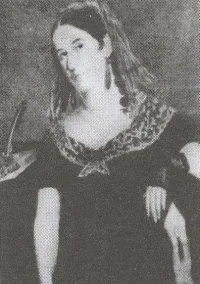
Maria da Felicidade do Couto Browne

Maria da Felicidade do Couto Browne was a poet and writer whose work, although less publicized, reflects sensitivity and a deep connection with literary expression. Her work, imbued with a particular lyricism, addresses interiority and the observation of the world around her, using careful language to express feelings and reflections. Her contribution, though discreet in the literary landscape, represents a unique voice in Portuguese-language poetry.

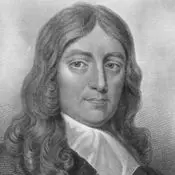
John Milton

John Milton was an English poet, polemicist, and civil servant for the Commonwealth of England under Oliver Cromwell. He is best known for his epic poem "Paradise Lost," one of the greatest works of English literature. Milton's work is characterized by its grand scope, theological depth, and masterful use of blank verse. His life and work were deeply intertwined with the political and religious turmoil of 17th-century England. Despite facing significant personal challenges, including blindness, Milton produced a body of work that continues to be studied and admired for its intellectual rigor and poetic artistry.

This is the month, and this the happy morn, Wherei
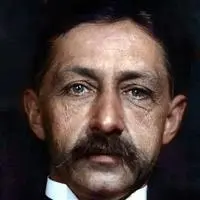
Ivan Bunin

Ivan Bunin was a Russian writer, Nobel laureate in Literature in 1933, being the first Russian writer to receive such an honor. His work, predominantly in prose, explores with melancholy and lyricism the landscapes of Russia and the dilemmas of the human soul, also having dedicated himself to poetry.

Cruzeiro Seixas

Manuel António Cruz Seixas, known artistically as Cruzeiro Seixas, was a Portuguese poet, a prominent figure of Surrealism in Portugal. His poetic work is characterized by the exploration of the unconscious, the dreamlike, and the illogical, breaking with narrative and rational conventions. Through transgressive language and surprising imagery, Seixas invites the reader to delve into the depths of the human mind, challenging the perception of reality.