Poem of the day

Grass

Carl Sandburg
Pile the bodies high at Austerlitz and Waterloo.
Shovel them under and let me work
-I am the grass; I cover all.

And pile them high at Gettysburg
And pile them high at Ypres and Verdun.
Shovel them under and let me work.
Two years, ten years, and the passengers ask the conductor:

What place is this?
Where are we now?

I am the grass.
Let me work.
Read full poem

Born on this day

14
Papiniano Carlos

Papiniano Carlos was a Portuguese poet, playwright, novelist, and literary critic, whose work is part of the context of modernism and postmodernism. With a writing style marked by formal experimentation, irony, and a profound reflection on language and the human condition, Carlos explored themes such as memory, time, identity, and the nature of art. He is recognized for his contribution to the renewal of Portuguese poetry, with a challenging and innovative language.

António de Navarro

António de Navarro was a Portuguese poet, whose works belong to the Modernism period, but with a singular voice and a style that frequently deviated from the dominant currents. His poetry is marked by deep introspection and an exploration of the human condition, with subtle and, at times, melancholic lyricism.

Josefina Plá

Josefina Plá was a multifaceted figure, excelling as a poet, ceramicist, journalist, and art critic. Born in Spain, she settled in Paraguay, where she developed much of her work and became a fundamental voice in Paraguayan culture. Her poetry, marked by deep sensitivity and intense exploration of themes such as identity, exile, and the female condition, is recognized for its expressive force and formal innovation. Plá contributed significantly to Paraguayan modernism, leaving a lasting legacy as one of the most important writers in Latin America.

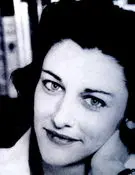
Anne Sexton

Anne Sexton was an American poet noted for her confessional and shocking work, addressing taboo subjects like mental health, sexuality, the female body, and motherhood with brutal frankness. Her poetry, often raw and visceral, explored the depths of the human psyche, existential crises, and internal conflicts, reflecting her own experiences with mental illness and hospitalizations. Sexton challenged the literary and social conventions of her time, using direct language and powerful imagery to express pain, anger, and desire. Her work provoked both admiration for its radical honesty and controversy for its disturbing nature, solidifying her as a unique and influential voice in 20th-century American poetry.

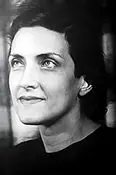
Myriam Fraga

Myriam Fraga was a distinguished Portuguese poet, journalist, and translator. Her poetic work is marked by a profound sensibility, exploring themes such as nature, time, memory, and the human condition with a refined language and a unique lyricism. Her vast experience as a journalist and her involvement with Portuguese culture enriched her worldview and her literary production, giving her an authentic and resonant voice.

Torquato Neto

Torquato Neto was a Brazilian poet, art critic, filmmaker, and journalist, a central figure of the counterculture in Brazil. His poetic work is marked by linguistic experimentation, existential rawness, and the exploration of themes such as madness, drugs, and social transgression. His short but intense career left a significant legacy for contemporary Brazilian poetry, influencing generations of artists.

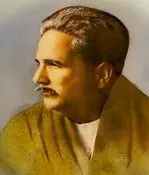
Muhammad Iqbal

Allama Muhammad Iqbal was a South Asian intellectual, poet, and politician, widely regarded as the spiritual founder of Pakistan. He was a strong advocate for the political and spiritual regeneration of the Muslim world, particularly in British India. His poetry, written in both Urdu and Persian, is renowned for its philosophical depth, nationalist fervor, and exploration of Islamic themes. He is celebrated for inspiring a sense of pride and self-reliance among Muslims.

The goat replied, 'This complaint is unjust
Diogo Velho

Diogo Velho is a Portuguese poet whose work focuses on the exploration of identity, memory, and the relationship between human beings and time and space. His poetry is marked by a dense and evocative language, which uses strong imagery and subtle musicality to create atmospheres of introspection and existential questioning. His verses invite deep reflection on the human condition, the transience of life, and the search for meaning in a constantly changing world.

Teodoro Cuesta

Teodoro Cuesta was a Spanish poet, born in Asturias and strongly linked to the island of La Palma, in the Canary Islands. His poetic work is characterized by a deep connection with the land, the sea, and the lives of the men and women of the Canary Islands, exploring themes such as identity, memory, love, and nature with an accessible and emotive language.

Roger Mcgough

Roger McGough is a prominent English poet, known for his accessible and often humorous verse. He gained popularity in the 1960s as part of the "Mersey Beat" movement, associated with the vibrant Liverpool scene. His poetry frequently engages with everyday life, using wit, wordplay, and a conversational tone that appeals to a broad audience, including children and adults. He has also been a popular broadcaster and performer.

Beguiling

Died on this day

11
Cecília Meireles

Cecília Meireles was one of the most important poetesses in the Portuguese language, with a work marked by musicality, lyrical delicacy, and the exploration of themes such as time, ephemerality, childhood, and the search for transcendence. Her poetry, influenced by symbolism and modernism, is characterized by its apparent simplicity, but with deep philosophical and existential complexity. With a vast literary production that includes poetry, short stories, chronicles, and children's literature, Cecília Meireles left an unparalleled poetic legacy, celebrating the beauty of the world and the fragility of existence with a crystalline and imaginative language.

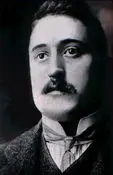
Guillaume Apollinaire

Guillaume Apollinaire was a highly influential French poet, playwright, short story writer, novelist, and art critic. He is considered one of the most important figures of early 20th-century European literature, particularly associated with the Symbolist movement and the development of Surrealism. Apollinaire is credited with coining the term 'Surrealism' and is renowned for his innovative use of language, experimental typography, and exploration of modern themes. His poetry often blends lyricism with everyday experiences, reflecting the vibrant, often chaotic, spirit of his time.

Annie
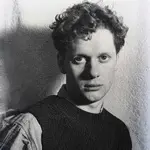
Dylan Thomas

Dylan Thomas was a celebrated Welsh poet whose vivid imagery, lyrical intensity, and unique use of language captivated readers worldwide. His work, often characterized by its passionate exploration of life, death, love, and nature, combined a deep connection to his Welsh heritage with a modernist sensibility. Despite a tragically short and often tumultuous life, his poems possess an enduring power and musicality that have secured his place as one of the 20th century's most important poets.

Ghosts whooed like owls in the long nights when I dared not look over my shoulder;
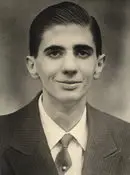
Sérgio Milliet

Sérgio Milliet was a Brazilian art critic, writer, and translator, a prominent figure in the 20th-century cultural scene. His work encompasses art criticism, poetry, and prose, always with a sharp and intellectualized view of artistic and literary production. Known for his erudition and analytical capacity, Milliet played a fundamental role in the dissemination and debate of arts in Brazil, leaving a legacy of texts that continue to be important references for the study of Brazilian culture.

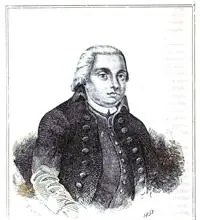
Domingos Caldas Barbosa

Luso-Brazilian poet, known as "D. Ana" or "Caldas". He stood out in the lyrical and satirical poetry of the late 18th century, integrating Arcadianism. His work, marked by orality and musicality, explores themes such as love, nature, and social conventions, often with an ironic and critical tone. He was also a musician and composer, which influenced the rhythm and melody of his verses, making him a unique and innovative figure in the poetry of his time.

Antonio Porchia

Antonio Porchia was an Italo-Argentine poet known for his aphoristic and existentialist work. His writing is marked by conciseness, philosophical depth, and the exploration of themes such as life, death, time, and solitude. Although his literary production is scarce, his only book, 'El Libro de las Palabras', achieved a cult status and influenced several Spanish-language writers. His work stands out for its ability to condense complex reflections into short and impactful sentences, inviting the reader to a deep introspection about the human condition. The intensity and originality of his aphorisms have earned Porchia a unique place in 20th-century literature.

Ivan Andreievitch Krylov

Ivan Andreyevich Krylov (1769-1844) was a Russian fabulist, widely regarded as the greatest Russian fabulist poet. His works, often based on fables by Aesop and La Fontaine, are known for their humor, satire, and wisdom. Krylov keenly portrayed Russian society of his time, criticizing bureaucracy, hypocrisy, and stupidity.

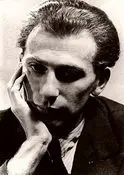
Miklós Radnóti

Miklós Radnóti was a Hungarian poet of Jewish origin, whose work, profoundly marked by the atrocities of the Holocaust, became a poignant testament to the human condition in times of barbarism. His poetry, often written in extreme circumstances, is characterized by lyrical strength, the struggle for dignity, and the incessant search for beauty amidst horror. Radnóti left a legacy of verses that echo the resilience of the human spirit, the importance of memory, and the universality of suffering and hope. His work is a landmark in 20th-century literature, serving as a grim and powerful reminder of the consequences of intolerance and war.

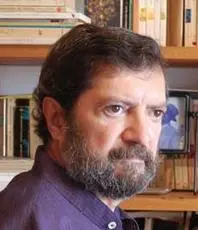
Manuel Gusmão

Manuel Gusmão is a Portuguese poet whose work is distinguished by its rigorous exploration of language and the incessant search for new forms of poetic expression. Throughout his career, Gusmão has developed a poetry that is simultaneously intellectual and visceral, marked by profound reflection on time, memory, identity, and the very nature of poetry. With a body of work that defies easy classification, Gusmão is recognized for his formal experimentation and the density of his poetic discourse. His poetry invites the reader into a complex dialogue, where form and content are intrinsically intertwined, solidifying him as a unique and influential figure in contemporary Portuguese poetry.

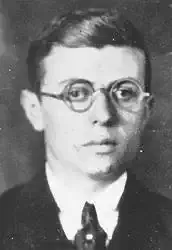
José Vitorino da Fonseca

José Vitorino da Fonseca was a Portuguese poet whose works uniquely explore the landscape, feelings, and reflections on existence. His poetry is often associated with an intimate lyricism and a language that seeks precision and musicality, reflecting on the passage of time and the beauty of the natural world. Although not a central figure in literary history, his work deserves attention for its quality and contribution to Portuguese poetry.

Ramón Cabanillas

Ramón Cabanillas was a fundamental Galician poet of the 20th century, considered one of the most representative voices of the Rexurdimento and contemporary lyric poetry of Galicia. His work is characterized by a deep connection with the Galician land, its landscape, its history, and its people, often tinged with melancholy and a strong sense of identity. Recognized as the "Poet of Rosalía," Cabanillas captured the essence of Galician culture in his verses, using a rich and evocative language. His poetry is a tribute to the land, the sea, and traditions, and his figure is a pillar in modern Galician literature.