Poem of the day

Grass

Carl Sandburg
Pile the bodies high at Austerlitz and Waterloo.
Shovel them under and let me work
-I am the grass; I cover all.

And pile them high at Gettysburg
And pile them high at Ypres and Verdun.
Shovel them under and let me work.
Two years, ten years, and the passengers ask the conductor:

What place is this?
Where are we now?

I am the grass.
Let me work.
Read full poem

Born on this day

16
Mariana Angélica de Andrade

Mariana Angélica de Andrade was a writer and poet whose work is situated within the cultural and historical context of her time, reflecting the social nuances and literary ideals of the era. Her writing is marked by a particular sensitivity and an exploration of themes that resonate with the human experience.

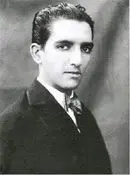
Ascânio Lopes

Ascânio Lopes was a poet whose work is part of the panorama of contemporary Portuguese poetry. His writing is marked by a deep reflection on the human condition, exploring themes such as time, memory, and the ephemerality of existence. With a style that moves between lyricism and existential questioning, Lopes crafted dense and imagistic poetry, inviting the reader to immerse themselves in the complexities of the soul. His contribution to Portuguese-language poetry is notable for its originality and expressive force, consolidating him as a unique voice in the literary landscape.

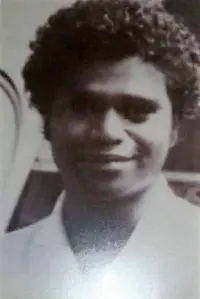
Gulamo Khan

Gulamo Khan is a Mozambican poet known for his poetry that explores the complexities of identity, culture, and the human condition. His work often reflects the experiences and challenges of living in a post-colonial context, addressing themes such as ancestry, memory, and the search for a sense of belonging. With a language rich in imagery and symbolism, Khan constructs verses that resonate with the musicality and orality of his African roots, while also engaging with the universal literary tradition. His poetry invites reflection on cultural diversity and the universality of human emotions.

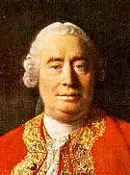
David Hume

David Hume was a Scottish philosopher, historian, economist, and essayist, considered one of the most important figures of the Scottish Enlightenment and Western philosophy. He is widely recognized as an empiricist and a radical skeptic. His works had a profound influence on the development of philosophy, especially in the areas of epistemology and philosophy of mind.

Custom, then, is the great guide of human life.
Auguste Marseille Barthélémy

Auguste Marseille Barthélemy was a French satirical poet and writer. Born in Marseille, he is known for his wit and sharp social commentary. His work often addressed the politics and customs of his time, making him a notable figure in 19th-century French literature. His satirical vein and talent for poetry earned him recognition, and his writings continue to be studied for their historical and literary importance.

Camilo José Cela

Camilo José Cela was a prominent Spanish writer, awarded the Nobel Prize in Literature in 1989. His work, which includes novels, short stories, and poetry, is known for its rich language, raw realism, and exploration of the complexities of Spanish society. He is considered a central figure in 20th-century Spanish literature, particularly known for novels such as "The Family of Pascual Duarte" and "The Hive," which portray the harsh reality of post-civil war Spain.

Rose Ausländer

Rose Ausländer was a poet of Romanian origin who wrote most of her work in German. Her poetry is deeply marked by experiences of exile, loss, and resilience, reflecting her journey through turbulent times and a constant sense of displacement. Her work is characterized by concise yet emotionally charged language and powerful imagery, exploring themes such as memory, identity, hope, and the search for a home. Rose Ausländer sought, through poetry, to find refuge and meaning in a frequently hostile and unstable world, leaving a poetic legacy of great strength and sensitivity.

Soror Madalena da Glória

Sister Madalena da Glória was a 17th-century Portuguese nun and poet, a notable figure in the Baroque literature of Portugal. Her work, written during a period when women had few opportunities for public expression, stands out for its spiritual depth and literary quality, reflecting the themes and style of her era. Her poetry, of a religious and mystical nature, explores the relationship between human beings and the divine, the transience of earthly life, and the pursuit of salvation. The Baroque style, with its use of contrasts, hyperbole, and elaborate language, is evident in her work, giving it a unique expressiveness.

Alfredo Carvalhais

Alfredo Carvalhais was a Portuguese poet and professor, known for his poetry that explores universal themes such as nature, love, and the ephemeral nature of life. His work, marked by deep lyricism and careful language, is part of the literary context of the late 19th and early 20th centuries.

Augusto Casimiro

Augusto Casimiro was a Portuguese poet and writer known for his lyrical and reflective work. His poetry frequently explores themes such as nature, time, identity, and the human condition, marked by careful language and intrinsic musicality. Throughout his career, he contributed significantly to Portuguese literature, leaving a legacy of verses that continue to be appreciated for their depth and aesthetic sensibility. His work reflects a constant dialogue between the lyrical self and the external world, seeking an authentic expression of emotions and thoughts.

Mikhail Sholokhov

Mikhail Sholokhov was a Soviet writer, awarded the Nobel Prize in Literature. His most celebrated work is 'And Quiet Flows the Don', an epic that narrates the life of the Don Cossacks during the turmoil of the Russian Revolution and the Civil War. Sholokhov is known for his social realism and for portraying the hard life and passions of his people.

Kamau Brathwaite

Edward Kamau Brathwaite was a Barbadian poet, historian, and educator, widely regarded as one of the most important voices in Caribbean and post-colonial poetry. His work explores themes of identity, history, culture, and the African diaspora, with a strong emphasis on musicality and the fusion of languages and traditions. Brathwaite is known for his formal innovation, particularly for the development of the "tri-continental" and the "Antillean rhythm," incorporating elements of orality, calypso, and jazz into his poetry. He sought to create an authentic voice that reflected the complexity and richness of the Caribbean experience, challenging colonial structures of language and thought.

Michael Palmer

Michael Palmer is an American poet known for his experimental and politically engaged work. His poetry frequently explores themes of power, politics, medicine, and the nature of language, challenging traditional literary conventions. He is a prominent figure in contemporary poetry, with a career spanning decades.

Died on this day

11
Juan-Eduardo

Juan-Eduardo was a poet of remarkable sensitivity, whose work was characterized by the deep exploration of human emotions and the search for an innovative poetic language. His writing, often melancholic and introspective, addressed universal themes such as love, loss, and the inexorable passage of time. With a style that blended tradition with experimentation, Juan-Eduardo left a poetic legacy that continues to resonate for its authenticity and its ability to touch the reader on deep existential levels.

Sebastião Corrêa

Sebastião Corrêa was a Portuguese poet, whose work stands out for its lyrical intensity and exploration of universal themes such as love, death, and the human condition. His poetry is marked by careful language and strong emotional content, reflecting a deep sensitivity and a particular worldview. He contributed to Portuguese literature with a singular and striking voice.

Joaquim Manuel de Macedo

Joaquim Manuel de Macedo was a Brazilian writer, journalist, and politician, a prominent figure of Romanticism in Brazil. He is best known for his novel "A Moreninha" (The Brunette), which became a landmark in national literature. His work contributed to the consolidation of a Brazilian literary identity, exploring themes such as love, society, and the customs of the time, with a style that blended sentimentalism with nationalism.

Henri-Frédéric Amiel

Henri-Frédéric Amiel was a Swiss philosopher, literary critic, and diarist. Born in Geneva, he spent much of his academic life in this city, where he taught aesthetics at the University of Geneva. He is best known for his "Intimate Journal", a vast and introspective work that he began in his youth and continued until his death. This journal offers a profound portrait of his inner life, his intellectual and emotional struggles, and his observations on society and art. Despite having a respectable academic career, his posthumous fame is largely due to this work, which continues to be studied for its psychological and literary value.

Norberto Ávila

Norberto Ávila is a Portuguese poet whose work stands out for its expressive force and its ability to explore the complexity of the human experience. His poetry frequently addresses existential, social, and political themes, with vigorous language and a critical view of the world. Ávila contributes to contemporary Portuguese-language poetry with an authentic and interventionist voice, marked by reflection and artistic sensibility.

Edgar Bogardus

Edgar Bogardus is an American author known for his work in the field of fiction. His writing focuses on exploring relevant and universal themes, presented through engaging narratives and well-constructed characters. Throughout his career, Bogardus has dedicated himself to refining his literary art, always seeking new ways to connect with his readers and provoke reflection through his stories. He is recognized for his careful approach to writing.

Nicolás Fernández de Moratín

Nicolás Fernández de Moratín was a Spanish poet and playwright, a prominent figure of Neoclassicism in Spain. His work is characterized by the application of the rules of reason and verisimilitude, seeking to educate and entertain the public. He cultivated both lyrical and dramatic poetry, leaving an important legacy in the Spanish theater of his time. His poetic production, although less extensive than his dramatic work, reflects the influence of classical models and the sensibility of his era, addressing themes such as love, nature, and morality.

Héctor Azar

Mexican writer, poet, and essayist, Héctor Azar stood out for his profound lyrical work and his sharp literary and social criticism. His poetry is characterized by emotional intensity, constant introspection, and a search for truth through the word. He addressed themes such as solitude, the passage of time, death, and love, with a refined yet powerful style. He was an influential figure in Mexico's cultural landscape, leaving a legacy of intellectual rigor and artistic sensitivity.

Pedro Henríquez Ureña

Pedro Henríquez Ureña was a distinguished Dominican intellectual, literary critic, and essayist, considered one of the most important figures in 20th-century Hispano-American culture. His vast work encompassed philology, literary history, criticism, and philosophy, leaving a profound mark on the study of Spanish language literature and thought. He was characterized by his erudition, analytical rigor, and his integrative vision of Hispanic culture. Henríquez Ureña promoted the cultural unity of Latin America and advocated for the preservation and enrichment of the Spanish language.