Poem of the day

Do Not Go Gentle Into That Good Night

Dylan Thomas
Do not go gentle into that good night, 
Old age should burn and rave at close of day; 
Rage, rage against the dying of the light. 

Though wise men at their end know dark is right, 
Because their words had forked no lightning they 
Do not go gentle into that good night. 

Good men, the last wave by, crying how bright 
Their frail deeds might have danced in a green bay, 
Rage, rage against the dying of the light. 

Wild men who caught and sang the sun in flight, 
And learn, too late, they grieved it on its way, 
Do not go gentle into that good night. 

Grave men, near death, who see with blinding sight 
Blind eyes could blaze like meteors and be gay, 
Rage, rage against the dying of the light. 

And you, my father, there on that sad height, 
Curse, bless, me now with your fierce tears, I pray. 
Do not go gentle into that good night. 
Rage, rage against the dying of the light.
Read full poem

Born on this day

14
Manuel Alegre

Manuel Alegre is a prominent figure in contemporary Portuguese literature, known for his engaged, lyrical, and deeply human poetry. His work is marked by a strong connection to Portugal's recent history, particularly the period of dictatorship and the struggle for freedom. With a style that combines the power of the word with the subtlety of feeling, Alegre explores themes such as identity, memory, justice, and hope. His poetry, with great popular reach and critical recognition, is a testament to his journey through political life and his experience of the ideals of democracy and civic engagement.

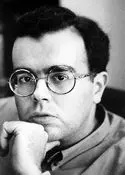
Fernando Pinto do Amaral

Fernando Pinto do Amaral is a Portuguese poet, essayist, and university professor, whose work is distinguished by its intelligence, irony, and a deep reflection on language and culture. His poetry moves between the personal and the universal, addressing themes such as memory, identity, the passage of time, and the very art of writing. With a style marked by precision and sensitivity, Pinto do Amaral has established himself as an important voice in contemporary Portuguese literature, also known for his extensive critical work.

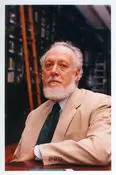
Alberto da Costa e Silva

Alberto da Costa e Silva was a prominent Brazilian poet, diplomat, and essayist, recognized for his vast work that celebrates African culture and its influence on the formation of Brazil. His poetry is marked by lyricism, musicality, and a deep reflection on themes such as identity, history, ancestry, and beauty. He distinguished himself by his erudition and his ability to make accessible the complexities of African heritage, advocating for the importance of intercultural dialogue and the recognition of diversity.

Hermes Vieira

Hermes Vieira was a Brazilian poet whose work was noted for its profound reflection on the human condition, temporality, and the search for meaning amidst the complexities of existence. His poetry is marked by an elaborate and imagistic language, which oscillates between the lyrical and the philosophical, exploring the anxieties and hopes of the individual. With a consistent output, Vieira left a legacy of verses that invite introspection and questioning about the mysteries of life.

Almandrade

Almandrade is a prominent name in contemporary poetry, known for his writing that navigates between lyricism and social reflection. His work is marked by precise language and a keen insight into the complexities of human existence and the world we live in. With poetry that frequently engages with tradition, yet reinvents itself in form and content, Almandrade solidifies his position as a relevant poet, whose verses invite meditation on identity, memory, and time, establishing him as a singular and influential voice.

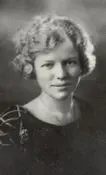
Lorine Niedecker

Lorine Niedecker was an American modernist poet, recognized for her concise, imagistic, and experimental poetry. Associated with the Objectivist circle, her work is characterized by meticulous attention to nature, labor, and everyday life, often drawing profound depth from seemingly simple observations. Niedecker explored language in innovative ways, using fragmentation and word economy to create poems of great impact. Although her literary output was less widely known during her lifetime, Lorine Niedecker is today considered an important figure in 20th-century American poetry, whose influence extends to later generations of experimental poets interested in the relationship between language, nature, and society.

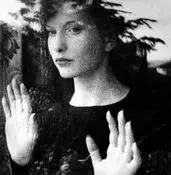
Maya Deren

Maya Deren was a Ukrainian-American filmmaker, writer, and film theorist, a pioneer of experimental cinema. Her work is deeply marked by the exploration of the unconscious, dreams, and mythology, using a unique and innovative visual language. Deren left a lasting legacy in the seventh art, influencing generations of independent filmmakers with her avant-garde and visionary approach.

Maria do Sameiro Barroso

Maria do Sameiro Barroso was a notable Portuguese poet, whose work is part of the panorama of contemporary poetry. Her writing is recognized for its lyrical sensitivity, for the exploration of themes such as identity, memory, the relationship with nature, and the female condition, in an approach that combines introspection and acute observation of the world. With careful and imaginative language, Barroso's poetry establishes a deep dialogue with human emotions, time, and space, exploring the complexity of everyday and existential experiences. Her work is an invitation to reflect on the beauty of the ephemeral and the strength of feelings.

Víctor Domingo Silva

Víctor Domingo Silva was a notable Chilean poet, professor, and politician. His poetic work is marked by deep lyricism and a strong sense of nationalism, celebrating Chilean identity and landscape. As an educator and public figure, Silva dedicated a large part of his life to promoting culture and education in his country, leaving a significant legacy in the fields of literature and public service.

Ricardo Jaimes Freyre

Ricardo Jaimes Freyre was a prominent Bolivian poet, essayist, and diplomat, a key figure in Hispano-American literary Modernism. His poetic work, marked by musicality, subjectivity, and a deep exploration of themes such as love, melancholy, and nature, is fully integrated into the aesthetic currents of the late 19th and early 20th centuries. As an essayist, he addressed literary criticism and social issues of his time, advocating for a renewed vision of literature and culture. His diplomatic work allowed him to disseminate Bolivian culture abroad, consolidating his figure as an intellectual with continental reach.

Edward Lear

Edward Lear was an English artist, illustrator, musician, author, and poet, celebrated primarily for his nonsense poetry. His distinctive style, characterized by limericks and whimsical illustrations, brought him widespread fame. Lear's work often featured eccentric characters, fantastical landscapes, and playful rhymes, offering a unique blend of humor and imagination. He is considered a pioneer of the nonsense genre, influencing generations of writers and artists with his creative spirit.

Unicorny,
Claribel Alegría

Claribel Alegría was a Nicaraguan poet, essayist, and novelist whose work is characterized by its profound lyricism and social commitment. Throughout her life, she explored universal themes such as love, death, memory, and identity, often intertwining them with the history and politics of Latin America. Her poetry is distinguished by an intimate yet collective voice, capable of evoking intense emotions and deep reflections. Her literary legacy is vast and internationally recognized, having received numerous awards and distinctions. Alegría established herself as one of the most important poetic voices in 20th and 21st-century Spanish-language literature, leaving an indelible mark on the culture and memory of the region.

Died on this day

7
Evaristo da Veiga

Evaristo da Veiga was a 19th-century Brazilian poet, journalist, and politician, a prominent figure of the Romantic period and the nationalist movement. His poetic work, marked by a civic and patriotic tone, celebrated Brazil's independence and exalted the country's heroes and nature. As a journalist and editor, he played a crucial role in disseminating liberal ideas and shaping public opinion, founding the influential newspaper 'Aurora Fluminense'.

Henry Becque

Henry François Becque was a French playwright, known for works that explored human nature with raw and often dark realism. He was born in Paris, France, on April 18, 1837. Becque is considered a precursor of naturalist and symbolist theater. His plays often featured complex characters and moral dilemmas, departing from the theatrical conventions of the time. Despite having a limited literary output, his influence on the development of modern drama is notable.

Nelly Sachs

Nelly Sachs was a German-language Jewish poet and playwright, awarded the Nobel Prize in Literature. Her work is deeply marked by the experience of the Holocaust and her life as a refugee. Her poetry, often described as a "song of mourning and hope," explores themes such as suffering, memory, diaspora, and the search for redemption. Through a lyrical and visionary style, Sachs gives voice to the victims of persecution, but also seeks a sense of transcendence and communion with the divine. Her writing is a poignant testament to the resilience of the human spirit in the face of barbarity.

Braulio Arenas

Braulio Arenas Pacheco was a multifaceted Chilean artist, known mainly for his work as a poet, playwright, and novelist. His work is characterized by a strong element of experimentation, surrealism, and a deep exploration of the subconscious and the human condition. He was a central figure in the Chilean surrealist movement.

Josephine Miles

Josephine Miles was a prominent American poet, known for her innovative approach to language and poetic form. Her work frequently explored the nature of communication and the nuances of meaning, with a style that balanced intellectual rigor with emotional expressiveness. Miles dedicated much of her career to teaching and literary criticism, influencing generations of poets. Her poetry collections are celebrated for their intelligence, clarity, and the way they challenged established poetic conventions, making her an important figure in 20th-century American poetry.

Marià Villangómez

Marià Villangómez Llobet was a Spanish poet and writer, prominent in the literature of the Balearic Islands. His poetic work is recognized for its intimate lyricism, exploration of landscape, and reflection on the human condition. He is considered a central figure in contemporary Catalan poetry, especially in its insular strand.