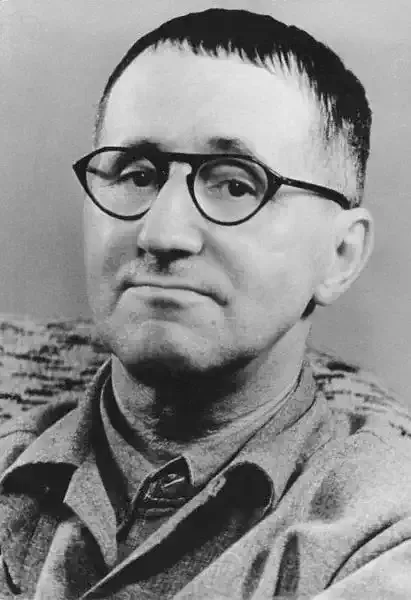
Jean-Paul Sartre
Author of the day

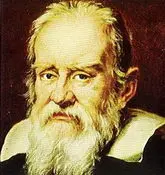
Jean-Paul Sartre

Jean-Paul Sartre was a French philosopher, writer, playwright, and literary critic, a central figure of atheistic existentialism. His vast and multifaceted work explores human freedom, individual responsibility, bad faith, and social commitment. Sartre rejected the Nobel Prize in Literature, advocating for a stance of refusal of bourgeois institutions. His thought profoundly influenced 20th-century philosophy, literature, and political debate, marking a generation with his emphasis on autonomy a…

Poem of the day

Do Not Go Gentle Into That Good Night

Dylan Thomas
Do not go gentle into that good night, 
Old age should burn and rave at close of day; 
Rage, rage against the dying of the light. 

Though wise men at their end know dark is right, 
Because their words had forked no lightning they 
Do not go gentle into that good night. 

Good men, the last wave by, crying how bright 
Their frail deeds might have danced in a green bay, 
Rage, rage against the dying of the light. 

Wild men who caught and sang the sun in flight, 
And learn, too late, they grieved it on its way, 
Do not go gentle into that good night. 

Grave men, near death, who see with blinding sight 
Blind eyes could blaze like meteors and be gay, 
Rage, rage against the dying of the light. 

And you, my father, there on that sad height, 
Curse, bless, me now with your fierce tears, I pray. 
Do not go gentle into that good night. 
Rage, rage against the dying of the light.
Read full poem

Born on this day

5
Paul Groussac Mendes

Paul Groussac Mendes was a Brazilian writer, professor, and literary critic, known for his involvement in intellectual circles and for his erudite work that addressed historical and literary themes. His writing demonstrated a profound knowledge of literature and history, often with a sharp insight into culture and society. He was a respected figure in academic and literary circles, contributing to debate and the dissemination of knowledge.

Dzore Drzic

Dzore Drzic (1461–1508) was a Dalmatian humanist poet and playwright. He is considered one of the most important figures of Croatian Renaissance literature, known for his works in Latin and vernacular.

António de Almeida Santos

António de Almeida Santos was a Portuguese jurist and politician, with a prominent career in the field of law and public life. Known for his vast experience and involvement in various areas, he played significant roles in national and international institutions, marking Portugal's contemporary history.

Richard Siken

Richard Siken is an acclaimed American poet, known for his lyrical intensity and exploration of themes such as love, desire, violence, and mortality. His poetry is raw, visceral, and often dramatic, using fragmented narratives and powerful language to evoke strong emotions.

Died on this day

14
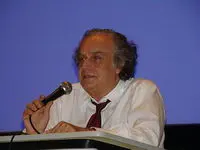
Arnaldo Jabor

Arnaldo Jabor was a multifaceted Brazilian filmmaker, screenwriter, producer, and journalist, known for his cinematic work that frequently explored the complexities of Brazilian society and human relationships. His filmography is marked by a critical and aesthetically refined eye, addressing themes such as sexuality, social hypocrisy, and politics. In addition to his contribution to cinema, Jabor also stood out as a columnist and journalist, with incisive and reflective writing on Brazilian culture and politics, demonstrating remarkable artistic and intellectual versatility throughout his career.

Myriam Fraga

Myriam Fraga was a distinguished Portuguese poet, journalist, and translator. Her poetic work is marked by a profound sensibility, exploring themes such as nature, time, memory, and the human condition with a refined language and a unique lyricism. Her vast experience as a journalist and her involvement with Portuguese culture enriched her worldview and her literary production, giving her an authentic and resonant voice.

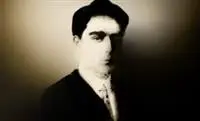
Ronald de Carvalho

Ronald de Carvalho was a Brazilian poet, writer, and diplomat, an important figure of Modernism. His work is marked by the search for a renewed poetic language, the exploration of national themes, and irreverence. As one of the pioneers of Modernism, he contributed to the consolidation of an authentic Brazilian literary identity, combining formal experimentation with a deep love for the homeland and Brazilian culture.

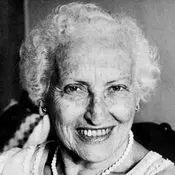
Helena Kolody

Helena Kolody was a Brazilian poet, whose work stands out for its lyrical sensibility and profound reflection on existence, nature, and love. Her poetry, marked by delicate and imagistic language, addresses the beauty of the everyday and the complexities of human feelings with an authentic and touching voice.

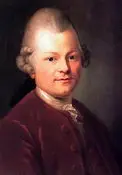
Gotthold Ephraim Lessing

Gotthold Ephraim Lessing was a prominent German writer, philosopher, and theater critic of the Enlightenment. His work is fundamental to the development of German drama and literary criticism. Lessing advocated for reason and religious tolerance, influencing generations of thinkers.

Barbara Guest

Barbara Guest was an American poet recognized for her contribution to modern poetry, particularly associated with the New York School. Her work explores the complexities of language, perception, and identity, often in an experimental and innovative manner. Guest challenged poetic conventions through her distinctive use of verse and her fragmented, interconnected approach to form. Throughout her career, she explored themes such as memory, nature, art, and the female condition, using precise and imagistic language. Her poetry is often characterized by its intelligence, subtle musicality, and profound reflection on the limits of representation and expression.

Luísa Dacosta

Luísa Dacosta was a notable Portuguese poet, novelist, and short-story writer, known for her lyrical writing and exploration of themes such as memory, identity, and the female condition. Her poetic work, in particular, stood out for its musicality and introspective depth, establishing her as an important voice in contemporary Portuguese literature. Throughout her career, she demonstrated remarkable versatility, moving with mastery between poetry and prose, and leaving an enriching literary legacy.

António Moreno

António Moreno is a contemporary poet known for his lyrical and reflective writing, which explores themes such as identity, time, and memory. His poetry is marked by careful language and a keen sensitivity to the nuances of human experience. Moreno has been consolidating his presence in the literary scene through a body of work that appeals to introspection and contemplation, dialoguing with poetic tradition while proposing an authentic and current voice.

Laura Crafton Gilpin

Laura Crafton Gilpin (born Laura Gilpin) was an American photographer known for her documentary work on the southwestern United States, focusing on the landscapes and culture of Indigenous peoples. Her work is characterized by a humanistic approach and her deep connection to the environment and the communities she portrayed. Gilpin dedicated much of her life to documenting the social and environmental changes in the region, using her art to preserve and celebrate cultural and natural heritage.

Mirza Ghalib

Mirza Ghalib was a preeminent Urdu and Persian poet of the 19th century, renowned for his profound ghazals and his sophisticated literary style. He is widely considered one of the greatest poets in the Hindustani language, whose work bridged classical traditions with emerging modern sensibilities. Ghalib's poetry is celebrated for its intellectual depth, philosophical insights, wit, and its exploration of complex human emotions, including love, loss, and the existential condition. His mastery of language and his unique perspective continue to resonate with readers and scholars alike, making him a towering figure in South Asian literature.

José Luis Cano

José Luis Cano was a Spanish poet, literary critic, and translator. His poetic work is characterized by a deep and serene gaze upon reality, exploring themes such as memory, the passage of time, nature, and the human condition with precise and evocative language. As a critic, he dedicated himself to the study of contemporary Spanish poetry, standing out for his rigor and analytical sharpness. His work as a translator also enriched the Spanish literary landscape. He is considered a relevant figure in the poetry and criticism of his generation.