Poem of the day

Do Not Go Gentle Into That Good Night

Dylan Thomas
Do not go gentle into that good night, 
Old age should burn and rave at close of day; 
Rage, rage against the dying of the light. 

Though wise men at their end know dark is right, 
Because their words had forked no lightning they 
Do not go gentle into that good night. 

Good men, the last wave by, crying how bright 
Their frail deeds might have danced in a green bay, 
Rage, rage against the dying of the light. 

Wild men who caught and sang the sun in flight, 
And learn, too late, they grieved it on its way, 
Do not go gentle into that good night. 

Grave men, near death, who see with blinding sight 
Blind eyes could blaze like meteors and be gay, 
Rage, rage against the dying of the light. 

And you, my father, there on that sad height, 
Curse, bless, me now with your fierce tears, I pray. 
Do not go gentle into that good night. 
Rage, rage against the dying of the light.
Read full poem

Born on this day

16
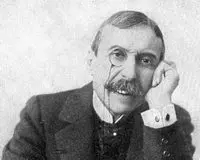
António Nobre

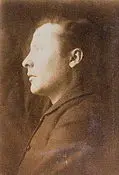
António Nobre was a Portuguese poet, a prominent figure of Symbolism and Decadentism in Portugal, known for his melancholic, musical poetry full of saudade (a deep emotional state of nostalgic longing). His work, marked by strong subjectivity and an elegiac tone, reflects his deep connection to Portugal and a personal, nostalgic view of the world. His poetic work, although relatively scarce in volume, exerted a significant influence on later Portuguese poetry, consolidating him as one of the most emblematic poets of the late 19th and early 20th centuries.

Millôr Fernandes

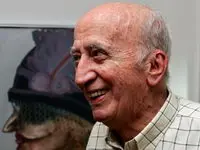
Millôr Fernandes was a Brazilian writer, humorist, cartoonist, playwright, and journalist. He stood out for his acidic and critical humor, addressing social, political, and existential themes with insight and irreverence. His work spans various genres, including chronicles, poems, plays, and cartoons, always with accessible language and a sharp eye on the human condition. He was one of the founders and collaborators of widely circulated newspapers and magazines, leaving a legacy of intelligence and irreverence in Brazilian culture.

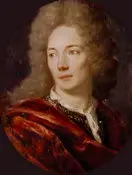
Jules Laforgue

Jules Laforgue was a French poet and literary critic, a transitional figure between symbolism and modernism. Known for his irony, melancholy, and formal experimentation, his work explored themes such as love, death, time, and the human condition with a skeptical and disillusioned perspective. Despite a relatively short literary output and limited recognition during his lifetime, his innovative style and unique vision of modernity exerted a significant influence on 20th-century poetry, particularly on American modernist poets.

Eudoro Augusto

Eudoro Augusto was a Portuguese poet and journalist whose verses explored themes related to nature, love, and saudade, with a style that bordered on romantic sentimentalism and intimate lyricism. He was active in various periodical publications, where his poems found a receptive audience for the expression of deep feelings and the contemplation of the beauty of the natural world. His work, although less prominent than that of some contemporaries, contributes to the richness of Portuguese poetry of his time.

Charles Bukowski

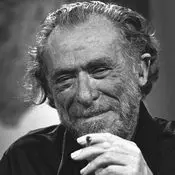
Charles Bukowski was a German-American poet and writer, known for his raw, visceral, and autobiographical work. His writing, often associated with the so-called "Beat Generation" and the counterculture, portrays marginalized life, vices, poverty, sex, and alienation with direct and straightforward language. Bukowski celebrated the underworld and the misfits, becoming an icon for many who felt on the fringes of society.

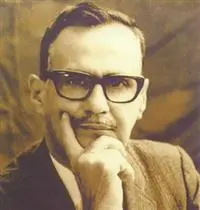
Christopher Okigbo

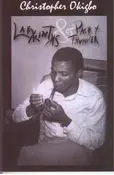
Christopher Okigbo was a Nigerian poet, considered one of the most prominent figures in modern African English-language poetry. His work is marked by a deep lyrical sensibility, rich and imagistic language, and an exploration of themes such as African identity, the sacred, war, and the human condition. His influences are diverse, encompassing African oral traditions, classical and modern Western poetry, and a strong spirituality. Okigbo is remembered for his expressive force and his tragic death in combat during the Nigerian Civil War, which lent his work an aura of sacrifice and prophecy. His poetry continues to resonate for its formal beauty and its existential and political relevance.

Mauro Mota

Poet, journalist, and Brazilian professor, Mauro Mota stood out for his lyricism deeply connected to the identity and landscape of the Northeast. His work explores the cultural and social richness of the region, often with a tone of exaltation and a sharp eye on its contradictions. His poetry is marked by accessible language, yet rich in imagery and musicality, reflecting a strong social consciousness and a genuine love for his land. He became a representative voice of Northeastern poetry in the Brazilian literary scene.

Luís Ribeira Seca

Luís Ribeira Seca was a poet whose work stands out for its originality and its ability to capture the essence of the human experience through careful poetic language. His poetry, although sometimes enigmatic, invites reflection on universal themes such as love, solitude, and the search for meaning. His figure is a testament to the vitality of poetic expression.

Armando Soares Imaginário

Armando Soares Imaginário was a poet whose work is distinguished by its strong imaginative charge and the exploration of dreamlike and symbolic universes. His poetry delves into themes such as saudade, the search for identity, and the human relationship with the mystery of the universe. With a rich and evocative language, Soares Imaginário built a body of work that stands out for its originality and lyrical depth, leaving an indelible mark on contemporary literature.

Aurora Luque

Aurora Luque is a Spanish poet, essayist, and translator, whose work is recognized for its lyrical strength, intelligence, and its approach to themes such as the body, sexuality, mythology, and history from a feminist perspective. With a distinctive and innovative poetic voice, Luque has been an important figure in the renewal of contemporary Spanish poetry. Her writing boldly explores language, weaving cultural references with contemporary sensibility and a strong social commitment.

Salvador Reyes Figueroa

Salvador Reyes Figueroa was a notable Chilean writer and poet, with a body of work that moves between prose and verse, exploring the culture, history, and identity of Chile. His writing is marked by a deep connection with literary traditions and a humanistic vision, sensitively addressing the complexities of Chilean life and society.

Ferenc Juhász

Ferenc Juhász was a renowned Hungarian poet, considered one of the most important voices of 20th-century Hungarian poetry. His work is marked by vivid imagination, deep symbolism, and an intrinsic connection with nature and mythology. He explored themes such as life, death, love, and the human condition with a unique intensity.

César Simón

César Simón is a Spanish poet and literary critic, known for his poetic work that stands out for its reflective depth and formal rigor. His poetry explores existential and social themes with a language that combines the lyrical and the intellectual. As a critic, he actively contributes to the analysis of contemporary literature, offering valuable insights into authors and trends.

Reynaldo Arenas

Reynaldo Arenas is a Cuban poet, narrator, and essayist whose work is characterized by a deep reflection on identity, memory, and the human condition within the context of Cuban and Latin American reality. His writing is distinguished by poetic language of great expressive force, often laden with symbolism and with sharp social criticism. Arenas is considered a relevant voice in contemporary literature, exploring the complexities of existence and the dilemmas of his time with a personal and universal outlook.

Died on this day

4
Haroldo de Campos

Haroldo de Campos was a Brazilian poet, translator, essayist, and literary critic, a central figure of concretism. His work is marked by linguistic experimentation and the pursuit of a poetry that transcended the barriers of traditional language, exploring the visuality and sonority of words. He was one of the founders of the concretist movement in Brazil and an intellectual of vast influence, with a production that spanned poetry, literary theory, and translation.

Jorge Gonzalez

Jorge Gonzalez is a Spanish writer, illustrator, and comic book author, known for his extensive work and striking visual style. Born in Alicante, he developed much of his career in France, where he became a prominent figure in the Franco-Belgian comic scene. Gonzalez is recognized for his versatility, addressing themes ranging from science fiction and fantasy to social realism and biographical chronicles. His ability to create complex worlds and multifaceted characters, combined with a distinctive graphic style, has earned him international acclaim and numerous awards.

Henry Céard

Henry Céard was a French writer, journalist, and diplomat, known for his contributions to the naturalist movement and his association with Émile Zola. Born in Paris, France, on November 18, 1851. Céard was a proponent of literary naturalism and actively participated in the intellectual debates of his time. His work, although less known than that of his more famous contemporaries, reflects the scientific and social spirit of the era.