Jean-Paul Sartre
Author of the day

Jean-Paul Sartre

Jean-Paul Sartre was a French philosopher, writer, playwright, and literary critic, a central figure of atheistic existentialism. His vast and multifaceted work explores human freedom, individual responsibility, bad faith, and social commitment. Sartre rejected the Nobel Prize in Literature, advocating for a stance of refusal of bourgeois institutions. His thought profoundly influenced 20th-century philosophy, literature, and political debate, marking a generation with his emphasis on autonomy a…

Poem of the day

Do Not Go Gentle Into That Good Night

Dylan Thomas
Do not go gentle into that good night, 
Old age should burn and rave at close of day; 
Rage, rage against the dying of the light. 

Though wise men at their end know dark is right, 
Because their words had forked no lightning they 
Do not go gentle into that good night. 

Good men, the last wave by, crying how bright 
Their frail deeds might have danced in a green bay, 
Rage, rage against the dying of the light. 

Wild men who caught and sang the sun in flight, 
And learn, too late, they grieved it on its way, 
Do not go gentle into that good night. 

Grave men, near death, who see with blinding sight 
Blind eyes could blaze like meteors and be gay, 
Rage, rage against the dying of the light. 

And you, my father, there on that sad height, 
Curse, bless, me now with your fierce tears, I pray. 
Do not go gentle into that good night. 
Rage, rage against the dying of the light.
Read full poem

Born on this day

12
Maria de Lourdes Hortas

Maria de Lourdes Hortas was a Portuguese poet whose work is distinguished by its lyrical depth and exploration of existential and everyday themes. With careful language and keen sensitivity, her poetry reflects an introspection on the human condition, love, and the passage of time.

Roberto Freire

Roberto Freire was a Brazilian writer, psychoanalyst, and activist. Recognized for his literary work, which explores the complexity of the human psyche and Brazil's social issues, he also stood out as an important psychoanalyst and public intellectual. His writing is marked by psychological depth, social criticism, and the pursuit of individual and collective freedom. Freire was an active voice in the defense of human rights and the promotion of critical thinking.

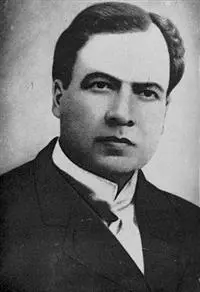
Rubén Darío

Rubén Darío was a Nicaraguan poet, journalist, and diplomat, considered the father of literary modernism in the Spanish language. His work revolutionized Spanish poetry, introducing new metrical forms, a rich and exotic vocabulary, and unparalleled musicality. Darío explored universal themes such as love, death, time, and the pursuit of beauty, with a language that combined the classic and the modern. His influence extended throughout Latin America and Spain, profoundly marking Spanish-language literature.

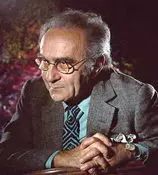
Jacob Bronowski

Jacob Bronowski was a Polish-British mathematician, scientist, philosopher, literary critic, playwright, and historian of science. He is best known for his BBC television series and book "The Ascent of Man," which explore the history and impact of science on human civilization. His work sought to connect the natural sciences with the humanities, emphasizing the unity of knowledge and the crucial role of human creativity in scientific and cultural progress. Bronowski was a brilliant communicator, capable of making complex concepts accessible to a wide audience.

Paul Léautaud

Paul Léautaud was a French writer, literary critic, and journalist, known for his direct, ironic style and his detailed memoirs of Parisian literary life. His most famous work, "Le Journal littéraire," offers an intimate and often caustic portrait of his contemporaries and himself, revealing a complex personality and a keen sense of observation. Léautaud led a discreet life, but his passionate writing and relentless criticism made him a respected and sometimes controversial figure in the French cultural scene. He is remembered for his artistic integrity and his refusal to conform to literary and social conventions.

João Apolinário

João Apolinário was a Portuguese poet whose work is part of the context of contemporary poetry. His writing is marked by a profound reflection on the human condition, time, and memory, with a refined language and a strong imagery.

Eduíno de Jesus

Eduíno de Jesus was a poet whose work is characterized by a deep exploration of the human condition, addressing themes such as faith, doubt, hope, and the search for transcendence. His poetry, of intense and reflective lyricism, is marked by accessible language, yet laden with meaning, capable of evoking deep emotions and inviting introspection. With an authentic voice and sharp sensitivity, Jesus left a poetic legacy that resonates with his humanity and his ability to engage with fundamental existential questions, inviting the reader on an inner journey of discovery and meaning.

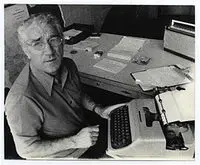
Ricardo Garibay

Ricardo Garibay was a prominent Mexican writer, playwright, and screenwriter, whose work is characterized by a sharp observation of Mexico's social and political reality, as well as a deep exploration of the human condition. His writing, marked by a direct and often raw style, addresses themes such as corruption, violence, injustice, and the complexity of interpersonal relationships. As a playwright, Garibay contributed significantly to Mexican theater, creating works that questioned the power structures and morality of his time. His foray into cinema as a screenwriter also left an important mark. Garibay's work is a faithful and often uncomfortable reflection of Mexican society, seen through a critical and committed lens.

Jorge Guillén

Spanish poet, one of the central figures of the Generation of '27 and one of the most important representatives of pure poetry in the Spanish language. His work is characterized by a celebration of existence, light, and formal perfection, seeking a poetry stripped of anecdotes and excessive sentimentality. Throughout his extensive production, Guillén explored the beauty of the world and the fullness of being through a refined language and constant aesthetic rigor.

Died on this day

12
Antero Coelho Neto

Antero Coelho Neto was an Angolan poet, essayist, and professor, whose work stands out for its profound connection with the social, political, and cultural realities of Angola. His poetry is a reflection of his homeland, addressing themes such as identity, history, the struggle for freedom, and hope for a better future. As an engaged intellectual, Coelho Neto dedicated himself to reflecting on the African condition and valuing Angolan culture and language. His writing is marked by a strong lyrical charge and a commitment to human dignity.

Amadeu Fontana

Amadeu Fontana was a poet whose work stands out for its exploration of existential themes and the intrinsic musicality of his verses. His writing is characterized by refined language and a profound sensitivity in approaching the human condition, addressing the fleeting nature of time and the search for meaning in a constantly transforming universe. His poetry, although at times melancholic, is permeated by a subtle hope and a serene contemplation of life.

Arnaldo França

Arnaldo França was a Brazilian poet, translator, and literary critic. His poetic work, marked by erudition and lyrical sensitivity, explores themes such as memory, the passage of time, and the human condition. As a translator, he stood out for his competence in transposing important works of universal literature into Portuguese.

Chagas Correia

Chagas Correia was an Angolan poet and writer, whose work is a reflection of his identity and the complexities of Angola. His poetry is often associated with themes of national identity, history, culture, and the struggle for the affirmation of the Angolan people. It is characterized by a strong connection to the land and its people, expressed in a language that evokes orality and the strength of traditions.

Edward Bulwer-Lytton

Edward George Earle Lytton Lytton Bulwer, 1st Baron Lytton, was a prolific English writer, poet, and politician. Author of highly successful historical and social novels, his works often explored themes of mystery, romance, and adventure. He was also a noted playwright and a politician who served in the House of Commons.

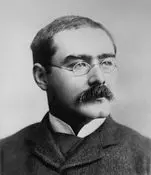
Rudyard Kipling

Rudyard Kipling was a prolific English writer and poet, best known for his works on British India and his children's stories. He championed the idea of the 'White Man's Burden' and his writings often reflected imperialist sentiments. Despite controversy surrounding his political views, his imaginative storytelling and mastery of language continue to be recognized, with works like 'The Jungle Book' and 'Kim' remaining popular.

When your Daemon is in charge, do not try to think
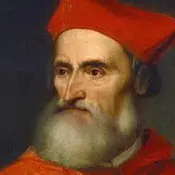
Pietro Bembo

Pietro Bembo (1470-1547) was an Italian cardinal, humanist, poet, and literary theorist. Born in Venice, he distinguished himself through his work in prose and poetry, being a central figure in the Italian Renaissance. Bembo was a proponent of Florentine as the standard Italian literary language and played a crucial role in codifying the grammar and style of the language. His influence extended throughout Europe, shaping the development of Renaissance literature.

Raul Gustavo Aguirre

Raul Gustavo Aguirre was an Argentine poet, an important figure of surrealism and the poetic renewal movement in Argentina. His work is marked by the exploration of the unconscious, dreamlike images and an innovative language, reflecting the anxieties of his generation.

Pe. Manuel Antunes

Fr. Manuel Antunes was a Portuguese Jesuit, philosopher, and theologian, known for his profound intelligence and vast culture. He dedicated his life to the study and dissemination of thought, being a prominent figure in the Portuguese intellectual landscape of the 20th century. His work encompasses reflections on faith, reason, culture, and society, always with a critical and humanist perspective.

Maria Judite de Carvalho

Maria Judite de Carvalho was a Portuguese writer, journalist, and translator, a prominent figure in 20th-century literature. Her literary work, which spans novels, short stories, and chronicles, is recognized for its psychological depth, exploration of the human condition, and subtle social critique, often focused on the complexities of relationships and female identity. With a style marked by conciseness and insight in analyzing emotions, Maria Judite de Carvalho established herself as a singular voice in Portuguese literature, addressing universal themes such as love, loneliness, death, and the search for meaning, leaving a significant legacy in contemporary prose.

António de Almeida Santos

António de Almeida Santos was a Portuguese jurist and politician, with a prominent career in the field of law and public life. Known for his vast experience and involvement in various areas, he played significant roles in national and international institutions, marking Portugal's contemporary history.

Miguel Ángel Flores

Miguel Ángel Flores is a contemporary poet whose work is distinguished by introspection and the exploration of the human condition. With a language rich in imagery and sensitivity, his verses address universal themes such as love, loss, the passage of time, and the search for meaning. His poetry invites reflection on the ephemerality of life and the strength of feelings, establishing an intimate dialogue with the reader.