Juan Ramón Jiménez
Author of the day

Juan Ramón Jiménez

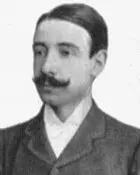
Juan Ramón Jiménez was a Spanish poet, awarded the Nobel Prize in Literature in 1956. His work, profoundly marked by symbolism and the desire for "pure poetry," evolved towards an incessant search for beauty and transcendence. His poetry explores themes such as nature, spirituality, love, and the very essence of poetry, with a refined, musical, and visionary style. He is considered one of the great renovators of 20th-century Spanish poetry.

Poem of the day

Grass

Carl Sandburg
Pile the bodies high at Austerlitz and Waterloo.
Shovel them under and let me work
-I am the grass; I cover all.

And pile them high at Gettysburg
And pile them high at Ypres and Verdun.
Shovel them under and let me work.
Two years, ten years, and the passengers ask the conductor:

What place is this?
Where are we now?

I am the grass.
Let me work.
Read full poem

Born on this day

16
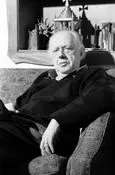
Eugénio de Andrade

Eugénio de Andrade was one of the most important Portuguese poets of the 20th century, known for the purity and musicality of his language, and for his deep connection to nature, the body, and sensory experience. His work is characterized by a refined lyricism that celebrates life, light, and beauty, without ignoring the darker dimensions of existence. With poetry distinguished by its conciseness, clarity, and apparent simplicity that hides great reflective depth, Eugénio de Andrade consolidated an unmistakable style and a unique voice in contemporary Portuguese-language poetry.

Affonso Ávila

Affonso Ávila was a Brazilian poet, essayist, professor, and literary critic, a prominent figure of the third generation of Modernism. His poetic work is marked by a profound reflection on the human condition, the ephemerality of time, and the search for meaning in a constantly changing world. As an essayist and critic, he contributed significantly to the understanding of Brazilian literature.

Ronaldo Bonfim

Ronaldo Bonfim is a contemporary poet whose work stands out for its exploration of identity, ancestry, and complex human relationships within the urban and social context. His poetry delves into the roots of Afro-Brazilian culture, addressing themes such as heritage, resistance, spirituality, and the search for one's place in the world. Bonfim uses vibrant and accessible language, which shifts between lyricism and the rawness of reality, reflecting the diversity of voices and experiences that make up society. His writing is marked by a strong visual imagery and a rhythm that evokes the orality and musicality of popular culture.

Trajano Galvão

Trajano Galvão is a name that resonates in the panorama of contemporary poetry, known for his exploration of universal themes such as love, loss, time, and the search for transcendence. His writing is characterized by careful language, full of evocative poetic imagery, and a confessional tone that establishes an intimate connection with the reader. Galvão's work demonstrates a deep reflection on the human condition, navigating between melancholy and hope, fragility and strength. His poetry, while firmly rooted in the lyrical tradition, presents a modernity that makes it relevant and accessible to today's readers, consolidating his place as an important voice in literature.

Janis Joplin

Janis Joplin was an iconic American rock and blues singer, known for her powerful and expressive voice, and her passionate performances. During the 1960s, she stood out as one of the most charismatic and influential figures in popular music, leading bands such as Big Brother and the Holding Company and the Kozmic Blues Band. Her career, although short, left an indelible mark on music history, being remembered for her stage energy, her authenticity, and her songs that addressed themes such as love, pain, and the search for freedom, reflecting the spirit of her generation.

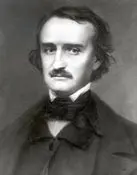
Edgar Allan Poe

Edgar Allan Poe was an American writer, poet, editor, and literary critic, best known for his poetry and short stories, particularly his tales of mystery and the macabre. He is widely regarded as a central figure of Romanticism in the United States and American literature as a whole. Poe is credited with inventing the detective fiction genre and was one of the earliest American writers of short stories, as well as the originator of the "cosmic horror" subgenre. His work is characterized by its exploration of dark themes, psychological depth, and often melancholic or terrifying atmosphere.

A Dream
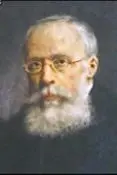
Arturo Graf

Arturo Graf was a prominent Italian literary critic, historian, and poet. Born in Athens, he dedicated his career to the study of literature and culture, with a particular focus on comparative literature and the history of ideas. His work is known for its scholarship and its profound analysis of literary and philosophical currents.

Albino Forjaz de Sampaio

Albino Forjaz de Sampaio was a Portuguese writer, journalist, and politician, known for a multifaceted career that included poetry, novels, and interventionist prose. His work, while not entirely homogeneous, reflects a deep interest in social issues and national identity, in a style that sometimes oscillates between lyricism and realism.

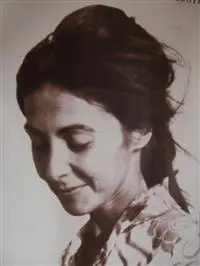
Silvina de Sousa

Silvina de Sousa was a Portuguese writer whose work stood out for its exploration of the female condition and the complexities of identity. Author of poetry and prose, her writing is marked by deep sensitivity, addressing themes such as love, loneliness, memory, and the passage of time. Her poetry, in particular, reveals an introspective lyricism and a careful language, which earned her a prominent place in contemporary Portuguese literature.

Ribeiro Dias

Ribeiro Dias is a Portuguese poet whose work is part of contemporary poetry. His writing is distinguished by the exploration of themes such as identity, memory, and the individual's relationship with the world. He uses accessible yet dense language, combining existential reflection with careful observation of reality. His poetry invites introspection, addressing the complexity of human emotions and the search for meaning in a constantly changing social and cultural context.

Maria Regina Louro

Maria Regina Louro is a prominent figure in Portuguese poetry, with a work distinguished by its intellectual depth and exploration of complex themes. Her writing, often marked by a strong philosophical and existential charge, invites reflection on the human condition. Through an elaborate language and a critical view of the world, Louro constructs a poetic universe that challenges and enriches the reader.

Adriano del Valle

Adriano del Valle was a Spanish poet, literary critic, and professor. His poetic work, although concise, is marked by lyrical depth and the exploration of universal themes such as love, death, and the search for meaning. As a critic, he contributed to the analysis of various authors and literary movements of his time, demonstrating a keen eye and notable erudition. His work as a professor also left a legacy, inspiring generations of students with his passion for literature and knowledge.

Lionel Ray

Lionel Ray is a French poet and literary critic whose work is characterized by a profound reflection on language and poetry itself. His writing explores the boundaries of verse, often experimenting with form and rhythm to capture the essence of human experience. He is known for his critical intelligence and dedication to the study of poetry. With a career dedicated to poetic exploration and literary analysis, Ray contributes significantly to the debate on contemporary poetry. His work invites readers to a new appreciation of the written word and its power to evoke and question the world. He is an important voice in modern French poetry.

Joan Brossa

Joan Brossa was a Spanish poet, playwright, and visual artist, a key figure of surrealism and visual poetry in Catalonia. Known for his avant-garde spirit and his experimentation with language, Brossa explored the possibilities of the object poem, scenic poetry, and artistic intervention in public spaces. His work challenged literary and artistic conventions, inviting playful and critical reflection on reality.

Died on this day

10
Fiama Hasse Pais Brandão

Fiama Hasse Pais Brandão was a Portuguese poet, playwright, and translator, known for her work marked by formal experimentation and the exploration of existential and social themes. Her writing is characterized by dense language and a strong rhythmic component, often associated with the Surrealist movement and concrete poetry. Throughout her career, she explored various forms of expression, including theater and poetic performance, leaving a significant legacy in contemporary Portuguese-language poetry.

Alberto de Oliveira

Alberto de Oliveira was a Brazilian poet, considered one of the greatest exponents of Parnassianism in Brazil. His work is marked by formal perfection, metrical rigor, and imagistic plasticity, distinctive characteristics of the movement. With a cultivated language and a rich vocabulary, he explored themes such as nature, idealized love, and classical mythology, always with an objective and descriptive approach. His poetry, although sometimes considered cold by some critics, is recognized for its musicality and aesthetic beauty.

Emiliano Perneta

Emiliano Perneta is an Angolan poet known for his work exploring identity, the human condition, and the complexities of society. His poetry is characterized by rich and evocative language, with influences ranging from African oral tradition to contemporary literary currents. Perneta addresses universal themes such as love, death, the search for meaning, and the marks left by history and culture.

Manuel Machado

Manuel Machado was a Spanish poet, known for his work that blends modernism with elements of symbolism and Parnassianism. His poetry is marked by intense lyricism, a rich vocabulary, and characteristic musicality, exploring themes such as love, death, time, and the ephemerality of life. Machado developed a unique style, with strong attention to form and the sonority of verses, influencing later generations of poets with his pursuit of beauty and aesthetic perfection in poetic language.

Cândido da Velha

Cândido da Velha was a Portuguese poet known for his forays into religiously and morally inspired poetry. His work reflects a period of literary transition, where echoes of classicism were still felt, but with a sensibility that foreshadowed new thematic approaches. His compositions, often didactic in nature, sought to deepen reflections on the human condition and spiritual values, fitting into a context of literary and religious renewal in Portugal.

William Congreve

William Congreve was a playwright and poet of the English Restoration period.

António Luís de Seabra

António Luís de Seabra was a Portuguese poet, magistrate, and politician, known for his poetic work that falls within Neotrovadorismo and Arcadismo. His writing shows a deep love for the homeland, for Portuguese history and tradition, often exploring themes such as heroism, past glory, and saudade. With careful language and a style marked by rhetoric, Seabra sought to revive the nation's values and ideals through his verses, reflecting a sense of nostalgia for Portugal's historical greatness and a desire for national renewal. His figure is representative of a literary sensibility that valued collective identity and memory.

Gustave Thibon

Gustave Thibon was a French philosopher and essayist, known for his reflections on the human condition, spirituality, and the relationship between man and nature. His work is marked by a profound humanism and the search for a synthesis between rational thought and intuition.

Xoan Manuel Casado

Xoan Manuel Casado is a Galician writer, known for his contribution to literature in Galician. His work spans various genres, exploring the cultural and social identity of Galicia. He stands out for his engaging prose and his ability to portray Galician daily life with sensitivity and realism. With a consolidated literary career, Casado has received recognition for his authentic writing and his dedication to the Galician language and culture. His work is a reflection of the region's rich literary tapestry, contributing to its preservation and dissemination.