Poem of the day

Do Not Go Gentle Into That Good Night

Dylan Thomas
Do not go gentle into that good night, 
Old age should burn and rave at close of day; 
Rage, rage against the dying of the light. 

Though wise men at their end know dark is right, 
Because their words had forked no lightning they 
Do not go gentle into that good night. 

Good men, the last wave by, crying how bright 
Their frail deeds might have danced in a green bay, 
Rage, rage against the dying of the light. 

Wild men who caught and sang the sun in flight, 
And learn, too late, they grieved it on its way, 
Do not go gentle into that good night. 

Grave men, near death, who see with blinding sight 
Blind eyes could blaze like meteors and be gay, 
Rage, rage against the dying of the light. 

And you, my father, there on that sad height, 
Curse, bless, me now with your fierce tears, I pray. 
Do not go gentle into that good night. 
Rage, rage against the dying of the light.

Read full poem

Born on this day

9
Pedro Abrunhosa

Pedro Abrunhosa is a Portuguese musician, composer, and singer known for his eclectic sound that blends pop, soul, funk, and Lusophone rhythms. His career, which began in the 90s, is marked by a strong stage presence, lyrics that explore everyday themes, love, and society, and an innate ability to create musical hits that resonate with the public. Abrunhosa has established himself as one of the most popular and enduring artists in Portuguese music, admired for his originality and contagious energy.

Alcides Werk

Alcides Werk is a poet who stands out for his lyrical and introspective work, frequently exploring the depths of the human condition, the ephemerality of time, and the search for meaning. His poetry is marked by careful language and a keen sensitivity to the nuances of existential experience. His writing invites reflection on life, love, and art, establishing an intimate dialogue with the reader.

Bráulio de Abreu

Bráulio de Abreu is a contemporary poet whose work is distinguished by its exploration of themes such as memory, time, and the human condition, approached with lyrical and introspective language. His poetry invites reflection on the complexities of existence, the ephemerality of moments, and the search for meaning. His writing, marked by keen sensitivity and a unique worldview, has been gaining a space in the current literary landscape. Bráulio de Abreu's ability to weave verses that resonate with individual and collective experience gives his work notable relevance.

Maranhão Sobrinho

Maranhão Sobrinho was an important Brazilian poet and lawyer, whose work is distinguished by its lyrical strength and profound connection to the cultural roots of the Northeast. His poetry, often elegiac and marked by musicality, evokes the landscapes, customs, and soul of the sertão, consolidating him as one of the great names of Northeastern and Brazilian poetry.

Gonzalo Rojas

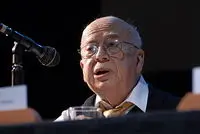
Gonzalo Rojas was a Chilean poet recognized for his intense and innovative work. His poetry is marked by a deep reflection on the human condition, exploring themes such as love, death, time, and identity with a powerful and imagistic language. He is considered one of the most important voices in 20th-century Latin American poetry, with a unique style that bridges existentialism and visceral sensuality.

Tomás da Rosa

Tomás da Rosa is a Portuguese poet, short story writer, and columnist, known for his lyrical and reflective poetry. His work frequently explores themes such as memory, time, the ephemerality of life, and the human condition, with a careful and musical language. Throughout his career, he has distinguished himself by his sensitivity in approaching universal feelings and his ability to evoke deep poetic images, consolidating himself as an important voice in contemporary Portuguese-language poetry.

Gérard D’houville

Gérard d'Houville was a French writer, journalist, and literary critic, known for his active participation in the cultural and literary life of his time. His work, although less known internationally, reflects an interest in the nuances of society and reflections on art and literature. As a journalist and critic, d'Houville had the opportunity to interact with various artistic and intellectual movements, contributing to the cultural debate of his time. His writing seeks to explore the complexities of human relationships and literary trends, presenting a keen insight into the French cultural scene.

Liz Waldner

Liz Waldner is an American poet known for her experimental and innovative poetry, which often challenges the conventions of language and form. Her work is characterized by an intellectual and playful engagement with words, exploring the nature of perception, communication, and reality itself. Waldner is recognized for her unique approach and her ability to create poems that are both challenging and rewarding. Her writing invites the reader to reconsider how language constructs our understanding of the world, solidifying her as an important figure in contemporary experimental poetry.

Died on this day

10
António Lampreia

António Lampreia is a Portuguese poet whose work is characterized by lyrical intensity and the exploration of themes such as nature, time, and the human condition. With careful language and strong musicality, his verses invite immersion in a universe of sensations and deep reflections. His poetry, although often anchored in landscapes and everyday observations, transcends the merely descriptive to reach a more universal and existential dimension, touching on the fragility and beauty of existence.

Carlos D’Alge

Carlos D’Alge is a poet whose work is distinguished by its exploration of subjectivity and the nuances of human experience. His poetry is characterized by refined language and an unparalleled ability to capture deep emotions and reflections. D’Alge has consolidated his presence in the literary landscape through consistent production and a keen eye on the world, which has allowed him to create verses that resonate with readers.

Léopold Sédar Senghor

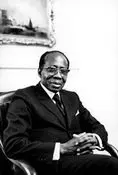
Léopold Sédar Senghor was a Senegalese poet, writer, and politician, known as one of the greatest African intellectuals of the 20th century. He was one of the founders of the Négritude movement, which celebrated African cultural identity and black heritage. His poetic work is marked by a profound musicality, influences from African oral tradition and French poetry, exploring themes such as the homeland, African identity, love, and spirituality. Senghor played a crucial role in Senegal's independence and became its first president, leading the country for more than two decades. As a statesman, he promoted cultural cooperation between Africa and Europe and advocated for a vision of universal civilization. His vast literary work and political legacy make him an unavoidable figure in the history of Africa and world literature.

António Correia de Oliveira

António Correia de Oliveira was a Portuguese poet, known for his markedly religious and mystical poetry. His work is profoundly marked by the Catholic faith, exploring themes such as devotion to Our Lady, the search for transcendence, and spiritual life. Correia de Oliveira's poetry is distinguished by its purity of language and its atmosphere of recollection and prayer, reflecting a life path dedicated to the expression of his deep religiosity and contemplation of the sacred.

Rui Guilherme Figueiredo da Silva

Rui Guilherme Figueiredo da Silva is a poet whose work is characterized by introspection and a deep exploration of the human condition. His poetry addresses universal themes such as love, loss, time, and the search for meaning, often with careful language and a melancholic tone. His compositions reflect a refined sensitivity to the nuances of existence, inviting the reader to reflect on their own life and feelings. His work, although sometimes discreet in terms of mass dissemination, has been winning a niche of readers who appreciate dense and emotional poetry.

Günter Eich

Günter Eich was a German poet, playwright, and radio dramatist, a central figure in post-war German literature. His poetry is known for linguistic experimentation, dreamlike atmosphere, and reflection on language and the human condition in times of crisis. As a pioneer of radio drama in Germany, Eich innovated in form and content, exploring the sonic and narrative possibilities of the medium. His literary work, in both poetry and prose, is marked by a search for authenticity and a critical view of society.

Arturo Capdevila

Arturo Capdevila was a prominent Argentine writer, journalist, and diplomat, recognized for his prolific literary work that includes novels, short stories, essays, and poetry, as well as for his important work as a chronicler and a figure of his country's culture. His style is characterized by rich prose, a deep sensitivity in capturing the essence of Argentine reality, and a constant exploration of themes such as national identity, history, the human condition, and nature. He was a keen observer of his time and a defender of Argentina's cultural values.

José Hierro

José Hierro was a Spanish poet, one of the central figures of post-war social poetry and one of the innovators of poetic language in Spain. His work is characterized by a profound humanism, a concern for social and existential reality, and constant formal and thematic experimentation. His poetry is distinguished by its reflective tone, its commitment to the human condition, and its search for a language that can name the complexity of the world and of being. Hierro is considered a poet of doubt, of constant questioning, and his work is a testament to the search for meaning in an often turbulent and contradictory world.