Jorge Luis Borges
Author of the day

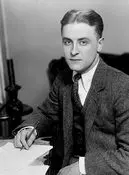
Jorge Luis Borges

Jorge Luis Borges was an Argentine writer, poet, essayist, and translator. His work is characterized by its philosophical depth, intricate plots, and exploration of themes such as time, infinity, identity, and the nature of reality. Borges is considered one of the most significant literary figures of the 20th century, renowned for his innovative use of literary devices and his profound influence on postmodern literature.

Poem of the day

Grass

Carl Sandburg
Pile the bodies high at Austerlitz and Waterloo.
Shovel them under and let me work
-I am the grass; I cover all.

And pile them high at Gettysburg
And pile them high at Ypres and Verdun.
Shovel them under and let me work.
Two years, ten years, and the passengers ask the conductor:

What place is this?
Where are we now?

I am the grass.
Let me work.
Read full poem

Born on this day

12
Filinto Elísio

Filinto Elísio was a Portuguese poet known for his lyrical work and his connection to the Symbolist movement. His poetry explores themes such as melancholy, the transience of time, and the search for an ideal, often marked by careful language and musicality.

Vera Maya

Vera Maya is a prominent figure in contemporary poetry, with a body of work that stands out for its deep exploration of identity, human relationships, and the complexities of existence. Her poetry is marked by direct language, yet charged with emotion and subtlety, capable of addressing universal themes with an intimate and personal perspective. Through verses that oscillate between strength and fragility, Maya constructs a poetic universe where vulnerability becomes a source of strength, and reflections on time, memory, and love intertwine. Her work invites the reader to confront their own experiences and feelings, establishing an authentic and resonant connection, which has earned the author a prominent place in current Portuguese literature.

Felipe Sampaio

Felipe Sampaio is a contemporary Brazilian poet and essayist, known for his work that navigates between introspective lyricism and social reflection. His poetry explores the human condition, the complexities of interpersonal relationships, and existential questions, often with an accessible yet meaning-dense language. Active in the Brazilian literary scene, Sampaio also stands out for his work as a cultural critic and promoter.

Paulo Augusto Rodrigues

Paulo Augusto Rodrigues is a poet whose work stands out for its lyrical and reflective approach to existence. His writing is often marked by a deep aesthetic sensibility and a careful exploration of poetic language. His poems address universal themes, such as love, solitude, the passage of time, and the search for meaning, with a voice that oscillates between the personal and the universal. His contribution to contemporary Portuguese poetry is notable for its originality and its ability to move the reader.

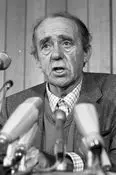
Heinrich Böll

Heinrich Böll was a prominent German writer, awarded the Nobel Prize in Literature in 1972. His work is known for its strong social and political engagement, criticizing militarism, nationalism, and the hypocrisy of post-World War II German society. He addressed themes such as guilt, memory, and the reconstruction of Germany. Böll explored the lives of ordinary people, the marginalized, and the victims of war, giving voice to those who were silenced. His writing is characterized by clarity, humanism, and a deep empathy with his characters. He was an important figure in German literature and an active defender of human rights.

Oh, that ludicrous virile earnestness!
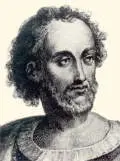
Mathurin Régnier

Mathurin Régnier was a French satirical poet, nephew of fellow poet Jacques Grévin. He was born in Chartres in 1573 and died in 1613. Known for his witty and often irreverent satires, his work is characterized by a sharp style and keen observation of the society of his time.

Manuel Joaquim Dias

Manuel Joaquim Dias was a Portuguese poet, a figure of popular and satirical poetry of the 19th century. His work is marked by a critical and humorous tone, addressing customs and social types of his time with sharpness and insight. Dias's poetry reflects an attentive look at Portuguese society, using irony and satire as tools to comment on reality. His style, while rooted in the tradition of popular poetry, presents an originality in the way it transitions between the social and the personal, constructing a vivid portrait of everyday life. The work of Manuel Joaquim Dias constitutes a valuable record of a specific period in Portuguese cultural history, standing out for its ability to entertain and, at the same time, provoke reflection on human behavior and social structures.

António Maria Ferreira da Silva

António Maria Ferreira da Silva, also known by the pseudonym Silva Porto, was a Portuguese poet associated with the Romanticism movement. His work, although sometimes overshadowed by contemporaries of greater prominence, reflects the aesthetic and thematic concerns of his time, with an inclination towards nature and sentiment. His contribution, within the literary context of the 19th century, earned recognition in his era.

José Guerra Maio

José Guerra Maio was a Portuguese poet and professor, a prominent figure in contemporary poetry. His work is marked by a strong lyrical component, exploring themes such as memory, time, identity, and landscape, with a refined language and a unique rhythm. As a pedagogue, he dedicated himself to the dissemination of literature, especially poetry, leaving an important legacy in the formation of readers and writers.

Richard Hugo

Richard Hugo was an influential American poet, known for his lyrical and often melancholic poetry, which frequently explored the landscape and life in the lesser-known regions of America. His work is characterized by a deep sense of place, a keen eye for ordinary people, and an exploration of the human condition with honesty and compassion. Hugo was also an important creative writing teacher, inspiring many students with his passion for poetry and his dedication to the art.

Died on this day

13
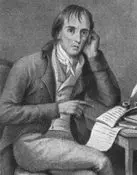
Bocage

Bocage, whose real name was Manuel Maria Barbosa du Bocage, was one of the most important Portuguese poets of the late 18th century. His work, marked by intense and sometimes irreverent lyricism, explored themes such as love, passion, the fleetingness of time, and melancholy. Known for his bohemian life and strong personality, Bocage left a poetic legacy that transcends his time, influencing later generations of writers with his formal mastery and expressiveness.

Giuseppe Belli

Giuseppe Gioachino Belli was an Italian poet, widely recognized as one of the greatest exponents of Roman dialect poetry. His work, written predominantly in the Romanesco dialect, offers a vivid and often satirical portrait of popular life in Rome in the 19th century, addressing themes such as daily life, religion, politics, and the human condition with a raw and expressive language. Despite having had a modest life and publishing little during his existence, his poetry gained posthumous recognition, consolidating itself as a fundamental landmark of Italian literature and an invaluable testimony to the culture and society of 19th-century Rome.

Antunes da Silva

Antunes da Silva was a Portuguese poet whose work belongs to the more lyrical and introspective vein of contemporary poetry. His writing explores the complexity of human emotions, the ephemerality of life, and the search for meaning in a constantly changing world. With a refined language and a sensitive look at reality, Antunes da Silva left a body of work that invites reflection on existence and human relationships.

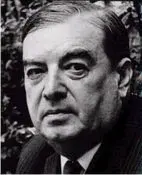
Charles-Louis Philippe

Charles-Louis Philippe, also known as Charles-Louis Philippe, was a French writer. He is known for his works that explore the lives of the working classes and the darker aspects of society.

Roger Caillois

Roger Caillois was a French-Argentine writer, essayist, and sociologist. Born in Reims, France, in 1913, he moved to Argentina in 1914 and lived there until 1945, when he returned to France. His work covers a wide range of themes, including the sociology of sport, games, religion, and poetry. He is known for his theories on games and society, as well as his influence on surrealism.

Virgínia Vitorino

Virgínia Vitorino was a Portuguese writer and poet, whose work stands out for its sensitivity and exploration of social and existential themes. Her writing, often marked by a reflective tone and careful language, addressed the female condition and the complexities of human relationships. Despite having a relevant literary output, her name is not always evoked with the same frequency as other contemporaries, making her work an important field for rediscovery.

António Maria Ferreira da Silva

António Maria Ferreira da Silva, also known by the pseudonym Silva Porto, was a Portuguese poet associated with the Romanticism movement. His work, although sometimes overshadowed by contemporaries of greater prominence, reflects the aesthetic and thematic concerns of his time, with an inclination towards nature and sentiment. His contribution, within the literary context of the 19th century, earned recognition in his era.

Hernán Miranda

Hernán Miranda is a Chilean poet known for his lyrical and reflective work. His poetry frequently explores themes such as memory, identity, and the human condition, with a language that moves between the colloquial and the erudite. He stands out for his ability to capture the essence of everyday feelings and experiences, elevating them to a universal level.

Blai Bonet

Blai Bonet was a Spanish poet, writer, and translator, an important figure in Catalan literature. His poetic work is recognized for its lyrical intensity and exploration of themes such as existence, sensuality, death, and the search for beauty, with a language often marked by experimentation and the influence of surrealism. Bonet left a significant legacy as one of the great poets of his generation, whose work continues to be studied and admired for its originality and aesthetic depth.

Adrian Henri

Adrian Henri was an English poet associated with the Liverpool Poetry Scene, an influential group in the 1960s and 1970s. His poetry is known for its accessibility, vibrant imagination, and themes that often celebrate love, the city, and everyday aspects. Henri was also noted for his versatility, working in various media, including visual arts and music.

Wendy Battin

Wendy Battin is known for her work in the field of literature, with a special focus on poetry and literary criticism. Her work stands out for the sensitivity and depth with which she addresses universal themes, using poetic language as a vehicle to explore the nuances of human experience and the complexities of the contemporary world.