Poem of the day

Do Not Go Gentle Into That Good Night

Dylan Thomas
Do not go gentle into that good night, 
Old age should burn and rave at close of day; 
Rage, rage against the dying of the light. 

Though wise men at their end know dark is right, 
Because their words had forked no lightning they 
Do not go gentle into that good night. 

Good men, the last wave by, crying how bright 
Their frail deeds might have danced in a green bay, 
Rage, rage against the dying of the light. 

Wild men who caught and sang the sun in flight, 
And learn, too late, they grieved it on its way, 
Do not go gentle into that good night. 

Grave men, near death, who see with blinding sight 
Blind eyes could blaze like meteors and be gay, 
Rage, rage against the dying of the light. 

And you, my father, there on that sad height, 
Curse, bless, me now with your fierce tears, I pray. 
Do not go gentle into that good night. 
Rage, rage against the dying of the light.
Read full poem

Born on this day

7
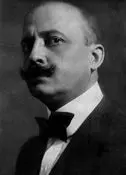
Filippo Tommaso Marinetti

Filippo Tommaso Marinetti was an Italian poet, editor, and literary theorist. He is best known as the founder of Futurism, an artistic and social movement that he described in his 1909 "Futurist Manifesto". Marinetti advocated for speed, technology, youth, and violence, and Futurism had a significant impact on visual arts, literature, theater, and music. His work sought to break with tradition and celebrate the dynamism of the modern era. Marinetti believed that art should reflect the constantly changing world, with its machines, industries, and vibrant cities. He was a controversial figure, with some of his ideas being associated with fascism.

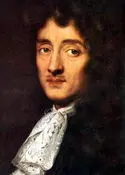
Jean Racine

Jean Racine was a renowned French playwright, considered one of the three great playwrights of the 17th century in France, alongside Molière and Corneille. He is widely celebrated for his classical tragedies, which are distinguished by their psychological depth, purity of style, and the intensity of human passions.

She floats, she hesitates; in a word, she’s a woma
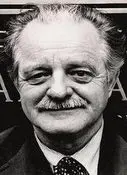
Kenneth Rexroth

Kenneth Rexroth was an influential American poet, essayist, and critic, a prominent figure in 20th-century American poetry, associated with movements such as Modernism and the Beat Generation. His work is characterized by a wide range of interests, from Eastern poetry and philosophy to radical politics and ecology. Rexroth was known for his scholarship, his accessible yet profound language, and his advocacy for poetry that was simultaneously beautiful and socially relevant, exploring themes such as nature, love, spirituality, and social criticism.

Hernán Miranda

Hernán Miranda is a Chilean poet known for his lyrical and reflective work. His poetry frequently explores themes such as memory, identity, and the human condition, with a language that moves between the colloquial and the erudite. He stands out for his ability to capture the essence of everyday feelings and experiences, elevating them to a universal level.

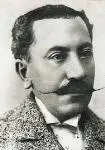
Manuel Gutiérrez Nájera

Manuel Gutiérrez Nájera was a prominent Mexican poet, short story writer, and literary critic, considered one of the precursors of modernism in Spanish America. His work, marked by elegance, musicality, and melancholy, addressed themes such as love, ephemeral beauty, lost childhood, and introspection. Through a refined style and careful language, Nájera introduced new aesthetic sensibilities that laid the groundwork for the renovation of poetry on the continent.

Alvaro Cunqueiro

Alvaro Cunqueiro was a prominent Galician narrator and poet, known for his deep connection with the mythology and folklore of Galicia. His work is characterized by a rich and evocative prose, often tinged with a melancholic lyricism and subtle humor. His literary output encompasses both poetry and narrative, exploring universal themes through a prism deeply rooted in Galician culture, which has earned him a prominent place in Galician and Spanish language literature.

Died on this day

9
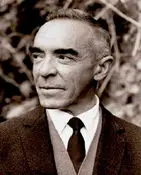
José Régio

José Régio was an influential Portuguese writer, professor, and essayist, a central figure in the Neorealist movement in Portugal. His work, which spans poetry, short stories, essays, and literary criticism, is notable for the psychological depth of its characters, social analysis, and exploration of themes such as morality, religion, the human condition, and social hypocrisy. With a rigorous style and a critical view of society, José Régio left a significant legacy in 20th-century Portuguese literature.

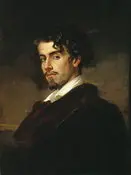
Gustavo Adolfo Bécquer

Gustavo Adolfo Bécquer was a Spanish poet and writer, a prominent figure of Post-Romanticism. His work, marked by intimacy, melancholy, and the idealization of love and women, transcends his time and continues to be a fundamental reference in Spanish-language poetry. Although his life was marked by financial difficulties and personal fragility, Bécquer left a body of work that explores the transience of life, the enigmatic nature of inspiration, and the ethereal beauty of romantic feeling, consolidating himself as one of the most read and translated poets in his country.

Mário Linhares

Mário Linhares was a Portuguese poet whose work stands out for its lyrical sensibility and exploration of themes such as love, nature, and the ephemerality of life. His poetry, although sometimes linked to aesthetic currents of his time, possesses an authentic voice and a style marked by musicality and the power of imagery. His literary production, although not extensive, left a mark on Portuguese poetry, revealing an attentive eye on human emotions and the beauty of the world around him.

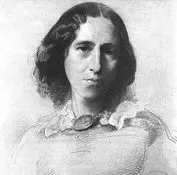
George Eliot

George Eliot is the pseudonym of Mary Ann Evans, a prominent English novelist of the Victorian era. Eliot is celebrated for her profound psychological insight, moral complexity, and realistic portrayal of English provincial life. Her works often explore themes of morality, religion, determinism, and the position of women in society.

It is never too late to be what you might have bee
André Brun

André Brun was a Portuguese poet and essayist, whose work is part of a context of lyrical renewal and reflection on human identity and experience. His poetry, often marked by deep introspection and careful language, explores universal themes such as love, solitude, and the passage of time. His intellectual journey reflects a continuous search for expression and meaning in the Portuguese literary landscape.

Maria Aurora C. Homem

Maria Aurora C. Homem is a notable figure in contemporary poetry, known for her exploration of intimate and universal themes. Her work stands out for its lyrical depth and ability to evoke complex emotions through careful and imagistic language. Homem's poetry often addresses the nuances of human relationships, the passage of time, and the search for meaning in a constantly changing world. The author constructs a poetic universe that resonates with individual experience, inviting reflection on the human condition.