Poem of the day

Grass

Carl Sandburg
Pile the bodies high at Austerlitz and Waterloo.
Shovel them under and let me work
-I am the grass; I cover all.

And pile them high at Gettysburg
And pile them high at Ypres and Verdun.
Shovel them under and let me work.
Two years, ten years, and the passengers ask the conductor:

What place is this?
Where are we now?

I am the grass.
Let me work.
Read full poem

Born on this day

15
Alexandre O'Neill

Alexandre O'Neill was a Portuguese poet, a prominent figure of surrealist poetry in Portugal. His work, often irreverent and critical, moves between lyricism and humor, exploring language in an inventive and surprising way. He is known for his ability to subvert the common meaning of words, creating dreamlike and critical images of society. His poetry is an invitation to deconstruct apparent reality, revealing the absurd and the marvelous hidden in everyday life. O'Neill is one of the most original and influential names in 20th-century Portuguese poetry.

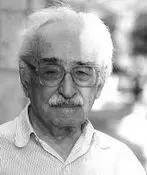
Manoel de Barros

Manoel de Barros was a Brazilian poet whose verses explored childhood, nature, and daily life with a unique and inventive language. His work is marked by a deep sensibility towards the rural world and the simple elements of life, which he elevated to a lyrical and philosophical level. His ability to reinvent words and create surprising images from the mundane made him one of the most beloved and original figures in contemporary Brazilian poetry.

Vitorino Nemésio

Vitorino Nemésio was a prominent Portuguese poet, novelist, and essayist, whose work is notable for its lyrical depth and exploration of Azorean and Portuguese identity. His writing is characterized by rich and musical language, often evoking the landscape and culture of the islands where he was born. Nemésio was also an important figure in the academic and cultural world, leaving a lasting legacy in Lusophone literature.

Alfredo Castro

Alfredo Castro is a prominent figure in contemporary theater and cinema. Recognized for his versatility and interpretive intensity, he has built a career marked by the exploration of complex characters and his ability to move between different artistic languages. His work has been acclaimed both nationally and internationally, consolidating him as a reference artist.

Mauro Gama

Mauro Gama is a poet whose works explore the depths of the human condition, the ephemerality of time, and the search for meaning in everyday life. His writing is marked by accessible language, yet imbued with lyricism and philosophical reflection, inviting the reader to contemplate life's small, great questions. His poems often address themes such as memory, affections, the passage of time, and the individual's relationship with the world around them, never falling into sentimentality but maintaining an emotional honesty that resonates with universal experience.

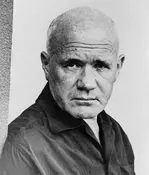
Jean Genet

Jean Genet was a prominent French writer, playwright, and political activist. His work, often controversial, explores themes of crime, sexuality, marginality, and the search for transcendence through rebellion. Genet challenged the social and moral conventions of his time, using poetic and stylized language to portray the underworld and the human condition.

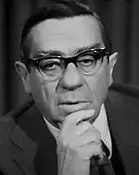
Abel Bonnard

Abel Bonnard was a French poet, novelist, and essayist known for his lyrical work and, later, for his controversial political stances. Born at the end of the 19th century, Bonnard began his literary career with poems and novels that explored themes such as nature, beauty, and introspection. His early writing was praised for its elegance and aesthetic sensitivity. However, his trajectory took a different turn in the following decades, especially during and after World War II, when he adopted political positions aligned with the far-right and the Vichy regime, which significantly tarnished his reputation.

Abd al-Wahhab Al-Bayati

Abd al-Wahhab Al-Bayati was a prominent Iraqi poet, considered one of the pioneers of modern Arabic poetry. His work is deeply marked by the experience of exile, the struggle against oppression, and the pursuit of social justice and freedom. Al-Bayati is known for his powerful poetic voice and his ability to blend Arab tradition with Western influences, creating poetry that resonates with universal themes of identity, hope, and resistance.

Sá Flores

Sá Flores, pseudonym of Afonso de Sá e Flores, was a Portuguese poet whose work is predominantly part of Modernism. His poetry is characterized by formal experimentation, the exploration of urban themes, and the search for a renewed language, reflecting the concerns and cultural effervescence of the early 20th century. He stood out for his active participation in literary movements and his connection with other artists and writers of the time. His work, although sometimes less celebrated than that of some contemporaries, represents a valuable contribution to the renewal of Portuguese poetry.

Luis Javier Moreno Madroño

Luis Javier Moreno Madroño is a Spanish writer and professor, whose work focuses on literary analysis and creation. His production encompasses both creative writing and essays, reflecting a deep interest in language, culture, and literary history.

José Lezama Lima

José Lezama Lima was an influential Cuban poet, essayist, and novelist, a central figure in 20th-century Latin American literature and one of the foremost exponents of surrealism and the avant-garde in the region. Recognized for his baroque language, his erudition, and his profound exploration of imagery, history, and mythology, Lezama Lima constructed a unique and complex literary universe. His work, dense and polysemic, addresses themes such as identity, memory, religion, eroticism, and artistic creation, inviting an ever-renewed and challenging reading.

Salvador Elizondo

Salvador Elizondo was a Mexican writer, critic, and essayist, a prominent figure in his country's literature. His work is characterized by a deep exploration of identity, reality, and perception, often intertwining the fantastic with the everyday. Through experimental prose and an avant-garde style, Elizondo challenged the literary conventions of his time, inviting readers to question the boundaries between dreams, memory, and tangible existence. His legacy lies in his ability to renew narrative and poetic language, leaving an indelible mark on 20th-century Latin American literature.

Died on this day

10
Rubem Braga

Rubem Braga was one of the most important Brazilian poets of the 20th century, known for his lyrical work and his ability to capture the beauty of everyday life and the intensity of human emotions. His poetry is marked by apparent simplicity, musicality, and a worldview that oscillates between optimism and melancholy. His vast literary production, which also includes chronicles and short stories, reveals a deep love for nature, for Rio de Janeiro, and for the simple joys of life, consolidating him as a master in the art of poeticizing the prosaic and the profound.

Fernanda de Castro

Fernanda de Castro was a multifaceted figure in Portuguese arts, excelling as a poet, stage director, choreographer, and educator. Her poetic work, marked by experimentation and the exploration of new languages, reflects deep sensitivity and an innovative spirit. Alongside her literary production, she developed significant work in the performing arts, exploring the relationship between word, body, and movement. Her passion for artistic education was evident through her teaching, where she sought to inspire and train new generations of creators. She passed away in Lisbon, leaving a diverse legacy in poetry and the performing arts.

Silveira Neto

Silveira Neto was a Brazilian poet, short story writer, novelist, and journalist. His work is marked by a deep reflection on the human condition, the ephemerality of time, and the search for meaning in a constantly changing world. With a rich and imagistic language, he explored themes such as love, death, loneliness, and the inexorable passage of years, often set in scenarios that evoke melancholy and introspection.

Goulart de Andrade

Goulart de Andrade was a poet and writer whose work is marked by a strong lyrical charge and a deep sensitivity in exploring themes such as love, longing, identity, and the human condition. His poetry, often associated with an bittersweet lyricism, reflects a deep connection with emotions and introspection, inviting reflection on the nuances of life and relationships.

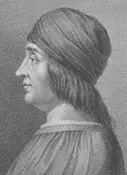
Matteo Maria Boiardo

Matteo Maria Boiardo was an Italian poet and nobleman of the Renaissance, known mainly for his epic poem "Orlando innamorato" (Orlando in Love). This monumental work served as inspiration for Ludovico Ariosto's "Orlando Furioso" and is considered one of the pillars of Renaissance epic poetry. Born in Scandiano, Boiardo dedicated himself to literature and public life, holding administrative and diplomatic positions. His poem merges the Arthurian matter with the Matter of France, creating a universe of knights, magic, and passion that enchanted the Italian courts.

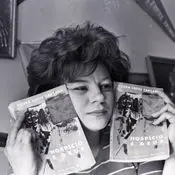
Maura Lopes Cançado

Maura Lopes Cançado was a Brazilian poet and short story writer whose work is marked by strong sensitivity, a particular lyricism, and a profound exploration of the feminine soul and human relationships. Her writing, often poetic even in prose, addresses themes such as love, loneliness, identity, and the search for freedom. With a style distinguished by its musicality and its ability to create vivid images, Maura Lopes Cançado left a legacy of texts that continue to resonate for their originality and depth. Her work is an invitation to revisit the emotions and complexities of existence with a sensitive and questioning eye.

Laurence Whistler

Laurence Whistler was a British poet and writer known for his lyrical style and his reflections on themes such as nature, art, and the inner life. His poetic work is valued for its clarity, musicality, and the depth of his observations.

Emily Jane Brontë

Emily Brontë was an English novelist and poet, best known for her only novel, Wuthering Heights. She was part of the Brontë family, renowned for their literary contributions. Her work is characterized by its passionate intensity, exploration of complex human emotions, and a unique blend of realism and Gothic elements. Brontë's poetry, though less famous than her novel, is also notable for its stark beauty, powerful imagery, and exploration of themes such as love, loss, and the natural world.

My hour of rest had fleeted by,