John Keats
Author of the day

John Keats

John Keats was a leading figure of the second generation of English Romantic poets. Despite a short life, his prolific output of some of the most celebrated odes and sonnets in the English language profoundly impacted literature. His poetry is renowned for its sensory richness, exploration of beauty, and philosophical depth, often delving into themes of love, mortality, and the transient nature of existence. Keats's work, though not widely appreciated during his lifetime, is now considered a cor…

Poem of the day

Do Not Go Gentle Into That Good Night

Dylan Thomas
Do not go gentle into that good night, 
Old age should burn and rave at close of day; 
Rage, rage against the dying of the light. 

Though wise men at their end know dark is right, 
Because their words had forked no lightning they 
Do not go gentle into that good night. 

Good men, the last wave by, crying how bright 
Their frail deeds might have danced in a green bay, 
Rage, rage against the dying of the light. 

Wild men who caught and sang the sun in flight, 
And learn, too late, they grieved it on its way, 
Do not go gentle into that good night. 

Grave men, near death, who see with blinding sight 
Blind eyes could blaze like meteors and be gay, 
Rage, rage against the dying of the light. 

And you, my father, there on that sad height, 
Curse, bless, me now with your fierce tears, I pray. 
Do not go gentle into that good night. 
Rage, rage against the dying of the light.
Read full poem

Born on this day

15
Luis Cernuda

Luis Cernuda was a Spanish poet, a central figure of the Generation of '27. His work, marked by a profound melancholy and an incessant search for an ideal love and a full reality, explores themes such as desire, solitude, rebellion, and beauty. Cernuda lived much of his life in exile, which intensified his reflection on identity, homeland, and displacement.

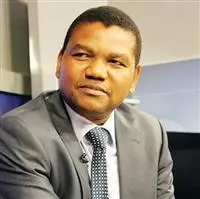
Hélder Muteia

Hélder Muteia is a contemporary Mozambican poet and writer, whose work is characterized by a deep connection to African cultural roots, to the history and social complexities of Mozambique. His poetry, often marked by strong and expressive language, addresses themes such as identity, the struggle for freedom, the colonial heritage and hope for a future of dignity and justice. He is an important voice in African Lusophone literature.

Carvalho Neto

Carvalho Neto, literary name of Sebastião de Carvalho Neto, was a prominent Brazilian writer, essayist, and folklorist. His work is largely dedicated to the study and dissemination of popular culture, especially from Northeast Brazil. With a diverse literary production, Carvalho Neto dedicated himself to exploring cultural manifestations, oral traditions, and popular narratives, consolidating himself as a reference figure in Brazilian folklore studies and regionalist literature.

Herberto Sales

Herberto Sales was a prominent Brazilian writer, mainly known for his novel "Vidas Secas" (Barren Lives), a fundamental work of national literature that portrays the harsh reality of the Brazilian Northeast backlands and the struggle for survival. His writing is marked by a deep realism, a concise style, and a powerful ability to give voice to the marginalized and oppressed. Sales explored various facets of Brazilian society, addressing themes such as social inequality, drought, popular religiosity, and human resilience.

Yolanda Bedregal

Yolanda Bedregal was a Bolivian poet, writer, and educator, with a work marked by lyrical sensitivity and the exploration of themes such as identity, nature, and the human condition. Her poetry is recognized for its expressive power and musicality. As an educator, she dedicated herself to the formation of young people, transmitting cultural and literary values. Her work contributed to the valorization of Bolivian literature and the training of new generations of readers and writers.

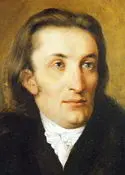
Johann Peter Eckermann

Johann Peter Eckermann was a German poet and writer, best known for his work as secretary and close friend of Johann Wolfgang von Goethe. Born in Winsen, Lower Saxony, Eckermann dedicated himself to recording and publishing Goethe's conversations and thoughts, preserving a valuable testimony of his life and work.

François Dufrêne

François Dufrêne was a French poet and artist, known for his active participation in the Surrealist Doctrine movement. His poetic work, although sometimes less prominent than that of other surrealists, is marked by linguistic and visual experimentation, aligned with the principles of creative freedom and exploration of the unconscious.

Joaquim Mendes dos Remédios

Joaquim Mendes dos Remédios was a Portuguese poet and professor, a prominent figure in the literary and intellectual landscape of his time. His poetic work, although sometimes less known to the general public, reveals a refined sensibility and a deep interest in themes such as nature, spirituality, and the human condition. As an educator, he dedicated himself to education, leaving an important legacy in the field of teaching. His literary output, whether in verse or prose, reflects thoughtful consideration and careful language, contributing to the richness of Portuguese literature.

Filipe Neiva

Filipe Neiva is a name associated with contemporary poetry, exploring the complexities of human existence through a language that oscillates between the lyrical and the introspective. His work tends to delve into universal themes such as love, the passage of time, and the search for meaning, often reflecting on the human condition in the modern world. His poetry stands out for its sensitivity in exploring emotions and its ability to create vivid images that resonate with the reader. With a style that favors expressive clarity, but without renouncing depth, Filipe Neiva invites reflection on everyday experiences and the existential questions that define us. His contribution to poetry lies in the way he addresses the fragility and resilience of being, establishing a dialogue between the intimate and the universal.

Edouard Glissant

Édouard Glissant was a Martinican poet, writer, and essayist, a central figure in contemporary French-language literature. His work is marked by the exploration of Caribbean identity, the diaspora, and "world-diversity". Glissant developed concepts such as "poetics of relation" and "critique of totality", profoundly influencing post-colonial thought and literary theory.

Antonio Arroyo Silva

Antonio Arroyo Silva is a Spanish writer whose work stands out for its psychological depth and exploration of narratives that address the human condition in its complexities. His work is marked by careful prose and the ability to evoke strong emotions in the reader. With a solid literary career, Silva is dedicated to creating stories that resonate with universal themes, offering a unique perspective on the dilemmas and beauties of existence.

José Pedroni

José Pedroni was a prominent Brazilian poet, recognized for his deep lyricism and his connection to the land and everyday life. His work is characterized by a special sensitivity to rural themes, love, and the human condition, expressed through simple yet emotionally charged language. He was an important figure in 20th-century Brazilian poetry, leaving a legacy of verses that evoke the beauty of the simple and the strength of feelings.

Died on this day

12
Artur Eduardo Benevides

Artur Eduardo Benevides was a Portuguese poet and university professor, known for his lyrical work and his strong connection to the landscape and culture of Trás-os-Montes. His poetry, often marked by a deep reflection on time, memory, and the human condition, engages with the Portuguese literary tradition, but innovates in the approach to themes and in the exploration of language. As an academic, he dedicated himself to the study of literature, being recognized for his erudition and his capacity for critical analysis. His poetic work, although not extensive, is considered of great value for its intensity, musicality, and originality, leaving an important legacy in contemporary Portuguese-language poetry.

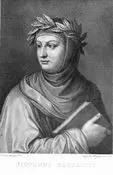
Giovanni Boccaccio

Giovanni Boccaccio was an Italian writer, poet, and humanist. He is best known for "The Decameron", a collection of one hundred tales depicting the life and customs of 14th-century Italy. His work had a significant influence on the development of narrative prose in Western literature.

[ Of the Black Death :] How many valiant men, how
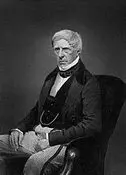
Henry Brougham

Henry Brougham was a prominent Scottish politician, jurist, and social reformer. Known for his intelligence and eloquence, Brougham played a significant role in British politics during the 19th century. He was a staunch advocate for public education and judicial reform, leaving a lasting legacy in these areas.

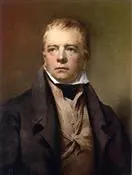
Walter Scott

Sir Walter Scott (15 August 1771 – 21 September 1832) was a prolific Scottish poet, novelist, and historian. He is widely regarded as one of the pillars of the historical novel and a central figure of Romanticism in English literature. His work had an immense impact on the popular imagination, shaping the vision of past eras, especially the Middle Ages and the stories of the Scottish Highlands. Scott not only wrote but also helped preserve and popularize Scottish culture and traditions.

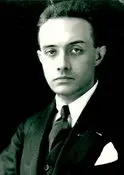
Henry de Montherlant

Henry de Montherlant was a renowned French novelist, playwright, and essayist. Born in Paris, France, on April 20, 1895, he is known for his works that explore themes such as virility, love, honor, and the pursuit of beauty. Montherlant developed a distinct literary style, often lyrical and with a strong emotional charge. His work reflects a melancholic and idealistic view of the world, with characters frequently tormented by internal conflicts and the passage of time.

Virgílio

Publius Vergilius Maro, known in Portuguese as Virgil, was a poet of Ancient Rome, celebrated for his epic work "The Aeneid". Considered one of the greatest poets of Latin literature, his works had a profound and lasting influence on Western literature. Besides "The Aeneid", he wrote the "Bucolics" and the "Georgics", which explore pastoral and agricultural themes, respectively. His poetry is marked by technical mastery, lyrical beauty, and thematic depth, addressing themes such as destiny, homeland, love, and man's relationship with nature.

Arma virumque cano, Troiae qui primus ab oris Ital
Vítor Silva Tavares

Vítor Silva Tavares is a Portuguese poet whose work is part of contemporary poetry. His writing is marked by a deep reflection on the human condition, the passage of time, and the search for meaning in a constantly changing world. He explores universal themes through a careful and imagistic language, dialoguing with poetic traditions while affirming a unique voice.

Rodrigo Leal Rodrigues

Rodrigo Leal Rodrigues was a Portuguese poet known for his lyrical and existential work. His poetry often explores themes such as solitude, the search for meaning, and the ephemerality of life, characterized by careful language and deep sensitivity. Although less prominent than some contemporaries, he left a subtle mark on 20th-century Portuguese poetry, with verses that resonate through their introspection and the melancholy that permeates them. His work, marked by an apparent formal simplicity, hides a thematic and emotional complexity.

Günter Kunert

Günter Kunert was an influential German poet, writer, and essayist, whose works frequently addressed the complexities of life in East Germany under the communist regime, the experience of war, and the human condition. His poetry is marked by intelligence, irony, and a deep concern for individual freedom and truth.

Juan Boscán

Juan Boscán was a Spanish Renaissance poet, mainly known for his work in adapting the sonnet and other Italian poetic forms to the Castilian language. His work, along with that of Garcilaso de la Vega, laid the foundations for modern Spanish poetry, introducing a new lyrical and metrical sensibility. Although his production was not very extensive, his impact on Spanish poetry was transcendental, paving the way for the innovations that would characterize the Golden Age. His figure is fundamental to understanding the transition from medieval to Renaissance poetry in Spain.