Jean-Paul Sartre
Author of the day

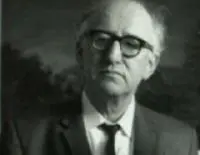
Jean-Paul Sartre

Jean-Paul Sartre was a French philosopher, writer, playwright, and literary critic, a central figure of atheistic existentialism. His vast and multifaceted work explores human freedom, individual responsibility, bad faith, and social commitment. Sartre rejected the Nobel Prize in Literature, advocating for a stance of refusal of bourgeois institutions. His thought profoundly influenced 20th-century philosophy, literature, and political debate, marking a generation with his emphasis on autonomy a…

Poem of the day

Do Not Go Gentle Into That Good Night

Dylan Thomas
Do not go gentle into that good night, 
Old age should burn and rave at close of day; 
Rage, rage against the dying of the light. 

Though wise men at their end know dark is right, 
Because their words had forked no lightning they 
Do not go gentle into that good night. 

Good men, the last wave by, crying how bright 
Their frail deeds might have danced in a green bay, 
Rage, rage against the dying of the light. 

Wild men who caught and sang the sun in flight, 
And learn, too late, they grieved it on its way, 
Do not go gentle into that good night. 

Grave men, near death, who see with blinding sight 
Blind eyes could blaze like meteors and be gay, 
Rage, rage against the dying of the light. 

And you, my father, there on that sad height, 
Curse, bless, me now with your fierce tears, I pray. 
Do not go gentle into that good night. 
Rage, rage against the dying of the light.
Read full poem

Born on this day

11
Ricardo Kelmer

Ricardo Kelmer is a contemporary Portuguese poet and writer, whose work is distinguished by its exploration of existential themes, its investigation of language, and its formal experimentation. His poetry, often rooted in an urban and introspective sensibility, seeks to unveil the complexities of the human condition, the fragilities of relationships, and the search for meaning in a constantly changing world. He is an author who favors imagistic density and philosophical reflection.

Américo Facó

Américo Facó was a Brazilian poet whose work was characterized by the exploration of themes such as the land, nature, the countryman, and social issues, especially those linked to the Northeast of Brazil. His poetry is marked by a strong regional identity, genuine lyricism, and a language that evokes orality and popular wisdom. With a keen sensitivity for portraying the daily life and aspirations of the northeastern people, Facó built a body of work that dialogues with Brazil's cultural roots, addressing the life, struggles, and hopes of his characters. His poetry is a testament to the strength and beauty of the sertão.

Salomé Ureña de Henríquez

Salomé Ureña de Henríquez was a Dominican poet, educator, and activist, widely regarded as the national poet of the Dominican Republic. A pioneer in women's education in her country, she founded the first normal school for women, the 'Instituto Profesional de Señoritas,' which became a center of excellence for the training of teachers. Her poetic work, though not extensive, is marked by profound lyricism, patriotic themes, reflections on the female condition, and the pursuit of an ideal of justice and freedom. Ureña is remembered not only for her literary contribution but also for her unwavering commitment to education and the emancipation of women.

Samuel Taylor Coleridge

Samuel Taylor Coleridge was an English poet, literary critic, and philosopher, one of the founders of the Romantic movement in England. He is best known for his poems "The Rime of the Ancient Mariner" and "Kubla Khan".

A poet ought not to pick nature’s pocket: let him
Ursula K. Le Guin

Ursula Kroeber Le Guin was a prominent American writer, celebrated for her science fiction and fantasy works that often explored philosophical, social, and anthropological themes. Her writing is marked by a lyrical style, the psychological depth of her characters, and the creation of imaginative and complex worlds. Le Guin challenged genre conventions and used speculative fiction as a vehicle to examine questions about power, identity, and human nature.

To light a candle is to cast a shadow...
Alphonse de Lamartine

Alphonse de Lamartine was a French poet, writer, and politician, a prominent figure of Romanticism. His poetic work, particularly 'Méditations Poétiques', had a significant impact on French literature, introducing themes of love, nature, and melancholy. He also played an important role in French politics during the Second Republic.

Sometimes, when one person is missing, the whole w
Charles Van Lerberghe

Charles Van Lerberghe was a Belgian poet of French language. He is considered an important figure of French symbolism. His works are known for their musicality and ethereal atmosphere.

Edmundo De Amicis

Edmundo De Amicis was an Italian writer, journalist, and teacher, known worldwide for his children's book "Heart". His work is characterized by strong sentimentalism and a pedagogical view of literature.

Patrick Kavanagh

Patrick Kavanagh was an Irish poet whose works are marked by a deep connection to the land, the simplicity of rural life, and a brutal honesty about the struggles and joys of existence. His poetry, often autobiographical, explores themes such as identity, faith, solitude, and the search for beauty in everyday life. Kavanagh is celebrated for his authentic voice and his ability to evoke landscapes and emotions with lyrical clarity and existential depth.

Pam Rehm

Pam Rehm is an American poet known for her poetry that explores nature, memory, and the female experience. Her work is marked by lyrical and introspective language, often with a focus on the connections between the inner and outer worlds. She deals with themes of loss, desire, and the search for meaning.

Died on this day

10
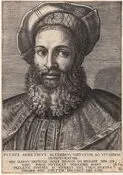
Pietro Aretino

Pietro Aretino was a prominent figure of the Italian Renaissance, known for his wit, satirical writing, and his ability to navigate the intricate power circles of the time. Dubbed the "scourge of princes" due to his scathing criticisms and blackmail, Aretino built a unique literary career based on manipulating his reputation and producing texts that mixed poetry, prose, and correspondence. His work, although sometimes controversial, reflects a deep understanding of Renaissance society, its grandeur and its miseries. Aretino distinguished himself not only as a poet and writer but also as a master of self-promotion, using his pen to obtain patronage and influence public opinion.

Marcus Accioly

Marcus Accioly was a Brazilian poet whose works explore the depths of the human soul, with a dense language full of symbolism. His poetry is marked by strong spirituality and a constant search for the transcendent, addressing themes such as loneliness, love, death, and the ephemerality of existence. Accioly developed a unique style, characterized by intrinsic musicality and erudite vocabulary, which earned him a prominent place in contemporary Brazilian poetry. His work invites reflection on the mysteries of life and the universe.

Jack Kerouac

Jack Kerouac was an American novelist and poet, a pioneer of the Beat Generation, and a central figure in the counterculture movement of the mid-20th century. His seminal novel, *On the Road*, became an anthem for a generation seeking freedom and spiritual exploration outside conventional American life. Kerouac's writing is characterized by its spontaneous prose, jazz-influenced rhythms, and autobiographical themes, often exploring journeys, disillusionment, and a search for meaning. His work captured the spirit of restlessness and a yearning for authentic experience that defined a significant cultural moment.

Sometimes I'd yell questions at the rocks and tree
José Nuno Pereira Pinto

José Nuno Pereira Pinto is a poet whose work is characterized by an introspective lyricism and a deep reflection on the human condition, time, and memory. His poetry explores the nuances of emotions, the beauty and transience of existence, with careful language and a strong sensory appeal. Pereira Pinto has built a poetic universe marked by sensitivity and the ability to evoke inner and outer landscapes, leaving behind a body of work that resonates with its authenticity and depth.

Manuel Gonçalves

Manuel Gonçalves was a Portuguese poet whose work stands out for its introspective lyricism and deep exploration of the human condition. Through carefully crafted language, he addressed themes such as the ephemerality of time, the search for meaning, and the complexity of human relationships. His poetry, marked by keen sensibility, invites reflection on existence and the fragility of life.

Carlos María Gutiérrez

Carlos María Gutiérrez was an Uruguayan writer and journalist, known for his work that blends fiction and essay, exploring themes such as history, identity, and literature. His writing is marked by erudition and originality.

Julián del Casal

Cuban poet of great relevance in the transition from Romanticism to Modernism, Julián del Casal is recognized for his profound sensitivity and the exploration of themes such as melancholy, solitude, and the fleetingness of life. His work is characterized by a careful musicality and a rich, often decadent imagery, reflecting the aesthetic currents of his time and his own introspection.

José Hernández

José Hernández was an Argentine poet, journalist, and politician, one of the most important literary figures in his country. His masterpiece, "Martín Fierro", is an epic poem that narrates the life of the gaucho and has become a symbol of Argentine national identity. Through his poetry, Hernández captured the reality of the countryside, social struggles, and the figure of the gaucho as an archetype of freedom and resistance. His political commitment and journalistic work also marked his life, defending the rights of the gauchos and promoting federal ideals. He is a central figure in gaucho literature and an unavoidable reference in Argentine culture.