Poem of the day

Do Not Go Gentle Into That Good Night

Dylan Thomas
Do not go gentle into that good night, 
Old age should burn and rave at close of day; 
Rage, rage against the dying of the light. 

Though wise men at their end know dark is right, 
Because their words had forked no lightning they 
Do not go gentle into that good night. 

Good men, the last wave by, crying how bright 
Their frail deeds might have danced in a green bay, 
Rage, rage against the dying of the light. 

Wild men who caught and sang the sun in flight, 
And learn, too late, they grieved it on its way, 
Do not go gentle into that good night. 

Grave men, near death, who see with blinding sight 
Blind eyes could blaze like meteors and be gay, 
Rage, rage against the dying of the light. 

And you, my father, there on that sad height, 
Curse, bless, me now with your fierce tears, I pray. 
Do not go gentle into that good night. 
Rage, rage against the dying of the light.
Read full poem

Born on this day

10
José Carlos Augusto Ferreira

José Carlos Augusto Ferreira was a poet whose works explored the depths of the human condition, the ephemerality of time, and the search for meaning amidst the complexity of existence. His poetry is marked by a rich and evocative language, capable of transitioning between melancholic lyricism and profound philosophical reflection. Ferreira dedicated himself to investigating the nuances of emotions and the existential dilemmas that shape individual and collective experience. Through his verses, the poet wove an intimate dialogue with the reader, inviting them to contemplate the beauty and fragility of life. His poetic legacy lies in his ability to capture the essence of human feelings and express them with unique sensitivity. Ferreira's work continues to resonate with readers who seek in poetry a way to understand themselves and the world around them, appreciating the mastery with which he approached universal themes with depth and originality.

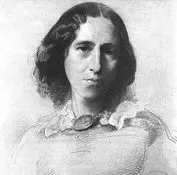
George Eliot

George Eliot is the pseudonym of Mary Ann Evans, a prominent English novelist of the Victorian era. Eliot is celebrated for her profound psychological insight, moral complexity, and realistic portrayal of English provincial life. Her works often explore themes of morality, religion, determinism, and the position of women in society.

It is never too late to be what you might have bee
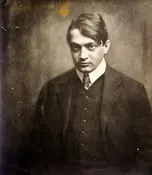
Endre Ady

Endre Ady was one of the most influential and innovative poets in Hungarian literature. His work is marked by an overwhelming emotional intensity, exploring themes such as love, death, homeland, and spirituality in a deeply personal and, at the same time, universal way. Ady revolutionized Hungarian poetry with his modern language, bold imagery, and raw approach to the human condition. His poetry reflects the complexities of his time and his own soul, with a strong sense of urgency and an incessant search for meaning. He is considered one of the pillars of Hungarian modernism, whose impact on the country's literature endures to this day.

Diogo de Macedo

Diogo de Macedo, with his Wikidata ID Q5279234, was a multifaceted figure in the Portuguese cultural landscape, distinguishing himself as a poet, essayist, and literary critic. His poetic work, marked by careful language and a deep reflection on the human condition and art, reflects the complexity of modern thought. With a vast intellectual production, Macedo explored themes such as identity, memory, and the relationship between the individual and the world. His critical and essayistic intervention contributed significantly to the literary and cultural debate in Portugal, positioning him as a prominent intellectual of his generation.

Alfredo Rosário Rodrigues

Alfredo Rosário Rodrigues was a poet whose work was characterized by lyrical depth and the exploration of themes such as identity, memory, and the human condition. His writing, often evocative and musical, reflected a profound sensitivity to the world and its complexities. Rodrigues dedicated himself to capturing the essence of emotions and experiences, leaving a poetic legacy marked by introspection and the beauty of language.

Graça Pires

Graça Pires is a Portuguese poet whose writing is distinguished by its lyrical intensity and exploration of themes such as love, pain, longing, and the search for identity. Her poetry is marked by a strong emotional charge, expressed through language that is sometimes raw and direct, but always rich in musicality and rhythm. Pires addresses the complexity of human relationships and the fragility of existence, inviting the reader to confront their own emotions and reflections. Her work reflects a keen sensitivity to life's contradictions and a constant search for deeper meaning, expressed through powerful metaphors and a penetrating gaze into the inner and outer universe.

Xohana Torres

Xohana Torres is a Galician writer and poet, known for her work in Galician that explores identity, femininity, and the experiences of modern life. Her poetry and prose are marked by a lyrical voice and a contemporary perspective. With a career dedicated to literature, Torres has been consolidating her presence in the Galician literary scene, addressing relevant themes with sensitivity and depth. Her work is a reflection of her worldview and her reflections on existence.

José María de Heredia

José María de Heredia was a renowned Cuban poet, known as the 'Prince of Verses' and one of the foremost exponents of Parnassianism in the Spanish language. His work is characterized by formal perfection, the plasticity of his imagery, and the evocation of historical, exotic, and mythological themes. In addition to his poetic work, Heredia had a distinguished political and diplomatic career, which led him to live in different countries, influencing his worldview and his literary output.

Died on this day

8
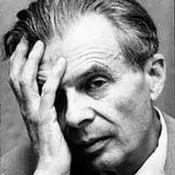
Aldous Huxley

Aldous Huxley was a prominent English writer, known for his vast body of work spanning novels, essays, short stories, and poetry. His writing is marked by profound intelligence, a critical view of society, and a constant exploration of themes such as technology, spirituality, sexuality, and human potential. "Brave New World" is his most celebrated work, a visionary dystopia that continues to resonate for its insight into humanity's future.

Carlos Cardoso

Carlos Cardoso was a prominent Mozambican journalist and activist, known for his courage and intransigence in defending press freedom and combating corruption. Founder and director of the newspaper "Metical", he used investigative journalism as a tool to expose abuses of power and promote transparency. His life was marked by a constant struggle against political pressures and threats, culminating in his tragic assassination in 2000. His journalistic work left an indelible legacy in Mozambique's history, inspiring generations of communication professionals to defend democratic values.

Anthony Burgess

Anthony Burgess was an English novelist, composer, and critic. He is best known for his 1962 dystopian novel, 'A Clockwork Orange', which explores themes of free will, free choice, and the nature of evil. Burgess wrote over 50 books, including novels, essays, criticisms, and works of non-fiction.

Erich Fried

Erich Fried was an Austrian poet, writer, and critic, whose work is characterized by social and political depth, combined with a remarkable lyrical sensibility. Exiled to England during the Nazi period, his life experience profoundly marked his writing, giving him a unique perspective on themes such as war, oppression, love, and justice. Fried is recognized for his direct and accessible language, yet loaded with meaning, and for his ability to address complex issues with clarity and empathy. His often engaged poetry invites critical reflection and transformative action.

Mauro Mota

Poet, journalist, and Brazilian professor, Mauro Mota stood out for his lyricism deeply connected to the identity and landscape of the Northeast. His work explores the cultural and social richness of the region, often with a tone of exaltation and a sharp eye on its contradictions. His poetry is marked by accessible language, yet rich in imagery and musicality, reflecting a strong social consciousness and a genuine love for his land. He became a representative voice of Northeastern poetry in the Brazilian literary scene.