Juan Ramón Jiménez
Author of the day

Juan Ramón Jiménez

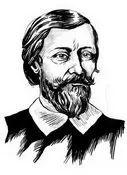
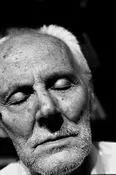
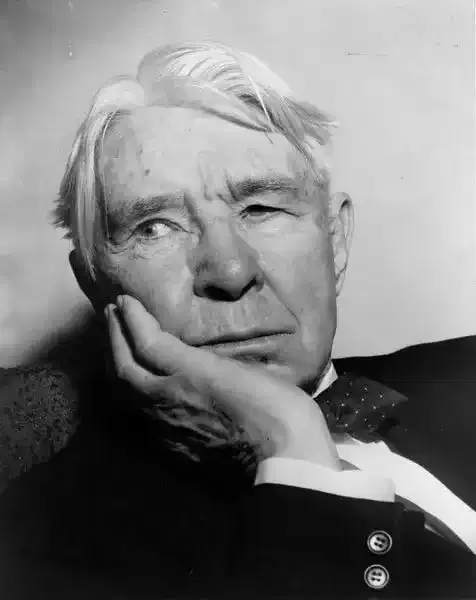
Juan Ramón Jiménez was a Spanish poet, awarded the Nobel Prize in Literature in 1956. His work, profoundly marked by symbolism and the desire for "pure poetry," evolved towards an incessant search for beauty and transcendence. His poetry explores themes such as nature, spirituality, love, and the very essence of poetry, with a refined, musical, and visionary style. He is considered one of the great renovators of 20th-century Spanish poetry.

Poem of the day

Do Not Go Gentle Into That Good Night

Dylan Thomas
Do not go gentle into that good night, 
Old age should burn and rave at close of day; 
Rage, rage against the dying of the light. 

Though wise men at their end know dark is right, 
Because their words had forked no lightning they 
Do not go gentle into that good night. 

Good men, the last wave by, crying how bright 
Their frail deeds might have danced in a green bay, 
Rage, rage against the dying of the light. 

Wild men who caught and sang the sun in flight, 
And learn, too late, they grieved it on its way, 
Do not go gentle into that good night. 

Grave men, near death, who see with blinding sight 
Blind eyes could blaze like meteors and be gay, 
Rage, rage against the dying of the light. 

And you, my father, there on that sad height, 
Curse, bless, me now with your fierce tears, I pray. 
Do not go gentle into that good night. 
Rage, rage against the dying of the light.
Read full poem

Born on this day

9
Manuel Apolinario

Manuel Apolinário was a Portuguese poet whose verses frequently explore the landscape, memory, and the human condition with a refined language and a particular lyrical sensibility. His work reflects a deep connection with Portuguese roots and cultural identity, addressing themes such as time, the passage of life, and the search for meaning. Through introspective and sometimes melancholic poetry, Apolinário manages to capture the essence of human emotions and experiences, leaving a legacy of verses that resonate for their authenticity and beauty.

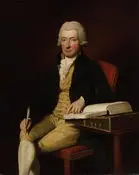
William Cowper

William Cowper (1731-1800) was an English poet and hymn writer. He is remembered for his lyrical and reflective poetry, which often addresses themes of nature, faith, and domestic life. His most famous work includes "The Task", a long narrative poem, and "Olney Hymns", a collection of religious hymns. Cowper struggled with mental health issues throughout his life, which also profoundly influenced his poetry, bringing characteristic introspection and melancholy.

Oh! for a closer walk with God.
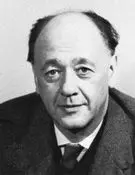
Eugène Ionesco

Eugène Ionesco was a Romanian-French playwright, one of the main representatives of the Theatre of the Absurd. His work is characterized by illogicality, the breakdown of language, and the exploration of the emptiness of human existence, reflecting the anguish and absurdity of the modern world. Plays such as "The Bald Soprano" and "Rhinoceros" are milestones of 20th-century theatre.

Childhood is the world of miracle and wonder; as i
Jorge Listopad

Jorge Listopad is a poet whose work is characterized by the exploration of the human condition, the ephemerality of existence, and the search for meaning in a complex world. His poetry, marked by precise language and deep sensitivity, addresses themes such as memory, identity, and interpersonal relationships, reflecting on the fragility and beauty of the moment. His reflections on the passage of time and the quest for transcendence lend his writing a philosophical and existential dimension.

Vasco de Lima Couto

Vasco de Lima Couto was a Portuguese poet and doctor, a prominent figure in the literature of his time. His poetic work is characterized by a profound sensibility, marked by the exploration of universal themes such as love, death, nature, and the human condition. His writing, although rooted in literary traditions, reveals an original voice and a careful style. With a career that spanned different phases, Lima Couto demonstrated a remarkable capacity for renewal and lyrical expression. His contribution to Portuguese poetry is significant, leaving a legacy of verses that continue to be appreciated for their depth and beauty.

Heid E. Erdrich

Heid E. Erdrich is a Native American writer known for her poetry and prose that explore themes of identity, culture, and history. Her work often addresses the connection to the land, spirituality, and the complexities of contemporary life for Indigenous peoples.

Died on this day

6
Augusto Gil

Augusto Gil was a notable Portuguese poet, known for his lyrical and meditative poetry. His work is marked by the exploration of themes such as love, death, time, and saudade (longing), often with a melancholic and reflective tone. His writing is distinguished by its musicality, rich vocabulary, and use of traditional forms, like the sonnet, adapted to a modern sensibility. A poet of a transitional generation, he managed to reconcile Portuguese poetic heritage with the new aesthetic currents of his time, leaving a legacy of verses that continue to resonate for their emotional depth and formal elegance.

Alberto da Costa e Silva

Alberto da Costa e Silva was a prominent Brazilian poet, diplomat, and essayist, recognized for his vast work that celebrates African culture and its influence on the formation of Brazil. His poetry is marked by lyricism, musicality, and a deep reflection on themes such as identity, history, ancestry, and beauty. He distinguished himself by his erudition and his ability to make accessible the complexities of African heritage, advocating for the importance of intercultural dialogue and the recognition of diversity.

Gregório de Matos

Gregório de Matos, known as "Boca do Inferno" (Mouth of Hell), was a Brazilian Baroque poet of the 17th century. His work, characterized by a variety of registers — lyrical, satirical, erotic, and religious — reflects the colonial society of Brazil at the time with rawness and humor. He is widely considered the first great Brazilian poet, known for his biting satirical vein against the authorities and customs of Bahia, but also for his love lyrics and existential reflections.

Mário Cesariny

Mário Cesariny de Vasconcelos was a Portuguese poet, a prominent figure of surrealism in Portugal. His work is characterized by the exploration of the unconscious, the dreamlike, and creative freedom, combined with a language rich in surprising imagery and unexpected associations. Cesariny also distinguished himself as an essayist and translator, being one of the most important Portuguese poets of the second half of the 20th century.

António de Vilas Boas e Sampaio

António de Vilas Boas e Sampaio was a poet whose work is part of the Portuguese literary landscape. He stood out for his lyrical sensitivity and for exploring universal themes through careful and expressive language. His poetry reflects a deep insight into the human condition, affections, and the passage of time, marked by strong musicality and a technical mastery of poetic form.