David Hume
Author of the day

David Hume

David Hume was a Scottish philosopher, historian, economist, and essayist, considered one of the most important figures of the Scottish Enlightenment and Western philosophy. He is widely recognized as an empiricist and a radical skeptic. His works had a profound influence on the development of philosophy, especially in the areas of epistemology and philosophy of mind.

Poem of the day

Grass

Carl Sandburg
Pile the bodies high at Austerlitz and Waterloo.
Shovel them under and let me work
-I am the grass; I cover all.

And pile them high at Gettysburg
And pile them high at Ypres and Verdun.
Shovel them under and let me work.
Two years, ten years, and the passengers ask the conductor:

What place is this?
Where are we now?

I am the grass.
Let me work.
Read full poem

Born on this day

9
Maurício de Lima

Angolan poet and essayist, Maurício de Lima is a prominent voice in Portuguese-language African literature. His work, rich in symbolism and thematic depth, addresses identity, history, ancestry, and the challenges of the human condition in the African context. With a style that balances expressive force and lyrical delicacy, his verses invite reflection on the roots, struggles, and hopes of a continent in constant transformation, consolidating him as a benchmark author.

Jacy Pacheco

Jacy Pacheco, a figure linked to literature and theater, became known for his active participation in Brazilian cultural life. His work, whether literary or performative, reflects a deep engagement with social and existential issues, addressing themes ranging from the complexities of human relationships to social criticism. As an actor and writer, he demonstrated a versatility that allowed him to leave a significant mark on his time. His legacy lies in his ability to communicate and provoke reflection through different forms of artistic expression, consolidating him as a name to remember in Brazilian culture.

Soares de Passos

Soares de Passos was a Portuguese poet of the 19th century, a prominent figure of Ultra-Romanticism in Portugal. His work is marked by a deep pessimism, existential discontent, and an attraction to death and the melancholic, characteristics that made him one of the most distinctive representatives of his generation. His poetry, although sometimes considered excessively somber, reveals an intense sensibility and a lyrical skill that place him as a notable poet in Portuguese literature.

János Pilinszky

János Pilinszky was a Hungarian poet whose work is profoundly marked by the experience of World War II and the Holocaust. His poetry is characterized by an austere, concise, and sometimes brutal language, which seeks to confront the horror of existence with an incessant search for meaning and redemption. Pilinszky is known for his unique lyrical voice, which combines the rawness of reality with spiritual transcendence, exploring themes such as guilt, suffering, faith, and the need for compassion in a fragmented world. His work is considered one of the pillars of 20th-century Hungarian poetry.

Han Kang

Han Kang is a South Korean writer whose work explores themes of trauma, memory, identity, and the complexities of the human condition. Her prose is often visceral and poetic, delving into the depths of the human psyche and confronting difficult aspects of history and society.

Alberto Girri

Alberto Girri was an Argentine poet, essayist, and translator known for his lyrical work marked by reflection on language, everyday reality, and the human condition. His poetry is characterized by an apparent simplicity that hides a profound philosophical inquiry and formal mastery. Girri explored the tension between language and the world, questioning the limits of poetic representation and addressing themes such as identity, time, and the transience of existence. His work, translated into several languages, solidifies him as one of the most important voices in 20th-century Spanish-language poetry.

José Asunción Silva

José Asunción Silva was a Colombian poet, a central figure of literary modernism in Hispanic America. His work, although scarce in volume, is of exceptional quality, marked by melancholy, musicality, and profound introspection. Silva explored themes such as death, unrequited love, the fleetingness of time, and the pursuit of ideal beauty, using innovative and rhythmically sophisticated language. He is considered one of the precursors of contemporary poetry in the Spanish language.

Pedro Salinas

Pedro Salinas was a central figure of the Generation of '27, distinguished by a lyrical and intellectual poetry that explored the depths of love, knowledge, and self-awareness. His work is characterized by a sharp reflection on reality and human experience, using purified language and innovative imagery that fuses the everyday with the metaphysical. Recognized for both his academic work and his unique poetic voice, Salinas left a legacy that influenced subsequent generations of poets, establishing himself as one of the foremost exponents of 20th-century Spanish poetry.

Died on this day

11
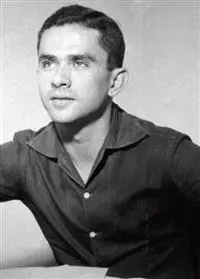
Mário Faustino

Mário Faustino was a Brazilian poet, critic, and translator, a prominent figure of the Generation of 45. His poetic work, though concise, is marked by formal experimentation, irony, and profound reflection on language and the human condition. As a critic, he stood out for his sharpness and innovative vision, contributing significantly to the renewal of literary criticism in Brazil. His work as a translator was also relevant, introducing important works of foreign literature to the country.

Nilton Santos Filho

Nilton Santos Filho is a Brazilian poet and writer whose work stands out for exploring themes such as identity, culture, and memory, with a particular focus on the social and existential realities of Brazil. His poetry is often marked by a language that blends the colloquial with the lyrical, creating a universe of profound and accessible meanings. With a career that spans various facets of literary production, Santos Filho has contributed to contemporary literature with an authentic and engaged voice. His work invites reflection on the individual in their context, the marks of history, and the search for meaning in the present.

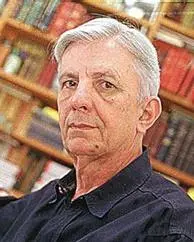
Sebastião Uchoa Leite

Sebastião Uchoa Leite was a Brazilian poet, literary critic, and translator, a prominent figure in contemporary poetry. His work, marked by intelligence, irony, and profound reflection on language and the human condition, oscillates between lyricism and essayism. He was also an important disseminator of foreign literature in Brazil, through his translations and reviews.

Émile Verhaeren

Émile Verhaeren was a Belgian poet and art critic, known for his work in the French language. He is considered one of the greatest Symbolist poets and a prominent figure in Belgian literature. His works explore themes such as urban life, nature, religion, and the human condition, with a rich and expressive language.

Horácio

Quintus Horatius Flaccus, commonly known as Horace, was a prominent Roman lyric poet during the time of Augustus. He is regarded as one of the greatest Roman lyric poets. His works, including Odes, Epodes, Satires, and Epistles, offer a vivid portrayal of Roman society and human nature. Horace's poetry is characterized by its technical mastery, elegant style, and philosophical depth, often exploring themes of moderation, the passage of time, and the pursuit of a happy life. His influence on Western literature is profound and enduring, shaping poetic traditions for centuries.

The secret of all good writing is sound judgment.
Nicolae Iorga

Nicolae Iorga was a Romanian historian, writer, and politician. He is considered one of the most influential Romanian historians of the 20th century, known for his extensive work on Romanian history and the history of Eastern Europe. In addition to his academic career, Iorga played an active role in Romania's political life, serving as Prime Minister.

Alfredo Carvalhais

Alfredo Carvalhais was a Portuguese poet and professor, known for his poetry that explores universal themes such as nature, love, and the ephemeral nature of life. His work, marked by deep lyricism and careful language, is part of the literary context of the late 19th and early 20th centuries.

José Viñals Correas

José Viñals Correas is a Spanish writer and poet, whose works explore the depth of human experience and the complexity of relationships. His writing is marked by keen sensitivity and the ability to capture emotional nuances. He stands out in contemporary literature for his engaging narratives and poetry that resonates with universal themes, inviting reflection on life and its mysteries.

Gloria Fuertes

Spanish poet known for her direct, simple, and deeply human style, which often moves between tenderness, irony, and social protest. Her work, accessible to all audiences, addresses themes such as love, loneliness, injustice, childhood, and nature with an unmistakable voice, full of musicality and sensitivity. Gloria Fuertes became a symbol of popular and committed poetry, leaving an indelible legacy in Spanish and Latin American literature.

Gaspar Melchor de Jovellanos

Gaspar Melchor de Jovellanos was a towering figure of the Spanish Enlightenment, excelling as a jurist, writer, politician, and reformer. His thought, deeply rooted in the principles of reason and progress, encompassed a wide range of interests, from education and economics to politics and social criticism. He was a tireless promoter of Enlightenment ideas in Spain, seeking to modernize the country and improve the living conditions of his fellow citizens. His literary work, though not as extensive as his essayistic and political output, reveals a profound knowledge of the language and a notable sensitivity, especially in his poetic and theatrical compositions. Jovellanos is remembered as one of the great intellectuals of his time, a statesman committed to the welfare of his nation, and a staunch advocate for reform and progress.