Poem of the day

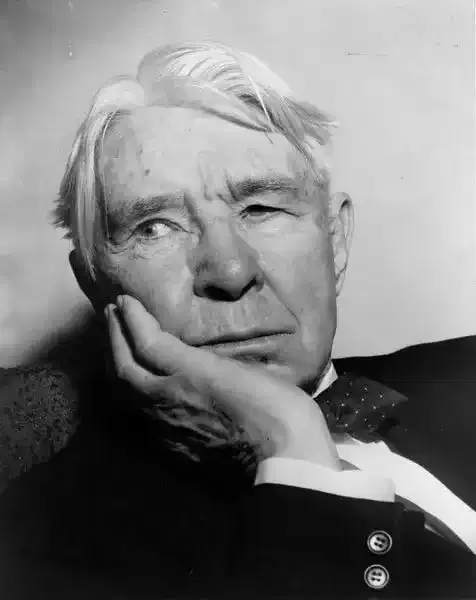
Grass

Carl Sandburg
Pile the bodies high at Austerlitz and Waterloo.
Shovel them under and let me work
-I am the grass; I cover all.

And pile them high at Gettysburg
And pile them high at Ypres and Verdun.
Shovel them under and let me work.
Two years, ten years, and the passengers ask the conductor:

What place is this?
Where are we now?

I am the grass.
Let me work.
Read full poem

Born on this day

7
Maria Thereza Cavalheiro

Maria Thereza Cavalheiro is a writer whose work stands out for its sensitivity and the way she explores the complexities of the human soul. Her writing, often marked by an atmosphere of introspection and melancholy, addresses universal themes such as love, loss, memory, and the passage of time. The author invites the reader to delve into inner universes, revealing the beauty and fragility of human emotions.

António Reis

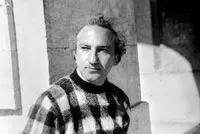
António Reis was a Portuguese poet, filmmaker, and essayist, a central figure in a deeply reflective and poetic auteur cinema. His work, marked by rigorous investigation into identity, memory, and man's relationship with the land, overflows into poetry, where he explores orality, landscape, and the human condition in a dense and imagistic way. He frequently collaborated with Margarida Cordeiro, his creative partner, in a production that challenged the narrative and aesthetic conventions of cinema and literature.

Gjertrud Schnackenberg

Gjertrud Schnackenberg is an American poet whose works are known for their formal precision, lyrical intelligence, and exploration of themes such as memory, identity, and human experience. Her poetry is often marked by deep contemplation and carefully crafted language.

Jean Loisy

Jean Loisy was a French poet and writer, known for his work reflecting on nature, spirituality, and the human condition. His poetry is often marked by introspective language and a search for meaning. He addresses existential themes with sensitivity, exploring the individual's relationship with the world and with themselves.

Amado Nervo

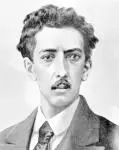
Amado Nervo was a Mexican poet and diplomat, a prominent figure of literary Modernism and one of the most influential poets of his generation. His work, characterized by simplicity, musicality, and introspection, explores themes such as love, spirituality, death, and the beauty of the everyday. Nervo cultivated a lyrical and melancholic style, evolving towards a more refined and spiritual poetry in his later stages. His legacy lies in his ability to move the reader with verses that are both accessible and profound, and in his contribution to the renewal of poetic language in Spanish.

Manuel Acuña

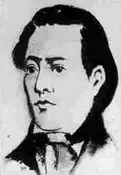
Manuel Acuña was a Mexican poet considered one of the most representative figures of Romanticism in his country. His work, marked by a deep melancholy and heightened sensitivity, addresses themes such as unrequited love, the fleetingness of life, and death. Despite his short existence, he left an indelible mark on Mexican literature, being remembered for his romantic fervor and tragic life.

Died on this day

8
Alberto de Lacerda

Alberto de Lacerda was an Angolan poet whose work stood out for its profound lyricism and reflection on identity, memory, and the human condition, with strong roots in African and Lusophone reality. His writing, marked by a rich and evocative language, explored themes such as saudade, the search for a place in the world, and social criticism, often using powerful metaphors and imagery. A poet of remarkable sensitivity, Lacerda left a literary legacy that significantly contributes to the understanding of Portuguese-language African poetry, originally addressing the complexities of the post-colonial experience and the universality of human feelings.

Lope de Vega

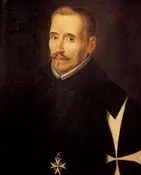
Félix Lope de Vega y Carpio was a Spanish playwright and poet, a prominent figure of the Golden Age of Spanish literature. Known for his prolificacy and versatility, Lope de Vega revolutionized Spanish theater with his dramatic formula, known as "comedia nueva", which became extremely popular. His poetic work covers a wide range of themes, from courtly love to religion, demonstrating a remarkable mastery of form and language.

Inácio José de Alvarenga Peixoto

Inácio José de Alvarenga Peixoto was a Brazilian poet and military man, a prominent figure of Arcadianism in Minas Gerais. He stood out for his participation in the Inconfidência Mineira, which led to his imprisonment and exile to Angola, where he would later die. His poetic work, although not extensive, reflects the spirit of the time, with pastoral themes and veiled social criticism. He was one of the representatives of the so-called "generation of 1770" of Brazilian poetry, marked by a feeling of revolt against colonial rule.

José Hélder de Souza

José Hélder de Souza was a poet whose work is characterized by lyrical depth and the exploration of universal themes such as love, longing, and the human condition. With an evocative and musical language, Souza knew how to translate the complexities of the soul into verses, creating poems that resonate with the reader's sensitivity. His writing, though sometimes melancholic, is permeated by a constant search for beauty and meaning.

Raniere Rodrigues dos Santos

Raniere Rodrigues dos Santos is a Brazilian poet, whose work stands out for its exploration of themes such as identity, ancestry, and the individual's relationship with society and the universe. His poetry is often marked by a strong musicality and by a language that seeks to connect the contemporary with cultural roots.

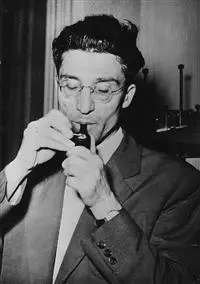
Cesare Pavese

Cesare Pavese was a prominent Italian writer, poet, translator, and literary critic. His work, deeply marked by the experience of war, solitude, and the search for identity, explores themes such as lost childhood, the return to the homeland, and the difficulty of communication. Recognized for his direct style and melancholic view of existence, Pavese left a significant literary legacy, influencing later generations of Italian writers. His tragically interrupted life reflects the intensity and contradictions of his profound artistic sensibility.

João Teixeira Soares

João Teixeira Soares is a poet whose work is characterized by lyrical depth and the exploration of themes such as identity, memory, and the relationship between human beings and time and space. His writing is marked by careful language and a unique sensitivity to capturing the nuances of human experience. With a body of work that has been gaining recognition, Teixeira Soares has established himself as a relevant poetic voice in contemporary literature, addressing the complexities of existence in an introspective and sometimes melancholic way.

Leopoldo Panero

Spanish poet, member of the Generation of '50, known for his rooted and existential poetry. His work is characterized by introspection, the exploration of vital anguish, death, and the search for meaning in an often desolate world. His language is direct and his tone, often somber.