Poem of the day

Do Not Go Gentle Into That Good Night

Dylan Thomas
Do not go gentle into that good night, 
Old age should burn and rave at close of day; 
Rage, rage against the dying of the light. 

Though wise men at their end know dark is right, 
Because their words had forked no lightning they 
Do not go gentle into that good night. 

Good men, the last wave by, crying how bright 
Their frail deeds might have danced in a green bay, 
Rage, rage against the dying of the light. 

Wild men who caught and sang the sun in flight, 
And learn, too late, they grieved it on its way, 
Do not go gentle into that good night. 

Grave men, near death, who see with blinding sight 
Blind eyes could blaze like meteors and be gay, 
Rage, rage against the dying of the light. 

And you, my father, there on that sad height, 
Curse, bless, me now with your fierce tears, I pray. 
Do not go gentle into that good night. 
Rage, rage against the dying of the light.
Read full poem

Born on this day

10
Juvenal Galeno

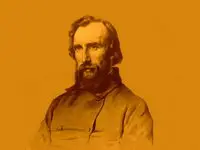
Juvenal Galeno was a Brazilian poet, journalist, and teacher, an important figure in Ceará's and national literature at the end of the 19th and beginning of the 20th centuries. His poetic work, often linked to regionalism, portrays the life and customs of the Northeast, with a lyricism marked by simplicity and emotion. In addition to his literary production, Galeno dedicated himself to journalism and teaching, contributing to the cultural and educational life of Ceará. He is remembered as a popular and sensitive poet, whose verses capture the soul of the sertão and its people.

Rodrigues de Abreu

Rodrigues de Abreu was a writer whose literary output, although less explored in depth by specialized criticism, offers a valuable glimpse into the literature of his time. His work reflects a remarkable capacity for social observation and a particular attention to the nuances of human language and thought. Through writing that moves between the narrative and the reflective, Abreu left a record that contributes to the understanding of the literary evolution and aesthetic concerns of his era. His legacy lies in the authenticity of his voice and in how he captured the essence of his observations.

Maria Teresa M. Carrilho

Maria Teresa M. Carrilho is a poet whose work stands out for its lyrical sensitivity and deep exploration of themes such as memory, time, and identity. Her writing is characterized by a careful language and introspective reflection on the human condition and its complexities.

Henri-Frédéric Amiel

Henri-Frédéric Amiel was a Swiss philosopher, literary critic, and diarist. Born in Geneva, he spent much of his academic life in this city, where he taught aesthetics at the University of Geneva. He is best known for his "Intimate Journal", a vast and introspective work that he began in his youth and continued until his death. This journal offers a profound portrait of his inner life, his intellectual and emotional struggles, and his observations on society and art. Despite having a respectable academic career, his posthumous fame is largely due to this work, which continues to be studied for its psychological and literary value.

Jacques Bossuet

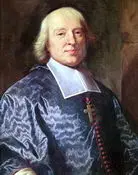
Jacques-Bénigne Bossuet was a sacred orator, theologian, and French writer, considered one of the greatest masters of rhetoric in the Catholic Church. Born in Dijon, he distinguished himself as a preacher at the court of Louis XIV, where he developed his eloquence and erudition. His work includes sermons, funeral orations, and theological treatises, noted for their grand style and defense of absolute monarchy and the divine right of kings.

Lhasa de Sela

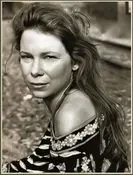
Lhasa de Sela was a Mexican singer-songwriter, known for her unique and emotive voice and for the fusion of musical styles that included influences from folk, blues, rock, and traditional Latin American music. Her music, often sung in different languages, addressed themes such as love, loss, spirituality, and the inner journey, with a depth and authenticity that captivated a loyal audience worldwide. With a mesmerizing stage presence and a discography that reflects a constant pursuit of artistic expression, Lhasa left a musical legacy that celebrates cultural diversity and the intensity of the human experience.

Grazia Deledda

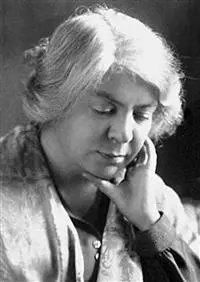
Grazia Deledda was an Italian writer, awarded the Nobel Prize in Literature in 1926. Her work, deeply rooted in Sardinia, explores the human condition, moral conflicts, and the power of fate. Deledda masterfully portrayed her homeland, its customs, and the psychology of its inhabitants, often through characters marked by intense passions and ethical dilemmas. Through rich and evocative language, the author gave voice to the landscapes and soul of Sardinia, addressing universal themes such as love, sin, redemption, and fatality. Her style, realistic yet charged with symbolism, earned her international recognition and established her as one of the most important voices in 20th-century Italian literature.

Francisco Machado de Faria e Maia

Francisco Machado de Faria e Maia was a Portuguese writer and public figure, with a body of work that spanned different literary genres. His intellectual production reflects an involvement with the social and political issues of his time, demonstrating notable versatility. Although not a prominent name in the history of Portuguese literature, his work contributes to the understanding of the cultural and intellectual landscape of the period in which he lived.

Pe. António de Carvalho

Fr. António de Carvalho was a notable Portuguese poet, whose work stands out for its spiritual depth and exploration of religious and existential themes. His writing, often imbued with lyrical and reflective sensibility, addresses faith, doubt, transcendence, and the human condition in light of a theological and philosophical perspective. His poetry is a testament to his dedication to art and spirituality, leaving a legacy of verses that invite contemplation and introspection.

Santos Domínguez

Santos Domínguez is a Spanish writer and professor, known for his extensive work encompassing essays, literary criticism, and fiction. His intellectual production is dedicated to the deep analysis of literature and culture, with a special focus on contemporary narrative. With a career dedicated to the study and dissemination of literary knowledge, Domínguez is a respected figure in academic and literary circles, contributing to the understanding of significant authors and works.

Died on this day

5
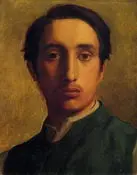
Edgar Degas

Edgar Degas was a French painter and sculptor, best known for his portraits of ballerinas, horse races, and scenes of Parisian daily life. He was one of the founders of Impressionism, although he considered himself more of a realist.

Rémy de Gourmont

Rémy de Gourmont was an influential French literary critic, poet, and essayist associated with Symbolism and Parnassianism. Known for his erudition and for a sharp, often ironic writing style, Gourmont addressed a wide range of topics, from philosophy and aesthetics to social criticism and sexuality. His works explored the complexity of the human mind and the pursuit of beauty and truth.

Charles Dobzynski

Charles Dobzynski was a French poet and translator, whose work is characterized by social and political engagement, combined with a deep lyrical sensibility. His poetry, often inspired by his Jewish origins and life experiences, addresses themes such as memory, identity, justice, and hope. Dobzynski was also an active promoter of culture and literature, especially regarding poetry and its dissemination.

Roy Fuller

Roy Fuller was an English poet and novelist whose work is marked by a strong sense of social realism and a deep concern with the political and moral issues of his time. His poetry, often characterized by direct language and a restrained rhythm, explores themes of work, class, identity, and the passage of time.