Poem of the day

Grass

Carl Sandburg
Pile the bodies high at Austerlitz and Waterloo.
Shovel them under and let me work
-I am the grass; I cover all.

And pile them high at Gettysburg
And pile them high at Ypres and Verdun.
Shovel them under and let me work.
Two years, ten years, and the passengers ask the conductor:

What place is this?
Where are we now?

I am the grass.
Let me work.
Read full poem

Born on this day

12
Carlos Gondim

Carlos Gondim was a Portuguese poet, translator, and journalist, whose work is distinguished by its lyrical sensitivity and exploration of themes such as memory, time, and the human condition. His poetry, although sometimes discreet, reveals a deep reflection on life and art, with careful language and a melancholic tone. As a translator, he contributed to the dissemination of important foreign authors in Portuguese literature. His journalistic activity allowed him to interact with different social realities, which, in a way, can be reflected in his literary sensitivity. His legacy, although not as prominent as that of other contemporaries, is that of an artist dedicated to the beauty of the word and the depth of thought.

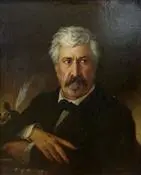
Manuel de Araújo Porto Alegre

Manuel de Araújo Porto Alegre was a Brazilian military man, politician, and poet, a multifaceted figure on the 19th-century scene. He stood out in the Farroupilha Revolution but also left a mark on literature as one of the precursors of Indianism in Brazil. His poetic work, though not extensive, is significant for its thematic treatment and language, anticipating elements that would flourish in Brazilian Romanticism.

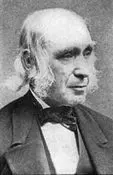
Amos Bronson Alcott

Amos Bronson Alcott was an American educational reformer, philosopher, and transcendentalist. He is best known for his pedagogical experiments, including the founding of the Temple School in Boston, where he sought to educate children holistically, emphasizing morality and spirituality. Despite his progressive ideals, his schools often faced financial difficulties and criticism.

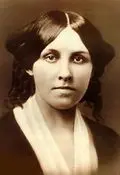
Louisa May Alcott

Louisa May Alcott was an American novelist, best known for her seminal novel "Little Women". Born in Germantown, Philadelphia, Alcott emerged from a literary and intellectual family. Her work frequently portrays themes of hard work, family love, and the pursuit of female independence, reflecting her own experiences and convictions.

Egas de Bastos

Egas de Bastos was a Portuguese poet whose work is notable for its originality and exploration of existential and social themes. His writing, often marked by an ironic and reflective tone, addresses the human condition with depth and insight. Through careful language and a critical view of the world, Egas de Bastos left a unique mark on Portuguese poetry.

Virgílio de Lemos

Virgílio de Lemos was a Portuguese poet, essayist, and literary critic, a prominent figure in the 20th-century cultural scene. His poetic work is marked by a deep reflection on existence, the human condition, and language. As an essayist and critic, he contributed significantly to the analysis and dissemination of literature, being recognized for his erudition and insightful vision.

João de Deus Rodrigues

João de Deus Rodrigues is a prominent figure in Portuguese poetry, known for his lyrical sensitivity and deep connection to the land and traditions. His work overflows with unparalleled musicality and an exploration of themes such as nature, childhood, saudade, and faith. With a style that evokes popular and religious lyricism, Rodrigues left a mark on Portuguese literature, with poems that became an integral part of the country's cultural identity.

Rebecca Wolff

Rebecca Wolff is an American writer, known for her insightful prose and often exploring the complexities of interpersonal relationships and the search for meaning amidst the chaos of modern life. Her writing is marked by subtle humor and a deep empathy for her characters. As an editor and teacher, Wolff has influenced and supported many emerging writers. Her work reflects a continued interest in the nuances of human experience and how stories shape our understanding of the world.

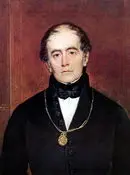
Andrés Bello

Andrés Bello was a Venezuelan humanist, philologist, jurist, and poet, considered one of the most influential intellectual figures in Latin America during the 19th century. His work spanned fields as diverse as law, grammar, history, philosophy, and poetry, leaving an indelible legacy on Hispanic American culture and thought. He was a passionate advocate for the linguistic unity of Spanish and a promoter of education and science in the region.

Died on this day

7
António Ferreira

António Ferreira was a Portuguese poet and playwright of the Renaissance, considered one of the central figures of Classicism in Portugal. His work, marked by erudition and formal rigor, sought to imitate Greco-Latin models, introducing new poetic forms and themes to the country. He was a pioneer in writing classical tragedies in Portuguese, exploring mythological and historical themes with elevated language and a profound aesthetic sense. His legacy is fundamental to the consolidation of the Portuguese literary canon.

Gomes de Sousa

Gomes de Sousa was a poet whose work is distinguished by its lyrical depth and exploration of universal themes such as love, saudade, and the ephemerality of life. His writing, often marked by a subtle melancholy and intrinsic musicality, captivates with its ability to express the complexities of the human soul in an accessible and moving way. Sousa left a poetic legacy that continues to resonate through its formal beauty and genuine exploration of the human condition.

Ángel Ganivet

Ángel Ganivet was a Spanish writer, diplomat, and philosopher, considered a key figure of Spanish Pre-Modernism.

Bella Akhmadúlina

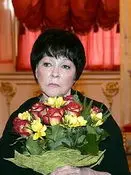
Bella Akhmadulina was a prominent Russian poet, known for her refined lyricism and emotional expressiveness. Her poetic work is marked by formal beauty, the exploration of universal themes such as love, memory, and the passage of time, and a deep aesthetic sensibility. Akhmadulina emerged as an important voice in 20th-century Russian poetry, captivating readers with her elaborate language and her ability to evoke vivid imagery and profound feelings. Her legacy endures as a testament to the power of poetry in expressing the complexities of the human experience.

Manuel dos Santos Serra

Manuel dos Santos Serra, also known by his Wikidata name Q85853759, was a poet whose work stands out for its deep connection to the land and traditions. His poetry reflects a strong cultural identity, expressed in a language rooted in orality and the surrounding landscape. With a style that combines lyricism with attentive observation of daily life, Serra managed to capture the essence of rural life and the feelings that emanate from it. His work is a valuable testament to popular culture and Portuguese roots, offering an authentic and emotional perspective on existence.

Armando Cortesão

Armando Cortesão was a Portuguese poet, journalist, and intellectual, whose work is characterized by a deep concern with the national identity, history, and culture of Portugal. His poetry, often imbued with an epic and patriotic tone, explores themes such as the homeland, heroes, and historical legacy, in a style marked by solemnity and expressive force. He was also an active figure in the dissemination and defense of Portuguese culture.

Alonso de Ercilla

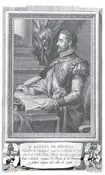
Alonso de Ercilla y Zúñiga was a Spanish soldier and poet, author of "La Araucana", one of the most important epic poems in Spanish literature and the first major work of Chilean literature. His life was marked by his participation in the wars of conquest in America, especially in the Arauco War, where he fought against the Mapuche. His work is a direct testimony of these campaigns, combining historical chronicle with the exaltation of the bravery of the conquerors and, at the same time, showing respect for the courage of the indigenous people.