Poem of the day

Do Not Go Gentle Into That Good Night

Dylan Thomas
Do not go gentle into that good night, 
Old age should burn and rave at close of day; 
Rage, rage against the dying of the light. 

Though wise men at their end know dark is right, 
Because their words had forked no lightning they 
Do not go gentle into that good night. 

Good men, the last wave by, crying how bright 
Their frail deeds might have danced in a green bay, 
Rage, rage against the dying of the light. 

Wild men who caught and sang the sun in flight, 
And learn, too late, they grieved it on its way, 
Do not go gentle into that good night. 

Grave men, near death, who see with blinding sight 
Blind eyes could blaze like meteors and be gay, 
Rage, rage against the dying of the light. 

And you, my father, there on that sad height, 
Curse, bless, me now with your fierce tears, I pray. 
Do not go gentle into that good night. 
Rage, rage against the dying of the light.
Read full poem

Born on this day

14
Fábio Afonso de Almeida

Fábio Afonso de Almeida is a poet whose work is distinguished by the exploration of existential themes and introspective lyricism. His writing, marked by careful language and a measured rhythm, invites reflection on the human condition, time, and memory. His poetic compositions often evoke inner landscapes and the complexity of emotions, establishing an intimate dialogue with the reader.

Lucília Cândida Sobrinho

Lucília Cândida Sobrinho is a less known figure in the literary landscape, but whose poetic production, although discreet, reveals a particular sensitivity for the expression of feelings and observations of everyday life. Her work, when accessible, demonstrates an effort to capture the essence of moments and emotions in a delicate and personal way, fitting into the context of more intimate and reflective poetry.

Jonathan Swift

Jonathan Swift was an Anglo-Irish satirist, essayist, political pamphleteer, and poet, best known for "Gulliver's Travels." His biting wit and sharp social commentary made him a prominent figure in English literature. He often used irony and fantasy to critique societal norms and political corruption, leaving a lasting impact on satire and prose.

Just get the right syllable in the proper place.
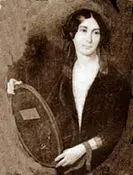
Louise-Victorine Ackermann

Louise-Victorine Ackermann was a French poet, born in Paris. Known by her married name, Madame Ackermann, her poetic work, often marked by a philosophical and introspective tone, explored themes such as nature, love, and the human condition. Although less known to the general public than other literary figures of her time, Ackermann left a legacy of elegant and reflective poetry, admired by critics and other poets for its depth and formal mastery. Her work reflects a keen sensibility and a deep connection with the natural world.

Richard Minne

Richard Minne was a Belgian poet and translator, known for his work that frequently explored existentialist themes and for his deep connection to the Flemish language and culture. His poetic compositions are notable for their introspection and reflection on the human condition, addressing the transience of time and the search for meaning in a constantly changing world. Throughout his career, Minne also dedicated himself to translation, making works by other authors accessible to the Flemish public, which demonstrates his commitment to cultural dissemination. His poetry, though sometimes melancholic, is marked by formal beauty and depth of thought that have secured him a prominent place in Belgian literature.

Francisco Álvares da Nóbrega

Francisco Álvares da Nóbrega was a Portuguese poet and university professor. His poetic work, marked by deep humanism and rigorous language, addresses themes such as existence, memory, and the human condition. As a professor, he dedicated himself to the study and dissemination of literature, especially poetry.

Guilherme de Azevedo

Guilherme de Azevedo was a Portuguese poet, journalist, and politician, a prominent figure in the Portugal Renaissance movement in the late 19th and early 20th centuries. His poetic work is marked by deep lyricism, addressing themes such as love, saudade, and nature, with a style that reflects the influence of Symbolism and Parnassianism. As a journalist and politician, Azevedo played an active role in the public life of his time, advocating for social and cultural causes. His poetry, although sometimes melancholic, reveals a strong connection to Portuguese identity and a desire for aesthetic and social renewal.

César Porto

César Porto is a poet known for his writing that oscillates between irony and melancholy, exploring the complexities of urban life and human relationships. His poetry is marked by direct language, yet laden with subtext, addressing themes such as heartbreak, loneliness, and the search for meaning in a modern world. The work of César Porto reflects a contemporary sensibility, capturing the fragility and resilience of the individual in the face of life's challenges. His poetic voice invites reflection on the human condition in current times.

Sarah Pinto Coelho

Sarah Pinto Coelho is a poet whose writing is characterized by the exploration of the human condition, addressing themes such as identity, love, and the passage of time with a particular sensitivity. With a language that combines delicacy with expressive force, the author constructs poems that invite reflection on the inner world and the complexities of human relationships, establishing herself in contemporary poetry.

Leo Connellan

Leo Connellan was an American poet known for his poetry that portrays the life and landscape of New England, especially the state of Maine. His works frequently celebrate nature, manual labor, and ordinary people, with a direct and accessible style.

Jotamario Arbeláez

Jotamario Arbeláez is a Colombian poet known for his sharp social criticism and irreverent language. His work is characterized by exploring the human condition, politics, and daily life with a mix of humor, irony, and deep reflection. He often uses a conversational and direct tone, bringing poetry closer to the common reader. His style has been associated with "nadaísmo," a countercultural movement that sought to break with artistic and social conventions.

Died on this day

13
Fernando Pessoa

Fernando Pessoa was a Portuguese poet, writer, literary critic, translator, and philosopher, considered one of the greatest exponents of Portuguese-language literature and one of the most relevant poets of the 20th century. His vast work, marked by the creation of multiple heteronyms with distinct personalities and styles, explores themes such as identity, existential anguish, saudade, and the search for meaning in a constantly changing world. Pessoa left a complex and multifaceted literary legacy, which continues to fascinate and challenge readers and critics.

Fernando Assis Pacheco

Fernando Assis Pacheco was a Portuguese poet, journalist, and literary critic, a prominent figure in contemporary poetry. His work, characterized by irony, melancholy, and deep reflection on time and the human condition, reveals a constant dialogue with literary tradition and an unmistakable originality. As a journalist and critic, he played an important role in promoting and debating Portuguese literature. His poetry is an invitation to introspection, exploring the complexities of feeling and thinking.

Oscar Wilde

Oscar Wilde was an Irish poet and playwright, celebrated for his wit, flamboyant style, and epigrammatic brilliance. He became one of the most famous figures of the late Victorian era, known for his advocacy of aestheticism, the belief that art exists for beauty's sake. Despite his literary success, his personal life was marked by scandal and legal troubles, leading to imprisonment.

A Vision
Oswaldo Martins

Oswaldo Martins was a Portuguese poet and educator, whose poetic work is marked by strong lyricism and the exploration of themes such as identity, memory, and the individual's relationship with their time and space. His poetry, often enveloped in a reflective and melancholic tone, seeks to deepen the understanding of the human experience through carefully crafted language. Martins played an important role in disseminating culture and literature through his work as an educator.

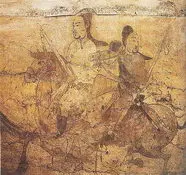
Li Po

Li Po was one of the most celebrated poets of the Tang Dynasty in China, known for his romantic and imaginative poetry. His work reflects a deep love for nature, friendship, and wine, often imbued with a Taoist spirit of freedom and spontaneity. He is considered one of the two greatest poets in Chinese history, alongside Du Fu.

Maria Teresa M. Carrilho

Maria Teresa M. Carrilho is a poet whose work stands out for its lyrical sensitivity and deep exploration of themes such as memory, time, and identity. Her writing is characterized by a careful language and introspective reflection on the human condition and its complexities.

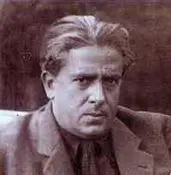
Francis Picabia

Francis Picabia was a French painter, sculptor, and poet, a central figure in the early 20th-century artistic avant-garde movements, such as Cubism, Dadaism, and Surrealism. His work is known for its constant experimentation and exploration of different styles and techniques.

Patrick Kavanagh

Patrick Kavanagh was an Irish poet whose works are marked by a deep connection to the land, the simplicity of rural life, and a brutal honesty about the struggles and joys of existence. His poetry, often autobiographical, explores themes such as identity, faith, solitude, and the search for beauty in everyday life. Kavanagh is celebrated for his authentic voice and his ability to evoke landscapes and emotions with lyrical clarity and existential depth.

Campos Monteiro

António Manuel Ferreira Campos Monteiro was a Portuguese poet, essayist, and university professor. His poetic work is marked by a profound reflection on language, existence, and the human condition, with an erudite style and a constant questioning of the limits of knowledge and expression. He was a central figure in literary criticism and literary theory in Portugal.

Américo Cortez Pinto

Américo Cortez Pinto was a distinguished Portuguese poet, a relevant figure in the literary landscape of the 20th century. His poetic work is recognized for its lyrical depth, for the exploration of themes such as identity, memory, and the passage of time, and for its elaborate and musical language. Throughout his career, he demonstrated a unique sensitivity in capturing the nuances of the human experience, consolidating a prominent place in contemporary Portuguese poetry.

Ali Lameda

Ali Lameda was a Venezuelan poet, essayist, and journalist. His poetic work stands out for its exploration of identity, memory, and the human condition, with a lyrical and introspective style. He also worked as a literary critic and cultural promoter.

Uwe Frisch

Uwe Frisch is an author known for his multifaceted writing, exploring themes ranging from the social to the personal. His works are characterized by psychological depth and an innovative approach to literary language, always seeking to push the boundaries of expression. He has a keen eye for the nuances of human experience, translating them into narratives that resonate with readers. His contribution to contemporary literature lies in his ability to create vivid worlds and complex characters, inviting reflection on the human condition.