Juan Ramón Jiménez
Author of the day

Juan Ramón Jiménez

Juan Ramón Jiménez was a Spanish poet, awarded the Nobel Prize in Literature in 1956. His work, profoundly marked by symbolism and the desire for "pure poetry," evolved towards an incessant search for beauty and transcendence. His poetry explores themes such as nature, spirituality, love, and the very essence of poetry, with a refined, musical, and visionary style. He is considered one of the great renovators of 20th-century Spanish poetry.

Poem of the day

Grass

Carl Sandburg
Pile the bodies high at Austerlitz and Waterloo.
Shovel them under and let me work
-I am the grass; I cover all.

And pile them high at Gettysburg
And pile them high at Ypres and Verdun.
Shovel them under and let me work.
Two years, ten years, and the passengers ask the conductor:

What place is this?
Where are we now?

I am the grass.
Let me work.
Read full poem

Born on this day

14
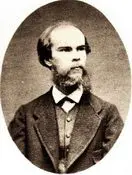
Paul Verlaine

Paul Verlaine was a French poet, a central figure of symbolism, known for his musicality and exploration of themes such as melancholy, love, and spirituality. His life, marked by turmoil and intense passions, was often reflected in his work, which oscillates between the spiritual and the carnal, the sublime and the degraded. Verlaine is celebrated for his ability to evoke atmospheres and sensations through carefully crafted language, influencing later generations of poets.

Thiago de Mello

Thiago de Mello was an internationally renowned Brazilian poet, known for his work deeply connected to the Amazon and social and environmental issues. His poetry is characterized by its musicality, imagistic strength, and political and existential engagement. Celebrated for his vast literary production, which includes poetry, prose, and translation, he became an important voice in contemporary literature, both in Brazil and abroad, receiving numerous honors and awards throughout his career.

Lucila Nogueira

Lucila Nogueira was a Brazilian poet, writer, and journalist, known for her lyrical work and her strong connection to contemporary poetry. She stood out for her sensitivity and the way she addressed universal themes.

Adelino Fontoura

Adelino Fontoura was a Brazilian poet who stood out in the second half of the 19th century, integrating the Parnassian current. His work is marked by the search for formal perfection, metrical rigor, and descriptive objectivity. Themes such as beauty, art, and classical mythology frequently appear in his verses. Fontoura sought in poetry a refuge for the expression of feelings and ideas, valuing form as an essential element of artistic expression.

Eduardo Guimaraens

Eduardo Guimaraens was a Portuguese poet whose work is part of a lyrical renewal context. His writing, marked by deep sensitivity and a remarkable command of form, explored universal themes such as love, the passage of time, and existential melancholy. His poetry is recognized for its musicality, rich imagery, and careful language, evoking the best of Portuguese lyrical tradition while engaging with modern anxieties. Despite a less extensive literary output compared to other prominent figures in Portuguese poetry, Guimaraens's work left an indelible mark, appreciated for its depth and formal beauty. His legacy lies in his ability to translate the complexities of the human soul into verse with singular elegance and authenticity.

Maomé

Muhammad was an Arab religious, political, and military leader who founded Islam. For Muslims, he is the last prophet sent by God to guide humanity. Born in Mecca, Muhammad received divine revelations that formed the basis of the Quran, the holy book of Islam. His initial preaching faced resistance in his hometown, leading him to emigrate to Medina, an event known as the Hijra, which marks the beginning of the Islamic calendar. There, he established a prosperous Muslim community and united the Arab tribes under the new faith.

Silvestre Péricles de Góis Monteiro

Silvestre Péricles de Góis Monteiro was a Brazilian writer and jurist, known for his participation in the literary movement of Parnassianism. His poetic work is marked by the pursuit of formal perfection, metrical rigor, and the exploration of classical and historical themes, reflecting the aesthetic characteristics of the movement. As a jurist, he also contributed to the field of law, demonstrating an intellectual versatility that distinguished him in his time.

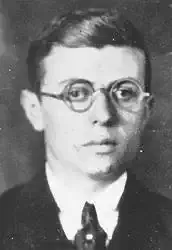
Jean Giono

Jean Giono was a prominent French writer, known for his works that celebrate nature, country life, and simplicity. His stories often depict characters who distance themselves from modern civilization to rediscover a more authentic way of life in harmony with the natural world.

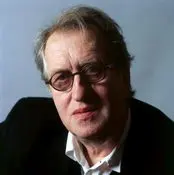
Gerrit Komrij

Gerrit Komrij was a renowned Dutch poet, writer, literary critic, and translator. His work spans a wide range of genres, including poetry, fiction, essays, and criticism. Known for his sharp intellect, caustic wit, and profound erudition, Komrij left an indelible mark on Dutch literature. He was a prominent figure in his country's cultural landscape, distinguished by his versatility and his ability to tackle complex themes with accessible and provocative language.

Cristóvão Aires

Cristóvão Aires was a Portuguese poet whose work is predominantly associated with the Modernist period. He stood out for his poetry, characterized by innovative language and the exploration of universal themes such as love, death, and the human condition. His contribution to Portuguese literature lies in formal and thematic renewal, establishing him as a relevant voice in the poetic landscape of the 20th century.

Frances Cornford

Frances Cornford was an English poet known for her brief and witty poems, often with a touch of irony and social observation. Her work celebrates the simple joys of life, the beauty of nature, and human relationships, with clear and accessible language.

Herib Campos Cervera

Herib Campos Cervera was a Paraguayan poet whose work is characterized by a deep reflection on the social and political reality of his country. His poetry, marked by commitment and denunciation, addresses themes such as oppression, injustice, and the search for freedom. He is considered one of the most important voices in contemporary Paraguayan poetry.

Died on this day

3
Manuel Mendes de Barbuda e Vasconcelos

Manuel Mendes de Barbuda e Vasconcelos was a Portuguese poet known for his lyrical work. His poetry explores universal themes such as love, nature, and the ephemerality of life, marked by careful language and a melancholic sensibility. His literary production is part of a transitional context between Arcadianism and Romanticism, reflecting the concerns and aspirations of his time. Although not a central figure in the history of Portuguese literature, his work contributes to the richness and diversity of 18th-century poetry.

Rui Grácio

Rui Grácio is a contemporary Portuguese poet, known for his poetry that investigates language, memory, and the human condition. His work is marked by an intellectual and experimental approach, where reflection on writing itself and its limits occupies a central place. Grácio moves between lyricism and deconstruction, challenging the reader to think about the meaning and form of poetry. His themes cover identity, time, art, and the city, revealing a critical and sharp look at contemporary reality.

Robert Creeley

Robert Creeley was an American poet, a central figure in post-war poetry and associated with the Black Mountain poets. His work is characterized by colloquial language, concision, and a deep exploration of personal experience and the human condition. He influenced generations of poets with his innovative approach. Creeley had a prolific career and an important role as an educator and editor, contributing significantly to the development of contemporary poetry.